Women’s Rights: How Far Back in Time Will our Legal System Go? by Janet Maika’i Rudolph

Wikimedia Commons

I was in the process of writing this blogpost last week when the Arizona supreme court decided to turn abortion rights back to the civil war era (1864). This was a time when women had no rights at all and abortion from conception was illegal. But civil war era laws are downright quaint and modern compared the legal underpinnings of the supreme court’s Dobbs decision.  

In his decision, Mr. Alito cited four “great” and “eminent” legal authorities, Henry de Bracton, Edward Coke, Matthew Hale, and William Blackstone. For perspective here are their dates. 

Henry de Bracton  c. 1210 – c. 1268
Edward Coke 1552 – 1634
Mathew Hale 1609-1676
William Blackstone 1723 –1780

To help me understand Alito’s logic, I read up on some conservative commentary. Here is what I learned: When the founding fathers needed to create legal documents, they didn’t create them out of thin air. They relied on the logic of the four men (and others) listed above. Yes, they did pick some enlightened aspects of these thinkers of the time, esp. in regard to the rights of the common people in relation to royalty. The thought of commoners having rights was revolutionary in its day. But as we have learned so painfully, our founding fathers limited who those rights applied to. They did not take into consideration the rights of anyone other than landowners, which at the time meant white men.

Continue reading “Women’s Rights: How Far Back in Time Will our Legal System Go? by Janet Maika’i Rudolph”
Jonnet Lies Under the Thorn Tree, 1634 by Carolyn Lee Boyd

While researching my family tree, I discovered the Survey of Scottish Witchcraft of the University of Edinburgh, an amazing database listing those who were accused of witchcraft in Scotland between 1563 and 1736 and what happened to them. I found a woman named Jonnet who had an unusual last name that closely matched one of my ancestors, who happened to come from a small town very close to where my ancestor had been born, and who had several children. Jonnet would have been of the previous generation or maybe two generations earlier than my ancestor. I was not able to trace my ancestor’s line back any farther than her birth, so I wondered if Jonnet had perhaps been the mother or grandmother of my ancestor, or maybe a more distant relative. 

Continue reading “Jonnet Lies Under the Thorn Tree, 1634 by Carolyn Lee Boyd”

Life Still Shaped by the Witch Hunts? by Eline Kieft

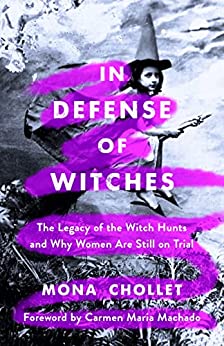
In this article I reframe my understanding of feminism through the lens of Mona Chollet’s In Defence of Witches, and reflect on how my psyche as a woman today is still deeply influenced by the effects of the witch hunts in mediaeval times. 

Continue reading “Life Still Shaped by the Witch Hunts? by Eline Kieft”

Medieval Torture Devices and the Goddess by Colette Numajiri

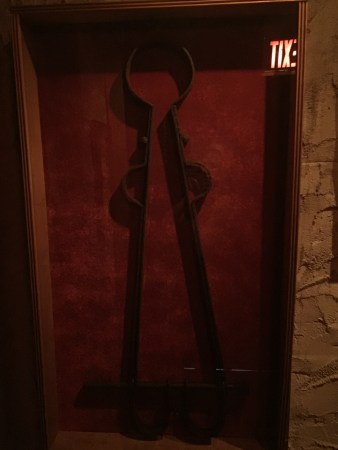
There is a campy dinner and tournament “castle,” Medieval Times, in our city in which you can eat and watch a fully- costumed period play complete with stunning Spanish horses in an indoor arena. Inside of this building, for a mere additional $2, there is a “torture chamber” attraction, a mini museum with a dozen or so of actual torture relics used in the Medieval Inquisition (or accurate looking replicas of them!) along with illustrations from the era.

In this collection they have what appears to be an authentic orifice-expanding “pear” and a “breast ripper” (see and read photo below) among other devices meant to inflict pain and often death to those with the misfortune to be accused.

The actual “Medieval Times” period was a horrific and bloodstained era when the NEW ORDER (the established Catholic and new Protestant churches) set out to “Christianize Europe.” They succeeded and became beyond wealthy by creating a WIDESPREAD FEAR of WOMEN, gaining power over more than half of the population and confiscating their money and land.

There is an hour long film funded by the Canadian government called: “THE BURNING TIMES” that tells the story of the people (85% women) that were brutally killed over a 300 year period in what was the WOMEN’S HOLOCAUST.

Continue reading “Medieval Torture Devices and the Goddess by Colette Numajiri”