


Years ago, I remember looking around one day and realizing that I was surrounded by plastic bottles. Of course I already knew it on some level; I had bought them, after all. But it was one of those epiphanal moments – you know, where you kind of freeze, and time seems to slow down, and everything goes a little out of focus. And I realized – yet again – that I had been hoodwinked. That we all have.
Because I felt like I needed every single one of them. Yet somehow – and not that long ago, either – everyone used to get along fine without all these plastic bottles in their lives. Yes, it probably involved more domestic labor; but it also just stemmed from a local, circular economy based on common sense.
See, all these highly convenient plastic bottles are causing huge, highly inconvenient problems. First, creating them alone destroys and poisons the ground beneath our feet. Next, we ship them all over the world, only financially possible through huge subsidies and corrupt labor policies that exploit and devastate whole communities, cultures, and ancestral traditions. And recycling plastic is basically a joke. We should still recycle what we can; but it is not the magic solution to the plastic waste crisis that everyone hoped for. Besides, even with robust recycling programs, most plastic bottles still get abandoned, dumped, or burned, releasing terrifyingly dangerous chemicals and further heating up the planet.
Last but not least – surprise, surprise – it turns out plastic is much, much more dangerous for women than anyone else. Women’s bodies have more fat on them, which stores the harmful, hormone-disrupting chemicals in plastics. Women’s overall health relies more closely upon hormonal cycles. Women also tend to believe we are not socially acceptable without the daily use of (or work in jobs helping others use) a lot more personal care products full of petrochemicals and harmful fumes, and packaged in all those lovely, eye-catching – you guessed it – plastic bottles.
Naturally (un-naturally?), the economy has put few restrictions on any of this; why should it, when there’s so much money to be made, and it’s mostly ‘just’ women’s health on the line? Medical studies weren’t even required to include women until 1993, so much less is still even known about women’s health needs and challenges. Women are the cash cow guinea pigs in this grand plastic soup experiment – and we pay the price, over and over and over.
Basically, plastic sucks.
Well, there’s no going backwards. That’s not how life works. Some (compostable?) plastic is probably necessary now, particularly in certain medical contexts. But it turns out, I wasn’t alone in my epiphany. For decades, a growing movement has been working hard to reduce our dependence on plastic.
I decided, then and there, that I was going to try to eliminate as many single use plastic containers from my life as I possibly could. I had already given up bottled water; so I started looking up easy, inexpensive, and local options for as many of those other plastic bottled products as I could. Homemade herbal teas, salves, medicines, shampoos, laundry soaps, even soda. And it didn’t feel like a burden – it felt… liberating. My kids and I spent an entire Lent trying to use as little plastic as possible, just to see what we could do. (We got really good at remembering our reusable bags when we forced ourselves to carry our purchases in our hands and pockets!)
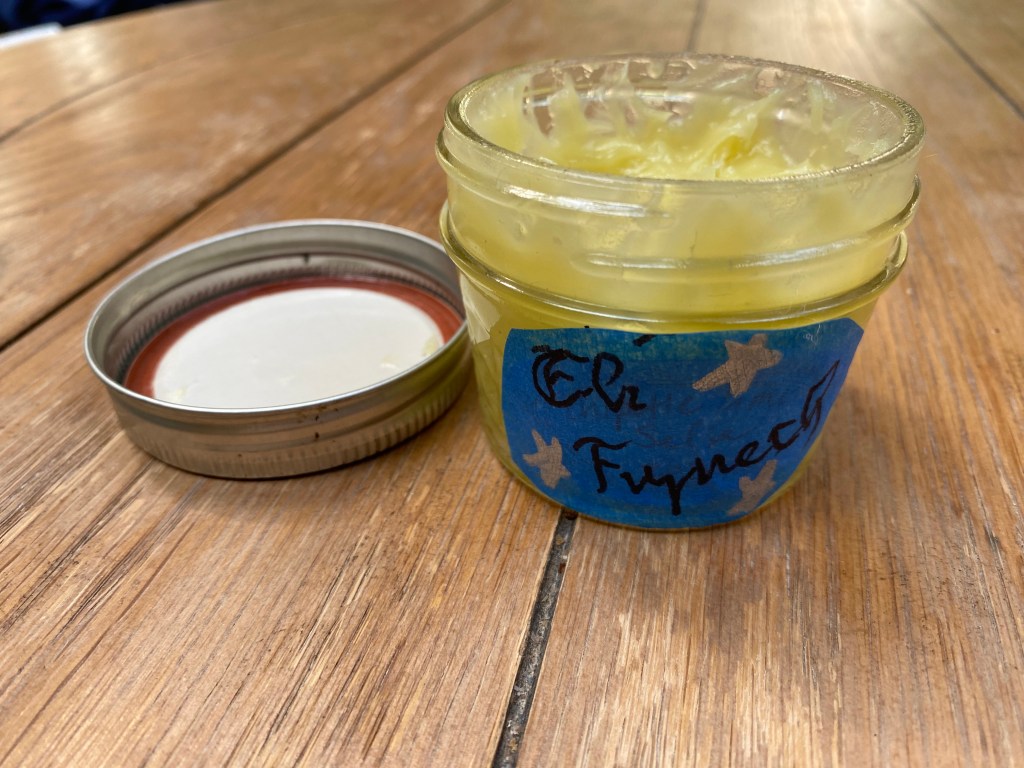
And in the midst of all that, something else interesting happened. I started noticing a pattern – in retrospect, not surprising – when it came to finding these healthy, cheap alternatives. The easiest way to avoid all that plastic, in many of its forms, came down to three basic things: oil, vinegar, and plants. In a word – salad.
There are a LOT of toxic ingredients in the stuff we use daily. Need inexpensive, quick shampoo or conditioner? Try a vinegar based recipe of some herbal extracts specific to your hair and scalp needs. Non-greasy body lotion? Certain oils can moisturize without clogging our pores, including local oils. There are fascinating potential health benefits of certain vinegars and oils, and also all the practical uses. From clogged drains to kitchen counters, from brushed steel appliances to wooden floors and decks, like some sort of superfood-zillas, oil and vinegar seem to work great for cleaning, protecting, or otherwise treating just about everything. Some stores even sell them in bulk (yay, less plastic!). Either way, it still saves money, packaging, carbon, and future wellness to spend a little less of my time watching TV and a little more time mixing up a quick body lotion and storing it in a glass jar.
Okay. So much for oil and vinegar. What about the rest of the salad?
Like my favorite kinds of salad, let’s include both leafy greens as well as whatever else, cooked or raw, goes in a plant-based diet. I should first mention that I absolutely love meat and seafood. You will never find someone who enjoys them more. I just… also care about my health, the happiness of other creatures, and trying to do my part for a livable planet.
Let’s just face this together, friends: we all need to be eating as much of a plant-based diet as we possibly can, for all those reasons. As Michael Pollan famously says, ‘Eat food. Not too much. Mostly plants.’ Yes, like coffee and chocolate, meat has an addictive stimulant in it; but once I weaned myself off my meat addiction, I started to crave vegetables and other plant-based foods. As meat became a small, occasional part of my life, I felt better and better about my health, my kinship with other creatures, and about doing my part for our shared planetary home, in solidarity with communities around the world, and for future generations.
Proverbs 15 says, better a small serving of vegetables with love, than a fattened calf with hatred. Trapped in misery and horror, a lot of the animals we consume would be justified in thinking we hate them. What does ‘love’ look like, in today’s world? Loving our bodies by nourishing them with natural self-care and nutritious foods? Helping men release the toxic masculinity that leads them to choose death by meat over plant-based eating? Planting a tree, or an herb in a pot? Maybe sometimes, love is simple – as simple as a serving of vegetables. As simple as the humble, yet mighty, salad.
Note: this blog is not intended as medical advice.
Discover more from Feminism and Religion
Subscribe to get the latest posts sent to your email.

 Feminism and Religion
Thank-you for this!
Sometimes I think that plastic will take-over our human bodies and develop its own species that will defeat humanity.
On the international level: there are current negotiations for an international plastics treaty. Hydrocarbon corporations, of course of course, are lobbying heavily to prevent an effective treaty, but the aim is to reduce the production of plastics.
This epic battle against plastics has only just begun and we must win it!
LikeLike
Thank you for your comment, AliB! And for everything you do. There really is a LOT happening to address this, all over the world. India banned all single use plastic! We can do this, if we all pull together!
LikeLike
Great post! Like you I am always complaining about plastic and although I do used plastic bags for storage of some items I reuse reuse reuse ad nauseam! Every week when I go to the dump most of the garbage is plastic something… Otherwise, I too use glass…If you ever lived in New Mexico you would never eat meat again… the cattle wreck the land and have all the rights – quite disgusting really – and all that red meat ? Ugh… i am not a vegetarian but I never eat red meat and this trend began in my twenties a life time before NM – I grew up in a meat eating family but once on my own began to turn away from beef because I loved all animals…. had a grandmother who wouldn’t eat meat either – she lived in Chicago for awhile and was exposed to slaughter houses… my mother made fun of her…
LikeLike
Sara, thank for everything you said. Anyone who takes the time to look at the meat industry is horrified. We are on a journey, and we just have to support each other and keep going! Even if it feels like baby steps, every bit helps! Thank you for all you do!
LikeLiked by 1 person
A great post! Our local health food store just opened a whole second store that is almost all bulk and it goes beyond the usual nuts, spices, and grains to include shampoo, cleaning products, etc. They ask that you not use plastic bottles or bags, only glass jars, and they will sell you mason jars if you don’t bring your own. It seems to be doing well and I hope they keep expanding what they offer in it!
LikeLike
Carolyn, that’s fantastic!! These things give me hope!! It’s so important to make it easy – we don’t want to add to particularly women’s burdens or working class burdens by making this extra domestic labor or cost! We can do this, if we keep working together!
LikeLike
Thanks for this. I agree, it is hard to avoid plastic. I have been taking my own bags and shopping at the farmers’ market for years; they are plastic but ones that accumulated unavoidably over the years. It took a while, but (most of) the vendors are used to it now. I don’t buy soup or juice at the market because they’re in plastic. And I give food containers to a friend who cooks for homeless folks. Yet I’m still surrounded by plastic. Always open to suggestions.
LikeLike
Thank you, Judith, for your solidarity, and all you do. It can be such an overwhelming thing to try to tackle! I think we need to throw a wide (plastic free lol) net here, when it comes to tackling this challenge. Individual choices are really important, and can really add up. Policy changes can have huge impacts, like plastic bag bans, and single use plastic bans. Getting involved in local, federal, and even international efforts can help raise awareness and move those policy changes along. Neighborhood efforts can be fun. In my experience, we can try to do everything – we each need to find what feels energizing and fun for us, and start there, just like you have. I’ve included a few links below in case they are helpful. Blessings to you!
https://myplasticfreelife.com/plasticfreeguide/
https://www.nrdc.org/stories/single-use-plastics-101?gclid=CjwKCAjw-vmkBhBMEiwAlrMeFyZxEg3nr8HJytgxt39j0IQa-v4NXC3h9EROXLd8WoRlpYEdd_nUQhoC9dMQAvD_BwE#avoid
https://www.earthday.org/campaign/end-plastic-pollution/?gclid=CjwKCAjw-vmkBhBMEiwAlrMeF58XGLYwc3bAkxsuR-U8D9KEovm5CX1Ty8xx0K5eXUr_Vk0nmcNWdBoCJwgQAvD_BwE
LikeLike
You bring up a very important topic – plastics – in your post. I too try everything I can to eliminate plastic from my life, doing many of the things you recommend. What I find really upsetting is every single product that we buy now, though not necessarily in plastic containers have an ever-increasing amount of plastic packaging surrounding them. I’ve heard that Big Oil knows their days of burning fossil fuels is near an end so they are putting all their research and development into developing more and more plastics which of course come from oil.
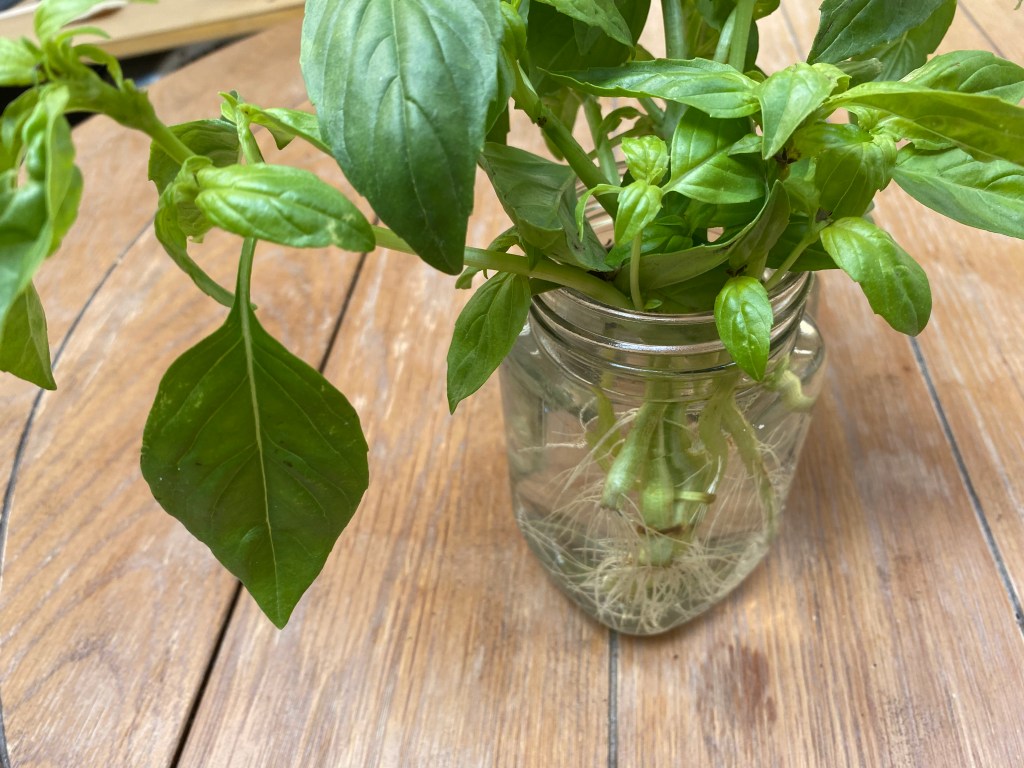
Thanks for the tip on getting herbs to grow roots by placing them in water. I didn’t realize that would work with basil. I have a basil plant going to seed early so I’ll give it a try and start a new one.
LikeLiked by 1 person
I try to eliminate plastics as much as possible, too. I used to make my own hand cream with beeswax and oil, etc. and my hands loved it but it stained my clothes and it was so hard to get the cream off anything I touched. I finally quit making it. I don’t eat meat or seafood. For me it is an ethical issue, since I love animals. Anyway, blessings for all that you do and many thanks for this post!
LikeLike
Linda, thank you for your comments! It’s absolutely true that these homemade things are quite a trial and error adventure, and they often don’t work as well for various reasons. It’s nice when other people can figure all that out for me and just sell it – I just wish they wouldn’t sell it in plastic bottles. I wish we could have more affordable, glass/metal, and refillable/bulk options for so many things. I think more and more people are finding creative ways to address this plastic waste crisis – I hope the tide is turning!
Well done eating sustainably! I agree, it is absolutely an ethical issue, and it feels so good to move in the direction of more solidarity, kinship, and healing! Blessings on you and all you do as well, friend.
LikeLiked by 1 person