

part 1 was posted yesterday
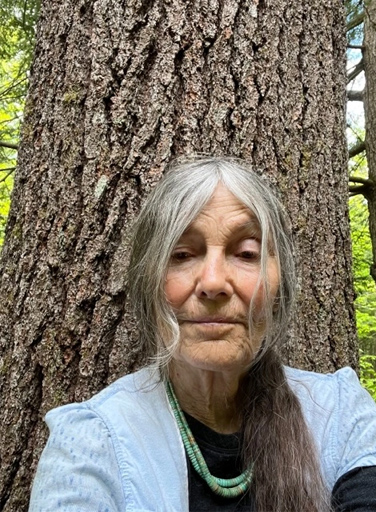
Returning home, I peered around my house; most of my wildflowers are seeding up – only a few columbine, celandine, wild bleeding heart and a riot of Canada anemones are shining their white faces upturned to the sky. What used to be my cultivated garden has gone wild, and I have let my vegetable garden go. As more and more trees shade the house, (A blessing during these hot dry summers) I feel a tremendous sense of contentment. I am doing research on wild plants for some folks, spending time in the woods when I can. Being surrounded by so much diversity offers me hope that even now some wild places will survive – at least for now.
Because one of my beloved dogs is in heart failure, Lucy’s health is my first priority, so we walk as early as possible to avoid Lucy’s coughing and shortness of breath. Later, I walk by myself, grateful that I have this little patch of land to cover a few miles without having to leave the property. It helps that I rise so early. When I can, I head for the forests I love, but the woods and my writing life have had to take a backseat to Lucy’s illness. Since my dogs have helped me survive my life – like nature has, they will always come first.
A few days ago, my cousin called; his high -priced lawyer son is having a second baby in the fall. Although I understood my cousin’s joy, I questioned the choice his son had made. I asked my cousin if he thought this was good time to have another child. Will the air be breathable in ten years? An urgent question. These two already have a toddler… Cousin’s response was defensive; “Nothing will interfere with my joy”. Easy to translate: Dismissed. But I understood his point of view. All I can think of is that this planet reached her carrying capacity in 19 72 and now we are eight billion and climbing…
Every where I go it’s ‘business as usual’, just as if the planet was not in crisis – with a catastrophe ahead that will impact us all. Breakdown. Few are paying attention.
Even the sites that proclaim empathy focus on fantastic individual stories of people who had something ‘miraculous’ occur – no one mentions the every day losses that for many of us are overwhelming. Silence is a form of dismissal and leaves those of us who feel earth grief alone, with no one to act as compassionate witness. Are these articles/stories supposed to be uplifting or are they nothing more than another form of denial? I don’t know. A large gap – perhaps a chasm has opened between the contents of many of these articles and the life I live.
Recently, a kind man wrote me an email stating that he was in awe of what I knew about nature’s processes. Awe? Quite a compliment, but certainly not true. I responded by saying that ‘all I do is to pay attention’… and what I see is that every tree that hasn’t been slaughtered by the logging machine has some kind of disease or is burning, the skies are full of haze, rivers and streams are disappearing, algae clog vernal pools and ponds, destructive insects are on the rise. Birds and animals are under siege. Human Violence is endemic, empathy absent. I could go on, but who would listen?
Paying attention could bring breakdown into the foreground helping us to begin to solve the crisis we are living by mobilizing governments and ourselves to implement genuine change together. But waking up also brings pain/anguish to the forefront. It also means that each of us will be asked to make difficult perhaps frightening changes in our own lives to adjust to a very uncertain future. The age of the Anthropocene is so focused on distractions, comfort and keeping life the same that I don’t see this happening and wish I did.
We all fear change and perhaps if we could acknowledge these personal and collective fears and begin to discuss them honestly without sugarcoating it might be enough to help us gather as a genuine world community, no longer focused on the individual but the Earth and ALL her inhabitants.
Maybe now, I’m the one just dreaming.
One truth I have gleaned from my life as a naturalist is that without turning to the planet and our elders (like trees and lichen) to teach us how to live, our future looks dim indeed.
Discover more from Feminism and Religion
Subscribe to get the latest posts sent to your email.

 Feminism and Religion
I also am stunned at the “business as usual” approach to life of so many in this dire time. I also had a dear dog companion named Lucie. Yes, dogs help to save our lives. Their old age is so precious, and their loss so heartbreaking. May you still have many early morning walks with her.
LikeLike
Oh I am so grateful that someone responded to this business as usual approach…Thank you Beth. Yesterday more flooding, thunder showers, unbreathable air, heat and people out in kayaks and speed boats on the ponds, walking down highways – just as if these weather changes/dangers weren’t occurring – when a flash flood (like the 50th in about a month) took out another road the response was ” this is crazy”. NOT ONE WORD ABOUT CLIMATE CHANGE – I could go on here but what’s the point? The irony for me is that so many people migrated to Maine ‘to get away’ from these changes and guess what – here we are with floods and unbreathable air from horrific forest fires – there is no place left to go – Thank you for your kind words about my Lucy who is sleeping after our early morning walk – I walk before dawn and then take the dogs for about a half mile meander at their pace – the continuous fog – is at least cool. and Lucy gets a little exercise. Like me she finds this weather intolerable.
LikeLike
Yes, yes, yes! I get so frustrated at all the resources being spent to “adapt” to climate change, when it’s clear that no adaptation will keep us safe from its effects. I think people are lulled into a false sense of security by the idea that there are a few small changes we can make that won’t interfere too much with business as usual and that will make everything all right. Information about “adaptation” is all around us, but there is very little that gets through about what big changes will be needed in not only how we live, but how we think about ourselves, non-human living beings, and the Earth, what we value, how many material possessions are really enough, to begin to turn the situation around. I think people automatically assume that change is bad, but perhaps those changes would really be good and lead to more happiness and well being across the globe. But we need visions of how everyday life in a world with those changes would really be and the joys of living on a sustainable, healthy planet.
LikeLike
Yes to this comment! You are so right – the illusion that a few little changes that won’t interfere with business as usual will be enough – they will not – we need more people – more feminists with this perspective – as far as change goes – well earth changes are scary for a good reason – here it’s been the archetype flood for a month, roads out deluge after deluge – but maybe these change will help us to wake up? And we do need visions of how everyday life in a world with those changes would be like.
LikeLiked by 1 person
Yes to Beth and Carolyn and what you say here – “Paying attention could bring breakdown into the foreground helping us to begin to solve the crisis we are living by mobilizing governments and ourselves to implement genuine change together. But waking up also brings pain/anguish to the forefront. It also means that each of us will be asked to make difficult perhaps frightening changes in our own lives to adjust to a very uncertain future. The age of the Anthropocene is so focused on distractions, comfort and keeping life the same that I don’t see this happening and wish I did.”
I applaud the efforts at restoration and re-wilding I mentioned in my comment on Part 1 but unfortunately no these efforts are not widespread enough. But I do see these efforts as a counterbalance to all the mitigation efforts which only seek to maintain the status quo of a capitalist economy and its necessary consumerism. Instead of building small communities which can live together without need for constant traveling to and fro and public transportation systems to provide transport when needed the whole world is focused on electric cars. The auto industry is very happy about that as they will continue to reap huge profits while the children and women in the Congo suffer as they mine the needed cobalt for all the batteries under horrendous conditions.
I believe you have hit on a wonderful idea with this suggestion – “We all fear change and perhaps if we could acknowledge these personal and collective fears and begin to discuss them honestly without sugarcoating it might be enough to help us gather as a genuine world community, no longer focused on the individual but the Earth and ALL her inhabitants.” Not sure how to accomplish that but it is worth thinking about and then acting on.
There really is no where to run to escape our collective societal collapse.
LikeLiked by 1 person
Oh you are so right Judith.
LikeLike