

Introduction to Kapka Kassabova’s ‘Honey Sellers‘, by Laura Shannon
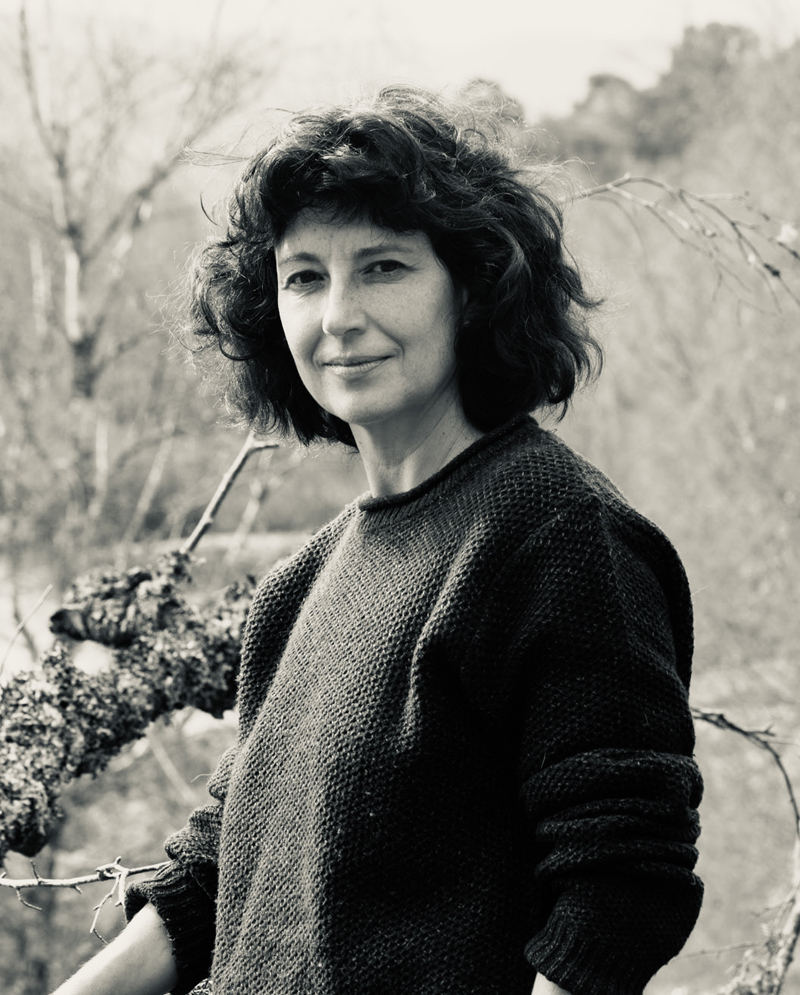
After my recent review of Kapka Kassabova’s latest book, Elixir: The Valley at the End of Time, I am delighted to share an excerpt from Elixir with FAR readers here, by kind permission of the author and the publisher.
Elixir is an astounding book, revealing a little-known world of foragers, healers, and mystics in a remote corner of Bulgaria. Here people live in profound connection to nature, with respect for herbs and the earth and older women, echoing the peaceful Neolithic civilisations which once flourished in the same valley Kassabova describes.
Kassabova bears witness, in heartwrenching detail, to the scars wrought upon this earth-reverent society by an exploitative patriarchal ideology, yet she also shows how a precious essence survives, distilled from the understanding that all beings are connected in the web of life.
It’s the ethic that Carol Christ (founding contributor to FAR) articulated in her book Rebirth of the Goddess with her ‘Nine Touchstones of Goddess Spirituality’: ‘Nurture life. Walk in love and beauty. Trust the knowledge that comes through the body. Speak the truth about conflict, pain, and suffering. Take only what you need. Think about the consequences of your actions for seven generations. Approach the taking of life with great restraint. Practice great generosity. Repair the web.’
In a previous post, I discussed how the Nine Touchstones relate to traditional women’s ritual dances of the Balkans. Elixir shows how the Mesta valley healers instinctively live by similar principles. In her spellbinding prose, Kassabova has given us an immensely encouraging gift, sharing a glimpse of people who naturally embody such a worldview. I hope FAR readers will enjoy this excerpt, then go on to read Elixir and enter this secret world for themselves. –Laura Shannon
______________
The honey sellers appeared suddenly at a roadside market. Alpine pastures opened up behind them in quick succession, a show the Earth had put on in an outburst of genius for its own delight.
At the market was everything that the mountain produced, including mursala. I had missed it, even if I admitted that a break in our relationship in favour of juniper had been good for me. It was late summer, the first of the pandemic. Spring had come and gone, the stone flower too.
I had landed just the day before quarantine for arrivals was lifted. In the capital, there were mass protests against the mafia state, with masks – a new sight.
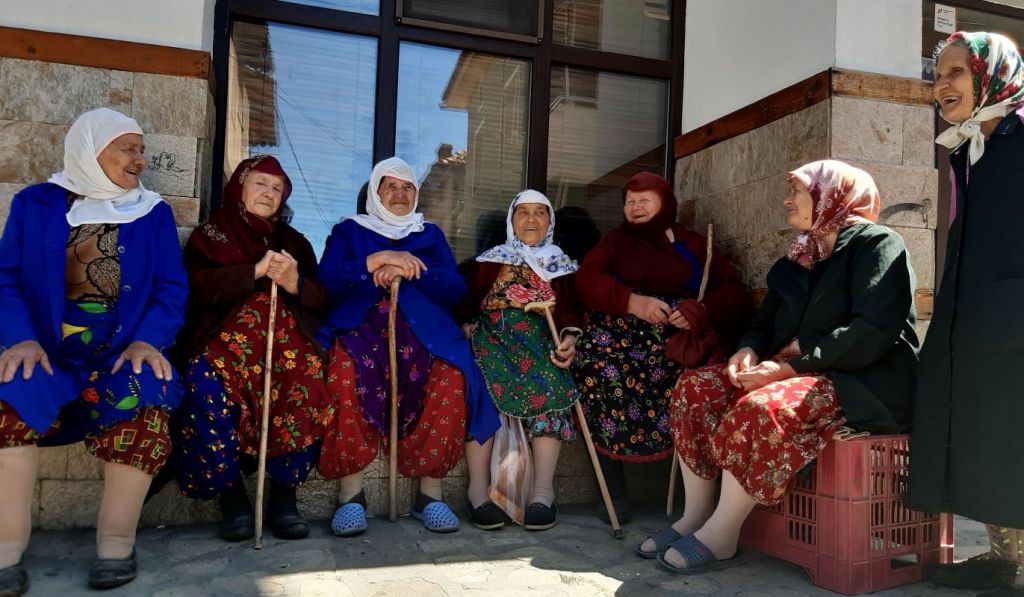
On the stalls were honeys, syrups, jams, milk, yogurt, butter and cheeses – fresh and matured from cow, ewe and goat – dried and fresh berries, walnuts, hazelnuts and almonds, broad beans and dried porcini. The sellers were Pomak women, with fair skin burned by decades of summer toil without sunblock, their hands huge from planting, sowing, hoeing, digging, weeding, watering, harvesting, shelling, de-stoning, drying, stringing, milking, boiling, preserving, birthing, killing and cooking. I knew nobody in this highest part of the river, but seeing these women, I instantly felt at ease.
They extracted round cheeses from chilly bins and sliced off generous chunks as tasters, on the tip of a knife, or scooped a spoonful of honey for you to lick. Everything was grown, soured, sweetened and shaped by their hands. The cheeses were creamy with tasty grasses. Their speech stroked me with its archaic lilt – the preserve of the Mesta Pomaks. But behind this gentleness was the familiar steely note. Their power was not on display, only the fruits of their earthly work, yet behind them was the mountain. Always, the mountain.
I filled the car with jars of sheep’s yogurt and blueberries. The road ran south until it converged with the first miles of Mesta. After the market, solo women with individual roadside stalls popped up, like fairies. Occasionally you saw a man at the stalls but nobody bought from the men, people only stopped for the women.
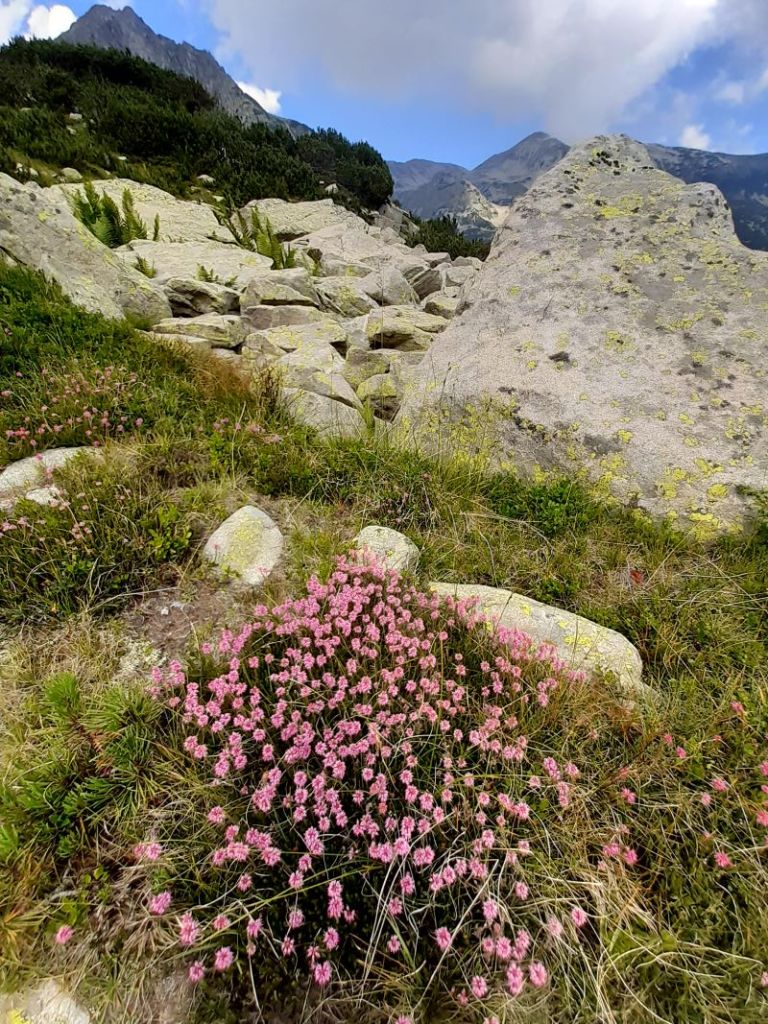
You passed places like the titles of unwritten stories: Saint Petka; Arab Peak; Yuruk Mound; The Horned One; The Treasure. The mountain kept them pressed between the pages of its hills.
Struck by the arcadian meadow behind the last seller, I pulled over. She was smiling already. I bought a jar of caramel-like pine syrup.
Her granddaughter picked berries in England. Her daughter was a nurse in Germany.
‘It’s better for them over there,’ said the honey seller.
I asked her name.
‘My name is Zaidé. I’m from The Birches.’
Ah! This was Metko’s aunt. She was delighted that I knew him.
Later, I learned Zaidé had been battered by a soldier with the butt of a rifle. She’d been in that march across the hills to Kornitsa.
The travellers who stopped to buy the ecologically pristine food made by Zaidé and the others didn’t know what these women had been through, and didn’t care. They haggled, tossed money to the sellers whose unflappable grace highlighted their customers’ arrogance, then squeezed back into their cars en route to Greek beaches. But not this summer. This summer, the border was closed because of the pandemic and the road was empty.
Something came full circle that summer. Resistance to the communist mafia state had been initiated in the 1960s by the Pomaks of Mesta with great sacrifices at the time and no recognition later. Sixty years later, new resistance to the oligarchic mafia state would lead torepeated elections that would bring it down. It had taken Zaidé’s entire life.
I said goodbye to Zaidé, but not before she piled the top of my yogurt jar, which I had opened to eat, with a thick mint syrup.
‘Because I have a lot of everything and it’s the thingiest thing on this earthly earth,’ she waved me off with her big hand, ‘to give a soul something to eat.’
The fortifying syrup was prepared by boiling large quantities of wild mint with mursala and sugar. I can’t forget the flavour of her mint and mursala syrup, and her pine syrup which I ate every day until it was gone, even after the many other faces and tastes of the valley. The taste of pine and mint merged with Zaidé’s face, with her steely blue eyes under the headscarf, like a clear note of welcome struck by the birth-mountain of the river.
‘Honey Sellers’ is reprinted by permission from the award-winning book Elixir: In the Valley at the End of Time © 2023 by Kapka Kassabova. Out now in paperback from Graywolf Press. Kassabova’s previous books of narrative nonfiction include Border, To the Lake, and Street With No Name. Visit Kapka Kassabova’s website here.
Discover more from Feminism and Religion
Subscribe to get the latest posts sent to your email.
 Feminism and Religion
Thank you Laura for this. The book sounds delicious. I have a very side-ways question: does anyone know why Carol had only nine Touchstones? It must have been a conscious decision.
LikeLike
That’s a good question, Judith. I had not yet met Carol in 1998 when she was writing Rebirth of the Goddess, so I don’t know if she considered more than nine Touchstones during that process. Perhaps some of her older friends can shed some light on that? Otherwise I can look in her papers for the Rebirth manuscript and drafts, but that will take some time.
I’m interested to know why you ask. Would you add more Touchstones to Carol’s original Nine, and if so, what would they be?
LikeLike
Good question. I haven’t thought about another Touchstone, I’m thinking numerologically. Seven Directions. 8 Sabbats. Ten Commandments. I know there is a discussion about whether 9 or 10 is the end of a cycle. Perhaps she didn’t think of another one. Or perhaps to emphasize that they are Touchstones and not “Commandments” (which as you know is a bad translation)?
LikeLike
Love. Love. Love. Reading this has me in tears. And my HEaRt feels kinship, solidarity, and gratitude. How Wisdom Speaks HERe! Sawbonna!
“Kassabova bears witness, in heartwrenching detail, to the scars wrought upon this earth-reverent society by an exploitative patriarchal ideology, yet she also shows how a precious essence survives, distilled from the understanding that all beings are connected in the web of life.”
LikeLike