

This was originally posted on October 1, 2012
What is a Goddess Pilgrimage and why are so many US, Canadian, and Australian women making pilgrimages to ancient holy places in Europe and Asia? The simple answer is that women are seeking to connect themselves to sources of female spiritual power that they do not find at home.

Traditionally pilgrims leave home in order to journey to a place associated with spiritual power. “Leaving home” means leaving familiar physical spaces, interrupting the routines of work and daily life, and leaving friends and family behind. For the pilgrim, “home” is a place that has provided both comfort and a degree of discomfort that provokes the desire to embark on a journey. The space of pilgrimage is a “liminal” or threshold space in which the supports systems of ordinary life are suspended, as Victor Turner said. A pilgrim chooses to leave the familiar behind in order to open herself to the unfamiliar—in hopes that she will return with new insight into the meaning of her life.
For feminist pilgrims, “home” inevitably involves the institutions of patriarchy that frequently intrude into personal relationships, structure the conditions of work, and deform the spirit. The feminist spiritual seeker desires to leave patriarchy behind. She sets off hoping to find a pre- or post- patriarchal world, a world in which female power is honored, and she is seeking the Goddess.
Because pilgrims generally leave home alone, it may seem surprising that Victor Turner named “communitas” as a central element in pilgrimage. In The Canterbury Tales, the pilgrims travelling together tell their stories. So too, on feminist spiritual pilgrimages, women tell stories. For some, the feminist community that emerges on the pilgrimage is the first they have known in which their stories, their questions, and the unspoken desires of their hearts are acknowledged. Even for those who have been part of feminist spiritual communities at home, a pilgrimage community is different. In the luminal space of the pilgrimage no one has to take a call from work or to leave early in order to tend to the needs of family members. Pilgrims have “set aside” time and space to focus on spiritual questions. They tell their stories to each other not to “pass the time” or to “fill in space,” but rather to search out the meaning of the story.

Place is an important aspect of pilgrimage. Pilgrims leave home, not only because they are seeking “something more,” but also because they think they know where they may find it. Shrines of saints are said to be places of extraordinary power. North American and Australian women have been cut off from their ancestral connections to sacred places, and do not yet have traditions that connect them to the sacrality of their adopted lands. They are drawn to places where others have experienced the sacred as female—sacred caves and mountaintops, Goddess temples, shrines of the Black Madonna. Visiting sacred places of the Goddess while inhabiting luminal space, in the company of like-minded women, feminist pilgrims open themselves to revelation. As they walk on ancient paths, climb into the womblike spaces of sacred caves, and set their offerings on ancient altars, a knowing that had been intellectual enters into the cells of their bodies. Some receive insights that come in a flash. For others, the meaning of the journey unfolds over time. Few are disappointed. She is there.
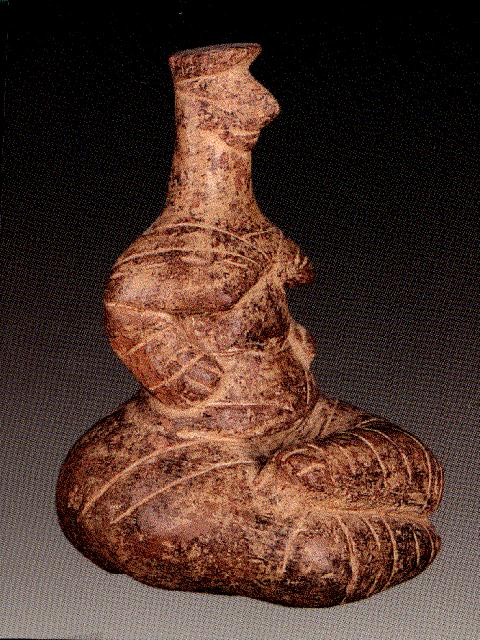
FAR’s own Laura Shannon has continued offering Carol’s pilgrimages to Crete through the Ariadne Institute .You can read Laura’s blogpost discussing it here.
Discover more from Feminism and Religion
Subscribe to get the latest posts sent to your email.

 Feminism and Religion
I would have liked to go with Carol on a pilgrimage in Crete. Her Powerful connection to the Goddess and Nature grounded her in a spirituality that I can still feel on a visceral level. I am getting old and find I have less desire to travel even if I had the money. I also have animals/plants and this too complicates matters. These days brief forays into new untrammeled forests (where I can find them) offers me an opportunity to move into another way of experiencing time… I always choose the lowlands where water flows…. ironic after a year of the worst flooding I have ever experienced!
LikeLiked by 1 person
So good. Sharing on the divine feminine app which lists these pilgrimages. (free to get info).
LikeLike
I have always been drawn to Greece.
LikeLike
I think it is nice to go to sacred sights though do we need to go to sacred sights to realize who we? How about discovering who our central goddess is in this lifetime, though this discovery you will see how you are a personality match for her. About a month ago I was lying in bed and heard very clearly, Hathor, Hathor and knew I had been given a message, there is something to this I thought. The next day I went onto the computer and looked at the personality traits of Hathor and discovered that she loved beauty, dancing, so on and so forth, I knew straight away that these were my personality traits. Later I shared my story with a friend, who is a shamanic practitioner, she told me that we all have a central goddess. you might like to check this out, I have no doubt that your personality too will be a reflection of your own central goddess.
LikeLike
Some of you may remember my posts on my COVID experience in Crete while on the Goddess Pilgrimage with Laura Shannon and my sister pilgrims a few months ago. The Heroine’s Journey was very real for me, leaving home, meeting ogres and dragons, drawing the sword from the stone, and returning home with the elixir. Yes, it was a liminal time but it was one of the most transformative times of my life.
LikeLike