

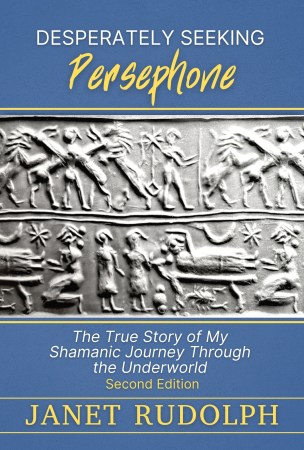
The myths of the descents of the Sumerian Inanna and the Greek Persephone to the underworld have fascinated and inspired women for millennia with their violence and betrayal, leaving behind all you love and that hold you up, and facing your deepest fears, even death. We recognize our own traumas in their struggles and seek guidance as to how to navigate our ascents back to wholeness and well being in their stories.
After her own experience of childhood abuse and stranger rape as a young woman, Janet Rudolph, one of FAR’s co-weavers, also pored over the myths in hopes of finding a helpful account of their journey home. “Once I had tumbled metaphorically, literally and mythically into the thorny quagmire of the underworld, it was devilishly hard to escape. I felt lost. I needed a guide, a role model to find my path outward”(xii). The problem is, Janet says, “The stories of their return are glossed over. There is no detailed story called From the Great Below Back to the Great Above” (15). Until now in Janet’s recently re-published book, Desperately Seeking Persephone.
Instead of simply wondering how Inanna and Persephone made it back from the underworld, as many of us do, Janet asked them. In fact, she invited them to a fantastical pajama party, including cocoa and blankets and followed every pathway they opened for her. “Hell as a place had never been a concept in the Sumerian and Greek worlds of Inanna and Persephone. But hell, as an emotional state of trauma, helplessness, darkness, and hopelessness, was a space we had occupied together. Henceforth, I decided we would call ourselves the Hellies Club to mark the time we had spent in the underworld” (23).
Now, decades and many shamanic experiences later, she has filled in the story of her return, her ascent back to the upper world from the underworld, as magical, dramatic, and adventure-filled as any myth, and given us signposts to make our own way in a book that is truthful, honest, open-hearted, mind-opening, humorous, and enlightening.
Signpost #1. Be open to all pathways that might hold answers, to all those who cross our lives at just the right time.
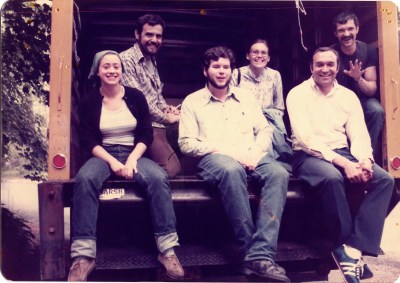
Inanna and Persephone listened deeply to Janet’s story and promised to find her a Mystery School, like the ancient Greek Schools based on Persephone’s own Eleusinian Mysteries. “Trust me. I will find you a mystery school. It will be a call to action, to experience. Perhaps some fun as well” (32).
Janet’s first step directed by these two pagan goddesses was towards a Catholic priest, Father Ted, who ran an an educational program to which Janet was assigned as a teacher. He also introduced Janet to Sr. Compassion, an artist nun who also lived her name. Their loving influence was healing enough to enable Janet to fall in love and marry. “I think the most important thing about this stage of my life is that I learned about love. What Ted started; my family continued” (50). And, as soon as this lesson had been implanted, Father Ted disappeared.
Signpost #2. Make friends with death, “that way it cannot haunt you” (108).
Finally, 18 years after Persephone’s promise, Janet was led to a mystery school run by a husband and wife team. “The central theme of any Mystery School is to teach people to face their own fears. Usually that involves facing our own mortality” (63). But the message was not only about our bodies dying physically. “It is dying to old ways in order to let in new ones. It can be transformational if we embrace our deaths, thus making our lives less fearful and more full” (109.)
Her most meaningful means of transformation was the “original baptism,” or bathing, in which apprentices would “go into the waters in the dark of night and come out at the dawning of day. The symbolism is the cycle of experiencing the darkness of death and then the light of rebirth” (65). Fear and cold caused her to shake uncontrollably, which reminded her of her rape “but here is the biggest and perhaps the most important difference. In the case of bathing, it was a pathway I chose to take. It was the pathway that brought me face-to-face with my fears. I could now understand how it was that Inanna chose to go face her sister, Ereshkigal, Queen of the Underworld” (66).
Janet shares with us that this journey was not easy, was not without risk, and does so delightfully by letting us in on what she was thinking. When she is first plunged into icy waters while “bathing,” we hear her say to herself “What the friggin’ H am I doing here? How long does it take for frostbite to settle in? How much will the antibiotics cost when I get bronchitis again?” (58).
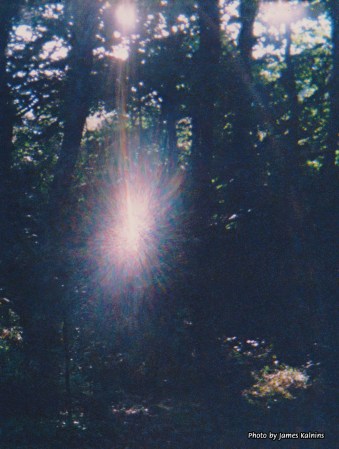
During the time at the Mystery School, Janet had other transformational experiences that challenged traditional ideas of everyday reality, expanding her understanding of the forces and beings with whom we share the Earth. During one trip, Janet, her teachers, and her fellow apprentices were visited by the three bright lights, who one of the Mystery School leaders identified as the Archangel Michael. With all the mystery and adventure, Janet’s attitude soon became “Here I was fulfilling my dream. In a few short months I had gone from being a bored, depressed, suburban housewife to Indiana Jones level adventure” (97).
During this time, Persephone and Inanna brought with them the three Norns, Norse goddesses in charge of human destiny. They told her, in their unique way of each speaking a different version of a word, “all is movement/flow/dance.” “You are the dancer/performer/originator and you can influence your own dance if you choose/opt/desire” (102).
As Janet explains, “The most overarching lessons that I’ve learned is that energy at its most basic is simply movement involving particles, molecules, and atoms. How I experience that movement…the distinguishing aspect is what’s coming from me” (94).
But she also learned valuable tools that she shares in detail in the book with us, her readers, about how to focus our attention, how to step outside time for revelations, the “triple secret of mudra, mantra, and mandala” (59). She also explains three Mystery School teachings that she still follows today (106):
- Look at the world through youthful “baby eyes” that see wonder and amazement in even the more “ordinary” aspects of life.
- Always speak the truth.
- Do all with an open and loving heart.
To learn about the rest of Janet’s shamanic adventures, read Part Two, to be post tomorrow.
Source: Rudolph, Janet. Desperately Seeking Persephone, FlowerHeartProductions.
Discover more from Feminism and Religion
Subscribe to get the latest posts sent to your email.

 Feminism and Religion
Thanks for this review, Carolyn. I love Janet’s book and recommend it to all FAR readers and beyond!
LikeLiked by 2 people
Yes, I love the book, too, and especially how Janet approaches everything as an adventure!
LikeLike
Carolyn this is an extraodinarily detailed review of Janet’s book (that I read too). Well done! I wonder if the second post will address the necessity of periodic returns to the underworld? I think it is very important that we understand that women will make this journey more than once if they are living in their own skin, and not in denial of the necessity of learning to deal with fear and death. There is another aspect of Persephone’s story that intrigues me and that is the idea that we can see Persephone’s journey modeled in nature by the seasons… the vegetative return of spring ephemerals and emerald green in the spring, the flowering, the heat, and then the slow letting go symbolized by the dropping of leaves into what for me is a forever winter with too much snow. I live this story every single year in one way or the other. One more note – I also have an idea the Hades realm could be compared to the underground mycelial network that supports all life – entering that realm is opening to mystery –
LikeLiked by 1 person
I don’t want to give away any spoilers, but Janet does address the lifelong aspects of her journey and I quote her in the second part! So you’ll get to read her take on it. And, yes, seeing the story of Demeter and Persephone in terms of the cycle of the seasons adds so many layers of understanding to our relationship to it, and to our own journeys to our own Underworlds. I hadn’t thought of Hades realm as the mycelial network but that is a fascinating idea, to see it as full of and necessary for life instead of a place of death, just death itself is an important element of the cycle of life, death, and regeneration.
LikeLiked by 1 person
Persephone has been framed as a dark Goddess, I see her as a brilliant archetype within me who with her sonar radar allows me to navigate the darkness, she is my super star!
LikeLiked by 1 person
Thanks, Cate! What a lovely image of Persephone! If you haven’t already, you might enjoy reading Charlene Spretnak’s Lost Goddesses of Early Greece in which she uses various evidence to excavate the original stories behind some of the Greek myths. In her version of Persephone’s story, Persephone is not abducted, but rather goes willingly to the Underworld to initiate lost souls into their new world.
LikeLike
Thank you Carolyn. Yeah, Many years ago I was learning about Goddesses within us. Persephone has sonar radar, she sees moves within the depth of the unconscious unfettered, she is amazing! Persephone is our go too Goddess, to support us in navigating our unconscious mind assisting us in healing ourselves. Her comfort in working with our unconscious is amazing, indeed she has sonar radar, totally unscathed by anything she sees as she glides through our unconscious. I carry this Goddess archetype within me, many do that had very difficult childhoods, she is a super hero Goddess!
LikeLiked by 1 person
I love this characterization of Persephone – a super hero goddess! I love the energy of that image, energy we all need right now!
LikeLike