

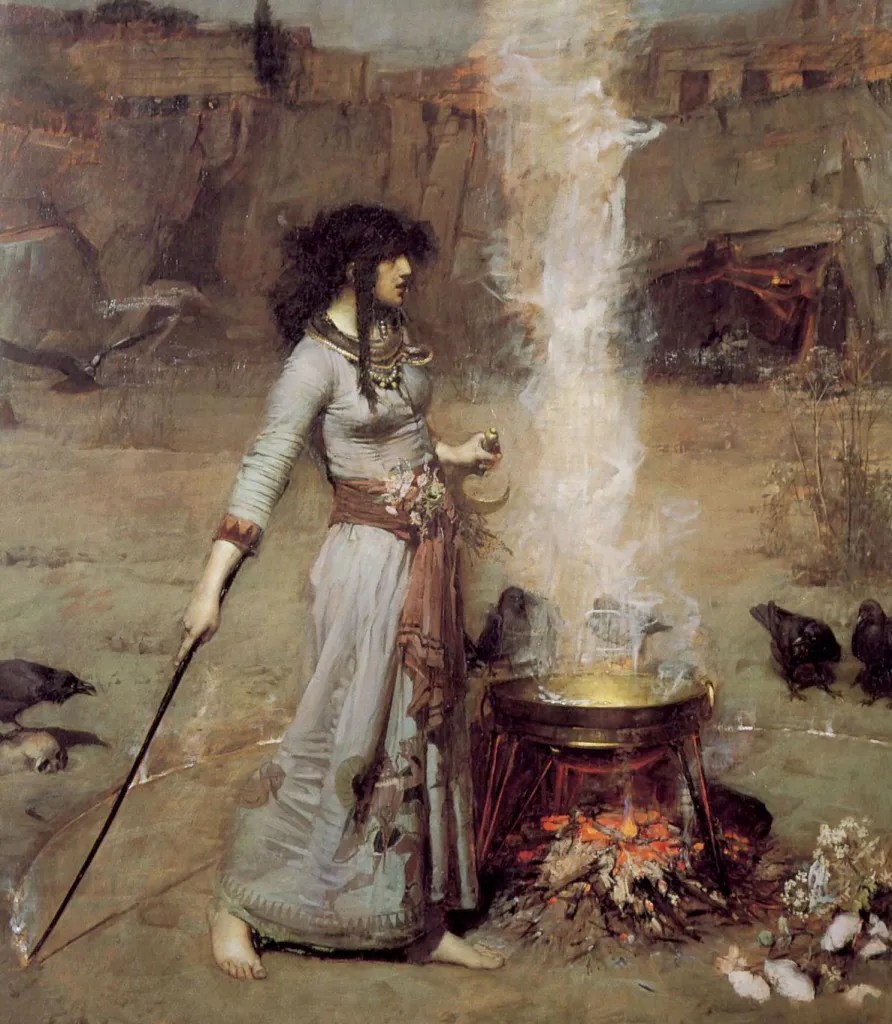
Throughout the modern ages there have been stories, legends, myths, and historical accounts of threatening people, mainly women, who have been linked with the supernatural, with containing powers, engaging with elements that go beyond the natural world, and who decentralize, shake up, and counter mainstream patriarchal systems and groups. And the predominate word which can be translated and transcend languages is that of WITCH. And since we are in the month of October, when it becomes somewhat acceptable for people to deck their houses with items long been associated with witchcraft, this month’s herstory profiles is diving into all things witchy.
So, lets deconstruct what witches do and how they function in history and in modern times. When we look at the origins of magic – at the very core- is the manipulation of the natural world for supernatural outcomings. Those outcomes can be a range – from conversing with supernatural beings, healings, prophecy, alchemy, transformation, and to even holding secret knowledge. The word magic has origins in Ancient Persian and Proto-Indo-European languages with concepts of “being able to” and to “have power.” If we look at ancient cultures, civilizations, and religions we found multiple variations of people and roles being able to contain, control, and weld magic.
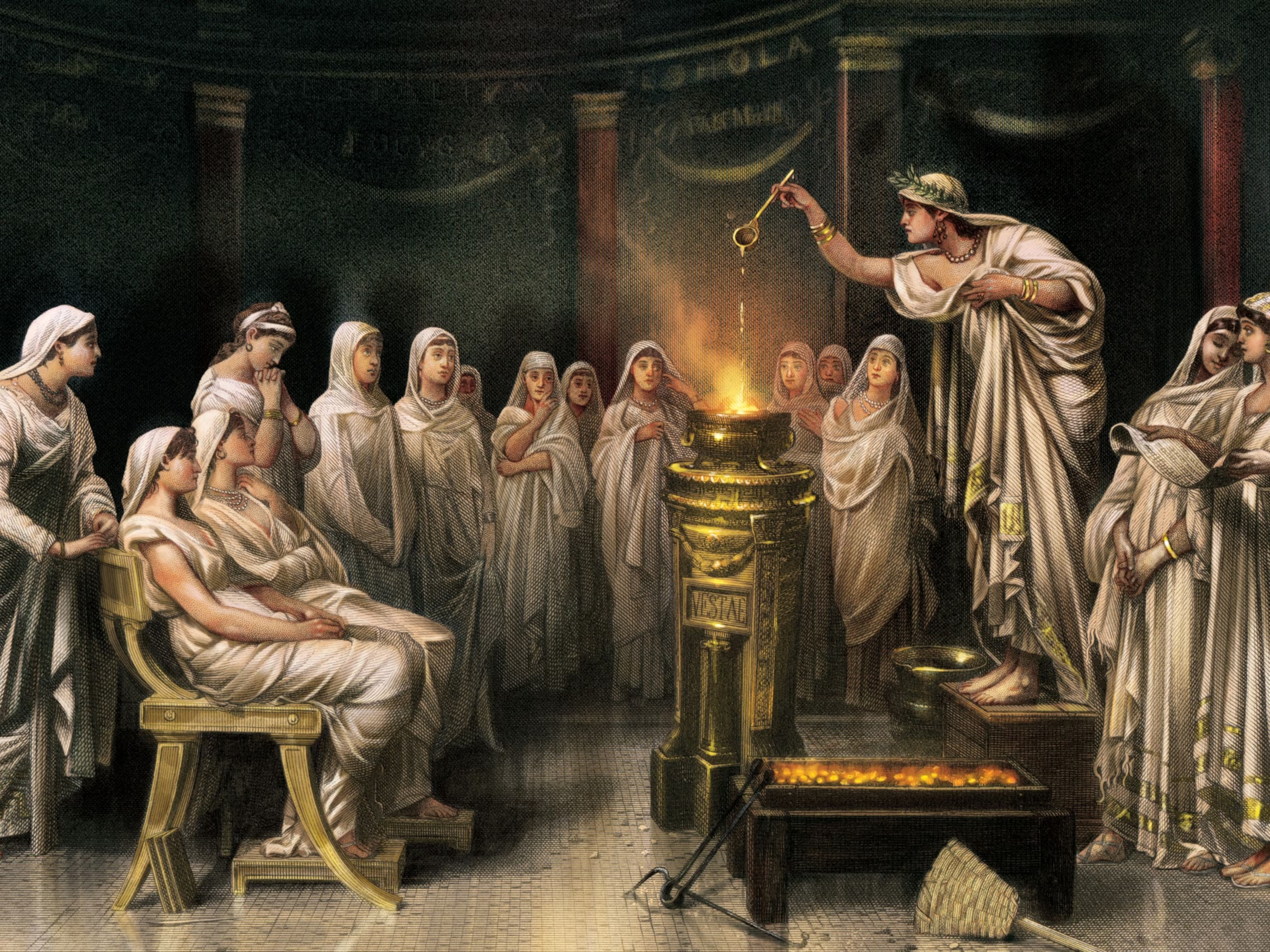
And largely what we see is that magic is used alongside functions, roles, and understandings of religion. Specifically with people who were able to become conduits, facilitators, and guides between humans and the divine.
And yes, we can also find evidence of cases where certain groups are doing the ‘correct’ forms of magic and those that are not. What we also see is how with the rise and fall of cultures and religions blending with systems of power and control- who has access to the legitimate forms of power and magic become important.
And what we also see emerge across time and space is that one gender is lauded as being more prone to performing and participating in “good” forms of power, manipulation, and magic or what will later be renamed ‘gifts of the spirit.’ A second gender becomes the bastion of all forms of other; all forms that will be classified as unwanted, unsanctioned, and unholy uses of power, manipulation, and magic. Before, wise women of the town would be sought out for herbal remedies, birthing of children, keepers of the seasons and stories and equal participates in the relationship between humans and the divine.
With the closing of ranks between who has access to the proper way of magic and the divine also saw the closing of ranks between genders. Those same women who were once sought after became targets and labeled as unnatural, temptresses, enchantresses, and harbingers of darkness; thus rises the Seasons of the Witches.
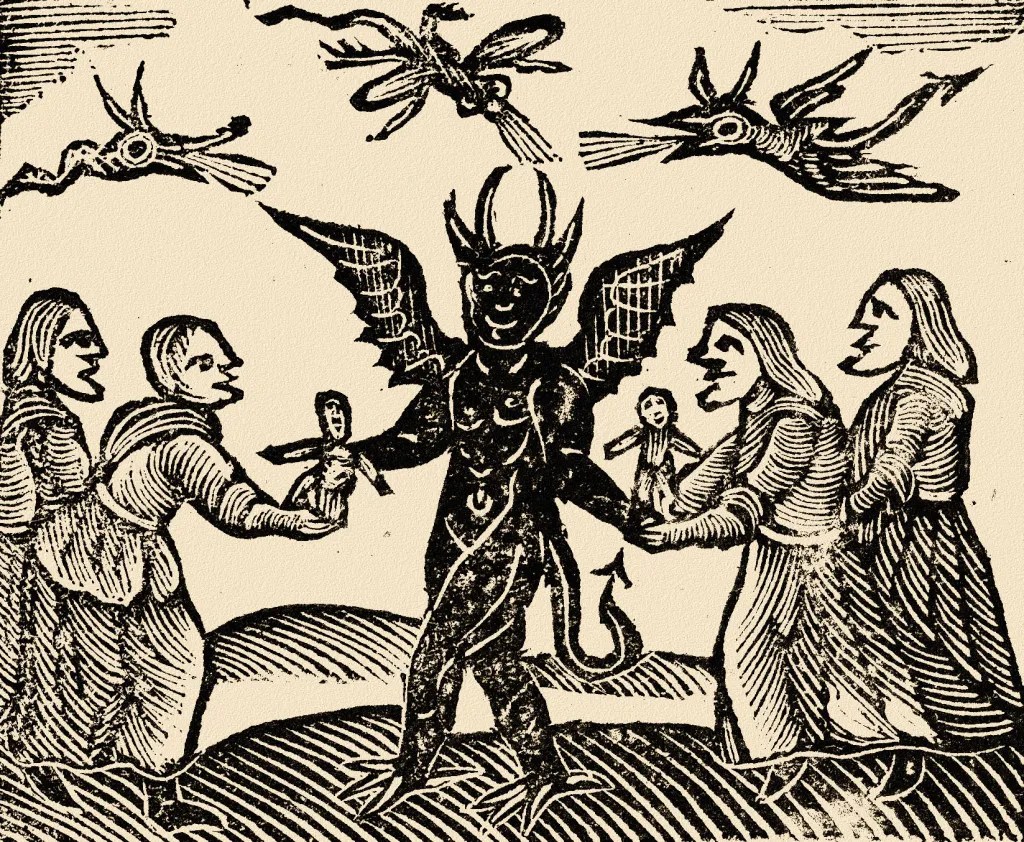
The etymology of the word ‘witch’ is most likely from the old English word ‘wiċċe’ with connection to understandings of “dividing or separating between the sacred” and can also mean “one who practices divination.” Witch becomes predominately linked to the female gender as wizard is to the male gender. The term witch or similar ideas can be found throughout languages, religions, and cultures. Look to every language and culture, there are examples of people and specifically women who weld power unwisely, wrongfully, and unnaturally. Titles like Bruja/Bruxa, Heks/Hexe, Majo, Strega, lamia, sorceress, crone, harpy, saga, and divina.

It becomes difficult to combat hundreds of years of propaganda, including religious propaganda often labeled as spiritual warfare, to find evidence of when women were the leaders, healers, and guides. When witches, brujas, stregas were not feared and hunted but celebrated and part of the very fabric of everyday life.
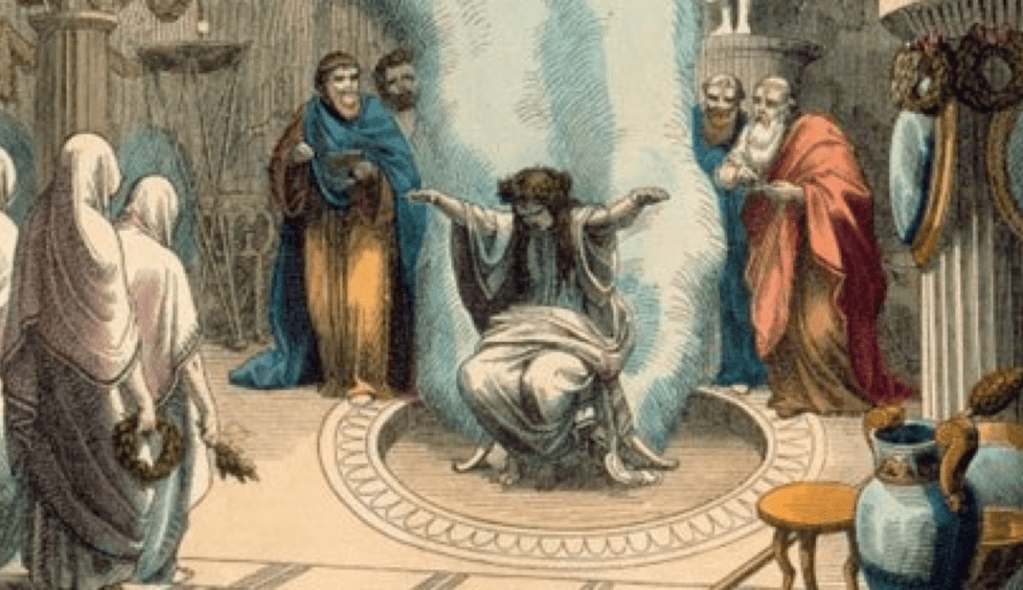
What we can clearly see in history is there came a time where women became targeted for their connection, roles, and functions between the natural and supernatural. In the West, these women become linked to the dark, the evil, the devil. They are to be feared and even to be eradicated. We only need to look to The Spanish Inquisition, The Catholic document The Malleus Maleficarum (The Hammer of Witches), and The Salem Witch Trials.
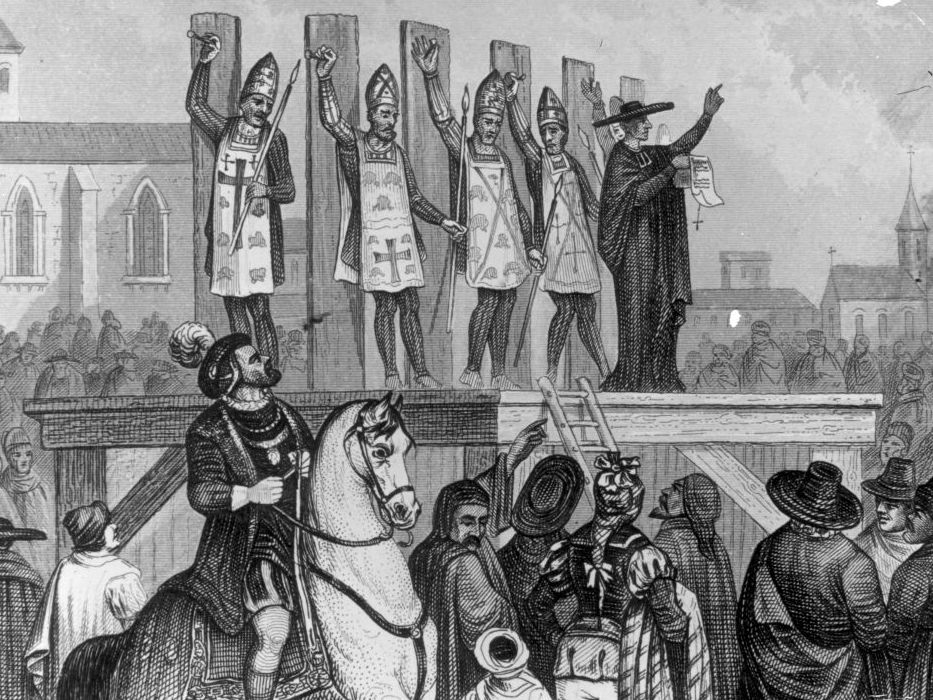
An illustration shows heretics being tortured and nailed to wooden posts during the first Inquisition.
The Spanish Inquisition which ran from 1478CE-1834CE was originally created to reestablish Catholic Orthodoxy in the Spanish territories, to remove heretics largely focused on converts (mainly those of Jewish and Islamic backgrounds), and would eventually include trying to end witchcraft. During this period, over 150,000 were investigated, jailed, and tortured. Estimates are that between 3,000 and 5,000 were executed.
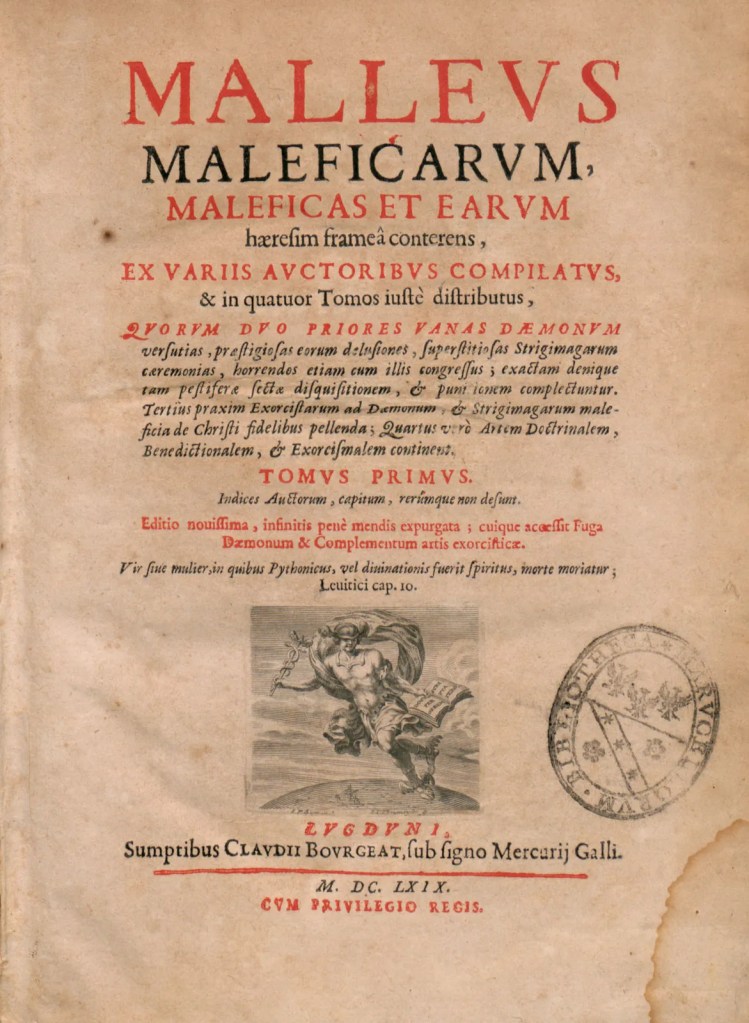
The Malleus Maleficarum is one of the most widely known Western written document on witchcraft. Written and published in 1486CE by Heinrich Kramer, the document outlines the powers and procedures of witchcraft and how to conduct witch trials and eliminate the craft all together. Over 110,000 trials were held between 1450CE – 1750CE. Scholars have found that both men and women were targeted but that women accounted for three quarters of the accused and over half of the trials ended in execution.
While the Witch Trials in Europe was raging, it spilled over across the ocean to the lands of America. The most known is the Salem Witch Trials of 1692CE where two hundred were prosecuted.

Thirty were found guilty with nineteen being hung (14 women and 5 men), one died during torturous interrogation, and five died due to horrible jail conditions. Scholarship and time have shown that the Salem Witch Trials were fueled by hysteria, false accusations, and superstitions.
Society has continued its fascination and paranoia with those that are doing the right forms of religious power and gifts and those that are doing magic and evil. One only needs to look to children’s fairy tales, folklore, and literature to find examples of witches. Some good but mostly bad. The Banshee, The Morrigan, La Llorona, Maleficent, The Evil Queen in Snow White, Hansel and Gretel, Lilith, Medusa, the Wicked Witches of the East and West, and Baba Yaga.

The continual fascination has heightened with the rise of the Harry Potter franchise with Witchcraft and Magic finding new ways to gain back legitimacy and acceptance but also provide another reason to be weary of those living outside of organized and proper procedures, positions, and people.
While I cannot speak to everyone’s beliefs and practices, what I do know to my very core is that all beings regardless of gender have the capacity to find wonder, magic, and the divine in their life. Not only find it but interact with it, if that is labeled witchcraft then so be it. We are richer and more whole when we find those moments of wonder, magic, and divinity.
Discover more from Feminism and Religion
Subscribe to get the latest posts sent to your email.


There was no such word as witch until it was written into the christian bible (king james) during the 1600’s. So ‘witch’ is new. Those who had developed RELATIONSHIPS with natural powers that are a primary aspect of nature have been around since the beginning of humankind – Humans once understood that all nature was sentient and was ‘mother’ to that power and some people made the choice to work with it There is nothing supernatural here. What we call grace or synchronicity is simply nature making herself visible. To ‘manipulate’ is to gain ‘power over’ – we see this in every aspect of our culture today. This human- centered belief is one of our own making to explain what we don’t understand. We cannot manipulate the rest of nature – it is a form of hubris to believe that we have this kind of ‘power over’ a planet that has supported life for two billion years – this is when it becomes clear that ‘magic’ is just another word for patriarchy in disguise .
LikeLiked by 1 person
Very interesting, Anjeanette. I’m not the least bit surprised that it was women who were seen as practicing the “wrong” form of magic. Leave it to patriarchy to try to control women’s connection to the Divine and to nature. I do agree with Sara that the idea of “manipulating” nature is an attempt to have power over nature, which is a patriarchal idea.
LikeLike