

Moderator’s Note: This piece is in co-operation with The Nasty Women Writers Project, a site dedicated to highlighting and amplifying the voices and visions of powerful women. The site was founded by sisters Theresa and Maria Dintino. To quote Theresa, “by doing this work we are expanding our own writer’s web for nourishment and support.” This was originally posted on their site on July 5, 2022. You can see more of their posts here.
Around 1200 AD in Europe, communities of women often called beguines began to form. These women were not nuns, they were devout and devoted to the tenets of Christianity but did not belong to any church. They were independent communities of women who often created their own industry, trade or other means to produce income. They were self-sufficient and generally concerned with helping the poor, especially women. They lived in convents. This was the origin of that word.
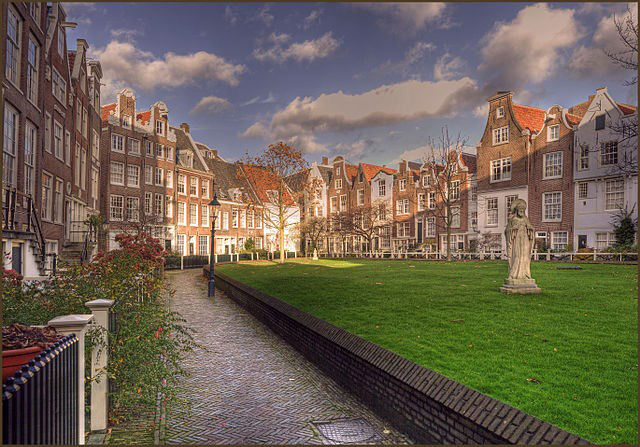
“These women were essentially self-defined, in opposition to the many attempts to control and define them. They lived by themselves or together in so-called beguinages, which could be single houses for as few as a handful of beguines or, as in Brugge, walled-in rows of houses enclosing a central court with a chapel where over a thousand beguines might live—a village of women within a medieval town or city”(2).
I found this a remarkable thing to learn about. Absolutely inspiring and exciting. I had certainly never heard about the beguines. Swan’s book is an exhaustive study of this phenomenon throughout Europe in all its many presentations and representations. Each country had its own flare and character of beguine and even their own names for them. The beguines were all different and excelled at different things. She explores all the aspects with research for support and for the reader to follow further if they so desire. Swan’s theological background enables her to explain things to those of us with less education on that subject, and she also adds in the history to put things into proper context.
The beguines were from every social class and age. They stood out for being self-supporting, independent and “preaching in public and debating with select theologians and biblical scholars”(11).
Feminists in the Middle Ages
Who would have thought that the Middle Ages, often seeming such a dark and unenlightened time for all humans in Europe, would have given rise to such lofty ideals and independence for women.
“These “gray women” —so named for their preferred attire of gray homespun wool with hooded capes—were given the nickname “beguine” in the Low Countries (from the root begg-, meaning to mumble or to speak unclearly), which was originally meant as a mocking term, suggesting these women were hypocritical or deceitfully pious. Powerful medieval men were insulted by the presence of women living independent lifestyles and thus publicly derided them. How absurd were these women to think that they could live without the guidance of a father or husband or cleric? Even teach and preach and handle their own money? Yet for many the term “beguine” soon became a compliment because these women had earned the respect and support of their fellow citizens, and even that of some political and religious leaders”(12).
Swan tells stories of individual beguines like Marie d’Oignies from Brussels, who chose to become a beguine rather than a nun.
“Marie earned a reputation for the efficacious power of her prayer. She was regarded as having the ability to read souls, which meant that she could gaze upon a person and effectively identify the status of their salvation: was the seeker in a state of sin, or guilty of unconfessed sins? Marie’s intent was to heal a person spiritually by calling them to repentance”(24).
The beguines were well known for being highly skilled in spiritual practices, including levitation, ecstatic visions or trance and able to do what we would today call channel or communicate with spirits or the dead. They were also leaders and businesswomen, often developing large communities which welcomed women who were married and did not want to live with their husbands any longer, women who were at risk of being on the streets, of being trafficked or raped.
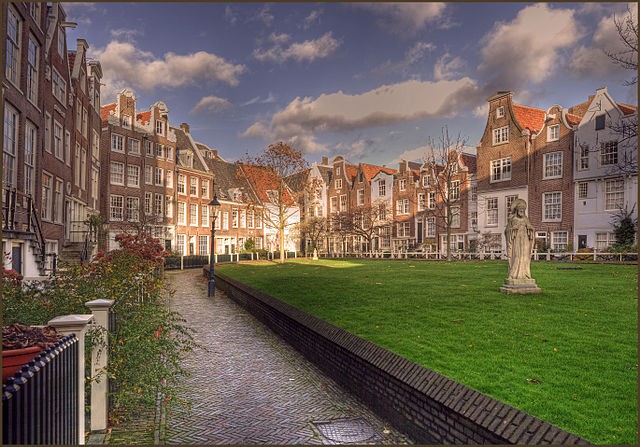
Swan mentions that life for women was dangerous on their own and the beguines wished to offer them shelter if they needed it. The walled-in communities only allowed men in at certain times of the day and they had to be men that some of the women knew and trusted. It’s really awe-inspiring to read about women creating this for themselves and one another. Many of the communities had a specific trade with which they supported themselves. Women who joined could apprentice in this trade and eventually contribute to the community. The women were also free to leave as they pleased, if they eventually wanted to get married and have children, or just go out on their own.
Often the beguinage would ally itself with a local priest to come into the community and say mass. The women wanted to express their faith as they experienced it. They wanted autonomy.
“Frequently, beguines gathered around a gifted female master teacher called a magistra (someone recognized as a master of theology) who was renowned for her eloquence and spiritual authority. Beguines forcefully embraced the call to holiness as every person’s journey and not just that of professional “holy people,” namely priests, monks, nuns, and others in formal religious life”(13).
Let’s just say: The beguines were feminists and they were nasty. They must have been very courageous to take this stance at this time.
It is intriguing to notice how most women’s movements are about agency: Women finding ways to have agency in a world, in culture after culture, that wishes to deny them that. I never knew these women had made this effort and it had worked for a long time.
It makes me so happy to know that in all situations, cultures and places around the world, we continue to find women who found a way. They are beacons and models for all of us to remember to find ways to blaze trails for whatever human right or social justice issue we are pursuing and fighting for, to not accept what we are told or offered. To use our creativity over and over again.
I am grateful to know that in the Middle Ages in Europe there were communities of women that were advocating for women and the poor. That there were women who were self-supporting, self-sufficient and self-identified putting their energies into creating safe spaces for other women.
Part 2 tomorrow
Discover more from Feminism and Religion
Subscribe to get the latest posts sent to your email.

 Feminism and Religion
The beguines are a fascinating example of how a few women managed to survive in a system that had no place for women except as baby machines…There have been many other small groups throughout the ages that have done the same including nuns – it is also always the same story – into these claves came the big wise man… never a woman – we could could such communities today if we wanted to. Many women are going to need them…
LikeLike
Now this is fascinating,
And another reason why I read this blog, this is the history they don’t teach in schools. It’s also a testament to just how many different things were happening in every era as well.
LikeLike
Hi Miami, I agree. It gives one a very different way of considering the present.
LikeLiked by 1 person
This should be taught in schools everywhere
LikeLike
Begin the Beguine! The time has come again.
LikeLiked by 3 people
Thank you for this beautiful article on the Beguines. To the best of my understanding, these independent women continue the tradition of the Old European and Old Scandinavian civilization that lingered on in Northern Europe/Scandinavia until Christianity forced these women into Christianity – or deemed free-to- hunt-hurt-and-kill without consequenses. Before the Huns established kingdoms in Northern Europe, these women – the Valas – were the Shaman Mothers leading society. During Viking Age they lived parallell to the Viking kingdoms and were called by the mocking terms, Völva (equals Vulva), Ko-berender (Cow-cunt) etc. These women were authonome, suvereign leaders, shamans, medicine women, superviser trade, travelled all over Europe in boats/ships and wagons (Tacitus say they always hade white horses).
The last Vala-graves in Scandinavia are dated early 11.th Century – still containing their wagons or boats, their staffs, their ceremonial drinking sets, chains of glass-amber pearls etc.
These former great shamans and mentally strong and capable leaders of prosperous societies did not subsumb to brutal male rulers, kings and church – and as their tradition did live on in folklore and in (often twisted and insipid versions of the former) wise women – and as their name Beguines are linked to Bridgit, Braido/Brud (Sweden) and Bride, I have little doubt that the Beguines are their daughters – uniting only some centuries later. They had much to preserve of the old european tradition (Guímbutas) and little to win in male dominated societies.
May they rise again and prosper!!
Thanks for your article!
LikeLike
Hi Kristen,
fabulous. Yes, May the powerful Völvas rise again.
LikeLike
Thank you for this article. I have referenced here: https://thedfapp.blog/who-are-the-beguines-and-what-is-their-legacy/ and on today’s #Goddess101Texts – the power of Love coming back!
LikeLike