

I do not know how else to endure these past few weeks except to continue the fight, to continue to resist, and to continue to speak truth into power. We must once again look to our ancestors, our foremothers, our pillars of human rights, dignity, and compassion. This month’s Herstory Profiles looks at two courageous and unwavering women involved in U.S. politics; Susan Shown Harjo and Patsy Takemoto Mink.
Suzan Shown Harjo (1945-)
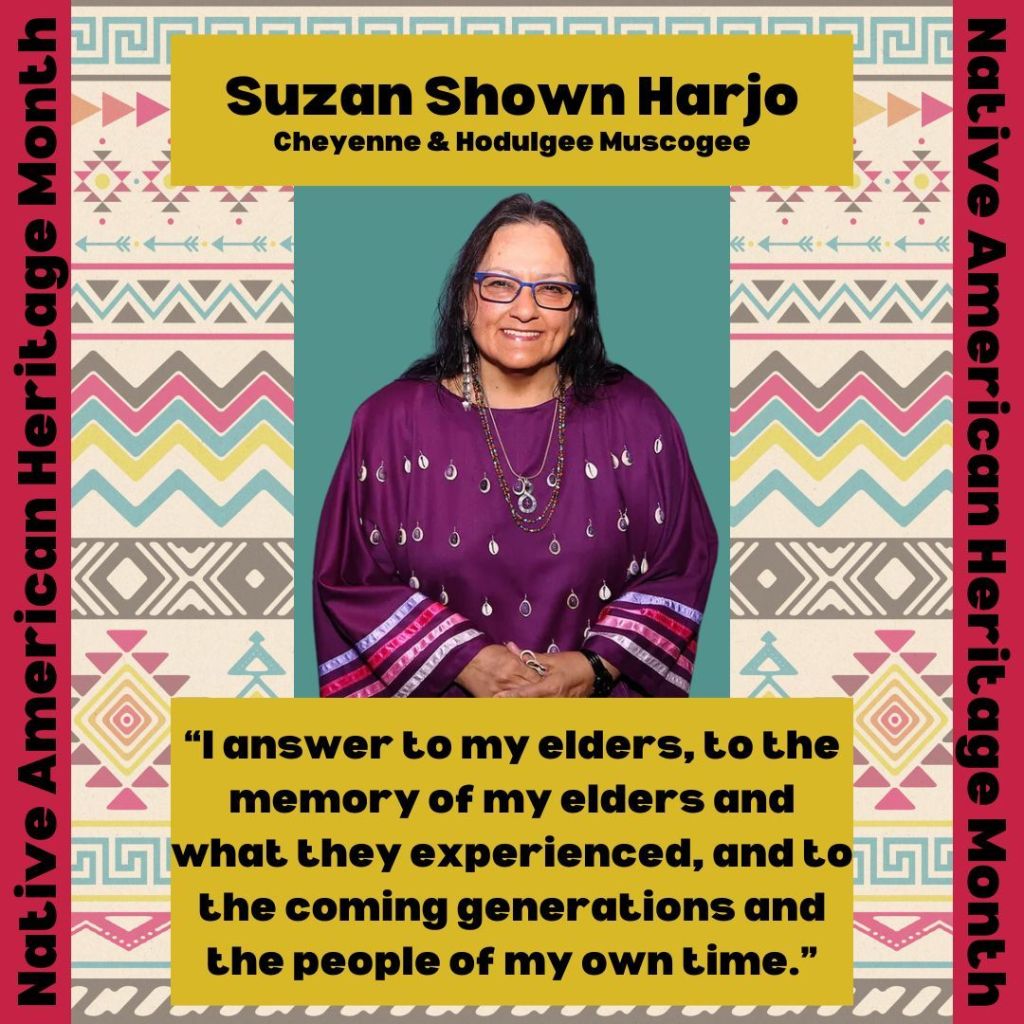
Suzan is a Cheyenne Citizen, Cheyenne & Arapaho Tribes, and Hotvlkvlke Mvskokvlke, Nuyakv and a Native American Activist. She is a poet, writer, speaker, policy advocate, and curator. She helped to recover and reclaim more than one million acres of Native Lands. Suzan served as the Congressional Liaison for Indian Affairs for President Jimmy Carter. She held the Presidency of the National Council of American Indians. She is active in the Morning Star Institute that advocates for sports teams to drop names and mascots that contain negative stereotypes towards Native Americans. She received the Presidential Medal of Freedom in 2014 from President Obama. In 2022 Suzan was inducted into the American Philosophical Society.
In the 1960s, while working in broadcasting and theater, Suzan visited the Museum of American Indian in New York where she saw sacred tribal burial garments on display. Suzan became involved with reparations and reclamation for Native American Tribes. Her and her husband would move to Washington D.C. to further their work in Native American Rights. She was appointed as Congressional Liaison in 1978 where she worked with multiple subcommittees in Congress dealing with Hunting and Fishing Rights on Tribal Lands, Voting, Contracts, and reparations. She became a dominate voice in pushing forward what would later become the American Indian Religious Freedoms Act (AIRFA). The 1978 AIRFA Law was fundamental for reestablishing religious freedoms and practices to Indigenous Peoples. It provides protection for practice of traditional religion and rituals. Suzan would continue her policy advocacy by helping with the passing of the 1989 National Museum of the American Indian Act and the 1990 Native American Graves Protection and Repatriation Act. In the first year of its enactment, it enabled the first repatriation of sacred items to American Indian tribes.
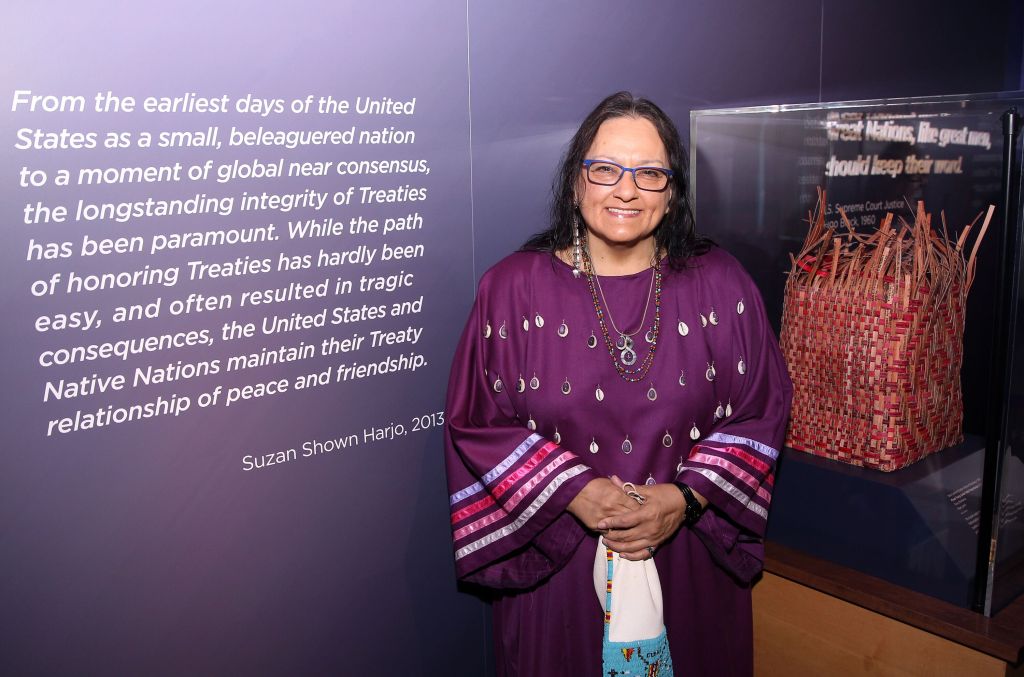
Paul Morigi/AP Images for The Smithsonian’s National Museum of the American Indian
Suzan became the first Native American woman to receive the Montgomery Fellowship at Dartmouth College. Throughout the years, Suzan has been invited by multiple universities to teach, advocate, create seminars and exhibits. In the first International Women’s Day in the 1970s, she was one of the 20 American Women writers to be featured.
In 2004, Suzan was the Director of the Native Languages Archives Repository Project that helps to create and maintain methods of preservation of languages, artifacts, and archives for Native America tribes and communities. In 2014, Suzan curated the exhibit “Nation to Nation: Treaties Between the United States and American Indian Nations” at the Smithsonian’s National Museum of the American Indian. She would also edit a companion book which has since become one of the most important encyclopedias of treaties between Native American Nations and the United States. Suzan’s advocacy, activism, and works continue to inspire and point us to creating a just world. According to the American Academy of Arts and Sciences;
Suzan is arguably the most consistent and effective advocate for Native American rights over the last six decades.
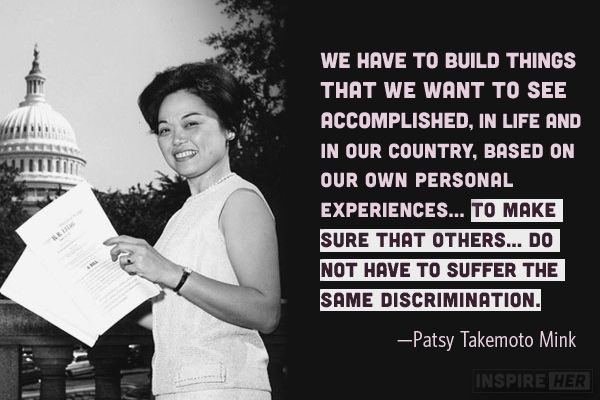
Patsy Takemoto Mink (1927- 2002)
Patsy spent her life as an attorney, politician, and activist. She served in the U.S. House of Representatives for 24 years and was the first woman of color and first Asian American woman to be elected to the U.S. Congress. Patsy was a third generation Japanese American (Sansei) who was born and grew up in the Hawaiian Islands. Patsy’s grandparents immigrated from Japan to the Hawaiian Islands and worked on a sugarcane plantation. Her father, Suematsu Takemoto, was the first Japanese American to graduate with a degree in civil engineering from the University of Hawaii at Manoa.
Patsy experienced tremendous amounts of racism and sexism when she was attending University of Chicago’s Law School. While she was attending Law School, Patsy would meet and marry John Francis Mink. Her marriage automatically removed her Hawaiian territorial residency which caused the Bar Association to deny her bar examination. She was able to successfully appeal and passed the Bar. Unfortunately, women lawyers were not mainstream in the 1950s nor easily accepted and Patsy struggled to find work. With the help of her father, Patsy was able to open her own law firm. In 1955, Patsy ran for the open position in Hawaii’s Territorial House of Representatives which she would win. Two years later she would run and win a seat in the Territorial Senate. Both of which she would be the first Japanese American Woman to be elected these positions. She was asked to speak at the 1960’s Democratic National Convention where she spoke about the rising Civil Rights movement.
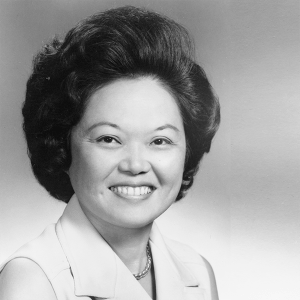
In 1964, Patsy ran for the U.S. House of Representatives position. She would hold that office from 1965-1977 and again from 1990 to 2002, a total of 24 years. Her US political career was centered around education, civil rights, women’s rights, and protections of children. She was instrumental in the Early Childhood Education Act and the Elementary and Secondary Education Act. She was one of the only voices to oppose G. Harrold Carswell’s nomination to the Supreme Court on the grounds of Carswell’s gender discrimination actions and speech. (Harry Blackmun would be appointed to the Supreme Court and would later become part of the majority opinion in the establishing of Roe vs. Wade).
Patsy would become a dominant force in the House of Representatives. She initiated the lawsuit which would lead to the Freedom of Information Act in 1971. In 1972, she would be the co-author of Title IX Amendment of the Higher Education Act that has since been renamed the Patsy T. Mink Equal Opportunity in Education Act in 2002 (the year of her death). She was also the first East Asian American to seek a presidential nomination and entered the 1972 election. During her last years of being in the US House of Representatives, she co-sponsored the DREAM Act and opposed the creation of the Department of Homeland Security as she feared that it would ultimately sanctify and pave the way for more government sanctioned Concentration Camps (reminiscence of the Japanese Internment Camps during WWII). She also helped to establish the Congressional Asian Pacific American Caucus.
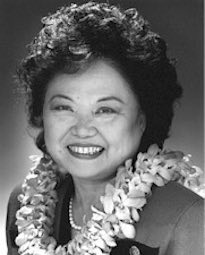
She died a week after she won her primary election to retain her seat in Congress and subsequential won the November election, three months after her death. Secretary of Defense Donald Rumsfeld ordered flags at half-staff, and she received a national memorial and a state funeral. She is buried at the National Memorial Cemetery of the Pacific. She would be awarded posthumously the Presidential Medal of Freedom by President Obama.
The National Women’s Hall of Fame writes:
For over four decades, Mink championed the rights of immigrants, minorities, women, and children, and worked to eradicate the kind of discrimination she had faced in her life. Known for her integrity, determination, tenacity, and honesty, she is recognized as the major mover of Title IX, the legislation that brought academic and athletic equity to American educational institutions. She was a strong environmental advocate and worked tirelessly on energy policy issues of regional, national, and global impact.
https://www.womenofthehall.org/inductee/patsy-takemoto-mink/
Discover more from Feminism and Religion
Subscribe to get the latest posts sent to your email.

 Feminism and Religion
Continue to fight… power? These are patriarchal constructs… and part of what got us here…. I guess that I would like to see us begin to focus on creating genuine human communities that create space for diversity. These are laudable stories about the rare individual who succeeded in creating some aspect of change and FAR continuously has highlighted such accolades, but I think we need to focus on the present, create time for self reflection for we too are part of this patriarchal story and we need to know what parts we have played. Only then will it be possible to face an uncertain future. Across the globe, virtually all peoples are suffering and heart centering has become necessity like never before. 90 million voters chose not to vote in this election. Talk about disconnect – We are in shambles.
LikeLike
I just opened my email and read the following from Robin Wall Kimmerer:
This year, it seems especially relevant to reflect on the spiritual values we so urgently need at the core of our social and cultural systems. How can we return to an ethic of care and reciprocity in the way we live?
Isn’t this the question we need to be asking?
LikeLike
Thank you for telling these women’s stories! I have title IX postage stamps. I am grateful to know how the full story behind them.
LikeLiked by 1 person