

Dear FAR Community, These poems arise from feminist spiritual practice with syncretic dimensions. The Irish-American Catholicism of my family mixes with the popular American confessional-style that charts and embodies emerging spirit, yet this very American path of self-styling and narrative self-creation has been refined via the influence of Zen practices, originally via the influence of the Soto practictioners of Green Gulch in Marin and then later via the teachings of Vietnamese refugee and Zen Buddhist monk, Thich Nhat Hanh. The feminism here is deeply personal, political, and spiritual.
This post was inspired by one written my Janet Maika’i Rudolph about Alice Munro which you can read here.
About Alice Munro: I experienced the revelations of her daughter very personally … I’ve read Alice Munro since I was very young and used to read my parent’s copy of the New Yorker. Because we shared the name Alice and also shared the cold Midwestern prairie though she was further north and across the border, I had always felt some affinity for her but also I felt something I really didn’t get. To me her stories took inexplicable turns and now we know why. Her daughter’s experience is dreadful and probably much more common than anyone would care to admit. That Alice Munro was famous doesn’t make that type of negligent mothering something rare.
Embrace your anger
I’m host to sacred fire
the goddess of anger wields her dagger,
her hair wild from battle
heart beating hard, driven
to avenge, to cut the veins
of him who attacked
his six year old sister
held her down
with his friend’s help stayed her wildly kicking legs
clamped his hand over screaming
and fractured her.
The sage[1] says:
embrace your anger like a mother
tenderly holds her infant–
and I try and this
anger is no infant
easily swaddled, no,
this firery goddess dances away
with lithe feet
my arms hold nothing
her flaming eyes confront me
and
she flashes her pointed dagger–
outraged love–
ready to slice anyone who tries to
subdue
her.
Awesome, terrifying goddess
ten thousand stars light your eyes
infinite love streams from
that fire,
Ah, you, defender of the little girl
who here now these many years later
still struggles against those grasping hands,
Sacred goddess crazed with wrath
Come with your love, lend me your powers,
Give me your hands, let go your knife,
We’ll work wonders
Your dancing feet beat rhythms to
live by,
Your mission, our love
the beautiful child blooms.
Every time
Every time, every time,
she wants to say,
this! this is the story
to tell,
the very essence of meaning is here
living here, now,
and then thousands, millions, billions
of details,
incidents, incinerations of fantasies,
multiplications of tales,
each and every
recounting the loving heart
the grief and stench of life
blossoming
via blood and guts
via sperm and eggs
the impetus to love
amid ceaseless displacements,
to embrace ruins even with no faint hint
of sprouting green, as clearly, soon,
those sprouts will grow.
***
and then she thinks, she can understand it all,
here, now, it all makes sense,
she can see the arc of the story
and the picture comes into focus
and even as it forms, it melts away again and forms
and melts
and forms
and melts
and form melts into melt and what level of living do we mean now
or now or now or now on and on through time we divide up being into meanings and all of
them now are equally there even though everyone always takes
herself or himself as one might
and then there’s that,
infinity reduced to the personal through which
if the needle is threaded
like the sun as it descends
like the sun as it descends
into
darkness
on
winter solstice-tide
shines fully through
the stone’s eye
and angels sing gladness
and glory
celebrations ring out across our great land
surely the true meaningful
appears at some time in her life.
Would she recognize it? Or,
be asleep on the bus stop bench —
how could the parade not wake her?
how could it all go on and she’s
there
sleeping?
Wake-up, wake-up,
and she does
and the dream dissolves
into the mists of swift flowing time,
and then it’s not so long until another grows,
more elaborate and heart-rending than the last,
strong and vivid as all of creation,
and again she awakens and again time dissolves
whatever it was,
and so she travels on,
wending her way,
with billions beside her,
all of us following visions,
all of us
children of Gaia.
[1] Zen Master Thich Nhat Hanh, called Thay by his students, teaches to embrace one’s anger like a mother embraces her infant, with tender, welling love. This embrace transforms anger to reveal the pain of the wounded one, who can then be healed with understanding.
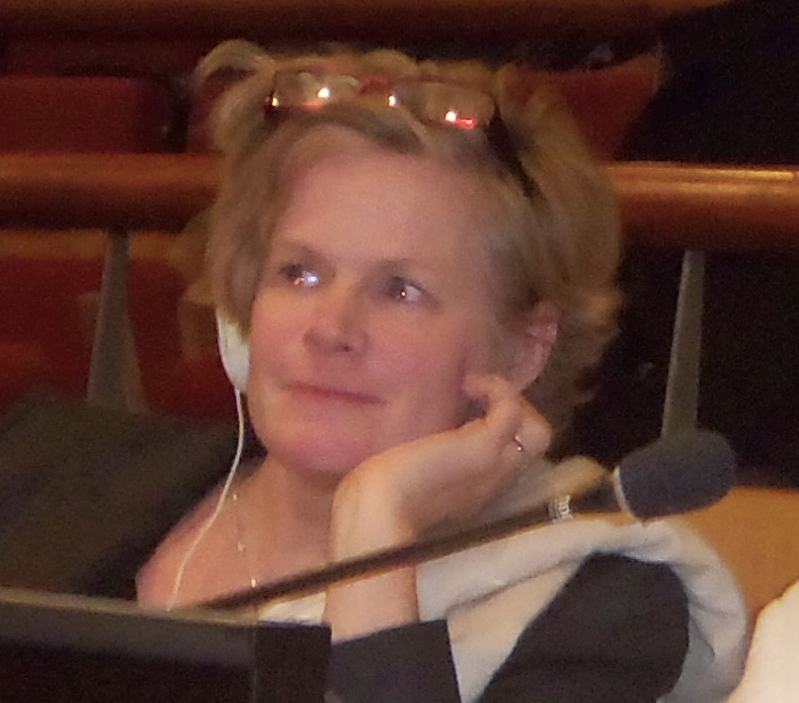
BIO: Alice Bullard, Ph.D. and Esq. is a writer who lives near the soft shouldered mountains of Maryland. She works in human rights, environmentalism, and mediation. As a historian, she publishes in history of French-speaking areas in the South Pacific and West Africa. Her most recent book is Spirit Crisis and Mental Health in Globalizing Senegal; A history of transcultural psychiatry, Routledge, 2022. Alice’s sister taught her feminism back when Alice was seven years old, when Mary Daly broke taboos and said the unsayable. See http://www.rebornathena.com for a glimpse of Alice’s manuscript novel, Reborn Athena, a story of redemption from unspeakable family troubles and the promise of justice.
Discover more from Feminism and Religion
Subscribe to get the latest posts sent to your email.
 Feminism and Religion
I resonated with the first poem so much
LikeLike
Adele, wishing you much healing energy. Too many of us have lived this and with the Goddess blocked in most of our religions, it makes healing that much more difficult. Hugs, A.
LikeLiked by 1 person
Thank you, hugs to you too.
LikeLike
I never read Alice Munro, but was horrified to read the account from her daughters’ perspective in the New Yorker. She pretended not to know, colluding all the way, while using what her husband did as material for her stories. Which often closely follow what actually happened. She was so emotionally dependent on the man that she turned her back on her daughters. Reminds me of Bone’s mother in Bastard Out of Carolina. All her tenderness for the abuser, none for the daughter.
LikeLiked by 1 person
Max, the way Munro’s second husband characterized a young girl as a seductress is chilling. I think such a perspective was more prominent back in those years, but it endures today. May the Goddess protect all those girls.
a.
LikeLike
Thank you Alice, I am particularly moved that my piece inspired you to write these two poems. I feel your pain but also your strength in these words.
“Your mission, our love
the beautiful child blooms.”
Amama Ua Noa (may it continue without limit).
LikeLike
Janet, thanks for your support. Your essays often inspire me.
Wishing you happiness, joy and peace,
Ali
LikeLike
Powerful post. Powerful poems! Thank you!
LikeLike
Thank-you Elizabeth. I appreciate your comment a lot.
I’ve a whole collection of these … 100 pages collected from 2021-2024.
LikeLike