

The Torah portion for today’s blog is Kedoshim (Leviticus 19:1-20:27), which was read by Jewish communities yesterday, May 10, 2025. Among scholars, it is part of what is often referred to as the Holiness Code, Leviticus 17-26 (Note 1). Kedoshim covers all manner of topics: from what fabric to wear to how to treat one’s neighbor and from keeping Shabbat to when one can eat the fruit of newly planted trees. These, what I will call prescriptions, all fall under the general reasoning that one does these things so that one can be holy like the deity is holy. In a way, the Holiness Code then is an apt name for this section. But, what can we take from this parshah from a (eco)feminist point of view? To answer this question, I will be using the methodology I have laid out in a previous blog and ask three questions.
Firstly, where are women in the parshah? Women are addressed in the parshah multiple times. In verses 19:3 and 20:9, women’s roles as mothers are highlighted. Sexual relations with a non-Jewish bondwoman and her freedom or lack thereof is discussed in verse 19:20; an unfreed non-Jewish bondwoman should not be put to death for this deed. However, the death penalty does apply in verses 20:10-12 for those men and women who commit adultery, and, in verse 20:16, when a woman practices bestiality, both her and the animal should be killed (men and bestiality are addressed in 20:15). The death penalty is also prescribed for men and women who practice specific forms of divination (20:27). Lesser consequences such as exile are levied against both parties when men have sex with their sisters (20:17). In addition, Israelites are commanded in verse 19:29 to not turn their daughters into prostitutes, so that society is not overrun with immorality.
Now that we have a basic list of where there are mentions of women in the parshah, we can look at how patriarchy plays out within it (Note 2). While there may be an argument to be made that in the language of the parshah ‘you’ is an inclusive formula meaning all Israelites, one can also very much argue that the audience is coded male. Verse 19:27 is a good example of the parshah’s male-centric coding. It reads, “You must not round off the hair of the corner of your head. You must not destroy any edge of your beard,” (Chabad’s translation). The audience is assumed to have beards. While it is true that some women can grow rather impressive beards, maleness is more often associated with having beards. The extensive use of only male pronouns throughout the parshah also supports such an interpretation.

In addition, in Kedoshim, agency is also assumed to be male. Men have sex, men put their daughters into prostitution, men curse their parents (20:9), men take, uncover, lay, and so on. When women are addressed they are objects of men’s actions as mothers, daughters, bondwomen, etc. The only example of a woman’s agency in Kedoshim leaves us with an incomplete action. The verse (19:16) describes how a woman gets close to an animal in order to have sex with it. The verse never says whether or not she has completed her intention (Note 3). That does not matter as she is already guilty based on the assumptions the community has made about her intentions when it comes to animals. In this example, I am reminded of Carol Christ’s article, “Why Women Need the Goddess,” and the ways in which she describes how religious practices and spirituality in general needs to support and cherish women’s agency and see the goodness of women’s intentions, will, and power. Additionally, women cannot only be the objects of men’s actions.
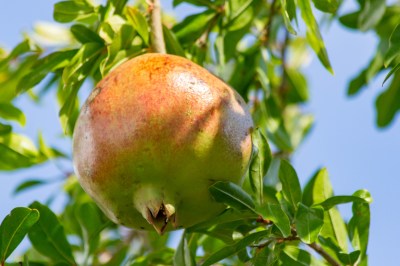
After all this, is there something within the parshah worth lauding? Yes. I have come to the conclusion the parshah’s commendable aspects involve respect: respect for trees, the land, and other human beings. For example, Kedoshim says that a fruit tree must be four years old before one can eat of its fruit (19:23-25). By waiting to eat its fruit, in my opinion, we are showing respect to the young tree. The poor and convert should be left the corners of the fields, the fallen grain, and the young grapes (19:8-9. Note 4). By doing so, we show them the respect and dignity they deserve (Note 5). Likewise, we should show respect for the elderly (19:32) and converts (19:33-34). I particularly like the idea that the respect for converts is grounded in the experience of slavery and foreignness in Egypt. It points towards empathy as well. Finally, the laws advocating for fair market practices in the face of a contemporary ever-widening gap between rich and poor are also particularly apt (19:35-36); we should respect each other by charging fair prices and paying fair wages.
After all, kadosh means holy, and here we are discussing part of the Holiness Code. Kedoshim describes the holiness of the people who adhere to this code, and it also describes the divine. Yet, we have seen here in this blog that the holiness of women, their bodies, their agency, and their will was often ignored, dismissed, or held to be suspect. In addition, it is not holy to assume men as the religious actor, the significant individuals within a community, and to speak to the community as if it is only comprised of men. This does not mean that Kedoshim is void of redeeming qualities. I particularly like its discussion of humanity’s relationship to the land, to trees, to right/just relationships with other humans, and its advocacy of fairness in the marketplace.
Notes:
- See John Collins’ Introduction to the Hebrew Bible and Deutero-Canonical Books (2013) pages 152-156 for more. It can be found on archive.org.
- Here, I cannot hope to cover all of the ways in which patriarchy is present in the text. Yet, I have covered many of the problematic aspects of this text when I have discussed similar issues with other parshot. For example, see my post against the death penalty here.
- I do not have the space here to critique bestiality, but you can read some of my thoughts about the respect and compassion due animals here and here.
- For more about how this has been interpreted within the Talmud, see here.
- We know such practices mostly like occurred since we can read about Ruth gleaning in Boaz’s field.
Discover more from Feminism and Religion
Subscribe to get the latest posts sent to your email.

 Feminism and Religion
Hi Ivy, thanks for this carefully explained post! As anthropologist I always try to read texts ‘through the eyes of those who wrote them’… and if we want to derive meaning from that in other times, that necessarily means translating and updating the words to modern context. I imagine this is a very hermeneutic approach (which in the protestant church I grew up in was always encouraged), but I’m glad that at least nature and the land and trees were respected at the time!
LikeLiked by 1 person