

People are often surprised to learn that I actually love Barbie. Years ago, I heard a BBC interview with Ruth Handler, the creator of Barbie. In a world of baby dolls for mothering creative play, she wanted her daughter – Barbara – to have the opportunity to imagine other things, too. A computer scientist. A top executive. An astronaut. (The film shows a bit of this early intent.) Of course, no one would support her idea. Then, one day in Switzerland, she was walking past a toy shop and saw a small, plastic, adult, female doll. She had finally found a prototype!
Unfortunately, this original Lilli doll had been created to depict an alluring, sassy, provocative “golddigger, exhibitionist, and floozy.” And Ruth specifically didn’t want her doll to be stereotypically ‘beautiful,’ because she didn’t want it to hurt girls’ self-esteem. But the only manufacturer willing to create the dolls was in Japan; their English was so limited, she finally picked up a file and literally filed off the plastic nipples in order to explain that she didn’t want the doll to have nipples.
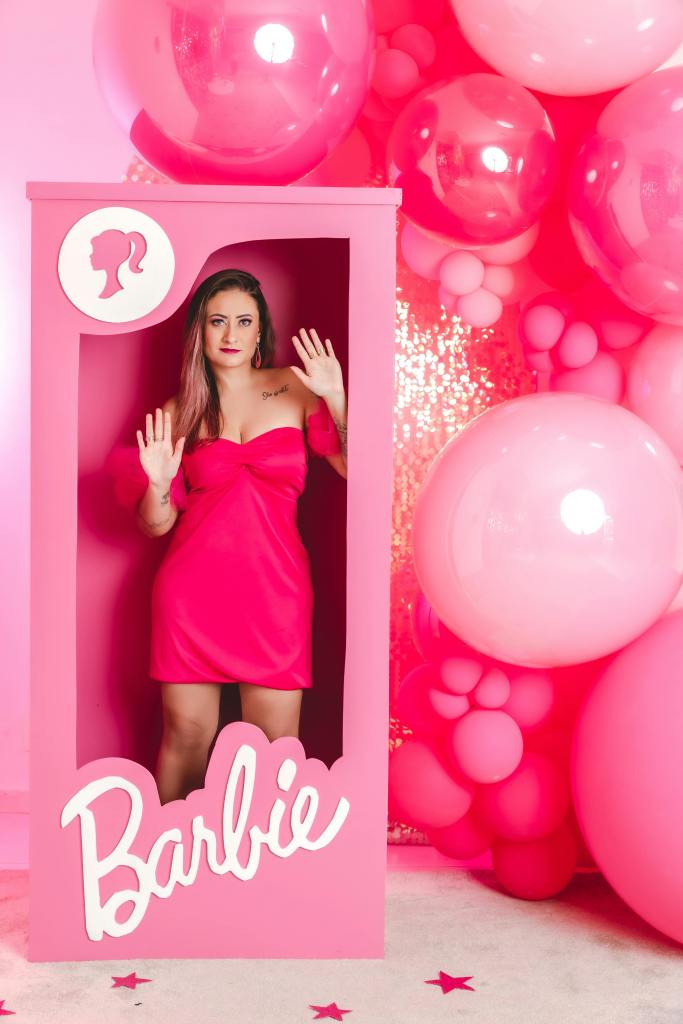
(Photo by Criativa Pix Fotografia.)
Despite the many challenges and limitations, Ruth was glad in the end that her dream became a reality. She even wanted to include her son Ken in this vision; Barbie would have a friend who loved and supported her in all her professional and personal goals (and maybe boys would want to play, too?). Since those early days, the Barbie doll has continued to try to help girls ‘dream big.’
Recently, my daughter asked if I would be part of a podcast called ‘So, You Think You’re a Feminist.’ She was recording the first episode for a college class assignment, and she wanted to make it about the (so-called) feminism in The Barbie Movie. We had heard great things about the film, and we really enjoyed watching it together.
Knowing Barbie’s history, I was excited to see what the film had to offer. (Spoilers!) It humorously depicts a utopian Barbieland, where the Barbies run everything, and the Kens are supportive friends. But something is wrong in the real world, which starts to affect Barbieland; so Barbie ventures out to set things right. Unfortunately, Ken forces himself along, finds ‘the patriarchy’ in the real world, and takes it back to Barbieland, which becomes a horrifically patriarchal ‘Kendom,’ where the Kens run everything and the Barbies are brainwashed into becoming subservient bimbos. Luckily, a brave real-world mother-daughter team and a few brave Barbies resist the patriarchy and restore Barbieland – but this time, with a commitment to allowing both Barbies and Kens alike to be ‘human’ (fully, imperfectly themselves). The movie ends with the original Barbie going to see a gynecologist with a huge grin on her face.
I appreciate all attempts to bring feminism into the mainstream. Trelawney Grenfell-Muir (my feminist hero), Anjeanette LeBoeuf, and I have already written here about Frozen 2, and many have written about other feminist movies. My Gen Z daughters are devouring feminist Greek mythologies as fast as they are published. There is a hunger for reclaiming stories, ancient and recent, to center women’s power, and right to be human.
You have to start somewhere, and The Barbie Movie was a fun feminist taster. (Sara Wright and Esther Nelson have great feminist takes on it.) My main concern is that people might think it is actually feminist and will miss the ways it is actually anti-feminist. Sure, we laughed; at other moments, we were appalled.
The film got many things right. I appreciated the ethnic diversity. I liked how the film literally poked fun at itself for not being feminist enough. It tried to show how creepy and violent the patriarchy is, and how it’s bad for everyone. They kept coming back to the idea that women are human, helping Barbie put her feet flat on the ground, and celebrating her very human body. The film clearly sought to deconstruct the idea that feminism hates men, or that ‘feminine’ means makeup, heels, cute/sexy dresses, and long hair. Over and over, the film tried to assert that we all get to be ourselves, and we all get to be human.
The main problem with this movie, in my opinion, stems from the fact that it has no ‘religion.’ No transcendence, no higher vision for the whole ecological community. At the end, Margot Robbie still looks like a supermodel (superhuman). The only ‘real’ looking actors were entirely peripheral, or elders. The big solution to the patriarchy is that we are all supposed to buy another piece of plastic to support the radical idea of a ‘normal’ Barbie. As for the men, Barbie apologizes to Ken (for apparently taking him for granted??), and all the Kens, who did a whole lot worse than that, never apologize at all. Ken has a childish temper tantrum while Barbie comforts him. Men are still never human – allowed to make mistakes, able to apologize. They are still that unwell, patriarchal combination of immature children and superhuman. In The Barbie Movie, the idolatry of the patriarchy is never healed. I’m not sure it’s even recognized.
Someone recently asked me how I would have ended the movie. I know a feminist film may not have sold as well; but here is my ecofeminist ‘kindom vision’ for this film:
At the climax, when the Kens are in full power, the rebel Barbies notice that birds and other creatures sing and play without hurting each other or themselves in the process. The trees and flowers all look beautiful, not despite their differences and ‘imperfections,’ but because of them. Barbieland becomes more and more real: soil, plants, trees, wild animals. The Barbies realize what reality actually is, and decide they want to try it. They start wearing comfortable clothes, so they can roll around on the grass and get dirty sometimes. They look like people we see: diverse, natural, and self-confident. They cry, sing, and dance without spending money on looks, fancy equipment, or fancy homes. They are so at one with the rest of the natural world that they become deeply joyful.

The Kens start to notice. The brainwashed Barbies start to notice. Even the (male) Mattel executives notice. It’s so different that they’re curious. They wonder if they could feel free and real, confident and joyful. The executives and Kens apologize, and ask if they can be part of this new Barbieland ‘Kindom,’ and the Real Barbies accept their apology, forgive them, and welcome them in as allies (like Allan!). And because the outside world is still patriarchal, Real Barbieland/Mattel centers female leadership, respect, and authority. Kids are encouraged not to buy a new doll, but to take their existing dolls and make them real, too. Play outdoors with them, get messy, cry, dance, argue, and figure things out in ways that respect everyone, including the other creatures.
This ‘Kendom to Kindom’ transformation could have been funny, and it could have been fun. And it WOULD have been feminist.
Discover more from Feminism and Religion
Subscribe to get the latest posts sent to your email.

 Feminism and Religion
Good to read you again! I haven’t seen the movie but through reading about it, thought it may be worth the effort. Turning Barbie into a feminist figure is motivation enough.
LikeLike
Thank you for your comments! I’d love to know what you think, should you ever watch the film. And you might enjoy the podcast my daughter and I recorded as well (linked above)! Baby steps, right? :)
LikeLiked by 1 person
I loved your re-write of the ending — Kendom to kindom!
LikeLiked by 1 person
Thank you, Beth! I can never resist a good play on words! :)
LikeLike
Now, THAT movie I want to see. Loved this.
LikeLike
I’m glad! I’d love to hear what you think, if you watch it! :)
LikeLike
A theology of “kinship.” I love it. You also bring to mind another childhood icon: “The Velveteen Rabbit Becomes Real.” It might take most of a lifetime to truly become “real” but certainly the process is best begun in childhood with the help of our toy avatars.
LikeLike
Well said, and such an important point about childhood symbols and intentionality. Thank you for brining in the nuance from The Velveteen Rabbit!
LikeLike
THE VELVETEEN RABBIT IS A CLASSIC – THE STORY OF BECOMING MORE REAL UNTIL WE DIE – BARBIE???
LikeLike
Who knew the Velveteen Rabbit was covertly feminist!
LikeLiked by 1 person
My main concern is that people might think it is actually feminist and will miss the ways it is actually anti-feminist. THANK YOU!
LikeLike
Greta Gerwig’s specialty is ‘feminism lite’… okay so long as we know that!!!!
LikeLiked by 1 person
ABSOLUTELY!!! She’s made of plastic – says it all
LikeLike