

If you were taught that “men lead” is God’s design, this is your permission slip to ask a harder question: what if that teaching was never Eden’s plan — but a wound the world mistook for a rule?
Many of us grew up inside churches that loved us, baptized us, and gave us language for hope—while also wrapping womanhood in shrinking instructions: be agreeable, be modest, be quiet, be helpful. We learned to make ourselves small so that men could feel large. We learned to translate our leadership as “support,” our wisdom as “intuition,” and our authority as “being difficult.” We learned to carry the room’s temperature without ever touching the thermostat.
Feminism — and the women who lived it before it had a name — has always asked religion to remember itself. Not to abandon Scripture or tradition, but to recover what was true before fear called itself theology. Before we rewrite our lives, let’s reread the beginning.
A forgotten reading of the oldest story
Look again at Genesis: the woman sees that the fruit is “desirable to make one wise” (Gen. 3:6). In Scripture’s own poetry, Wisdom is feminine—personified as Lady Wisdom (Hebrew: Chokma) calling us to life (Prov. 8:1-4, 22-31). And Genesis 3:6 ends with four words we usually skip: “who was with her.” Translation: she leads; he lingers.
Eve is shown here as the decision-maker. Adam had every opportunity to say, “No—God said not to,” or, “Yes, I want that too.” Instead, he stands beside her, passive and compliant. Scripture presents this first couple as God’s direct handiwork—the only pair personally shaped and taught by the Creator. No peer pressure. No meddling relatives. Just a loving God with beloved children. And the first explicit moment of decision shows Eve as God’s design choice to decide for the couple. And then comes the plot twist we mistook for a blueprint.
To further support the idea of Eve’s authority, look to the third punishment (Gen. 3:16): “he shall rule over you.” A punishment is applied to change behavior; it is not the original design. If male rule appears as judgment, then its opposite points us back to Eden’s intention: female Wisdom leading within mutuality. And that’s how a consequence got a coronation.
The Patriarchy’s Lie
Patriarchy’s goals have been threefold: keep women docile, keep women ignorant, keep women dependent. It works hard—in many cultures and systems—to perpetuate the punishment. As long as it succeeds, the wound remains open. Okay, great diagnosis—where’s the medicine cabinet?
In keeping with Genesis and Ephesians, we are compelled to oppose the Lie and restore the balance of Eden. Original sin reversed Eden’s roles; salvation and restoration invite us back toward an Eden-established relationship. If patriarchy isolates, circles braid us back together.
A Circle of Women
Over the past seventy years or so, women—and many men—have worked to dismantle the Lie. For the first time since Eden, a woman doesn’t need a man to be successful in society. However, there aren’t shared structures that give us the knowledge, guidance, and confidence to follow the Eden model.
Enter the Circle of Women. The Circle is a place where women are welcomed, taught, mentored, loved, and supported—where we practice leadership, pray with full voice, and make decisions together.
The symbol of the Circle is a wreath—many strands braided into one, stronger because no single strand bears the whole weight. The Circle becomes a place to seek the wisdom and counsel of other women, to collaborate and build community. Women, by design, are nurturers, caregivers, community-makers. We need the support of other women to make communities—quite frankly, to lead as Eve did.
Why the Circle matters (tangible reasons):
- Spiritual resilience: shared prayer and discernment re-train us away from domination toward mutuality.
- Wisdom in practice: decisions are tested among women first; we relearn trust in female judgment.
- Safety & boundaries: sisters name gaslighting, set limits, and back one another with presence.
- Mentorship: younger women gain models; elders offer story, skill, and steady hands.
- Provisioning: we share resources—childcare, job leads, crisis funds—so no woman stands alone.
How to build one (actions to take):
- Name your Circle (3–7 women). Text: “You are in my Circle. Thank you.”
- Meet monthly (60–90 min). Story, questions, one next step, blessing.
- Make a simple covenant. Confidentiality, consent, punctuality, no rescuing, no shaming, and women-led always.
- Rotate homes; keep it simple. Snacks count as liturgy.
- Ally protocol for men (by invitation). Protect without control; provide without ownership; step forward when asked and step back when women are speaking.
The Circle does not exist to fight men. It exists to de-center them—so they stop being the audience we perform for and become the community we bless on our terms. Healthy men can, and do, serve the Circle: protect without controlling, provide without owning, step forward when asked and step back when women are speaking. But the Circle is women-led. That’s the point. We’re not changing the creed; we’re changing what gets crowned.
Biblical Recovery (not a new religion)
For some readers, the language of circles, vows, and remembrance may feel like a new faith. It doesn’t have to. Many of us love Jesus and still refuse to canonize the curse. Think of this as Biblical Recovery—a renewal order inside the larger Body: women lead as Wisdom; men love us best by serving what we lead. Keep the creeds. Change the target. Male rule is not “how God wants it”; it’s what sin does—and Christ lifts curses (cf. Gen. 3:16; Gal. 3:28).
If you’ve been burned by the Church, you may need new language to heal. If you haven’t, keep the words that still work for you—and let the Circle give them back to you with your full height. When words need wings, we make a film.
Age of Women
We’re currently writing a feature screenplay that reframes the Eden story with one purpose: to help all women—Christian and non-Christian—use this re-examination of Genesis to shift the power balance back to an Eden model: female-wisdom-led. If you’re a values-aligned funder or partner who wants to see this message reach circles, campuses, and faith communities, we’d love to connect.
Stories go where sermons can’t. A film like Age of Women invites us to feel the shift—not just debate it. We watch Adam confuse possession with love; we watch Saharah refuse to destroy him while refusing to enthrone him; we watch Eve choose mission over approval. And at the end, the film does what a good liturgy does: it invites. “If you remember Eden, come sit with us.” Art becomes an altar; memory becomes movement. Candle, circle, courage—let’s go.
If you’re ready
Maybe you stay in your church and build a Circle inside it. Maybe you need a sabbath from the places that never let you stand tall. Either way, the work is the same: remember who you are, gather your women, and practice a power that does not need permission. Let your life be the answer to the old question we were never meant to carry: “Who told you to be small?”
Light the candle. Name your Circle. Pick up the wreath. And when you’re ready, say it out loud:
We remember Eden.
Unless otherwise noted, Scripture quotations are from the New Revised Standard Version Updated Edition (NRSVUE), © 2021 National Council of the Churches of Christ in the USA. Used by permission. All rights reserved.
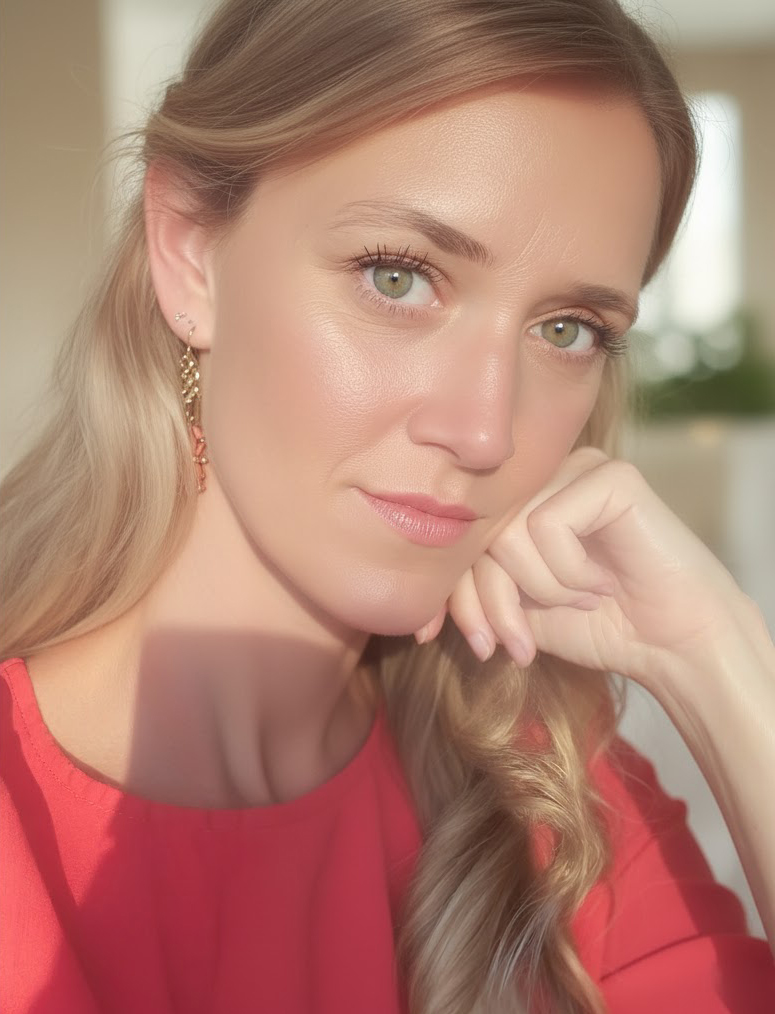
BIO: Susie Austin began her journey as a devout, born-again Christian, her life steeped in the traditions and scriptures she held dear. However, a quiet dissonance grew within her as she navigated a faith that seemed to shrink women, confining them to roles that felt misaligned with their innate strength and wisdom. Her life became a poignant testament to this conflict, as she endured a marriage to a diagnosed narcissist who subjected her to physical, spiritual, emotional, and financial abuse.
Everything changed when, in a moment of profound discovery, she stumbled upon a revolutionary reading of the Genesis story. It was a revelation that completely reoriented her worldview: in Eden, Eve, not Adam, was created to be the leader. This insight reframed her entire understanding of scripture, feminism, and power. She realized that male rule was not a divine ordinance but a consequence of the fall—a curse that Christ came to lift. For the first time, she saw a powerful biblical basis for female leadership, an “Eden model” where women were designed to lead with wisdom, confirming that women were never meant to make themselves small for men to feel large.
This theological awakening became deeply personal. Understanding Eve’s true legacy and the idea that males lording over women was a literal sin gave her the clarity and strength she needed to confront the abuse in her own life. It was this sacred wisdom that provided the key to her liberation, empowering her to finally end her marriage.
Today, Susie works with her circle of women to share this transformative message. As a co-writer, she is currently developing a groundbreaking film, Age of Woman, to bring the story of Eve’s intended authority and the promise of a restored, balanced world to a wider audience. Though just starting her social media journey, Susie is passionate about building a community and empowering women everywhere to reclaim their inherent strength and leadership, guided by this ancient yet revolutionary wisdom.
Discover more from Feminism and Religion
Subscribe to get the latest posts sent to your email.
 Feminism and Religion
“We learned to make ourselves small so that men could feel large. We learned to translate our leadership as “support,” our wisdom as “intuition,” and our authority as “being difficult… We learned to carry the room’s temperature without ever touching the thermostat”. Oh so true and it’s still going on… Creating a circle of women is one very effective way to counteract male authority. The problem for me is that I live in a rural area – and most of the women are the supporters…
LikeLike
This is the hardest part of the journey. When you step out of the role, but the town is still following the script.
Living in a rural area where tradition is everything can feel like a fortress. But here is a secret I learned: A Circle doesn’t have to be a protest. It doesn’t have to be a ‘feminist meeting.’
When I first started, I couldn’t talk about ‘Patriarchy’ or ‘Feminist’ with the women around me. They would have run for the hills. So, I just started a ‘coffee hour.’ No agenda. No Bible study (so men couldn’t lead it). Just women, tea, and one rule: How are you, really?
You’d be amazed. When you create a space where women don’t have to perform or support, the ‘supporter’ masks start to slip. They are tired too. They just don’t know they’re allowed to say it yet. You don’t have to change their minds all at once. Just offer them a chair and a safe place to breathe. You might be surprised who eventually joins you.
At some point, show them Genesis 3:6 and remark how incredible it is that even though Adam was standing there, Eve made the decision. This was the first human decision, and Eve made it which kind of shows that God intended it that way.
Sometime later, Genesis 3:16.. It interesting that men being in charge was the punishment and if men were meant to be in charge… it would be a fact not a punishment. So what did God intend?
LikeLike
Wow, I appreciate your words: “…we watch Eve choose mission over approval.”
Twenty years ago, I chose the mission of updating Mary Baker Eddy’s last edition of Science and Health with Key to the Scriptures over the religious authorities who did not approve. It wasn’t easy but then it was. Eddy wrote about spirituality, religion, and a God that she referred to as Father-Mother. The feminine was explored with deep respect and high regard. After teaching others and writing her first edition, with a few followup editions, Eddy started a church, developed her ideas into the theology she dubbed Christian Science and added a Key to the Scriptures to her Science and Health.
From 1875 until her death in 1910, Eddy revised her Science and Health nonstop, hundreds of times, so I had a pattern to follow when I started revising at the turn of this century. I added gender-inclusive language and contemporary references. When I was about three-quarters finished with my first edition, two men from the church told me to stop revising and destroy the work I accomplished, basically telling me that Mary Baker Eddy would want me to destroy it, since she “precluded” what I was doing.
Not all men did. I have many who thank me. My book, 21st Century Science and Health with Key to the Scriptures: A modern version of Mary Baker Eddy’s Science and Health, is now in its 7th edition.
I love to read, thank goodness, because it is from articles like this that I enlarge my tent with fresh, vivid, new, expansive views on contemporary feminine spirituality that works with ancient wisdom while discarding the baggage of lies that bloat patriarchy and inhumanity.
Thank you.
LikeLiked by 1 person
Wow, thank you for sharing such a powerful testimony of resilience. It is incredibly difficult to stand firm when voices of authority tell you to ‘destroy’ your work, but that is exactly what the ‘Eden model’ asks of us—to trust the Wisdom given to us. You clearly chose mission over approval, and I am so glad my words could offer a fresh view for your journey. Thank you for refusing to make yourself small!
LikeLike
My female lineage was strongly compromised by a maternal wound that goes back several generations. Unfortunately, I think there was a mother hunger for strong female role models and feminine wisdom especially in a spiritual sense as the mother-daughter relationships were kind of toxic. That said, I found out that my maternal great-great grantparents, immigrants from Germany, converted to Seventh Day Adventists (SDA) when they came to America. The SDA had a female founder, Ellen G. White, known as a prophetess to her founders, who authored several writings with authority. Ellen G. White was a strong advocate for women on the mission fields, and supported women using their gifts for social justice issues. Early adventist women were doctors, teachers, and ordained ministers. Ellen G. White and other adventist women preached in front of large crowds. Ellen G. White advocated for mothers to have a strong place in the home and the mission field. While the jury is out on whether Ellen G. White was really a prophetess, many women preachers in early christianity used prophetess terminology to be accepted as preachers when they were otherwise rejected. Some of Ellen G. White’s theology was outside mainstream christianity, but a lot of it was within the scope of other christian denominations. Unfortunately, the modern SDA church has forgotten this early influence of women and has voted against women’s ordination despite Ellen G. White’s writings still having a strong influence in some circles. I am not a Seventh Day Adventist, but I appreciate this early heritage of female wisdom and authority within my female lineage. I like to think my great-great grandmother, who taught a Sabbath School within SDA, was attracted to this influence of female spiritual authority. My great-great grandmother immigrated to America as an orphaned 18 year old girl, and she may have had a mother hunger for strong female role models and feminine authority which made her more attracted to SDA. Unfortunately, this heritage was not passed down within recent generations as mother-daughter relationships became quite toxic within the patriarchal marinade of the men of my family. I appreciate some of the ideas and influences that early SDA gave to women in the church and family. I see the wisdom in my female lineage for the attraction to such an early woman centric religion, and I feel that this is where my hunger for such things came from.
LikeLike
Thank you so much for sharing this rich and complex history. It is a perfect, though painful, example of what I call ‘Biblical Recovery’. You are looking back at a movement that began with a woman’s voice—Ellen G. White—and seeing how ‘fear called itself theology’ over time, eventually shutting the door on women’s ordination. It is a tragedy that we see repeated over and over: the ‘Lie’ convinces us that male rule is God’s design, when in reality, it is just a wound the world mistook for a rule.
I love that you can separate the institution from the spiritual intuition of your great-great-grandmother. She was likely drawn to that community because it offered a glimpse of the ‘Eden model’—a place where women were doctors, preachers, and leaders. That ‘mother hunger’ you describe is a very real, spiritual signaling system. It tells us that we were never meant to be motherless in the faith. We were designed to be nurtured by ‘elders’ who offer story, skill, and steady hands, not just doctrines that keep us dependent.
Even though you aren’t part of that church today, you are honoring the best parts of that heritage. You are refusing to let the ‘patriarchal marinade’ be the final word for your family line. By seeking out strong female role models and feminine wisdom now, you are satisfying that hunger that has existed in your family for generations. You are building your own ‘Circle’ right now, braiding the strands of wisdom back together so the next generation won’t have to be quite so hungry.
LikeLike
Thank you for your comment. I really like how you put this in perspective especially as “a very real, spiritual signaling system”. I totally see that! That “mother hunger” is something that I have been struggling to identify for several years nows especially in light of my family history and wanting to find that “maternal side” of God. Jesus, as our savior, is central, but I feel that the maternal is coded through our rebirth in the Holy Spirit in the New Jerusalem as alluded to by Jesus in John 3:5-8. Isaiah 66:13 “As one whom his mother comforts, so I will comfort you; you shall be comforted in Jerusalem” says this in the Old Testament. There is the Father, the Son, but the Holy Spirit (as the maternal) has been there the whole time. I just had to see that! When I speak about toxic mother-daughter relationships, I mean my maternal grandmother put down my mother and her granddaughters while preferring her sons and grandsons. My mother struggled in her relationships with my older sisters as a healthy mother-daughter relationship was never modeled for her. I am glad to say that she eventually figured it out, and my mother and I have a great relationship. However, it goes way back as my mother has said that my grandmother didn’t like her mother so there was definitely a maternal wound. Unfortunately, my father learned the ways of toxic masculinity that I see in his family (paternal wound), but it was the women who suffered for it. We definitely have to relearn the circle of women due to this history, and what I’ve seen manifesting in the culture. I see the spiritual instincts of my great-great grandmother in the SDA as a signal that recognizes this!
LikeLike