

This was originally posted on Nov 10, 2021

We’ve just entered November, the beginning of winter, the season of darkness. Twenty-odd years ago, I led a group of students through the Wheel of the Year in a class I called Practicing the Presence of the Goddess. (I also wrote a book with the same title.
At Imbolc (February 1), we held a divination party at Louise’s house. At Beltane (May 1), we met at Rose’s house, painted our faces, created wreaths of fresh flowers to embody our summer wishes, and then carried our wreaths of flowers through the streets of Huntington Beach to the ocean, where we cast them into the tide. At Lammas (August 1), we harvested our gardens and cooked a feast in my kitchen.
At Samhain (October 31), we met at Alice’s house in a canyon in the wild part of eastern Orange County, California. Her back yard was a miniature jungle of oaks and olive trees with a clearing and a picnic table near the center. Now I’m not an outdoors person and have never been comfortable in what I see as the wilderness, even if it’s been tamed. Especially on a windy night. As we were laying herbs and flowers, sugar skulls and bones, and a cauldron for scrying on the altar, the wind came up again. Because the fire season that year was ferocious, I decided it would be both prudent and meaningful to have a fireless altar. No candles. No incense. (We weren’t stumbling around in the dark, though; Alice left the porch lights on.) We cast our circle under the trees and invoked the dark winter goddesses, Hecate, the Black Madonna, the Eumenides, Black Annis, and Frau Holle. We asked them what was coming to us in the dark half of the year and to give us a peaceful winter season. An owl hooted and a dog howled nearby. It was a most satisfactory ritual.
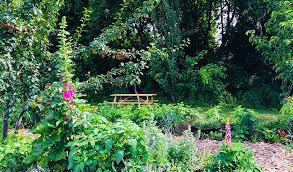
The idea of that dark altar has stuck with me all these years. Today I’m thinking we can see the dark altar as a dark mirror that can show us things we don’t see in the light. We can sit quietly in the darkness and look with the eyes of our imagination and see what may be coming to us. We can use the night vision of our soul and look for the crone we’re growing up to be. Who is the crone? She’s the elderly woman. The idea of three stages in a woman’s life was more or less invented by Robert Graves in his 1948 book The White Goddess: maiden, mother, crone. When the idea of “croning,” or being declared a wise elder in a special ritual, became a fad in the 1990s, practically everyone I knew got herself croned, even young women in their thirties. Around the turn of the century, however, my friend Donna Henes a ritualist and urban shaman who lives in Brooklyn, New York) and I both realized that a significant phase of woman’s life was missing from that old setup. Donna and I both called that important fourth phase the queen, and she wrote a book (Queen of My Self, ) about it.
While the women in the FAR community fall into all four stages of the feminine life, many of us are in fact old getting enough to be queens and crones. As winter begins, therefore, it seems to me that this is a good time to look at ourselves more closely. To see what our personal “winter” might be. To see our crone selves.
“Mirror, mirror on the wall, who’s the fairest one of all?” Regard the fair crone. Not fair as in “pretty,” although you may see the fairness of a face lined with the lessons of a lifetime. Fair as in “without bias, distinct, pleasant and courteous in speech.”
Here’s how to use the dark mirror. First, as in any ritual, large or small, set your intention. It might be a question. “What will this winter season bring to me?” You might also say, “Show me my dark side and teach me how to lighten up.” Or, “How can I become more enlightened during this winter season?” More important: “Let me see and speak with the crone I will be. What will she tell me?”
Next, create your own fireless altar. It doesn’t have to be pagan or Wiccan, but can be just a table with a few things you love on it to help keep you grounded. Do this outdoors in the dark or inside with the lights turned off so there are no distractions.
Now invoke, say, Hecate or the Eumenides and sit in the darkness and ponder the crone you may become. Request a crone encounter. Ask her to be present at your dark altar. Look carefully at this crone who appears with the goddess in the dark mirror. Can she bring light to it? To you? What can she tell you about your life in the coming season? In years to come? Ask her more questions. What’s coming into your life before spring? Is there any wilderness ahead? How can you prepare for it? What should you plan ahead for? Another topic: What parts of your life so far do you want to remember? What do you want to leave behind and forget? And of course: What kind of queen or crone will you be? When the persona in that dark mirror speaks, listen to her answers. Prepare for the coming winter. And stay warm during the cold season.
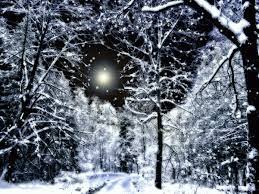
Note: HEY, GUYS—NO NEED TO FEEL LEFT OUT. Goddesses speak to men, too. (Read the myths.) Just as girls grow up to be crones, boys grow up to be sages, or wise elderly men. You can become a sage. Create a dark altar and ask the same kinds of questions of your future self.
Bio
Barbara Ardinger, Ph.D. (barbaraardinger.com), is the author of Secret Lives, a novel about crones and other magical folks, Pagan Every Day, a unique daybook of daily meditations, and other books. She really enjoys writing her monthly blogs for FAR. Her work has also been published in devotionals to Isis, Athena, and Brigid. Barbara’s day job is freelance editing for people who have good ideas but don’t want to embarrass themselves in print. To date, she has edited more than 300 books, both fiction and nonfiction, on a wide range of topics. She lives in Long Beach, California, with her rescued calico cat, Schroedinger.
Discover more from Feminism and Religion
Subscribe to get the latest posts sent to your email.

 Feminism and Religion
I do miss Barbara…. Wonder if she still reads FAR. What I like most about this post is that Barbara creates space for the dark side – if we ever needed to develop a relationship with the dark it is now so we are not fooled – we are facing societal collapse and living this unknown is scary. On a personal level being willing to self reflect (use the mirror if you like) is critical so we don’t end up projecting more dark out there. This essay also demonstrates one way to celebrate the wheel of the year – those eight spokes can be found in mythologies across the world… when we return to the wheel we pick up where our ancestors left off – human and otherwise. I can’t tell you how many many times my own rituals are punctuated by the sounds animals make. I suspect the trees do take note as well but sine their language is one of scent and signal it is harder to hear them unless they are speaking through scent which is how they often come to me.
LikeLike
Many many thanks to whoever’s in charge these days for pulling my essay out of the archives and a million thanks to all of you who read it and to you who commented. I always worked hard on my FAR essays and loved writing them.
No, I don’t read FAR anymore. But I’m glad people are reading the various essays.
Brightest blessings, y’all, for the winter. We who live in SoCal are very wary of fires, so fireless altars have another purpose. Yes, brightest blessings to us all.
Barbara
LikeLiked by 1 person
Oh Barbara I wish you still wrote for FAR….Fireless altars fit the season – and I am so glad that Janet/Xochitl post your work – it’s if anything more timely now than ever….we are wary of fires in Maine too 10 inches below normal – whatever normal means now….Blessings to you too
LikeLike
Thought you might like to know that we’re using your book right now locally (A Woman’s Book of Rituals and Celebrations) to our guide a monthly small circle. The webs we weave connect through time and space and past and present. <3
Love,
Molly
LikeLike
Molly, I’m sooooo glad to hear that someone is actually using my book. I wrote it to be used, but I almost never hear that anyone is doing anything in it.
Bright blessings to you and your group!
Barbara
LikeLike
Oh, I almost forgot the significance of the fireless altar – All Hallows and the Days of Dead ARE fireless – this is a spoke that speaks to water – so even without intention what needed to be honored was the powers of water and it was!
LikeLike
Thank you, Barbara, for this beautiful ritual. Thank you Sara for reminding us of this time to honor water.
LikeLike
Many thanks for posting this ritual. Bright blessings to all!
Barbara
LikeLike