
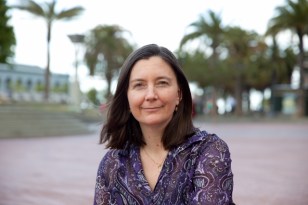
A Letter to Senator Feinstein by Sarah Robinson-Bertoni

Dear Senator Feinstein,

I distinctly remember celebrating the 1992 historic victory when you and Barbara Boxer were elected as the first female Senatorial duo from any state in the union.  My father brought my sister and me to an election party that evening at Gaia bookstore in Berkeley to watch the results trickle in.  We literally jumped for joy, proud that California could lead the nation in recognizing the full capacity of women to legislate effectively and to send you to Washington.  I never doubted that you would endeavor to represent me even though I was too young at that time to cast my own vote.

I am troubled by the recent media splash that showed your response to young people, who are rightly concerned about their own ability to have a future, represented in their intent to convince you to support the Green New Deal.  At a certain level, it doesn’t matter what name is on the legislation, but what does matter is the content.  Empirical reality, though undeniable in nearly the rest of the world, has been stymied here in the U.S. by those who profit from doubt and confusion.  It is time for more active leadership in government and business to steer away from the shore before the ship of civilization runs aground.

Continue reading “A Letter to Senator Feinstein by Sarah Robinson-Bertoni”
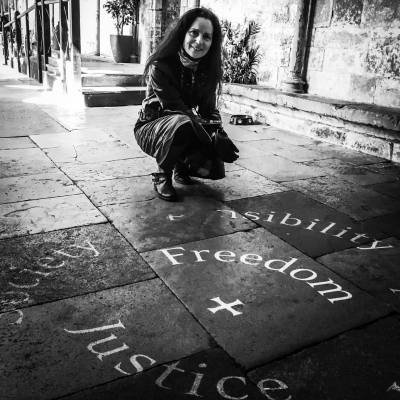
Sawbonna: Godde and Another Route to Forgiveness by Margot Van Sluytman

From the day my Father, Theodore, was brutally and callously murdered in Toronto, on Easter Monday, March 27, 1978, I wanted to meet his killer. I wanted to know how it was possible to do such a horrific thing. I wanted to know how he felt about destroying the lives of so many; my family’s, and his own.

We did meet. The meeting occurred in July of 2007. Because of reading about an award I received for my Therapeutic Writing Workshops and the publication of my books about healing, voice, and agency, he emailed me. Our meeting, our reconciliation, even those many years after that dark, dark day, was a rich blessing in my life, and proved helpful for him too.

The word forgiveness, is one that can lead to great suffering for victims and offenders alike. Victims are told that if they do not forgive, they cannot heal. Offenders are told that if they are not forgiven, they cannot move on from the crime they have committed. Forgiveness is a loaded word, with as many understandings, expectations, and definitions as there are experiences of savage loss, savage grief, savage pain.

Continue reading “Sawbonna: Godde and Another Route to Forgiveness by Margot Van Sluytman”

Ariel, just fighting to get above water…by Yara González-Justiniano

I am all for the critical deconstruction of Disney Princesses, especially since now I see more of a commercial push for them as a collection than when I was growing up in the late 80’s. However, I too had a favorite princess growing up, Ariel from The Little Mermaid. I lived next to the ocean and it made sense that she would be the most relatable Disney character to a Puerto Rican 5-year-old at that time; a character like Moana was not yet in site to appeal to this isleña.[1] I remember going to the beach every week and hoping to find a fish or a seagull that could talk. What drew me into the film was her story and the whimsical animal characters, not particularly the “finding prince charming” fairytale.

Recently, as more modern and independent female characters continue to make their Disney debut, I hear people refer to Ariel as the worst princess of them all. ¡Ay bendito![2] Poor Ariel is always critiqued and looked down on for giving up her voice for a man. But in reality she was infatuated with humans and wanted to be “part of [that] world” long before she met Eric. She was an explorer, a questioner and as naïve as we all can be sometimes when we set our hearts to follow a dream. Regardless, she wanted more! Continue reading “Ariel, just fighting to get above water…by Yara González-Justiniano”

Recognizing Abuse by Karen Tate

I’ve been thinking a lot about abuse.  Of course, most of us know about the domination, exploitation and  need for control meted out by patriarchy, but I wonder if we have actually normalized many abuses?  Abuse in the home, in the workplace, in our culture.   Perhaps  we accepted it unconsciously because so many of us are conditioned by religions that tell us to make noble sacrifice and tolerate suffering silently. I wonder if we’re calling it out when we see it – often and loudly – or if we’ve become conditioned to quietly accept the abuse with little push back.
My intent is not to offend anyone with this.  I want to find common ground and defeat the polarization we find around us, but our President is the poster child for abusive behavior.  Do we recognize his lies and fear-mongering and so many of the ideas he gives credence and license to as abuse?  Not only is he eroding our democratic institutions but he poisons the political, social and cultural arena with negativity, fear and hate, rather than uplifting us and encouraging us to evolve and be the best version of ourselves.  I equate him to poison in a well from which we must all drink. Continue reading “Recognizing Abuse by Karen Tate”

Leading by Mandala by Nurete Brenner and Elizabeth Meacham

Liz and Nurete (L to R)

Lake Erie Institute

The old myths and images that sustained us in earlier periods are no longer serving us during this time of breakdown of the old and the uncertainty about the future. The lone wolf, the frontiersman, the all-powerful superhero – these tropes fade into irrelevance as it becomes clear that no messianic figure is going to step forward and part the sea for us. We need to find new stories to accompany us and new images to illuminate the path as we shift from a patriarchal-hierarchical structure to a collective, relational, participatory one born in partnership rather than domination.  Women’s leadership is the emergent idea that leadership is about co-creating a new story for the world during a time of radical transformation in Earth history.

The word “leadership” stems from the Indo-European root leith which means to cross a threshold. How does a society cross the threshold from the myth of the strong leader to a new story of collective leadership? One answer is by telling new stories. Traditionally women have been the storytellers of our culture, relaying and relating the fairy tales, the bedtime stories, the family-history narratives and cultural myths. The men who share in this story-telling role are those who are at one with their feminine aspect and we recognize that this activity is not at all new for Indigenous cultures which have maintained an ongoing tradition of participatory story-telling leadership. Continue reading “Leading by Mandala by Nurete Brenner and Elizabeth Meacham”

Creatrix Mundi: Speculating The Godma by Isabella Ides

Photo Credit: KTYarbrough

What does it mean to approach the idea of a Godma, a mother-of-all, as an act of the imagination, as a pure act of speculation? I particularly love the word speculator: one who is mining for the diamond, one who is going off the map, a voyager, a voyeur, a seer. A spiritual adventurer. A gambler, a trader in divine currencies.

I am a writer of fictions—speculative fictions. I am a poet-philosopher. Acts of the imagination and divine currencies are my trade.

I like this phrase: In the beginning was an of the imagination, a movement of mind. Or better—an act of procreation, a giving of birth. I love how words lead an idea deeper into the woods. A chance to get lost in variations and find new places to hide and seek. Perchance to meet an angel. Or a wolf. Or yourself in disguise. Continue reading “Creatrix Mundi: Speculating The Godma by Isabella Ides”

Emotional Labor, Elastigirl, & Me by Kay Bee

Last year, I turned 40 and started grad school while working part time at the public library as the Children’s Services Manager, living in a cohousing community, volunteering with my Sisterhood, and raising three teenagers. I’m between semesters at the moment and I’ve had a chance to do some reading by choice instead of reading by syllabus. One of the titles I picked up during this semester break was Fed Up: Emotional Labor, Women, and the Way Forward by Gemma Hartley.
I’ve also had the chance to curl up with my family and watch a few movies. In addition to our epic Marvel chronology review project, we decided to snag the library’s copy of Incredibles 2 (2018) for family movie night. Despite the fact that the original movie released when our eldest child was only a year old, my teenagers have always been fans of Baby Jack-Jack and were excited to see this sequel fourteen years in the making.

I was about halfway through Hartley’s book when we sat down to watch the Parr family pick up right where they left off at the end of The Incredibles (2004). And less than a quarter of the way through the film when Fed Up and Incredibles 2 collided spectacularly inside my head. I spent the rest of the film thinking about emotional labor, parenting, and midlife career change. Continue reading “Emotional Labor, Elastigirl, & Me by Kay Bee”

Mantra and Meditation in Buddhist Hospice Chaplaincy to Alleviate Anxiety by Karen Nelson Villanueva

Karen Nelson Villanueva has recently successfully defended her doctoral dissertation, “Invoking the Blessings of the Tibetan Buddhist Goddess Tara Through Chanting Her Mantra to Overcome Fear,”

Mantras are not just the prescribed sound formulas or sentences found in Eastern religions, but they can also be thought of as the words or phrases that we continually repeat to ourselves. The word mantra comes from Sanskrit and its roots are manas-, meaning “mind,” and -tras, which can be translated as “tool.” Thus, mantra is a tool to protect the mind.

How often do we engage in negative self-talk like “It’s my fault” or “I’m to blame for what’s happened to me” or “No one loves me”? These expressions can become mantras, as we believe their messages from constant repetition. In hospice and hospital settings, one often finds patients who have convinced themselves that “This is God’s punishment” or “Everyone has forgotten me” or “I’m so scared.” These phrases, rather than protect the mind, become what is believed by the mind and may lead to increased anxiety, stress, and depression, and consequently the need for spiritual and emotional support.

Chaplains, as members of the care team in hospice and hospitals, provide spiritual and emotional support to patients and their families. Most often, chaplains attentively listen to patients and their caregivers (often family members) about the patients’ life story, their relationships, their dreams unfulfilled, and their wishes for those whom they are leaving behind. Chaplains take part in family meetings where decisions are made about patients’ care, sometimes interjecting to ask for clarification of medical terms and to ensure that the family understands. Sometimes, the chaplain will lead prayer with the patients and their families, and at other times, the chaplain will pull other tools from her toolbox such as mantra meditation.

Continue reading “Mantra and Meditation in Buddhist Hospice Chaplaincy to Alleviate Anxiety by Karen Nelson Villanueva”

Virgins with Pregnancy Scares: Feminist Reflections on the Annunciation by Lauren D. Sawyer

There I was in the bathroom, peeing on a stick. “It’s a rite of passage,” my friend Kelsey told me. She was the one wishing me luck from the other side of the door; she was the one who brought me the pregnancy test—and a pound of chocolate—after my panicked tears suggested I could not buy one on my own.

I came from a world of virgins with pregnancy scares. Growing up a girl in a conservative evangelical church, I was taught that all sexual sins—from kissing in the dark, to “petting” (whatever that was), to oral sex, to intercourse—were equally bad, were just as likely to risk my salvation. So many of us began imagining that the consequences were all the same too, that we might become pregnant by unconventional means. Lying naked together. Making out. Continue reading “Virgins with Pregnancy Scares: Feminist Reflections on the Annunciation by Lauren D. Sawyer”

The Santa Goddess from The Goddess Project: Made in Her Image by Colette Numajiri

Frau Holda Poem

Hail to Frau Holda, the beautiful and bright,
Crowned and clothed, all in glistening Winter white.
Ay seeking and searching, She sweeps o’er the land,
Scourge for the slovenly, held firmly in hand.
As Holda fares forth, with Her own Holy Host,
May She deem distaffs full, befitting a Yule boast.
For when all is cleanly, content She shall be,
Thus Her bedding she flaps, with a whirlwind flurry.
Soon crisp snowflakes, come falling feather light,
Cleverly She shakes, cloaking the clutter with white.
‘Til Earth is enclosed, by a fine fluffy down,
A bedecked beauty, in Her sparkling snow gown.
Heed well and hear, when Holda’s housework doth end,
A faint satisfied sigh, for the mess Frau did mend.
© Rhonda Turner


Once I became a mother I found the demands as well as my own expectations for holiday gifting, decor and celebrations to be SO taxing that I quickly felt a bit of resentment toward Santa Claus for getting all of the credit. Now I tell my children that Santa Goddess is posing as homekeeping MRS. CLAUSE and that SHE and the elves do all of the work, and that “Santa” is merely their courier. Engulfed in modern society, I don’t think my young children hear me as they still dance with glee at any mention of Santa Claus.

Continue reading “The Santa Goddess from The Goddess Project: Made in Her Image by Colette Numajiri”