

 One of the first things my American friends and family ask me when they learn I used to be married to an Indian man is: was it an arranged marriage? I understand the intrigue, the bewilderment and even horror that the phrase “arranged marriage” can conjure up in unfamiliar Western minds. Images of forcing women to marry strangers encountered upon the street or child betrothals or women being dragged to the wedding site to be married off to mustachioed men are likely to flash before one’s eyes. While such incidents may have occurred from time to time, and in the past, as with child marriages, the long-established concept of “arranged marriage” is very different and not as frightening as may seem.
Traditionally speaking, proposals materialized through word-of-mouth – family and friends recommended a good alliance, or a parent would approach someone directly or indirectly to ask for a daughter or son’s hand in marriage. Even then, personal histories were well researched into, before both parties decided to “see” each other. Marriages in India continue to be alliances between families, and so it is important to check into family background – what are the parents’ and siblings’ occupations? How much does the prospective groom earn? After all, he may be the sole earning member of his family and may not be able to provide for his own family once he starts one. Is there a history of crime or mental illness? This investigation makes perfect sense in a society that is community and family-oriented, and wherein joint family situations are still the norm, especially in smaller towns and villages. It is thus imperative that everyone try and get along. “Arranged marriage” is certainly not synonymous with an “Oh-let’s-just-get-rid-of-our-daughter” arrangement.
Continue reading “Breaking Down the Concept of Arranged Marriages by Vibha Shetiya”
 I’m sitting in my parents’ balcony in Pune, India, on a quiet morning. Well, this being a bustling Indian city of six million, it can’t really be quiet. As I sit with cup of tea in hand, I try and meditate – I’ve been practicing mindful meditation of late, and so, rather than block out the noises, I embrace the various sounds that make up this Monday morning.
 Like many others, I too have been thinking of this election the past month or so. A lot has been said about the repercussions a Trump presidency will have on immigrants, women, the LGBTQ community, non-Whites…the list is endless. But in this post, I would like to talk about personal matters, and what it meant for a first-time voter like me to vote in the US elections. I have been living in the United States for over seventeen years, but only recently – in April this year – did I apply for citizenship.
 This continues my reflections on the Devidasis in
  I recently re-watched a BBC documentary my students and I had discussed in class last Fall. “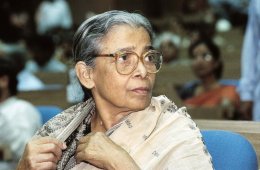
 I often recall the time many years ago when a relative sympathized with the fact that my kittie had been spayed. Pigou was one of five girl cats we had and rather than face the difficult task of having to find homes for all of their offspring, or worse, put their lives in danger for lack of adequate care, we decided to get Mama Cat along with her four daughters fixed. My aunt’s words still resonate in my ears: “That is so sad. After all, every woman nurtures a desire to be a mother.” I remember feeling terrible. My parents and I had just committed the grave sin of severing Pigou (along with her sisters) from her identity – her natural role of mother. As I have gotten older, my views on Pigou and her lack of choice in the whole matter have changed, although I acknowledge that it may remain an ethical issue for some. Much as I empathize, however, Pigou and animal rights are not the center of this post, although a related topic is – that of motherhood.
 As a teenager, I grew up wondering where exactly I belonged. Aside from the confusion resulting from straddling two entirely different, perhaps even opposing, cultures, my main concern seemed to center on which country was I from – India or Zambia? Or was I inherently British because of an education and upbringing enveloped by things English – values, books, magazines, not to mention people? Was I American because I grew up on TV shows like Charlie’s Angles, Wonder Woman, Six Million Dollar Man and Dallas that played a major role in fashioning my idea of the world around me? Perhaps I was Zambian because I had been living in that part of the world since the age of one. Or maybe I was from India because that was after all the land of my birth, to where I returned as an utterly confused and disjointed teenager who believed she now had to be “Indian” even though I could not relate so much as an iota to my immediate surroundings.
