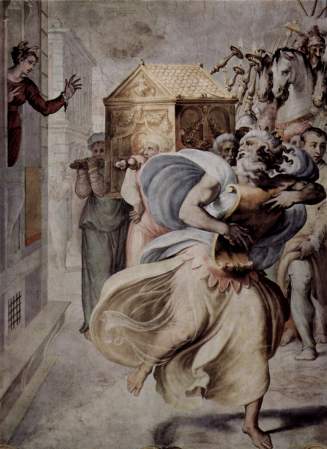
The Holy of Holies and the Umbilical Cord: The Evolution of a Ritual Object by Jill Hammer

In the Jewish calendar, we’re just past the holiday season—the High Holidays, the harvest festival of Sukkot, and the concluding festival of Simchat Torah when the last verses of the Torah are read and the first verses are started again. The Torah readings for these holidays speak often of the offerings once made on the altar in the Tabernacle in celebration of these festivals.  Particularly on Yom Kippur, the readings mention the kodesh kodashim: the holy of holies. This enclosed sacred space contained, according to legend: the tablets of the Commandments inside an ark, topped by two cherubim that held up an empty space between them—an empty space understood to be the amplified presence of an invisible God.  As I think back over my powerful summer, which was largely spent with Jewish priestesses on various retreats and adventures (in Connecticut, Mississippi, California, Costa Rica, England and Scotland), I am thinking about a unique ritual object we use, and realizing that in its own way, it is a kind of Holy of Holies.

Continue reading “The Holy of Holies and the Umbilical Cord: The Evolution of a Ritual Object by Jill Hammer”

The Prophetess: Greta Thunberg, Global Warming, and the Legacy of Prophecy in Our Own Day by Jill Hammer

My community and many others have been watching in awe as Greta Thunberg makes waves around the world—her lone climate change protest in Sweden growing in a single year into a climate strike with millions of demonstrators around the world.  Of course, Greta isn’t asking us to listen to her.  She is asking us to listen to the science that will save us.  And Greta is not alone: there are young indigenous female protesters like performance poet and peace activist Lyla June Johnston of the Dine (Navajo) and Tsetsehestahese (Cheyenne) peoples and water protector Autumn Peltier of the Anishnaabe people, who are speaking before the UN and in other public settings about global warming, and revitalizing our spiritual relationship with Mother Earth. Yet Greta knows that her fame (and her youth) gives her a platform. She is conscientiously using that platform to testify before Congress and the UN, Tweet, post on Facebook, and do whatever else she can do to make an impact.  Recently, I’ve noticed that some people in my home Jewish community, when they post about Greta on social media, have given her a nickname: they call her “the prophetess.”

This appellation has deep history.  The Hebrew word for prophet is navi, and the word for prophetess is neviah. These words come from the root nun-bet-alef which means to announce or proclaim.  At one event I attended, a woman enacting the role of a prophetess announced: “I am God’s microphone,” and that is what a navi or neviah does: amplify the voice of the sacred. Continue reading “The Prophetess: Greta Thunberg, Global Warming, and the Legacy of Prophecy in Our Own Day by Jill Hammer”

Sappho’s Poems as an Ethos for Women’s Ritual by Jill Hammer

Photo by: Zac Jaffe

For by my side you put on

many wreaths of roses

and garlands of flowers

around your soft neck


and with precious and royal perfume

you anointed yourself.


On soft beds you satisfied your passion.


And there was no dance

no holy place

from which we were absent.


–Sappho (trans. Julia Dubnoff)


Sappho, the poet from Lesbos (630-570 BCE), was considered one of the greatest poets of her time—one of her epithets was “the tenth Muse.” I discovered the poems of Sappho in my thirties and was utterly captivated.  I had newly embarked on a relationship with a woman and Sappho’s love poetry (though by no means exclusively lesbian) supported the expression of eros between women.  Yet even more than that, Sappho’s poems supported an erotic relationship between self and world—a relationship that included ritual as a form of intimacy.  I’m not a Greek scholar—I experience Sappho’s poems in translation. Yet the translations I read back then were a revelation: a world in which women lived in circle with one another.

Continue reading “Sappho’s Poems as an Ethos for Women’s Ritual by Jill Hammer”

Spring Blossoming: The Holy Orchard as Goddess by Jill Hammer

Every year when the cherries, pears, plums, and apple trees begin to bloom, I go out walking.  I look for every spot in my vicinity where white and pink blossoms are blooming in exquisite profusion like foam on an ocean. Every year I take photographs, even though I already have so many.  I walk at every hour of the day because, as the light changes, the colors change. I have albums and albums of pictures of my beloveds, the trees.
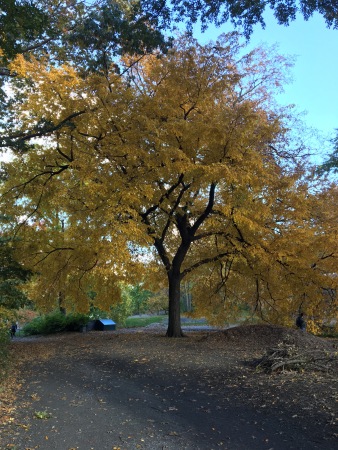
For me, the apple and cherry trees are a manifestation of Goddess.  Of course, everything is a manifestation of Goddess, but these, for me, have an extra measure of that life-giving beauty and abundance I associate with the indwelling Presence in the cosmos.  My enjoyment of the blossoms is both a sensual appreciation of the gorgeousness of Being and a poignant awareness that they will not last forever.  Sometimes these glories manifest for me as feminine, sometimes as masculine, and sometimes just as Life itself.


Continue reading “Spring Blossoming: The Holy Orchard as Goddess by Jill Hammer”

Tree of Life: The Festival of the Trees in an Age of Treefall by Jill Hammer

Almost every day, I walk in Central Park.  There are certain trees there I’ve come to know: the gnarled cherry trees by the reservoir, the bending willows and tall bald cypress by the pond, the sycamores that drop their bark each summer, the hawthorn not far from Central Park West.  Lately I’ve been taking photos of the trees to try to capture their essence, their posture in the world.  The trees around me feel like friends, which is what an ancient midrash (interpretation/legend) called Genesis Rabbah says about trees: that they are friends to humankind.  To me, they’ve always been a central manifestation of Mother Earth.

Currently, the national parks in the United States have no staff because of the government shutdown. Some people have taken the opportunity to cut down the rare and endangered Joshua trees in the Joshua Tree National Park—just for fun, I guess, or as a trophy of some kind.  Meanwhile, President Bolsonaro of Brazil recently has indicted that he wants to remove protection for the rainforest, in order to allow development.  It appears that my friends the trees have enemies.  Sometimes the enmity is for personal/corporate gain, and sometimes the enmity seems to have no reason at all.

Continue reading “Tree of Life: The Festival of the Trees in an Age of Treefall by Jill Hammer”

Jewish Hair, Witch Hair, and the Problem of Identity by Jill Hammer

This is a time of increased vulnerability for many minority populations in the United States: people of color, immigrants, LGBT people, native peoples. The policies and rhetoric of the current administration have left all these groups exposed to hostility.  Women are also feeling the pressure, as the gender split in voting in the past election suggests. And, Jews also are facing increased visibility.  In addition to the murders in Pittsburgh, anti-Semitic incidents around the country have increased in the last few years.  All this has me thinking about visibility, chosen and unchosen.
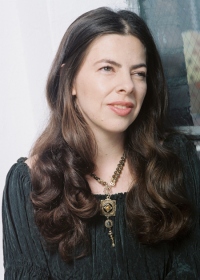
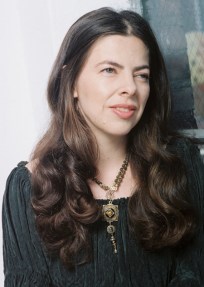
My father, an Ashkenazi Jew with curly black hair, green eyes and dark skin, came from an immigrant family that arrived here in the early 20th century from the region of Poland known as Galicia.  His mother in particular valued assimilation into American identity, and prized blond hair as a sign of this identity– she in fact later dyed her black hair blond.  His aunt had blond hair and it was considered a family coup.  (There’s much to say here about developing an assumed American identity of whiteness, as well as the presumption of Christianity.) When I was a little girl, I had blond hair and blue eyes.  My father used to call me his blond-haired, blue-eyed girl.

“No,” I would insist.  “My hair is brown and my eyes are green.” Continue reading “Jewish Hair, Witch Hair, and the Problem of Identity by Jill Hammer”

The Great Seal: Yom Kippur and The Ancient Practice of Making Incantation Bowls by Jill Hammer

The liturgy of Yom Kippur states: “On Rosh haShanah it is written, on Yom Kippur it is sealed: who will live and who will die, who by fire and who by water…”  This prayer refers to a legend mentioned in the Talmud, in which the righteous are written in the book of life while the wicked are written in the book of death (and those of us who fall in-between get our own book of “in between” people.).  During the High Holiday season Jews pray again and again to be written in the book of life, but by the end of Yom Kippur the language has changed: we pray to be “sealed” in the book of life.  But what is this “sealing”?

This season, as part of my sabbatical writing project, I have been studying the magical practices of Mesopotamia in the 6th-8th centuries.  One fascinating example of these practices is the making of “incantation bowls.”  This ritual, done by Jews as well as Christians and Mandaeans, involves inscribing a ceramic bowl with a spell of protection or healing, and then burying it under a threshold or in the corner of a home.  The words frequently are written in a spiral or other pattern, and sometimes include an image of a chained demon at the bottom of the bowl.  Typically the spells invoke divine and angelic names against demonic forces. Sometimes the bowls even speak of “divorce”—particularly, divorcing the demon Lilith and sending her away. Most typically, the bowls use the language of “sealing”—i.e. sealing demons out of a home.  Continue reading “The Great Seal: Yom Kippur and The Ancient Practice of Making Incantation Bowls by Jill Hammer”

The Three Mothers: Feminine Elements and the Early Kabbalah by Jill Hammer

For over ten years, I’ve been teaching a work of early Jewish mysticism known as Sefer Yetzirah, or the Book of Creation.  There are widely differing opinions on the book’s origin and dating, but many scholars date it to the sixth century.  Its core concept can be described simply: the Divine used the Hebrew letters as metaphysical channels to create the different aspects of reality: the directions, the elements, the planets, the months of the year, and so forth.  Each letter is a channel by which God creates a unique form or entity, and meditating on the letters provides us with a connection to divine creative power. In its discussion of the letters, Sefer Yetzirah shows a strong connection to feminine imagery, and thus helps the later kabbalah develop its own link to the feminine.

Sefer Yetzirah shows influences from Aristotle to Gnosticism, and is often viewed as a work of Jewish philosophy.  However, it is also a work of meditation, giving the reader instruction on how to focus and connect to the divine. Scholars such as Richard Hayman and Marla Segol have noted that the book’s structure and content connect it to magical literature: for example, the book has a deep concern with “sealing” the space of the world: letters of the Divine Name are used to seal the six directions of the universe.  In a similar way, ceremonial magicians of the ancient world used sealing ritual, including the incantation bowls that were buried in the corners of a home to keep out evil forces.  The book, like much ceremonial magic of the region, also discusses the elements.  However, Sefer Yetzirah has a three-element system rather than a four or five-element system.  The three formative elements are air, water, and fire.

Continue reading “The Three Mothers: Feminine Elements and the Early Kabbalah by Jill Hammer”

Crowding into the Spirit World: Reclaiming a Metaphysics of Multiplicity by Jill Hammer

A number of years ago, I had the opportunity to take a class with Chava Weissler, a scholar at Lehigh University who studies Jewish history, community, and sacred practices– particularly those practices related to women.  My fellow students in the class were other rabbis, taking a break from their work in order to do some learning.  Dr. Weissler was teaching about an Ashkenazi Jewish women’s practice known as “soul candles”—the making of candles during the High Holiday season to honor the dead of the community as well as the mythic ancestors.  Candles for Abraham and Sarah were made alongside candles for grandparents and other deceased relatives, using wicks that had been laid out along the graves to take the “measure” of the dead.  During the making of the candles, the candlemakers would ask that these ancestors would pray for the living, just as the living prayed for the dead.  As Dr. Weissler described this practice, a nervous giggle passed through the room.

I remember being shocked.  I understand that my colleagues have varying beliefs around life after death and around spirit in general.  And, hearing my colleagues laugh at such a ritual and its attendant beliefs surprised me.  Those same colleagues would never laugh at the idea that God wrote the Torah (even if not all of them believe that) or at the idea that God answers prayers (even though I’m sure many of them struggle with that idea too).  But the belief in ancestors who could intercede on behalf of their relatives was alien enough to be funny.  This caused me to notice that the contemporary spirit world, for some Jews, is rather empty.  It contains an abstract God, and no one else.

Continue reading “Crowding into the Spirit World: Reclaiming a Metaphysics of Multiplicity by Jill Hammer”

Michal the Priestess: Midrash, Multiplicity, and the Tales of King David by Jill Hammer

When I was in my late teens, I discovered midrash: the Jewish exegetical process by which commentators weave creative and additive interpretations into the sacred text.  Midrash comes from the word “to ask,” “to seek,” or “to divine.” For example, the tale in which a well follows the prophetess Miriam through the wilderness is an ancient midrash. The story in which God stops the angels from singing as the Egyptians drown in the Sea of Reeds is a midrash. Each of these stories derives from a particular close reading of text, whether a Torah text or a verse elsewhere in the Bible.  Each of them allows a new generation to add its own perspectives to the tradition.

Contemporary feminists, and many other contemporary artists, writers, and exegetes, have used a modern form of midrash to add liberatory perspectives to Jewish tradition and to biblical lore.  From Miriam to Vashti, female biblical characters shine in the creative interpretations of feminist midrashists.  Judith Plaskow’s “The Coming of Lilith” made a huge impact on the reading of the story of Eve and the legend of Lilith. Anita Diamant’s The Red Tent changed the conversation on Dinah forever. Alicia Ostriker, Norma Rosen, Veronica Golos, and many others have joined in this creative play which highlights marginalized voices within the text.  Wilda Gafney has made contributions to a Christian and womanist form of midrash.  Voices like Andrew Ramer and Joy Ladin have invited us to see queer and trans themes in the text. And of course many others, from poet Yehuda Amichai to bibliodramatist Peter Pitzele, have added to this rich tapestry.

Continue reading “Michal the Priestess: Midrash, Multiplicity, and the Tales of King David by Jill Hammer”