Anne Hutchinson, Sor Juana, and Kate Kelly: Reflections on Equality and Excommunication by Erin Seaward-Hiatt

Erin-Close-Up-BW On June 11, 2014 the New York Times made waves in the world of Mormondom with their breaking news that two members of the Church of Jesus Christ of Latter-day Saints (LDS) are facing excommunication on the grounds of apostasy. Active Church members Kate Kelly and John P. Dehlin both received letters from their local church officials in early June summoning them to participate in scheduled Church hearings to discuss their so-called heretical public activism. By many accounts, this appears to be Dehlin’s first notice of formal disciplinary action for his faith-mending work with Mormon Stories, but Kelly has been under official fire from the LDS Church since late May for her efforts in founding and operating Ordain Women (OW)—a pro-women’s ordination group of active believers—more than a year prior. The excommunication threats came on the heels of a church-wide trend that preaches acceptance and diversity among members and beyond, but sends a mixed message to those who, like Kate Kelly, find themselves asking sincere questions only to be either silenced or rejected by their Church and cut off from communal worship of their God.

Ever since the New York Times story broke, the web has seen a swarm of responses in the form of news, interviews, blog posts, and social media discussion; watching everything unfold has been a fascinating study in feminist thought. Kelly herself responded publicly to her disciplinary letter here, saying that she had been transparent about Ordain Women with her bishop from the group’s inception and that not once had she been called in to discuss her work. The formal letter came only after Kelly had moved across the country, and the disciplinary hearing is scheduled to occur with or without her on June 22, 2014. On June 23, Kelly received the word that the trial had resulted in her excommunication.

As I’ve read through the slew of ideas and arguments surrounding what amounts to Kate Kelly’s spiritual fate, I can’t help but notice a strong underlying theme of patriarchy at work in squelching what Kelly believes are sincere questions about the lives of Mormon women. Commentators have tried hard—in classic anti-feminist fashion—to discredit Kelly’s work with Ordain Women, making certain that readers see her as a disingenuous religious deviant worthy of silencing. Throughout the spill of voices about Kelly’s Church standing the underlying point seems to be that as a Latter-day Saint she has no right to contest her Church’s doctrine or its patriarchy, that she is imagining inequality into the Church, that the Church’s discipline will be for her own spiritual good, and even that her group, Ordain Women, is lying in its claims about inequality. Continue reading “Anne Hutchinson, Sor Juana, and Kate Kelly: Reflections on Equality and Excommunication by Erin Seaward-Hiatt”

#YesAllWomen, the Darwin Debate, and the God Complex by John Erickson

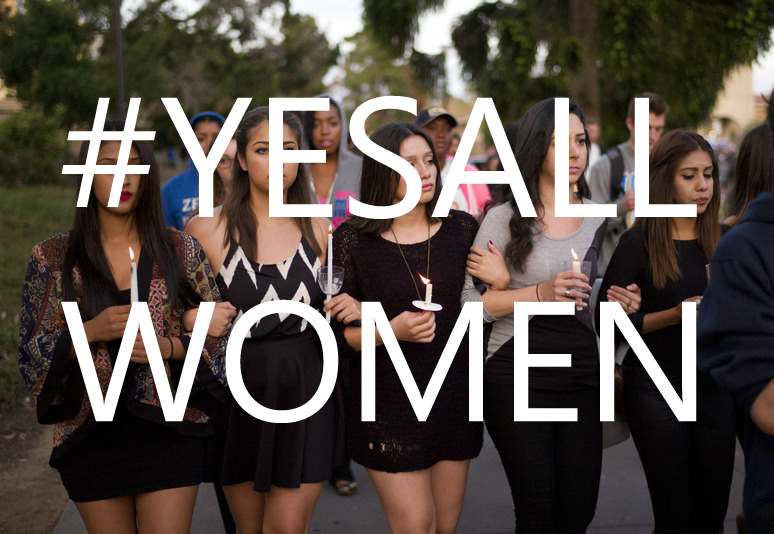
#YesAllWomen proved that although not all men commit horrible crimes against women, the men that often get the headlines and create the most controversy are the ones that need to be watched out for.

John EricksonThe one thing I typically will choose to do on the rare occasion that I’m able to sit down and relax is to watch a documentary.  While some people may go to the gym, read a book, or hang with friends, I typically choose to stay in, nestle up on my couch, and learn.  While on my last bout of relaxation, I chose to watch the HBO documentary Questioning Darwin. Although it offers very little new insight into the evolution vs. creationism debate, it does offer an interesting new way to look at the recent social media hashtag war feminists, allies, and supporters found themselves in over the #YesAllWomen movement that took the world by storm.

yesallwomen

Now, before I discuss #YesAllWomen, I have to admit that I did not enter into the safe space women created for themselves to tell tales of the horrible things they have and have had to face on a daily basis.  I firmly believe that men should not have entered into the digital space Continue reading “#YesAllWomen, the Darwin Debate, and the God Complex by John Erickson”

BARBARA LEE SPEAKS FOR ME by Carol P. Christ

carol christWhile I was in Crete on the Goddess Pilgrimage teaching about and experiencing a Society of Peace where violence and domination were neither celebrated nor encouraged, another war broke out in Iraq, breaking my heart, breaking all of our hearts—yet again. When will we ever learn, oh when will we ever learn?

Barbara Lee was the only member of Congress to vote against the US war powers authorized after 9/11 which were used to launch war in Afghanistan; she also voted against authorization for the Iraq war in 2002. Hillary Clinton voted for the Iraq war, despite clear indications that the US administration was lying about weapons of mass destruction—which were never found in Iraq. I voted for Barack Obama because he opposed this war. Then he listened to General Petraeus and expanded the war in Iraq. Barbara Lee speaks for me. Hillary Clinton and Barack Obama do not.

The Iraqi people are once again living in fear of their lives as reports surface that armies and militias are engaging in mass executions of their so-called “rivals.” Is there any cause that could justify this? Continue reading “BARBARA LEE SPEAKS FOR ME by Carol P. Christ”

Before Misogyny Contaminated Theology by Stuart Dean

Stuart WordPress photo

Compared to many issues related to ancient history, it is relatively easy to identify not just where and when misogyny began to contaminate theology, but  the person primarily responsible for it: Plato, who lived in Athens in the late fifth and early fourth centuries BCE. Although today Plato is not thought of as a theologian, in antiquity theology was not just one discipline among many, but rather was synonymous with philosophy as an overarching system of thought to which all else was subordinated. Conceived of in this way theology was comprised of a variety of interrelated theories that today ostensibly appear to be discrete disciplines, including biology and psychology.

There is thus little question but that the exclusion of women not just from theology but from literate culture generally up until the 20th century can to a great degree be attributed to Plato. In one dialogue he categorizes women as a subaltern species of humanity that has yet to evolve to the level of being attained by men. Consistent, in an odious way, with that biological theory, is Plato’s view of female psychology as being such that it should be against the law for women to establish private religious shrines and related rituals since they derive the inspiration for doing so from dreams, apparently incapable of the ‘serious thought’ he deemed necessary for such matters. Given that context it is hardly surprising that in all his ‘dialogues’ there is not one female participant.

Continue reading “Before Misogyny Contaminated Theology by Stuart Dean”

Supporting Gender Equality in the Church Results in Excommunication by Gina Messina-Dysert

Gina Messina-Dysert profileIt is unnerving to think that excommunication is still a real threat in the 21st century. Within both the Catholic and Mormon Churches members continue to be bullied into submission with such threats. Today, speaking out against gender injustice seems to be a sure way for one to end up expelled from her or his community. Kate Kelly, a human rights attorney and Mormon feminist, has become the most recent in a long line to be rebuked for speaking out about gender discrimination and is waiting to learn her fate following a trial by LDS Church leaders. Continue reading “Supporting Gender Equality in the Church Results in Excommunication by Gina Messina-Dysert”

Love Facing by Safa Plenty

aqua and red

This piece titled, ‘Love Facing’ is a meditation on the intergenerational dynamics of family violence and our need to move beyond labels in order to understand the complexities of American violence. It begins with a narrative critic of spanking as a corrective measure and its propensity to escalate into other forms of violence. The poem continues with reflection on how male privilege and power impact the disempowerment of women and girls. It signals forgiveness as a possible means of understanding intergenerational trauma and stress, however.  The piece advocates an understanding of male privilege and dynamics of power and control, as a means of empowering women and children, affected by family violence. Furthermore, it examines our societies failure to raise healthy men and boys, who are comfortable openly expressing their emotions. In the end, the poem signals our human need for unconditional love, respect, and honor and need for religious and spiritual practice imbued with compassion, mercy, and kindness, or feminine attributes of the Divine.

“When the power of love overcomes the love of power, the world will know peace.” ― Jimi Hendrix

Continue reading “Love Facing by Safa Plenty”

RAPE IS A NATIONAL CRISIS by Carol P. Christ

carol christWhen I was in high school I heard a story about a girl who got drunk at a party after a football game and had sex with more than one of the football players. The story was told at the expense of the girl, who was categorized as “easy” and “cheap.” The idea that gang rape might have occurred was not something that either the teller or I might have been capable of considering, for these words and the reality to which they point were not part of our vocabulary.

However, the fact that I remember this story decades later suggests that even then something did not “sit right” with me about the way it was told. The image of the girl, who was cute and had curly long light brown hair still fleets through my memory.

Yesterday I read that the following universities are under investigation for possible violation of Title IX Civil Rights protections for failure to investigate charges of rape on college campuses. Continue reading “RAPE IS A NATIONAL CRISIS by Carol P. Christ”

I Believe Anita! by Marie Cartier

Marie CartierDuring the past week I attended a Los Angeles premiere of a new documentary Anita: Speaking Truth to Power (Dir: Freida Lee Mock USA, 2013). The screening was sold out and I had great seats saved for me– sitting with a friend who works at Samuel Goldwyn, the distributor of this fine film.

In 1991, Anita Hill provided testimony she hoped would serve to dissemble the nomination of Clarence Thomas as a Supreme Court justice. Although the vote would end up being close (52-48) Hill’s testimony did not serve to dissuade the decision — Clarence Thomas’ nomination was confirmed and he was appointed to a life term on the Supreme Court four days after Hill’s testimony concluded. Here is an outline of the debate. Continue reading “I Believe Anita! by Marie Cartier”

Musings on Reification by Sara Frykenberg

Sara FrykenbergThe following is a bit of a messy and meandering blog: a kind of a ‘brain train,’ that starts with a question of reification and eating disorders, and moves into a sense of the literal ‘consuming’ nature of oppression.   So I will start with a ‘thank you’ to readers who will meander with me and with gratitude to the teachers whose thoughts I am wandering with along the way.

Reification is the process by which those created ideas that we externalize into institutions, concrete objects, or social principles then become so real to us that we tend to think of them as a separate reality or a thing/ life in and of itself.[1] I teach this concept in my ethics classes when we discuss the way in which actions and choices are connected to what we often consider to be external forces like “the government,” or “the economy,” when in fact, we are in relationship to and often, actively play a role in maintaining these realities (even when only playing a small role). Reification can subversively undermine our understanding of response-ability because it is a way of making the structures that form our society “other” than ourselves.

My students definitely struggle with this concept and often express the fear that they are too small as individuals to see any real change happen. (I too, often struggle with this fear when thinking about the reified ‘monsters’ of oppression and hate.) Dealing with this discouragement in class, I (and we) switch gears by emphasizing praxis and recognizing its successes. I ask my students to consider what can be done and what choices/changes I, they, or we are capable of making while re-membering changes already being made. As Gustavo Guiterrez says: “Pessimism comes from reality because reality is tragic, while optimism comes from action because action can change reality.”[2] Continue reading “Musings on Reification by Sara Frykenberg”

In Memoriam – God Hates Fags

Phelps didn’t just live a life filled with hate but he also embodied the very reasoning why so many communities cannot cross that proverbial bridge to work together to see past their differences and maybe never will. In the case of Phelps, sticks and stones may break our bones, but words really do hurt.

Fred Phelps, an American PasFred Phelpstor who headed the Westboro Baptist Church in Topeka, Kansas died at the age of 84 on March 19, 2014.  While some individuals leave behind legacies of their good deeds and loving memories, the only thing Phelps left behind was a family and church founded on the principle of hate.

A frequent eyesore at various events ranging from military funerals and gay pride gatherings to mainstream events that captured the attention of our pop-culture obsessed society, Fred Phelps and his clan believed it was their sacred duty to warn others of God’s anger over the growing acceptance of not only modernity in general but also issues like gay rights and abortion.  From slogans and signs such as ‘God Hates Fags’ to ‘Thank God for IEDs (Improvised Explosive Devices), Phelps has caused many controversies both during his lifetime and after his death.

Continue reading “In Memoriam – God Hates Fags”