#SHARE THEIR STORIES by Janet Maika’i Rudolph

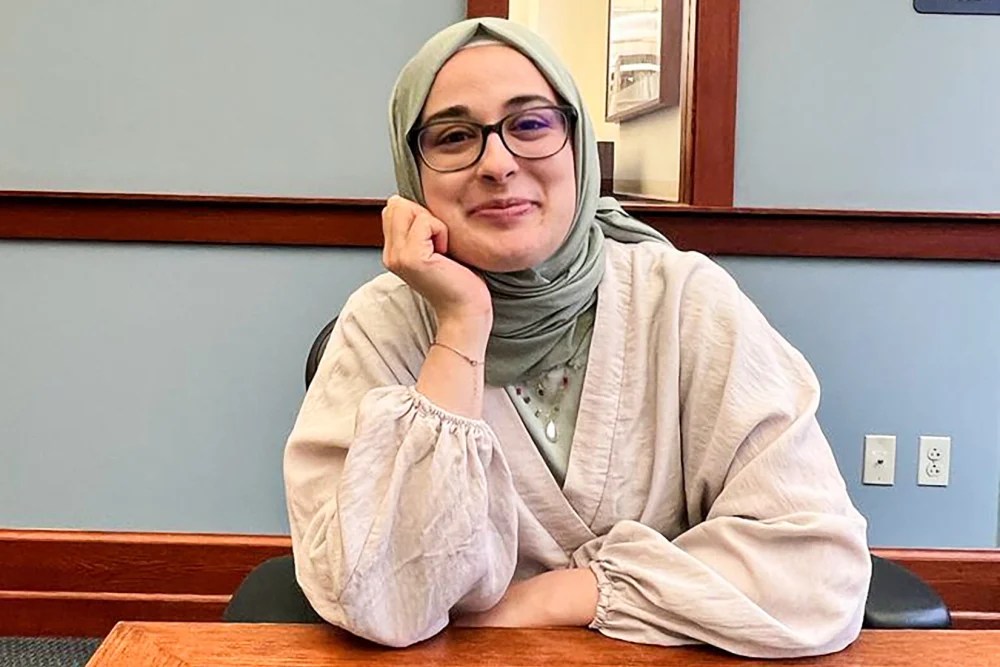
I was walking along the street the other day thinking about the comforts I find at home, my favorite tee-shirt, the three or four books I’m reading at a time, photos of loved ones. Around that time, I heard the news that Rümeysa Öztürk, a Turkish PhD student at Tufts who was whisked off the street by ICE agents in Massachusetts. She disappeared into the system until she showed up in detention in Louisiana. This is the facility that has been called “a black hole” by civil rights groups. So many have been swept off the street, how do we keep track? Ozturk had a valid student visa until the State department revoked it without notice nor telling her. She was on her way to break her Ramadan fast with friends. After her arrest she asked for food, not having eaten for 13 hours. She was given snacks. She still hadn’t eaten a meal by the next day and was feeling faint. She was given more snacks.

I began thinking, who are her friends? What was she going to eat? In fact, what are her favorite foods? In other words, who is she as a person. Her name is foreign, she comes from another country so it might be too easy to dismiss her as one of many. But if we know her story, if we humanize her, her story becomes harder to dismiss. The first step in the authoritarian playbook is to dehumanize people for some feature of who they are. When someone is dehumanized, it is far easier to do hateful things.

The antidote is to know their stories, share their stories, speak their stories.

Continue reading “#SHARE THEIR STORIES by Janet Maika’i Rudolph”

Did We Ask for a King? by Esther Nelson

Northrop Frye (1912-1991), a Canadian literary critic, is probably best known for his book THE GREAT CODE: THE BIBLE AND LITERATURE (1983). In it, he demonstrates how the Bible is foundational for our understanding of Western literature, a body of work replete with Biblical allusions. 

Today, most of us are not familiar enough with the Bible to appreciate where many literary themes take root. We fail to see how its stories—gathered over centuries—relate to us. Not only does Western literature mine from Biblical text, our lives as we experience them mirror much of Biblical story and narrative.   

I was raised on the Protestant Bible. To this day, I experience the world through Biblical story. There is nothing sacrosanct (to me) about the familiar text. The Bible is not unique. 

Continue reading “Did We Ask for a King? by Esther Nelson”

We’ve Seen This Playbook Before by Janet Maika’i Rudolph

Wikimedia Commons

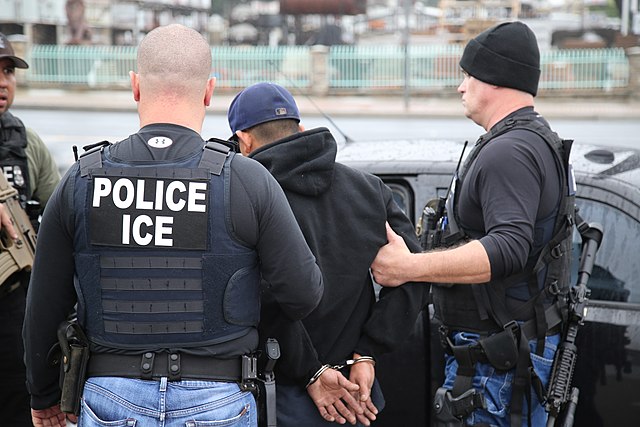
ICE has been doing mass round-ups of anyone who looks like “the other.” The people cheered.  “This is my country,” they shouted to the deportees. “Go back where you came from.” The people are flush with excitement thinking this is what we voted for, meanwhile ignoring that they came from someplace too. We know this is a publicity stunt. How? Dr. Phil tagged along on one of round-ups.  Newly minted secretary Kristi Noem also took her role in the spotlight attending one in NYC and saying dehumanizing words I will not repeat here. 

We’ve seen this playbook before. Creating chaos, disorientation and suffering for political points, TV or other publicity ratings. It doesn’t end well – EVER!

The NY Times had a report of how deportees were treated in a dehumanizing manner, being held on a broken plane in the Amazonian heat with no AC, people shackled, children were on board.  There are always people available to treat other people as less than human. “I was just doing my job.”  “I was only following orders.” 

We’ve seen this playbook before.  It doesn’t end well – EVER!

Continue reading “We’ve Seen This Playbook Before by Janet Maika’i Rudolph”

Saved by the Sea by Laura Shannon

This is the story of an improbable rescue. 


Delray Beach footpath. Photo: Public domain

The outcome of the US election was not the one I had hoped for or voted for. I know I’m not alone in this, nor am I alone in experiencing sudden strong emotional reactions in response to the acts of this new administration. 

For survivors of sexual abuse and sexual assault (officially 44% of adult women in the U.S., though habitual underreporting means this figure is probably much higher), it has been terrifying to see more and more men in positions of power who show no remorse for misogyny and abusive behaviour. This empowers others to behave badly, with an obvious sense of entitlement and impunity. 

The atmosphere of unchecked threat makes it harder for survivors to speak up for ourselves and others when any imbalance of power rears its head. Yet at the same time, it is ever more crucial that we do speak up. Many survivors find their chronic PTSD is triggered more frequently, while feeling even less able to respond with adult capability when a crisis strikes. This horrible paradox can quickly set off the paralysing cycle of diminishing self-esteem and increasing helplessness which survivors know only too well.

Continue reading “Saved by the Sea by Laura Shannon”

From the Archives: A Chorus of Need: I Need an Abortion by Marie Cartier

This was originally posted June, 2022

I need an abortion and I can’t get one

Because I don’t have the money to fly somewhere else other than …here

Where I can’t get one

I need an abortion and I can’t get one

Because the kid, or the cells of a maybe kid, were put in here by the guy that raped me and if I have to have it, I will kill myself

I need an abortion and I can’t get one

Because I have four kids already and I can’t feed another one

I need an abortion and I can’t get one

Because it’s my dad’s…did you hear me say that? I have never said that. I have never said what he does to me…and now I have to show everyone… if I can’t get this out of me I will…

I have to get this thing out of me

I need an abortion and I can’t get one

Continue reading “From the Archives: A Chorus of Need: I Need an Abortion by Marie Cartier”

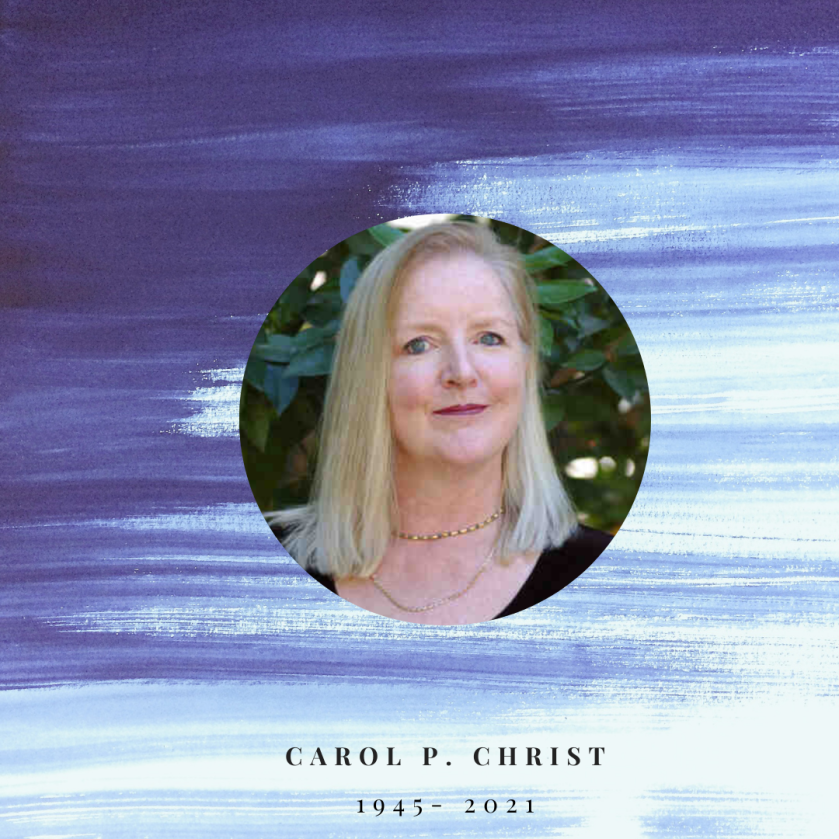
Legacy of Carol P Christ: WAR, WAR, WHAT ARE WE FIGHTING FOR?

This was originally posted Sept 16, 2013. It is sadly pertinent today

“They used chemical weapons, we must do something to stop them.”  A justification widely used in support of President Obama’s decision to launch a military strike against Syria.

We fought the Civil War to end slavery and racism. We fought the Second World War to end fascism. Did we end racism? Did we end fascism? Howard Zinn

At the time of the Revolutionary War, “a not inconsiderable Quaker element was on principle opposed to war, as itself a greater evil than any it might seek to right.”

Michelle Obama is against military intervention in Syria. Does the President dismiss Michelle’s dissent as “womanish”?

Continue reading “Legacy of Carol P Christ: WAR, WAR, WHAT ARE WE FIGHTING FOR?”

Legacy of Carol P. Christ: GODDESS WITH US: IS A RELATIONAL GOD POWERFUL ENOUGH?

This was originally posted on Sept 2, 2013

Last week I wrote about Protestant Neo-Orthodoxy’s deification of male power as power over.  This week I want to ask why the relational Goddess or God* of process philosophy has not been more widely embraced, both generally and in feminist theologies.

Could it be that a relational God just isn’t powerful enough? Are some of us still hoping that an omnipotent God can and will intervene in history to set things right?  Do we believe an omnipotent God can save us from death?

Process philosophy provides an attractive alternative to the concept of divine power modeled on male power as domination.  According to leading process philosopher Charles Hartshorne, the power to coerce, power as power over and domination, is not the kind of power God has.

The concept of divine power as omnipotent (having all the power) leads to what Hartshorne called “the zero fallacy.”  If God has all the power and can dominate in all situations, then the power of individuals* other than God is reduced to zero.  In effect, this means that individuals other than God do not really exist, but at most are puppets whose strings are pulled by the divine power.

Continue reading “Legacy of Carol P. Christ: GODDESS WITH US: IS A RELATIONAL GOD POWERFUL ENOUGH?”

Legacy of Carol P. Christ: Neo-Orthodoxy: The Apotheosis* of Power as Power Over

Recently I have been thinking about Neo-Orthodoxy, the leading  Protestant theological movement of the twentieth century, as a deification of male power as power over.  In the language of the schoolyard, this translates as “mine is bigger than yours.”  Or more precisely:  “God’s is bigger than yours.” 

Neo-Orthodoxy dominated Protestant theology in Europe and America in the mid-twentieth century and structured my theological education at Yale in the late 1960s and early 1970s.  Yale may have been “the bastion” of Neo-Orthodoxy, but Neo-Orthodox perspectives reigned in all the Protestant seminaries and were even celebrated in the media.  Neo-Orthodoxy may have some commonalities with fundamentalism but it was by no means an anti-intellectualist approach to theology.

Continue reading “Legacy of Carol P. Christ: Neo-Orthodoxy: The Apotheosis* of Power as Power Over”

Legacy of Carol P. Christ: RAPE CULTURE IN THE MILITARY AND “TURNING BOYS INTO MEN”

This was originally posted on June 17, 2013

Rape is not something that “just happens” in the military. It is an inevitable product of military training. Unless and until we understand this and change the way soldiers are trained, we will never be able to stop rape in the US military or any other military system.

Propaganda-Poster-Masculinity

The right to rape women of the enemy has been considered one of the “prerogatives” of warriors since the beginning of warfare.  Could “military training” which “turns boys into men” by calling them “girls” or “women” or “gay” in order to break down their self-esteem and remold their “character” as soldiers be one of the reasons rape is such a pervasive problem in the military? Are “boys” being taught that the only way to “prove” their “manhood” is to replace “identification” with women—their mothers, sisters, girlfriends, wives—with a new “identity” as a “dominant male” who “dominates” women and weaker men?  I fear that if we fail to address the “core issue” of “military training,” we will never get to the root of the rape culture that pervades the military.

Continue reading “Legacy of Carol P. Christ: RAPE CULTURE IN THE MILITARY AND “TURNING BOYS INTO MEN””

Legacy of Carol P. Christ: Somebody Almost Walked Off With All of My Stuff: And He Didn’t Even Know He Had a Thing of Value on the Open Market*

This was originally posted May 14, 2012

Gina Messina-Dysert’s blog on sexual harassment by a Religious Studies professor brought up memories that have haunted me for years. It has taken me some months to find the courage to post this story.

When I was an undergraduate, I was very naive and barely dating. I was not as prepared for college work as most of the other students, and I devoted myself to my studies.  I had a favorite professor, and I spent a lot of time in his office talking about books and about God.  This professor encouraged me to go on for a Ph.D. in his field at a time when a woman with a Ph.D. was an oddity.  His belief in my intelligence gave me the courage to overcome my parents’ opposition to the idea that I would pursue a doctorate. His recommendations helped me to win Danforth and Woodrow Wilson Fellowships. I naturally assumed that this professor respected me.   

Continue reading “Legacy of Carol P. Christ: Somebody Almost Walked Off With All of My Stuff: And He Didn’t Even Know He Had a Thing of Value on the Open Market*”