 The Women’s March on Washington has released its statement of vision and principles, and what a stunning testimony to intersectional feminism and collaboration it is! The statement is woman-centered, while at the same time addressing a multitude of issues that affect women’s lives: from access to abortion for all, to an equal rights amendment to the constitution, to the rights of women as domestic and farm workers, to police reform, and so much more.
I was thrilled to read the list of women honored as foremothers to the march:
Bella Abzug*Corazon Aquino*Ella Baker*Grace Lee Boggs*Berta Caceres*Rachel Carson*Shirley Chisholm*Angela Davis*Miss Major Griffin Gracy*LaDonna Harris*Dorothy I. Height *bell hooks*Dolores Huerta*Marsha P. Johnson*Barbara Jordan*Yuri Kochiyama*Winona LaDuke*Audre Lorde*Wilma Mankiller*Diane Nash*Sylvia Rivera*Barbara Smith*Gloria Steinem*Hannah G. Solomon*Harriet Tubman*Edith Windsor*Malala Yousafza
Many of these women have inspired me, particularly (but not only): Bella Abzug, Rachel Carson, Shirley Chisholm, Malala Yousafza. I have taught books by or about many of them, including: Rachel Carson, bell hooks, Audre Lorde, Harriet Tubman, Barbara Smith.
I hope these names will be read at the beginning of the ceremonies, followed by an invitation to all present to speak, shout, or whisper—all at the same time–the names of all the women, known and unknown, who have inspired their own activism for women’s rights. In this way, no one’s name is left out. We have a similar ritual on the Goddess Pilgrimage to Crete, and it is incredibly powerful.
I first heard the Women’s March on Washington discussed at the meeting of the Feminist Liberation Theology Network held in conjunction with the meetings American Academy of Religion and Society of Biblical Literature ten days after the (so-called) election of Donald Trump. At that time a number of women asked if this march would be a white women’s march. Would women of color feel called or able to come? In the interim, women of color have become leaders of the Women’s March on Washington and it is definitely not “for white women only.” It was suggested that women of color might feel safer at local marches. These have been organized as well: learn about Sister Marches here. At the time of this writing 370 Sister Marches had been organized—in all 50 states and in more than 40 countries.
If, like me, you are feeling weary and despondent these days, the statement of the Women’s March on Washington may help to re-inspire your commitment to all women’s rights:
The Women’s March on Washington is a women-led movement bringing together people of all genders, ages, races, cultures, political affiliations and backgrounds in our nation’s capital on January 21, 2017, to affirm our shared humanity and pronounce our bold message of resistance and self-determination
Recognizing that women have intersecting identities and are therefore impacted by a multitude of social justice and human rights issues, we have outlined a representative vision for a government that is based on the principles of liberty and justice for all. As Dr. King said, “We cannot walk alone. And as we walk, we must make the pledge that we shall always march ahead. We cannot turn back.”
Our liberation is bound in each other’s. The Women’s March on Washington includes leaders of organizations and communities that have been building the foundation for social progress for generations. We welcome vibrant collaboration and honor the legacy of the movements before us – the suffragists and abolitionists, the Civil Rights Movement, the feminist movement, the American Indian Movement, Occupy Wall Street, Marriage Equality, Black Lives Matter, and more – by employing a decentralized, leader-full structure and focusing on an ambitious, fundamental and comprehensive agenda. Read more.
Learn more about the march. Readers of FAR might want to participate in the march with WATER (Women’s Alliance for Theology, Ethics, and Ritual). I’ll be there in spirit from Molivos, Lesbos, Greece.
***
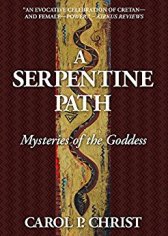 Be among the first to order A Serpentine Path, Carol P. Christ’s moving memoir of transformation. Carol’s other new book written with Judith Plaskow is Goddess and God in the World: Conversations in Embodied Theology. Carol also wrote the first Goddess feminist theology, Rebirth of the Goddess.
Join Carol on a Goddess Pilgrimage to Crete in 2017. Save $200.
Read two of the chapters in the book: Mysteries and Dionysian Rites.
Thanks to Judith Shaw for the cover art “Downward Serpent.”


 This was going to be a post about my new life in South Africa; to say what it means for me the return to this country full of wonderful things to do, after an intense and grievous experience in 2015 that pushed me towards a totally introspective period in my life; I was willing to tell you how I managed to put myself together, come back, go out there to face my fears, gather the courage to speak my truth, look for clearance and healing in the same place and with the same people where I was wounded.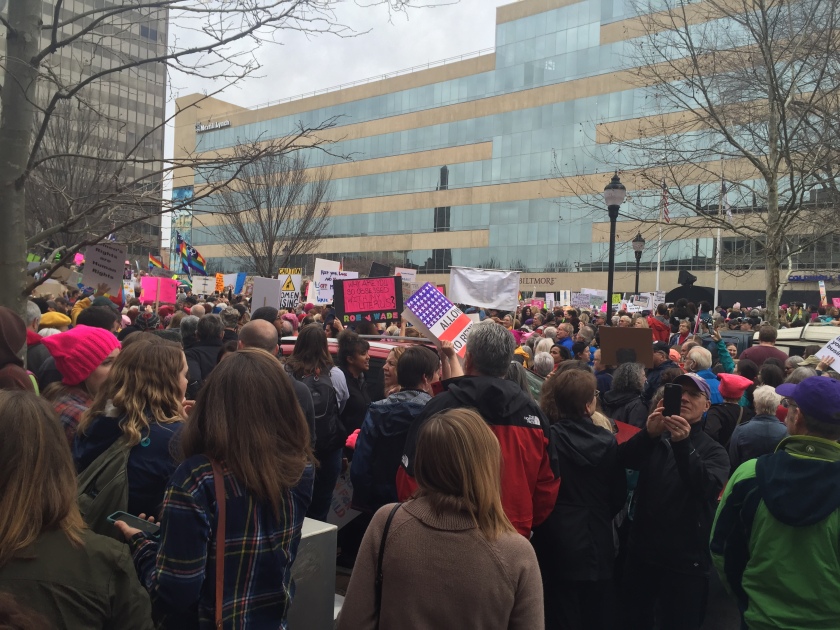
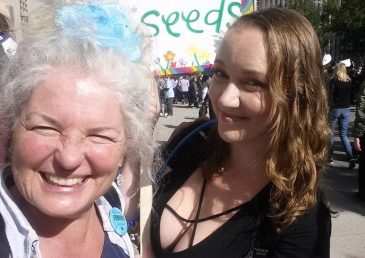
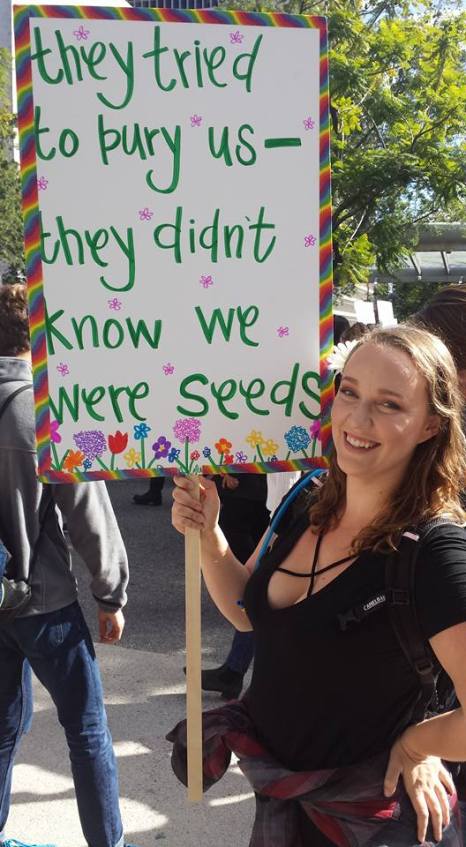
 What an honor to have taken part in the Women’s March (Washington DC) last Saturday, January 21, 2017! The event made visible the enormous number of people willing to give their time and effort to stand up and march for justice in the areas of women’s reproduction, immigration, race relations, LGBTQIA, the environment, and health care. The most frequently-used chants that I heard during the march were: “Black Lives Matter” and the call and response “My body, my choice. Her body, her choice.”
 This week
 I’m back in Las Cruces, New Mexico, spending the break between semesters in the spot where I plan to eventually retire. When I was here last summer (2016), I visited the Unitarian Universalist Church so decided to join the people gathered there on Christmas Day. Not many showed up—about twenty or so. The service was abbreviated. The emphasis was on singing Christmas carols from the hymnal. Unitarian Universalists, it appears, love to sing.
 Even though I encountered wisdom literature when specializing in Hinduism during my Religious Studies doctoral program, through reading the works of Christian female mystics and the liberation theologies of feminist spiritual guides, it took a book I never encountered in my academic studies to give me a spiritual foundation that feels complete after my departure from Christianity: Eckhart Tolle’s
  Feminism and Religion