Islam, Ali, and Reformation by Kile Jones

Kile JonesDoes Islam need a reformation? The ever-controversial Ayaan Hirsi Ali’s new book Heretic: Why Islam Needs a Reformation Now argues that it does. Do you agree with her? Or do you find problems with the way Ayaan Ali frames the discussion?

I ask these questions a few weeks after the first all-women’s mosque was opened. It has also only been a short time since Muslims for Progressive Values (MPV), headed by Ani Zonneveld, sent an open letter to Salman bin Abdul Aziz, King of Saudi Arabia. These, and the innumerable condemnations of the Charlie Hedbo shootings, remind us that this “reformation” Ali is looking for is not entirely absent. Continue reading “Islam, Ali, and Reformation by Kile Jones”

University of Oklahoma and Female Complicity in Patriarchy by Cynthia Garrity-Bond

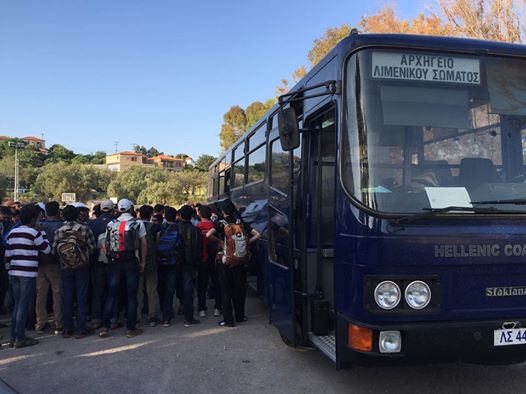
IMG_5296 - cat By now most, if not all, readers of FAR have read or watched the disturbing YouTube video of University of Oklahoma Sigma Alpha Epsilon (SAE) Fraternity sing their racist chant. The two male SAE members who led the “song” were swiftly expelled by President David Boren, with the National Chapter of SAE shutting down the OU chapter of SAE. Student outcry denouncing the racist behavior ranged from hurt and anger from white students to how are you surprised by black students. At the very minimum the incident was and is occasion for important race dialogue on all college campuses.

The level of comfort and familiarity with the lyrics sung by those on the bus horrified me. The students, both male and female, were dressed in formal attire on their way to an unspecified date function.  I flipped between MSNBC and CNN commentaries as the video replayed and the subsequent fallouts unfolded. Yet what I missed was commentary on the complicit nature of acceptance by the other students on that bus; and for the purpose of this post, the young women who gleefully followed along.

I immediately reflected on the writings of Mary Daly and her seminal work, Gyn-Ecology: The MetaEthics of Radical Feminism in which Daly challenges the multiple manifestations of patriarchy’s far-reach on the lives of women as well as female complicity in patriarchy.  Daly identifies the practice of Indian Suttee or female foot-binding as one of many examples of Sado-Ritual Syndrome in which she argues, “The history of the footbound women of China provides us with a vivid and accurate image of the way in which women have been coerced into ‘participating’ in the phallocratic processions.  The footbound daughter was bound to repeat the same procedure of mutilation upon her own daughter, and the daughter upon her daughter” (41-42).  While the literal practice of food-binding has been erased, Daly reminds us patriarchy continues with “insidious forms of mindbinding and spiritbinding in every nation of this colonized planet”(42).

The culpability of the young women (and men) and their Sin of Silence brought swift judgment from me.  How I thought, could they so easily participate in something so wrong? Then the related YouTube surfaced of University of Oklahoma SAE House Mom rapping the N-word in the same unconscionable manner as the SAE fraternity’s use of the N-word.  I basked in my indignation until I recalled a not-so-distant time when I remained silent in the face of what Daly might call the phallocratic mutilation of women.

The occasion was the appearance of comedian Bill Maher on the campus of Loyola Marymount University during the presidential campaign of the 2008 election. As a political pundit I expected Maher’s material to cover the upcoming election as well as the candidates, one of which was Hilary Clinton.  From the start Maher used abusive verbiage associated with female genitalia as a means of contesting her politics.  When speaking of the male candidates, his insults/jokes were framed around the substance of their platform and not their bodies.  The distinction was not lost on me, or the roar of laughter from the predominately student body.

I recall turning to my female co-workers repeating, “This is wrong, this is not funny! We need to walk-out right now!” “What?” they responded, “Walk out on Maher, you know he’ll make a mockery of us and our bodies if we do such a thing.”  They were right.  I sat in complete fear trying to find the courage to match my moral outrage with the action of walking out.  I recall imagining what horrible names related to the female anatomy he would hurl at me, affirming my deepest body-image sensitivities.  So like so many other women when confronted with the repercussions of ugly misogyny I remained silent and in my seat, seething with shame and disappointment by my in-action.

At the time I did not have Daly’s language of female complicity in patriarchy, although this is exactly what occurred.  While I self-identified as a feminist, I did not understand the repercussions and reach of a patriarchal system that so easily silences women to their own demise.  The seductive nature of this complicity takes form whenever I/we remain silent to its deceptive and phallocratic ways.  But speaking up is risky and dare I say, exhausting when you are the lone voice who objects to the tentacles of misogyny, especially when the pushback comes from other women.  I have discovered once you leave the safety of your feminist tribe and speak out against misogyny or speak in favor of women from a feminist stance, you are open game for all kinds of insults–with many coming from other women. During these encounters I find my voice softening to a safe whisper. I know my silence can be complicity in and with patriarchy, but the alternative engagement outside of academia leaves me with battle fatigue.

While I continue to hold those on the University of Oklahoma SAE bus accountable for participating in the racist rant, I wonder how the binding of the daughters by the bound mothers facilitated the participation in the phallocratic processions.

Cynthia Garrity-Bond is a feminist theologian and social ethicist, is completing her doctorate at Claremont Graduate University in women studies in religion with a secondary focus in theology, ethics and culture. For the past six years Cynthia has been teaching in the department of theological studies at Loyola Marymount University where she completed both her BA and MA in Theology. Her research interests includes feminist sexual theology, historical theology with particular emphasis on religious movements of women, agency and resistance to ecclesial authority, embodiment, Mariology and transnational feminisms. Having recently returned from Southern Africa, Cynthia is researching the decriminalization of prostitution from a theological perspective.

Spouse for Life & the Fight for Gay Marriage by Marie Cartier

marriage
Marie & Kim’s Legal Marriage California 2008

Today, I am exploring the following question set:

What is the shifting conception of religious liberty as religious groups carve out exemptions in complying with laws on LGBTQI rights, particularly as they relate to marriage? As gay marriage becomes “normative” how does it change the structure and study of religion? How did the anti-gay rights movement in California, regarding Proposition 8, funded largely through religious organizations such as the Church of Latter Day Saints and the Catholic Knights of Columbus, have a direct impact on state decisions, and animate new conversations about the juncture of religion and politics?

Let’s start with this information:

Sociologist Brian Powell posed the question of why people were opposed to gay marriage. Do what people say match the legal arguments that justify the opposition to gay marriage? Since legal arguments are based on public policy, what public policy was shaping the legal arguments? The findings, published recently in Social Currents, show that the most common reason for gay marriage opposition was given as: “Because I don’t believe God intended them to be that way.” Running a close second was: “Well, they’re sinners.”

If public opinion drives public policy, then the motivation for banning same-sex marriage is moral disapproval. Or as stated in Powell’s findings—religious disapproval—and the belief that God is not “on the side” of the homosexuals; casting homosexuals as sinners in the faith choice of the person formulating the public policy critique. With these formulations, Powell suggested that public discourse —based on religious formulations such as “sinner” and what “God intended” are the primary agents erecting state laws that ban access to civil rights- such as marriage- for the LGBTQI population. Continue reading “Spouse for Life & the Fight for Gay Marriage by Marie Cartier”

Passover and the Exodus: A Feminist Reflection on Action, Hope, and Legacy by Michele Stopera Freyhauf

Freyhauf, Durham, Hahn Loeser, John CarrollLast week, Supreme Court Justice Ruth Bader Ginsburg was in the news again, but not for reasons you would expect.  She, along with Rabbi Lauren Holtzblatt, penned a feminist essay about the Exodus title “The Heroic and Visionary Women of Passover.”  Finding this story was exciting, especially because I am so drawn to the Exodus story (the intrigue and curiosity of which caused me to return to school and study, as one of my main areas of focus, Hebrew Scriptures – along with Archaeology and Ancient Near Eastern History).  Now women’s roles in this story are being elevated thanks to Justice Ruth Bader Ginsburg and Rabbi Holtzblatt.

Before I discuss the message and the importance this message brings, I think it is important to know an important fact about Justice Ginsburg.  Ginsburg is not observant, but does embrace her Jewish identity.  When her mother died, she was excludedRuth_Bader_Ginsburg_official_portrait[1] from the mourner’s minyan because she was a woman; an event in Judaism that is meant to comfort the mourner, brings a sense of community, and is considered obligatory – a means of honoring our mother/father.  This important event left an impression and sent a loud message that inspired and influenced her career path – she did not count – she had no voice – she had no authority to speak.  No wonder her life and career focuses so much on women’s rights and equality.

As many of us know, the story of Exodus is focused on two things 1) Moses and 2) liberation from the bonds of servitude and enslavement; women are rarely discussed.  In the essay co-authored by Ginsberg, women are described as playing a crucial role in defying the orders of Pharaoh and helping to bring light to a world in darkness.  In the Exodus event, God had partners – five brave women are the first among them, according to Ginsburg and Holtzblatt.  These women are: Continue reading “Passover and the Exodus: A Feminist Reflection on Action, Hope, and Legacy by Michele Stopera Freyhauf”

Genderqueering by John Erickson

We find our versions of home in these communities and it is within these spaces where our home not only begins to define who we are but we, as a reflection of that space, begin to outwardly redefine the spaces we exist in. If we slowly begin, through our experiences to shape our homes based on privilege and power without self-reflection and acknowledgment of others, then we are no better than those oppressive forces we say we’re against.

Leelah Alcorn, Ash Haffner, Aniya Knee Parker, Yaz'min Shancez
Leelah Alcorn, Ash Haffner, Aniya Knee Parker, Yaz’min Shancez

This post is a response to a recent blog entry titled “Who is Gender Queer?” on this site from Carol Christ.  The post can be read by clicking here.  I want to thank my friend, advocate, and upcoming scholar Martha Ovadia for reasons only she knows!  Stay brave, speak up, be heard!
_________________________________________

It is terrifying to know that something is wrong but not be able to speak truth to power.

It is even more terrifying to know something is wrong, be able to speak to it, and then silence those voices that do not have that same privilege, power, or position.

The struggle that many of us in positions of privilege and power face is not just that of being ostracizing and essentializing forces—it is that we, as allies, members of communities, or even those dedicated to a cause, can ourselves participate in the oppression we are fighting against and can do harm.

It’s taken me a long time to not only be comfortable with who I identify as, but also how I go about fighting and defining my life based on said identity and experience. However, the one thing that I have the ability to do is choose that identity more freely than others. Unlike Leelah Alcorn, Ash Haffner, Aniya Knee Parker, or Yaz’min Shancez pictured above, I did not have to face the types of oppressions they did, to which they sadly lost their lives, as a result of the fact that we exist in a society that can’t deal with the inability to leave things undefined or to allow people to define who they are on their own terms.

It is vital that although my lived experiences could never meet nor match the same types of oppression that these brave individuals had to face, I, as a white, cisgendered gay male, do not become part of their oppression through my own position and privilege.

As a man who exists in the world of feminism and within various women’s communities, I walk a daily tightrope of privilege and power to insure that I do not silence those that I consider allies, friends, mentors, or colleagues. As a man who exists in the world of the LGBTQ community, I walk an additional tightrope to additionally not take away from or diminish the experiences of those members of our community that do not have the same type of lived experiences as myself.   Even within minority communities, there are positions of hierarchy and within these hierarchies of knowledge, identity, or power, comes a responsibility to insure that the oppressed do not become the oppressors.

We find our versions of home in these communities and it is within these spaces where our home not only begins to define who we are but we, as a reflection of that space, begin to outwardly redefine the spaces we exist in. If we slowly begin to shape our homes based on privilege and power without self-reflection and acknowledgment of others, then we are no better than those oppressive forces we say we’re against.

I can’t speak for what identity feels like –I can only speak for what essentializing does, and what it does is reflected in the deaths of Lelah, Ash, and the many others who die nameless.   It is our responsibility, as allies, members of communities, and those fighting to end sexist, patriarchal, and, even now, homonormative oppression, to make sure that no more deaths occur on our watch or that truth is spoken to power even when power is masquerading around as truth.

John Erickson is a Ph.D. Candidate in American Religious History at Claremont Graduate University. He holds a MA in Women’s Studies in Religion; an MA in Applied Women’s Studies; and a BA in Women’s Literature and Women’s Studies.  He is a Non-Fiction Reviewer for Lambda Literary, the leader in LGBT reviews, author interviews, opinions and news since 1989 and the Co-Chair of the Queer Studies in Religion section of the American Academy of Religion’s Western Region, the only regional section of the American Academy of Religion that is dedicated to the exploration of queer studies in religion and other relevant fields in the nation and the President of the University of Wisconsin Oshkosh’s LGBTQA+ Alumni Association.  When he is not working on his dissertation, he can be found at West Hollywood City Hall where he is the Community Events Technician and works on policies and special events relating to women, gender, sexuality, and human rights issues that are sponsored or co-sponsored by the City of West Hollywood. He is the author of the blog From Wisconsin, with Love and can be followed on Twitter @JErickson85

Can You Kill the Spirit? What Happened to Female Imagery for God in Christian Worship? by Carol P. Christ

carol at green party 2014 croppedWhen I first began to think about female language and images for God I imagined that changing God-He to God-She and speaking of God as Mother some of the time would be a widespread practice in churches and synagogues by now. I was more worried about whether or not images of God as a dominating Other would remain intact. Would God-She be imaged as a Queen or a Woman of War who at Her whim or will could wreak havoc on Her own people?

Forty years later, very little progress has been made on the question of female imagery for God. I suspect that most people in the pews today have never even had to confront prayers to Sophia, God the Mother, or God-She. Most people consider the issue of female language in the churches to have been resolved with inclusive language liturgies and translations of the Bible that use gender neutral rather than female inclusive language.

In her new book, Women, Ritual, and Power: Placing Female Imagery of God in Christian Worship, Elizabeth Ursic states that one of the reasons that the issue of female language seems less pressing than it once did is because those for whom the issue was important have for the most part left the church. But the question is why. Continue reading “Can You Kill the Spirit? What Happened to Female Imagery for God in Christian Worship? by Carol P. Christ”

Role Play: In Search of the Authenticity of My Being by Elise Edwards

Elise Edwards“I stood in the authenticity of my being: Black, preacher, Baptist, woman. For the same God who made me a preacher made me a woman, and I am convinced that God was not confused on either account.”
– Reverend Dr. Prathia Hall

These words came across my Facebook feed on Sunday in celebration of International Women’s Day. Reconciling Ministries Network put the statement on its Facebook page, along with a picture of Prathia Hall preaching from the pulpit, in remembrance and honor of women leaders who contributed to the US Civil Rights Movement. This past Sunday, March 8, when the quote was displayed, marked the 50th anniversary of Selma’s Bloody Sunday. Prathia Hall was a leader in the Student Non-Violent Coordinating Committee (SNCC) and one of the activists on the Edmund Pettus Bridge who were attacked as they began to march from Selma to Montgomery, Alabama. Later in her life, she became an ordained minister, professor, and womanist theologian.

For me, this past weekend was about remembrance through many forms. While there were many events commemorating Selma and the important events that unfolded there 50 years ago, my family and I were focused on a more intimate form of remembrance. On Saturday, we held a dinner and informal memorial service for my godfather who passed away last month. I got the news of his death on a day when I’d been doing some deep soul-searching and reflecting about the image I present to the world and its correspondence with who I am and desire to be. Just a few days prior, I’d spoken to my godfather about his health and subsequently, I had been questioning how I might be more connected to him. We lived several states apart, and I wondered how I could be a good goddaughter to him despite the distance. Those questions are left unanswered in the wake of his death. Continue reading “Role Play: In Search of the Authenticity of My Being by Elise Edwards”

“‘A’ is for Adjunct:” National Adjunct Walkout Day #NAWD

"Scooped" by Vanessa Vaile onto A is for Adjunct
“Scooped” by Vanessa Vaile onto A is for Adjunct

On Wednesday February 25th, adjunct faculty across the United States walked out of their classrooms, and hosted teach-ins, lectures, film screenings and rallies, to protest the employment conditions faced by adjunct and all contingent faculty members of colleges and universities. I am adjunct faculty; and encouraged by what I learned in my own participation in the protest, I would like to share my experiences with you in this blog.

While many Universities last week held massive protests and walkouts on campus, I realized when planning my own protest that if I walked out, I would probably be standing outside on the lawn with very few other protesters. There are plenty of adjunct faculty on my campus—75% to be exact, the national average for all college and university campuses— but I know very few of my adjunct peers and we have no organized voice at the school. Weighing my options (admittedly last minute), I found a great power point presentation on the National Adjunct Walkout Day Facebook page prepared by a Texas adjunct professor, Dr. Jenny Smith, and made available for use by all through Slideshare. Instead of walking out, I taught-in; and I was surprised by how little my students knew about this issue, though I was incredibly heartened by their responses.

Continue reading ““‘A’ is for Adjunct:” National Adjunct Walkout Day #NAWD”

Being Scared: Fear and Authenticity by Ivy Helman

meblogMy partner is a lawyer who works with asylum seekers and other immigrants here in the Czech Republic (ČR). She’s amazing at her job and I’m constantly in awe of her passion and commitment along with her righteous anger at systematic injustices. In fact just last week, her workplace, together with a consortium of other immigration organizations in the ČR, helped organize a demonstration in the center of Prague to protest the Czech Republic’s refusal to admit Syrian children and their families into the country. She invited me to attend the event with her. I went.

It was my first time attending a public demonstration in Europe. It was moving to see many of her co-workers there and inspiring to listen to the passionate speeches against xenophobia, Islamophobia, racism, the plight of the Roma people as well as the need to come together and welcome diversity. In addition, there were signs in Czech, German and English saying “No One is Illegal,” “End Xenophobia,” “Do Syrian Children Have to Wait for their (Nicholas) Winton?” “I want to have a Syrian Friend!” and “Refugees Welcome!” I wanted to hold each one of those signs! Continue reading “Being Scared: Fear and Authenticity by Ivy Helman”

On Not Being A Big Hollywood Film Director, and Other Life Choices by Marie Cartier

MARIE CARTIER- YOUNGAs you read this, dear FAR community, it will be my 59th birthday. I was born February 27, 1956. I have one year to go before I turn 60. For this last year I desperately wanted to dye my hair blue, purple and green and let the roots go gray.

However in a long conversation with my hair stylist she helped me realize that I have spent so many years dying my hair various shades of brown, dark brown and burgundy that if I bleach the hair out to white (so that I can then go blue, purple and green) the hair will fry and fall out—ah, Ok. I willhair live with my brown, black and burgundy hair until I am ready to go completely gray and watch it grow out (my hairdresser tells me it will take three years). Or I will decide to live with the choice I made to dye my hair since I was 35 or so and let it be and keep dying it – and have that be the choice I made. Continue reading “On Not Being A Big Hollywood Film Director, and Other Life Choices by Marie Cartier”