Recently, Ben of Ben’s Tallit Shop commented on an older post of mine on this website entitled: “How Literal is Too Literal? My Experience with Tallit Katan.” He wrote, “In my opinion, it makes sense to first try the mitzvah of tzitzit in private for a month or two to ensure you are undertaking it for the right reasons. Making a political statement is not a valid reason (though some people, I imagine, would argue otherwise). Mitzvahs and politics don’t mix.”
First of all, this comment is both sexist and patronizing! A man would never suggest to another man to do what he suggested I do and “try the mitzvah… in private… to ensure you are undertaking it for the right reasons.” I’d dismiss it entirely if I was that kind of person, but I’m not. Sexism and patronizing aside (as if one could do that really), I would like to engage with his thoughts on the mixing of politics and mitzvot because I think that can lead to great reflection and insight for Jewish feminists.
Not all mitzvot have an inherently political nature, but many do. In fact, one could even argue something as seemingly apolitical as lighting Shabbat candles could be political. Lighting candles ushers in Shabbat peace for one’s household and ideally for one’s community even if that peace is only for one day a week. Since this is at odds with the world’s political environment of fighting, war and violence, it could be interpreted as a political act. After all, won’t every day in the redeemed world be Shabbat? Continue reading “The Politics of Miztvot by Ivy Helman”
This month on the Spring Equinox I celebrate ten years of ordination. And for the first time in over fourteen years I am not employed as a minister at a local church. While I miss preaching and occasionally long for liturgy, I have never been more happy, and I find company and solace in the myriad holy women that fill my life. They have become my beloved community. They hold me accountable to my calling. They celebrate the birth of my child, dry my tears, laugh with me heartily, and remind me to dance for justice even when it’s difficult.
So, as winter turns to spring and I enter the next decade of ordained life now outside the church’s walls, I find myself clinging to Walt Whitman’s admonition: “From this hour forward I ordain myself loos’d of limits and imaginary lines.” As I think about this great cloud of witnesses surrounding me—my beloved Holy Women—I recall the ways in which we are all called to be prophets for justice.
Many have claimed that artists are our contemporary prophets, those who rage against the status quo, and call us to actions of justice that create beauty in the lives of all humanity, even all creation. So I turn to a great artist whose music has set free countless women and queer folk in search of new symbols, new language, new stories that are deep and wide enough to contain our subverted and searching spiritualities. The great womanist prophet, Tracy Chapman, sings these words in her song, New Beginnings: Continue reading “Painting and Ordaining the Holy Woman Icon by Angela Yarber”
We have come to a point in the history of our civilisation where our relationship to nature seems to be more of one of destruction than of nurturance and respect. Humankind has steadily distanced itself from nature, our homes are filled with dead things, plastics, metals and chemicals. Everything around us is synthetic and manufactured in factories. Some people live their lives never touching nature – the soil, the plants, the grass. I have even met people who have a deep fear of being in nature. This distancing from nature is a reflection of distancing from our Divine Earth mother, not just as the outside world, but also as the energy of the archetypal Earth Mother within our own psyche.
Many cultures and traditions herald a Great mother, Mother Earth or Mother Nature but our connection to her, especially recently in the Western world, has been severed. In the Greek mysteries, Gaia or Gaea, the Divine Mother, was one of the primal elements who first emerged from cosmic chaos at the dawn of creation. All the later Pantheon of Gods and Goddesses are said to have descended from her initial union with Ouranos (the sky) and Pontos (the sea). Her geneology and her presence in Greek myth is full of complexities, conflicts and contrasts. Her worship in Ancient Greece did in fact decline, for her role was supplanted by the Gods of Olympus. Some scholars such as Harris and Platzner (Greek Mythology: Images & Insights, 2011), maintain that the decline in her worship and the demonizing and slaying of the snake or serpent – one of Gaia’s primordial symbols and a symbol of archetypal feminine energy, represents the death of the sacred feminine brought about by the insidious reign of a patriarchal pantheon of male gods.
Gaia is not only a figure in Greek myth however. In the 1960s, James Lovelock (2000) formulated the Gaia hypothesis. Lovelock states that all life, and all living things on this planet, are part of a single, all-encompassing global self-regulating system (he avoided the word consciousness) which he named Gaia. It is this global system of interconnection that makes our planet capable of supporting life. Further, he believes, if you live in balance with Mother Nature, health and healing are yours; violate Her laws and tip the balance, you pay the price in suffering and disease. Thus Gaia does not only represent the Ancient Greek Mother Earth and the physical planet, she also represents the forces of nature: laws and intelligences that function on every level of the cosmos. She is the very fabric of existence. Glenys Livingstone says it beautifully: “She is the eternal pulse, in which each one of us flows. Gaia is Earth, is Universe, is Ultimate Mystery, is you, is me – She is multivalent.” (from her Essay ‘Gaia as a Cosmic Name‘, 2014)
I recently taught two workshops for women ‘Painting Gaia – Exploring our Connection to the Earth’ based in my belief that disconnection and distancing from nature is an issue that needs attention. We need more than ever, at this time in history to re-connect deeply with the earth and with the feminine – regardless of faith of tradition. This re-connection that will aid in deep ways in the healing of the planet and of the self. If we are not connected, how can we care about the plight of the planet and all sentient beings? And if we are not caring, how can we take action to make a difference?
I am dedicated to taking action, raising awareness and making a difference in the ways that I know how. The intention for these workshops is to connect to Gaia through the process of visioning, painting and inquiry. Our Gaias were birthed from the cosmos and as we brought her into being we deepened our connection to Her, within and without. We also strengthened our commitment to healing the earth in a capacity that is manageable. Some, including myself, expressed feelings of being overwhelmed by all the atrocities we are flooded with on the news and in social media forums. In this context, our goal was to become more mindful of our actions and choices. The workshop also called us to a deep, primal remembering of Her eternal presence, from the cosmos to the core.
It was apparent in our discussions is that Gaia represents paradox – life/death, chaos/order, creation/destruction, beauty/ugliness, peace/fury. Connecting deeply with Gaia is ultimately about living in paradox; we must accept both life and death to truly know her nature. Marion Woodman (Dancing in the Flames, 1996) states that “paradox is the core of wisdom and the core of the goddess”. The balance of both must be held.
In Greek art Gaia was often represented “tamed,” presented as a beautiful voluptuous woman, half risen from the Earth as can be seen here:
Gaia rising from the earth, Athenian Red-figure Kylix, 5th c BCE – image from http://www.theoi.com
Following are two of my recent paintings of Gaia in all her elemental power. I hope you feel and appreciate the difference! Continue reading “Gaia by Jassy Watson”
Here we are, creeping up on the vernal equinox (March 21), which astronomers and weathermen on TV tell us is the start of spring. I see Imbolc (as described by Deanne Quarrie) as the true beginning of spring, however. It’s when we see the first little crocuses popping up through the snow…..oh, yeah…..well, maybe not this year, when more than half the U.S. is buried under mountains of snow. Let’s just agree that in ordinary years crocuses pop up and bloom and trees start showing us their tiny green leaves in February. The equinox is really the turning point of spring, the hinge of time when the rising energy tips over into falling energy that is flowing toward summertime, which will arrive at Beltane (May 1 or 2).
Demeter and Persephone
We’re probably all familiar with the story of Persephone, who under her childhood name, Kore, was out picking flowers in the meadow one day when her Uncle Hades roared up out of the earth in his mighty chariot and kidnapped her. This led her mother, Demeter, the grain goddess, to search for her and finally go on strike and let the world turn back into winter. This went on until Aunt Hecate told Demeter where her daughter was. When Persephone, now queen of the underworld, came back up with her mother—voilà! It was springtime. That’s how the vegetation myth goes. Continue reading “Persephone by Barbara Ardinger”
Mary E. Hunt, Monique Moultrie, and I are updating the Guide for Women in Religion. The original version was edited by Mary with an impressive cast of contributors and first published ten years ago. Organized with entries from “A” (AAR) to “Z” (Zeitgeist), it was the successor to the 1992 Guide to the Perplexing, which billed itself as a “survival manual” and was team-written by a group that includes several now-legendary figures in the field, then junior folks trying to find their way in the sometimes hostile, often bewildering landscape of academic religious studies, particularly at the AAR and SBL.
With each iteration of the Guide, some important things have changed. (Others have not, but that’s another blog.)
One thing that has changed for the better: There are now plenty of women in senior positions, women who have attained the rank of full professor (and retired as emerita), or direct major organizations, who are recognized as leaders in their scholarly fields. Women’s studies in religion has gained prominence as a serious subfield, and gender as a crucial category (or factor, or variable, or consideration, or analytic lens) appears in a great deal of scholarship and not a few job ads. Continue reading “Making Our Way – Updating the Guide for Women in Religion by Kecia Ali”
In his column “Professors, We Need You!” New York Times columnist Nicholas Kristof charges that most university professors “just don’t matter in today’s great debates” and admonishes them not to cloister themselves “like medieval monks.”
Many academics and others took offense at what he has written. A Twitter hashtag #engagedacademics sprung up and many have posted opposing views.
That Kristof imagines the professors who isolate themselves from the real world as “medieval monks” betrays his bias that the professors to whom he is addressing and the public intellectuals he longs to see are male (and possibly white)! Continue reading “Feminist Professors Are Not Secluded Monks by Kwok Pui-lan”
Every February I gear up to participate in local V-Day 1 Billion Rising events where activists rise up to end violence against women and girls. This year’s theme was the journey to justice, and there were two local events. I delivered a speech at the second event. This is so meaningful to me because it testifies to how far I have come in my journey. Just a few years ago, I would never have spoken what I considered the unspeakable. I have found that with each utterance, I gain more freedom and encourage others to do the same in their own way.
One in every three women/girls will be sexually assaulted in her lifetime, and someone is sexually assaulted every two minutes in the USA. Knowing this and being one of these women, I dedicate this month’s post to my fellow survivors in hopes that you find some healing in it. Below is what the crowd heard from me on V-Day:
Justice is one of those tricky concepts that has many faces. For some survivors, justice is restorative where they are willing to engage in a dialogue with the perpetrator, community, and other stakeholders to attempt to repair the harm that has been done to them. For others, justice is poetic. It comes in the form of retribution and punishment whether it involves incarceration, physical harm or illness, or death by homicide or suicide. Yet other survivors feel that there is no such thing as justice any way you look at it. They feel that there is nothing that can ever be said or done to erase or minimize the life-long effects of the violence perpetuated against them. Continue reading “We Rose for the One Billion on V-Day by Jameelah X. Medina”
This week I had started my blog in commemoration of Black History Month. Alas it has sat in my computer unfinished as the deadline is well past for my bi-monthly post. So here is why.
As I was listening to NPR one day, a man was describing the “types” of thinking developed as a consequence of the types of intellectual and physical exposure. “Higher” thought (I hate that assessment of it, but it’s his word) he equated with things like knowledge of Shakespeare. “Other” thought went with the days before (or current places and peoples without) access to some of our own human intellectual ventures (like Shakespeare’s plays). What I, the abstract thinker (of course, I’m a theologian…) took away from this was that maybe I had ventured well into the realm of so-called higher thinking and as such had LOST touch with some basic thought for survival.
So I had a medical emergency. I have a hiatus hernia. It was diagnosed just before I went to India, and medication prescribed. I filled that prescription for over a year at my local pharmacy for about $10-$12 per 100 pills. India is in a patents war with the US over medicine production, because they refuse to play into the over-costly game that is our US norm. When my supply ran low I went to get a new prescription filled at my now local pharmacy. They asked for over $300 for a 3-month supply! Even if I only got one month it would be $169. I opted to do without altogether. I figured my dietary adjustments, no citrus, no mint, no tomatoes no night time eating would be enough to suffice. Continue reading “To Your Poor Health by amina wadud”
Have you visited Feminism and Religion’s Feminist Sparks page?
Here you will find upcoming events, announcements, and other Sparking news related to feminism and religion at the intersection of scholarship, activism, and community. Feel free to send in your own suggestions of upcoming events and announcements to be added to the page. Please email those to feminismandreligionblog@gmail.com and include “Feminist Sparks – submission” in the subject line of the email.
Now scroll down to read the most recent Sparking News!
~~~~~~~~~~~~~
Feminism and The Church Call for papersdeadline is Friday, February 21 (two more days to submit a proposal!)
March 21-23, 2014 Boston University School of Theology
The Center for Practical Theology and the Doctoral Student Association at Boston University will host the second Graduate Student Conference at BU’s School of Theology. Feminism and The Church is one of its four streams of inquiry under the larger theme, “Theological Research and The Church.” There is still room for paper and workshop proposals in the Feminism and the Church stream. Please submit your proposals and join Xochitl Alvizo and Mary Hunt, both FAR contributors, who will also be presenting. Additionally, Xochitl will be conducting an interview with Mary Hunt as part of the conference program. It should be fun – join us!
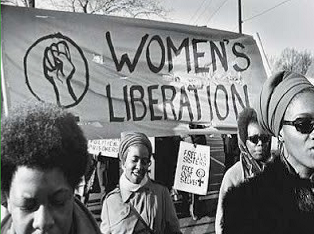
Hosted by the Women’s, Gender, & Sexuality Studies program at Boston University, in partnership with many others, this conference aims to do some historical remembering and celebrating of the Women’s Liberation Movement as well as critical analysis and discussion of the unfinished business that still continues today. It will inevitably be a reunion of many of the women, and men, who were directly involved in the movement, but its scope is also much larger than that. It’ll be a very exciting event! Plan to attend and register now!
~~~~~~~~~~
Goddess Pilgrimage to Crete with Carol Christ May 31-June 14. 2014 and September 27-October 11, 2014 Find the Goddess and a Society of Peace on a Sacred Sites Tour for women in Greece with Carol Christ, author of Rebirth of the Goddess. The Goddess Pilgrimage to Crete is a two week tour for women. Carol will lead you in rituals celebrating the grace and joy of life and introduce you to a pre-patriarchal culture where the Goddess was revered as the Source of Life, women were honored, people lived in harmony with each other and with nature, and there was no war. The pilgrimage will engage your body, mind, and spirit. Tours are small and intimate enough for community to develop. Join us now!
~~~~~~~~~~~~~
Seminar on Debates about Religion and Sexuality Harvard Divinity School
June 10-19, 2014
Applications are due February 5, 2014.
We are pleased to announce the 2014 summer seminar at Harvard Divinity School for scholars, other writers or artists, religious leaders, and activists who are working on a first large project in which they hope to change the terms of current debates around religion and sexuality. For scholars, this project would be either a doctoral dissertation or a first book. For other writers and artists, religious leaders, and activists, it might be a first book, though it might also be a new curriculum, a series of public presentations and performances, or a media piece. The seminar understands both “religion” and “sexuality” broadly. It especially seeks participants from outside the United States. Harvard Divinity School will pay for participants’ travel to Cambridge and lodging and meals during the seminar. The seminar will be directed by Mark D. Jordan (Washington University in St. Louis) and Mayra Rivera Rivera (Harvard University). Faculty from Harvard and other institutions or organizations will lead sessions in their areas of interest. Large portions of the seminar’s time will be devoted to discussing participants’ writing in workshop format. Applications are due February 5, 2014. Invitations to the seminar will be issued by February 20. Details of the application and further information about the program are available online at http://www.hds.harvard.edu/faculty-research/conferences-and-seminars/debates-about-religion-and-sexuality. Questions may be directed to rsseminar@hds.harvard.edu.
One of my academic joys is interviewing people I find particularly interesting (see most of my posts here). This time I am honored to present a recent interview I did with Judith Butler.


 Recently, Ben of Ben’s Tallit Shop commented on an older post of mine on this website entitled: “How Literal is Too Literal? My Experience with Tallit Katan.” He wrote, “In my opinion, it makes sense to first try the mitzvah of tzitzit in private for a month or two to ensure you are undertaking it for the right reasons. Making a political statement is not a valid reason (though some people, I imagine, would argue otherwise). Mitzvahs and politics don’t mix.”







 Feminism and Religion