Who’s Got the Money by amina wadud

amina 2014 - croppedAfter doing my usual pre-travel research (expected weather, electrical plug usage and currency exchange rates) I tried to amply prepare for a continuous trip between India and Switzerland on one ticket: not too many clothes in my suitcase, but enough for the climate disparity. At the time I checked in, that disparity was something like 90 to 60 degrees (F) respectively. I opted for cotton clothes with layers and sandals with or without socks. As it turned out, India got hotter (nearly 100F) and Switzerland got colder (45F) with biting rain and winds. So I spent a LOT of my down time in my hotel room.

I had stuff to read, casual and work related and managed to keep myself busy. On occasion, I would turn on the TV. All the stations in Fribourg were in French or German with one exception: the financial news channel. I could only take that news for so long. My last day in Fribourg, there was a break in the news and instead they played back-to-back episodes of some program about the “super rich”. It turned out to be more distressing than the news. You’d expect people with so much money to have one thing you might wistfully dream about. But nope, I really have no interest in private planes or huge yachts with custom fitted gold faucets, or Ferraris and Lamborghinis. Yes, I would like to live near the beach, but a small bungalow would do me just as well—no need for the 25,000 square feet vacation home they were showcasing. Continue reading “Who’s Got the Money by amina wadud”

Christian Sex Ain’t So Vanilla by Andreea Nica

Andreea Nica, pentecostalismMy recent literary digests have included memoirs and nonfiction audiobooks on sex, relationships, and non-monogamy. A recent listen, Open: Love, Sex and Life in an Open Marriage by feminist activist Jenny Block, provides insight into the paradigmatic features of open marriage drawing on the personal experiences of a bisexual woman. Currently, I’m musing over my latest read: The Ethical Slut: A Practical Guide to Polyamory, Open Relationships & Other Adventures written by psychotherapist Dossie Easton and author and sex educator Janet W. Hardy. Through my literary adventures, I can’t help but reflect on my own sexual conditioning and upbringing in the Pentecostal church.

The authors of these feminist-friendly, sex-positive books and social movements did not exist in the church I grew up in, and I feel quite saddened by this. While my sexual conditioning in the church was far from liberating, these reads have helped me realize that the religious community wasn’t as mundane as I thought. My early sex education which was conservative consisted of the anatomical and biological basics (Arizona education system, need I say more?) and early conditioning of sex morals and ethics in the church. The latter was more influential to my perception of sex, gender, and relationships. Of course the media and my peers constructed my views of sexual culture and gender norms, but the church had the greatest impact during my childhood and adolescence. Continue reading “Christian Sex Ain’t So Vanilla by Andreea Nica”

Film Radical Grace Highlights Nuns’ Response to Vatican Reprimand

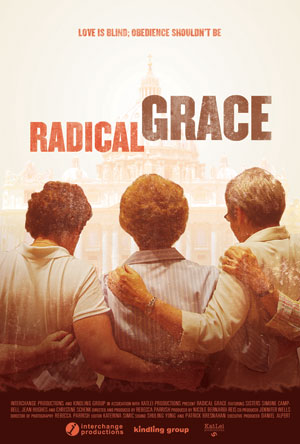
Radical GraceWhile the Catholic Church has sought to control US Nuns through what has been called the “New Inquisition,” it has been unsuccessful in its efforts.  The film Radical Grace documents the response of Sr. Simone Campbell, Sr. Jean Hughes, and Sr. Chris Shenk and is nothing short of brilliant.  Producers Rebecca Parrish and Nicole Bernardi-Reis chronicle their holy journeys in maintaining their vows by challenging the Vatican.  A full review of the film can be read here.

Please consider supporting the film through its crowdfund campaign.  The opportunity to meditate with Sr. Simone is incentive enough!  Congrats to Rebecca and Nicole on their fantastic project and much gratitude to Sr. Simone, Sr. Jean, and Sr. Chris for reminding us that “love is blind but obedience shouldn’t be.”

On April 30, the Vatican Doctrine of Faith “told the leadership group they were ignoring procedures for choosing speakers for their annual conferences and questioned if their programs were promoting heresy,” dashing hopes that the new pope would take a different attitude toward the nuns.

Continue reading “Film Radical Grace Highlights Nuns’ Response to Vatican Reprimand”

Transforming the Church from Within or Without? by Xochitl Alvizo

“Power belongs to those who stay to write the report!” stated Jeanne Audrey Powers during her presentation at the Religion and the Feminist Movement conference at Harvard Divinity School back in 2002. Though the statement sounds a little funny, it does raise a good question about how one participates in creating change. Where does the power for change and transformation lie? Is it in the writing of reports; is it from within institutions; from without? This question seems to be of particular relevance to those of us who have feminist visions and commitments and also remain involved in Christian churches – churches of a tradition with deeply embedded patriarchal habits and practices.

Recently, this concern was raised in a class for which I am a TA. We were talking about the fact that some feminist theologians develop feminist systematic theologies; by definition a cohesive theological system done from a feminist perspective. In part, the motivation is to reclaim the systematic way of doing theology and have it stand alongside other widely recognized theologies – but do so in a feminist way. Additionally, the traditional systematic format gives it validity and may serve to temper the prevailing habit of teaching feminist theologies as so-called ‘contextual’ theologies (as if other theologies are not also contextual, but that’s a topic for another post). A critique of this development, of course, is that by writing systematic theologies feminists are simply reinforcing patriarchal forms and patterns of academentia instead of expanding and creating new ones. Continue reading “Transforming the Church from Within or Without? by Xochitl Alvizo”

No Honor for A Career of Hate by amina wadud

amina 2014 - croppedA recent decision by Brandeis University (founded in 1948 as a nonsectarian Jewish community-sponsored, coeducational institution) to take back its offer to give Ayaan Hirsi Ali an honorary doctorate hit the media with the usual storm over such a controversial figure.

Most of the resistance to her, as a public figure, comes because of her own categorical statements against Islam. Not only does she choose to be an atheist, but she lambasts those who do not make her same choice. Her sweeping statements are meant to galvanize support against the Islam she has suffered from both as a child in a conservative family and as colleague of a brutally murdered film maker. She lost her bid for refugee status in Holland for lying about her past and was taken lovingly into the arms of certain institutions (like the conservative think tank, American Enterprise Institute  and tea party politicians, like Pamela Gellar). All manner of official trickery was put in her favor such that she enjoys something millions of her country men and women from Somalia would probably never hope to see: US citizenship and institutional support. Continue reading “No Honor for A Career of Hate by amina wadud”

From the Archives: I Believe Anita! by Marie Cartier

Moderator’s Note: This has been posted on FAR twice, originally on April 7th, 2014 and then again on

Marie Cartier

During the past week I attended a Los Angeles premiere of a new documentary Anita: Speaking Truth to Power (Dir: Freida Lee Mock USA, 2013). The screening was sold out and I had great seats saved for me– sitting with a friend who works at Samuel Goldwyn, the distributor of this fine film.

In 1991, Anita Hill provided testimony she hoped would serve to dissemble the nomination of Clarence Thomas as a Supreme Court justice. Although the vote would end up being close (52-48) Hill’s testimony did not serve to dissuade the decision — Clarence Thomas’ nomination was confirmed and he was appointed to a life term on the Supreme Court four days after Hill’s testimony concluded. Here is an outline of the debate.

Continue reading “From the Archives: I Believe Anita! by Marie Cartier”

Asking Sacred Questions by Carolyn Lee Boyd

carolyn portrait
If you could travel over space and time to an ancient holy oracle, a manifestation of the voice of Goddess, what questions would you ask? Imagine you are there, at the gateway to where the oracle sits, and consider which questions are closest to your heart, near your soul, the ones you have been trying to answer your whole life. Humanity has a long history of ostracizing, marginalizing, prosecuting, and sometimes executing those who question, especially those who question established authority and doctrine. However, you need have no fear at this place of the oracle where questioning is celebrated. Here you are at home because you are a feminist.

Feminists have long known the power of questioning to liberate, to enliven and enrich, to enact positive change, to expose injustice: “Should not women live free from violence? Have the nourishment, shelter, and health care they need? Vote? Hold property? Have their labor fairly compensated? What would a world in which all women are respected and celebrated as individuals with infinite dignity and worth be like, and how do we bring it about?” Continue reading “Asking Sacred Questions by Carolyn Lee Boyd”

In Memoriam – God Hates Fags

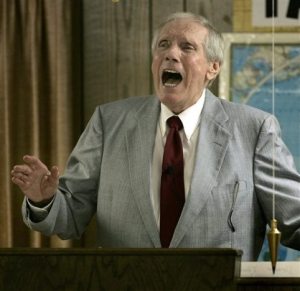
Phelps didn’t just live a life filled with hate but he also embodied the very reasoning why so many communities cannot cross that proverbial bridge to work together to see past their differences and maybe never will. In the case of Phelps, sticks and stones may break our bones, but words really do hurt.

Fred Phelps, an American PasFred Phelpstor who headed the Westboro Baptist Church in Topeka, Kansas died at the age of 84 on March 19, 2014.  While some individuals leave behind legacies of their good deeds and loving memories, the only thing Phelps left behind was a family and church founded on the principle of hate.


A frequent eyesore at various events ranging from military funerals and gay pride gatherings to mainstream events that captured the attention of our pop-culture obsessed society, Fred Phelps and his clan believed it was their sacred duty to warn others of God’s anger over the growing acceptance of not only modernity in general but also issues like gay rights and abortion.  From slogans and signs such as ‘God Hates Fags’ to ‘Thank God for IEDs (Improvised Explosive Devices), Phelps has caused many controversies both during his lifetime and after his death.

Continue reading “In Memoriam – God Hates Fags”

Abortion–the topic that won’t go away–or even morph by Esther Nelson

Esther NelsonRecently, I got involved in a conversation about abortion.  It happened on Facebook when a relative posted that her heart hurts when she considers her “sweet baby girl” and how the law (Roe v. Wade, 1973) in the United States gave her the choice as to “whether [or not] I would have her killed.”  She’s sincere.  Many of her friends “liked” her post and, with few exceptions, commented in agreement.  I was one of the exceptions.

March celebrates Women’s History Month–a month to remember the accomplishments of our foremothers, noting their work helping to secure for us (their progeny) certain rights, most notably the right to vote (Elizabeth Cady Stanton, 1815-1902) and reproductive rights (Margaret Sanger, 1879-1966).  Support for abortion nowadays almost always falls under the rubric of “women’s reproductive rights.”  So when we hear, “It’s my body and I’ll decide what I’ll do with my own body,” the speaker is giving voice to what many consider to be a fundamental right–the right to be autonomous and exercise free agency over one’s own person. Continue reading “Abortion–the topic that won’t go away–or even morph by Esther Nelson”

The Politics of Miztvot by Ivy Helman

headshotRecently, Ben of Ben’s Tallit Shop commented on an older post of mine on this website entitled: “How Literal is Too Literal? My Experience with Tallit Katan.”   He wrote, “In my opinion, it makes sense to first try the mitzvah of tzitzit in private for a month or two to ensure you are undertaking it for the right reasons.  Making a political statement is not a valid reason (though some people, I imagine, would argue otherwise).  Mitzvahs and politics don’t mix.”

First of all, this comment is both sexist and patronizing!  A man would never suggest to another man to do what he suggested I do and “try the mitzvah… in private… to ensure you are undertaking it for the right reasons.”  I’d dismiss it entirely if I was that kind of person, but I’m not.  Sexism and patronizing aside (as if one could do that really), I would like to engage with his thoughts on the mixing of politics and mitzvot because I think that can lead to great reflection and insight for Jewish feminists.

Not all mitzvot have an inherently political nature, but many do.  In fact, one could even argue something as seemingly apolitical as lighting Shabbat candles could be political.  Lighting candles ushers in Shabbat peace for one’s household and ideally for one’s community even if that peace is only for one day a week.  Since this is at odds with the world’s political environment of fighting, war and violence, it could be interpreted as a political act.  After all, won’t every day in the redeemed world be Shabbat? Continue reading “The Politics of Miztvot by Ivy Helman”