

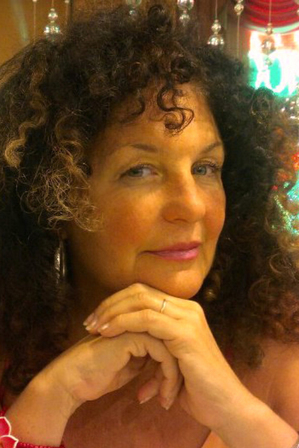
 I have blogged excerpts from my novel That Christmas Morning Feeling in progress previously—the first excerpt here and additional ones here and here. This blog serves as an “artist statement” regarding the novel in progress.
I want to discuss in this blog thoughts on my own creative process—how a project can percolate for years (this one for well over ten years) and be in pieces in several places (handwritten, hard drives, on a laptop, here in FAR) and then some magical “tipping point” comes that creates the necessary conditions to put other things aside and work on that project, birthing it forward.
Certainly the death of both my parents in one year, and the resulting fallout in the last two years, complicated relationship struggles both to be sure, prompted me to want to write this novel and put it out into the world in a finished form, which is what I’m trying to accomplish now.
This book is not an autobiography…it’s not “my story.” But, to be sure, I am a survivor of childhood sexual abuse and the feelings and experiences from that time have been published in autobiographical form in my poetry book, I Am Your Daughter, Not Your Lover, a play (of the same title, while much of this dramatic work is out of print, my work is catalogued at UCLA; here is the finding aid) based on the book produced in Los Angeles, and a one woman show I did entitled Blessed Virgin. I also created the activism project, Dandelion Warrior, which awarded medals to survivors who came to my numerous readings in the nineties who were willing to give up the option of suicide. To date I awarded well over a thousand buttons/medals to survivors in the States and internationally. When the buttons ran out I simply shook hands with the survivors who were willing to stand shoulder to shoulder with me and make the commitment to stay on the planet.

I was the first artist the state of California awarded an Artist in Residence grant to, to work specifically with incest survivors, and I worked also with women from forced marriages, and also prostitutes, creating dialogues with them and with survivors of childhood sexual abuse and created projects that showcased their voices coming together in the struggle for survival. I performed slam poetry about incest survival when it was just called reading poetry in bars; I did one woman shows and got flack in my reviews, as well as praise. For instance, one reviewer simply said “Speak Repressed Memory,” as he went on to say he didn’t believe survivors’ stories coming forward and did not at all review my play or performance except to say I was an “accomplished actress.” The rest of his review was about how he hated incest survival stories, and therefore the reader was to assume also my play.
I continued with my work. Continue reading “Dandelion Warriors, Incest Survival and An Artist Statement on That Christmas Morning Feeling by Marie Cartier”
 History offers few instances of women helping create scripture. Hinduism’s sacred Rigveda may have been partly composed by women, and scholars believe the biblical Book of Ruth was possibly written by a woman, but the evidence for each is wanting. And while Muhammad’s widow was entrusted with the manuscript that would become the Quran, its scribe was a man named Zayd ibn Thabit. The only clear exception to this is the Book of Mormon, which Joseph Smith partially dictated to his wife Emma. The central role of Mormon women in the church was therefore fixed from the start.
 One of my goals for the summer is to paint more. I find I can often say or think by a picture something that I am trying to work through in a formal, discursive way. Art functions as a methodological tool for my theology insofar as it helps me to articulate in one language something that I am trying to say in another. As my teaching career has lengthened, I’ve become more confident using images I have created to communicate my ideas. This no doubt has something to do with the liberty one gains in teaching as a performance exercise, combined with avoidance of repetition, and the desire to engage as well as to be entertained in one’s own right. Even more than just working out an idea, sometimes I also find making images to be a therapeutic tool. I can laugh, mourn, gripe, or celebrate through an image, and sometimes, I can even protest by one.
 Around the time
  I used to paint and draw all the time as a child. I thought about majoring in art as a college student, but I went to an institution that did not have any applied arts courses in the curriculum. I had gone to college on a scholarship that I could not duplicate elsewhere, so I settled for a number of art history classes and gave up any formal pursuit of art. However, when I had my children, I rediscovered art. More accurately, I did not rediscover it so much as I fell in love anew. For, I found in working with my children a tremendous liberation. It did not matter if it was “good” or not, had the “right” form or not, used the medium “correctly” or not, or said something “properly.” I learned all over again that people could have hearts for heads; skies could rain jellybeans; and skin could be blue just because you like it that way.
 Niamh (meaning ‘bright’ or ‘radiant’) of the Golden Hair, one of the Tuatha de Danann and daughter of Mannanan mac Lir, Celtic God of the Sea, was Queen in the land of Tír na nÓg (pronounced Tear na Noge), the most famous of the Celtic Otherworlds.
 One of my morning practices is
  I knew I’d paint her from the moment we discovered that we would spend three months of our
 Feminism and Religion