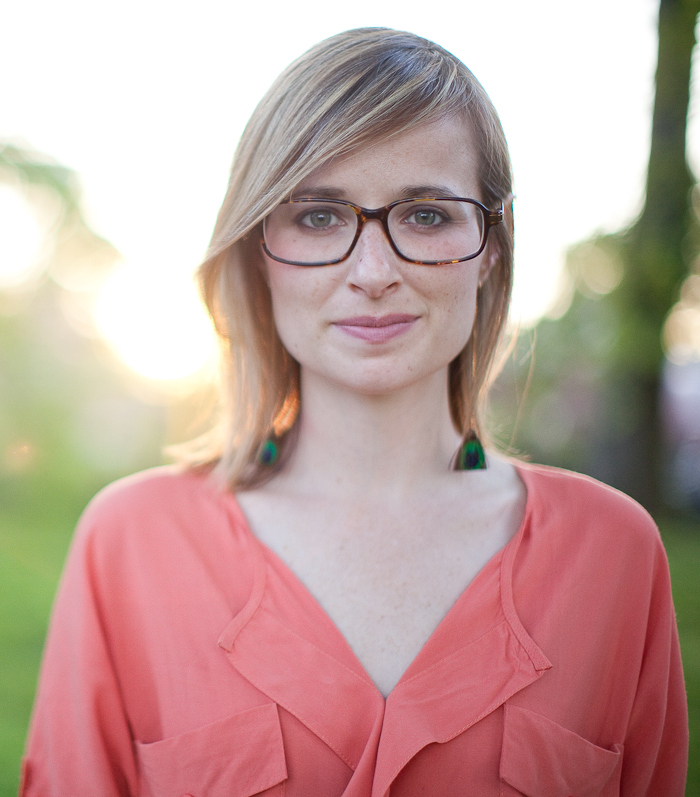
Patterns for the New Year by Sara Frykenberg

Sara FrykenbergLife last year continually pushed me to figure out how I should care for those close to me while also caring for myself.  I have been pushed to see the difference between myself and other people: their choices and my own.  This is perhaps, the most difficult challenge I faced in the first year of the Age of Aquarius… and life has been an unrelenting teacher. 

Happy 2013!  Or a statement more accurate to my feelings: Happy end of 2012!  Last year around this time, I wrote a post entitled: Celebrating the Beginning of the Aquarian Age.  The push to evolve was and is very exciting to me.  This shifting astrological paradigm challenges us to break away from those habits and patterns that no longer serve us.  But excited as I am, I have to admit that the first year of the Age of Aquarius really kicked my butt.

Did last year feel exceptionally difficult for anyone else out there?  I really felt like I couldn’t catch a break for the entirety of 2012.  This is not to say that my year was simply filled with loss and grief, though I am dealing with loss and a great deal of grief.  But some really great things happened last year too, which I celebrated, but also found extremely difficult to manage.  Many of my roles and relationships radically changed in ways that were more difficult than I expected or wanted.  Riding the Aquarian tides, I felt tossed about and was often confused.  I kept telling myself: just hang on.  Just hang on, because you are not alone riding these cosmic waves.  Hang on, because you will learn how to swim in these new waters.

Therefore, in honor of the New Year, I would like to take this opportunity to evaluate and strategize for my how.

I am not usually one for making new years’ resolutions.  The cultural rhetoric surrounding resolutions either presupposes failure or relates success to the amount of money you spend to achieve a goal.  Yet today I find myself considering how I approached last years’ challenges, successfully and unsuccessfully.  I have concluded that I need to create more life giving patterns and habits in 2013.  Many things I am doing now, my coping mechanisms and my defenses, can no longer meet my needs.  So, I guess I am making resolutions.  I, however, prefer to say that I am actively hope-ing to evolve my praxis of living. ;) Thus, I set the following intentions for 2013: Continue reading “Patterns for the New Year by Sara Frykenberg”

Random Questions? by Kelly Brown Douglas

 The notion of the bad body allows for bad things to be done to any body and anything human or non-human that has become body identified.

Where did it all begin? How has it happened that we have nurtured such an ethos of disrespect for the earth and all that is therein? How has it happened that we have fostered an ethic of indifference for that which is different? How has it happened that we have cultivated an environment hostile to the well-being of our very selves?  Where did this cycle of violence against the sacredness of all that is begin?

These are the questions that have troubled my mind and soul over these last few days as we have once again been reminded of the unimaginable and painful price we pay for not asking the hard questions of ourselves and trying to discover the seeds of our inhumanity.  As I have tried to answer these questions one word has continually come to the forefront of my mind: “wholeness.” As a womanist, informed by Alice Walker’s definition of a womanist as one who strives for wholeness, I have increasingly recognized that perhaps it all begins with a betrayal of the wholeness of creation itself.  Most of us are influenced by a Western view of the world that sees things in either/or paradigms.  The way in which we engage the world and ourselves is shaped by a dualistic consciousness.  Thus, distinctiveness becomes “other,” paradoxes become opposition.  Such a dualistic worldview undermines the unity of all being. It defies the complex harmony of the universe. And, it most especially disrupts our appreciation for our own bodies and the bodies of others.  Disdain and cavalier regard for the body and the earth becomes virtually inevitable. Continue reading “Random Questions? by Kelly Brown Douglas”

Don’t Worry, I Won’t Marry Your Girlfriend: Sexuality, Identity, and the Easy Laugh

No longer having to deconstruct the larger cultural and sexual narratives, heterosexuals who do not support marriage equality or feel threatened by homosexuals return to their one source of power that reinforces the ideology that they are on the right path: the Bible. “Marriage is between a man a woman,” or “A man shall not lie with another man as he would a woman,” becomes the newly reinforced heterosexual rallying cry and the progressive progress that occurred in the past becomes nothing more than a joke.

johnI must say, I will be the first to admit that the recent outbreak of videos promulgating the idea that gay men will marry a straight guy’s girlfriend or lesbians will marry a straight girl’s boyfriend all for the sake of marriage equality left me stifling my laughter as I attempted to pay attention in class.

However, after the calamity died down I took a moment to reflect upon the intrinsically embedded aspects of misdirected norms of sexuality, gender, and misogyny latent within the laugh lines and the guffaws throughout each video. Continue reading “Don’t Worry, I Won’t Marry Your Girlfriend: Sexuality, Identity, and the Easy Laugh”

Painting Guadalupe and Mary by Angela Yarber

As we feminists struggle to elevate Mary and Guadalupe, we sometimes forget that speaking of birth and gestation is not always empowering or even essential to womanhood. 

It is early morning on the Hill of Tepeyak on December 9, 1531 when a wondering peasant named Juan Diego first caught a glimpse of her presence.  Diego sees a vision of a teenage girl surrounded by light; the young girl asks that a church be built on the hill in her honor.  After hearing her speak and seeing the light emanating from her presence, Diego recognizes her as the Virgin Mary.  He rushes to the Spanish archbishop who insists on a sign as proof of Diego’s vision.  The young girl instructs Diego to gather flowers from the top of the hill, even though it is past their growing season.  Upon climbing to the top of the Hill of Tepeyak, Diego discovers Castilian roses—a beautiful flower otherwise unheard of in Mexico—which the glowing young woman arranges in his cloak.  When Diego returns to the archbishop, he opens his cloak to reveal the miraculous flowers and they fall to floor; in their place was an image imprinted on the fabric of his cloak.  It was the image of Our Lady of Guadalupe.

Guadalupe is one of Mexico’s most popular religious and cultural images and her icon, now on display at the Basilica of Our Lady of Guadalupe, is one of the most visited Marian shrines in the entire world.  On December 12, countless Christians—particularly Catholics—celebrate her feast day.  Her feast day occurs within the four week celebration of Advent, which is the period of waiting, expectancy, and gestation before the birth of Jesus at Christmas. Continue reading “Painting Guadalupe and Mary by Angela Yarber”

“I do, I do, I do believe in gay marriage” by Marie Cartier

I do believe in gay marriage. I mean fairies, I mean gay marriage. I’m a lesbian. I’m approaching my legal fourth year anniversary on October 29, 2012 with my wife. I’m voting for Obama for many reasons, and one of the strongest for me is that he is the only president who has “come out” in support of gay marriage.

An acquaintance recently said to me, “I don’t believe in gay marriage.” There is not a counter narrative to this in my vocabulary. I cannot say “I don’t believe in heterosexual marriage.” I can say I don’t support it—but even that is not true because my taxes do support a system which privileges partnering legally over not partnering. The metanarrative of religious discourse privileges belief statements. So when someone says “I don’t believe in gay marriage”—they are encasing my life in the world of theology where we cast our lot with belief or non-belief.  I’m Catholic—I believe in the Virgin Mary. I believe in the canon of saints. I don’t believe in Hell, however, or Purgatory. I’m not sure of my belief system regarding Heaven. As a New Age practitioner– among these practices are Wicca, yoga, martial arts, Western inspired meditation practice, psychic readings, etcetera– I feel empowered to question the belief systems of the Church, and even more so as a feminist. Continue reading ““I do, I do, I do believe in gay marriage” by Marie Cartier”

Smells Like Homeness by Erin Lane

“Tell me why it can’t be that simple,” I plead with my husband. “He needs a bed. We have a guest room.”

I am desperate for an answer that will assuage my guilt and brighten my mood. It’s more than that, though. I want an answer that will fix the problem of Michael’s homelessness, one that will ease both his pain and mine. Continue reading “Smells Like Homeness by Erin Lane”

Metamorphosis by Deanne Quarrie

The peri-menopausal woman displays the unbounded limits of her own self.  She explores and shares the amazing power of her emotions, now less contained, now erupting in a glorious array of color and sound.

Sometime between the ages of 35 and 55, give or take, a woman enters a phase in her life that can only be described as metamorphosis. Yes, most call it peri-menopausal or menopausal, but truly such changes occur in each woman’s life at this time and it truly is a metamorphosis.

It is that time in her life when she stops producing as much estrogen but the production is often haphazard, sporadic and certainly unpredictable. This affects every aspect of her life. She might notice her eyes being dry in the morning, feeling like grating sand when she tries to open them. Her bleeding times may come on at different intervals or not at all. She may bleed more – she may bleed less. She may experience hot flashes – you ask, “What does that feel like?” Imagine a wave of hot air hitting you in the back of your neck and head – instantly causing you to break out in a sweat. You might even get red in the face! All of this, of course, is without warning, and happening at the most inconvenient times. You will often exclaim, “Is it hot in here?”  Continue reading “Metamorphosis by Deanne Quarrie”

Working and Working Out: “Health,” Obesity, and Labor by Stefanie Goyette

What I think we must consider in analyzing any form of “health” that is encouraged, and even enforced, is that such encouragement comes back in the end to the ability to work, to be “productive,” and, in turn, to spend the money that one earns. 

What is “health”? What does it mean to be “healthy”? Physical well-being and energy? Mental and emotional balance? A sense of general control over one’s body and self? I had originally meant to speak of the frequent reduction in our culture of “health” to appearance: sexual attractiveness, muscle tone, body size, etc., but Lesley Kinzel has already given an analysis of this paradigm, twice, in fact. Go read her articles, then come back here and we’ll talk about some other stuff.

Attractiveness as a measure of “health,” which we will consider as being already established as a cultural fact, effectively defines health neither as a personal sense of well-being nor as a set of conditions agreed upon in consultation with a physician. Rather, aesthetic criteria render health a metric that lets other people judge – and judge others on – a level of “health.” This judgment affects women disproportionately and, being external, reduces the value of female subjective experience and the power of subjectivity in the individual. Yet this externalization by no means ends with quotidian social interaction, but also extends to the medical establishment and the regulation of bodies in terms of the normal and the pathological – no great revelation here (Foucault already said it) – and these measures are already part of the intrinsic layout and values of the culture to which a given medical establishment belongs. Continue reading “Working and Working Out: “Health,” Obesity, and Labor by Stefanie Goyette”

Proposition 35: Prohibition on Human Trafficking and Sex Slavery—Criminalizes the Sex Worker and not the Trafficker, By Cynthia Garrity-Bond

But beyond the sound bites and hyperbole of Proposition 35 resides a poorly written law that further criminalizes and discriminates against sex workers and their consensual adult clients.

The importance of the upcoming November 6 election cannot be overstated. Beyond defeating the Republicans War on Women, maintaining the Affordable Care Act and resuscitating a broken economy, brought on by eight years of Bush’s laissez faire policies, California residents will vote on thirteen propositions. Two of them address criminal justice, Prop 34 “End the Death Penalty” and Prop 36, repeal of the “Three Strikes” law of 1994. Both propositions seek to correct bad laws that are unjust, as well as fiscally exacting on the state.  The “Three Strikes” law, in its attempt to be tough on crime, instead gives life sentences to non-violent offenders.  To date there are 8,800 prisoners currently serving life terms for a third felony conviction—for some, petty theft or drug possession resulted in a life sentence.  The “Three Strikes” law was poorly conceived, written, and implemented, just as Proposition 35, the Prohibition on Human Trafficking and Sex Slavery or Californians Against Sexual Exploitation (CASE ACT) is.  Continue reading “Proposition 35: Prohibition on Human Trafficking and Sex Slavery—Criminalizes the Sex Worker and not the Trafficker, By Cynthia Garrity-Bond”

Is the Republican Party Platform Truly Pro-Life? by Michele Stopera Freyhauf

As many feminists invest their life fighting for women’s rights to be the center of attention – no one could predict the occurrences of this election year.  In my previous post “Rape is Not a Political Platform – Rape is a Violent Crime!” Carol P. Christ made a comment about women’s issues and politics:

 “I have been waiting all my life for women’s issues to become central in an election campaign, but I guess I should have been more specific in my wish: this is not the format I imagined…”

Christ’s reaction is like so many others in the election; no one could have imagined such a bizarre and backwards slide being lobbied against women’s rights.   Issues being bantered around continue to be rooted in a purported pro-life stance.  This ranges from trans-vaginal ultrasounds, definitions of “legitimate” rape, and now using an Ob/Gyn’s “best guess” to define the gestational age of a baby from the time of a woman’s last period.  This is not a game – this is semantics, this is politics, this rhetoric, and frankly, this needs to stop. Continue reading “Is the Republican Party Platform Truly Pro-Life? by Michele Stopera Freyhauf”