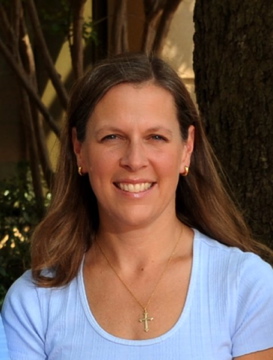
Girls Gone Gray by Erin Lane

My hair started “going gray” at nineteen. Prophetic, you could say, for a college girl whose life was going the same way.

The gray hair began around my temples, curling around my ears like a vine before following my hairline to the forehead and down the spine of my scalp. I remember calling my mother and telling her between tales of new classes and new boys of my new whiskers. “Oh, and mom, you will not believe it. I found a gray hair. What is that?”

Her laugh vibrated though the phone. “That is normal. I went gray at 19. Your father went gray at 19. Your brother has it coming in, too, nowadays.” She added, “Sorry.” But she didn’t sound it. Continue reading “Girls Gone Gray by Erin Lane”

If You’re Lucky You Get Old—Part One by Marie Cartier

This year two significant shifts happened inside of me: I realized I was getting older. And I wanted to protect my body/mind. These may seem to be perhaps the same realization– but both of these realizations came from very different incidences.  

Realization #1

Let me explain the first realization—realizing I was getting older. I am 56. Perhaps since I am a professor and while I have been getting older, my students stay the same age as each new crop of undergrads greets me in the fall. Perhaps because I have chosen to not have children of my own. Perhaps because I do work out—jogging (albeit slowly). Whatever the reason in my mind  I was still not “older,” whatever that is — yet.

And then I went for a long over due eye exam. When my new glasses arrived I admired them in the large mirror across the room. But when I sat at the desk and looked in the mirror directly in front of me, I gasped. “Oh my God!” I exclaimed. “What are those?” I was staring through my new lenses at the wrinkles above my lip. I stared at the eye glass specialist — a fabulous gay man (and partner to my ophthalmologist) who helped me pick out the frames. “Do you see those wrinkles?” I asked. It was only after he said, “Oh, honey, $900 you can fix that– I know someone,” that I realized I was assuming he would say, “What? I don’t see anything.” But you can rest assured a gay male friend will not lie to you about your looks. If that dress make you look fat, he’ll tell you (and help you fix it). In any case, in that moment of corrected vision I saw my wrinkles for the first time. And I hated them. Continue reading “If You’re Lucky You Get Old—Part One by Marie Cartier”

A Love Letter to My Body by Amanda Kieffer

My body, my love, how terribly I’ve missed you.  Do you remember the night we wept? The night I touched you for the first time since . . . I can’t remember when. I asked your forgiveness a hundred times. I had to make up for all the nights I spent ignoring you and asking forgiveness from that ridiculous Man in the sky.  I thought you were His.  I thought He was angry because I wanted to know your secrets and your secret places.  I was ashamed of myself and I was ashamed of you . . . of your sensual motions . . . of your dark spaces . . . where only men, well, only one man is supposed to go.  I am forbidden. So they say. If I explore your depths in secret it’s a sin and the Man in the sky will be angry, perhaps for Himself, perhaps for that one man on whose territory I am trespassing.  Never speak of such a transgression!  Everyone will be shocked, embarrassed, horrified. Well . . . Continue reading “A Love Letter to My Body by Amanda Kieffer”

Painting Baby Suggs by Angela Yarber

Each month I am writing an article that discusses one of my Holy Women Icons, which are an array of icons painted with a folk feminist twist.  These Holy Women Icons are comprised of biblical women, such as the Shulamite, feminist scholars, such as Mary Daly, artists, dancers, and women from mythology and literature.  This month, I’d like to focus on a holy woman whose preaching embodied eschatological imagination and whose dance liberated broken bodies.  This holy woman cannot be found within the confines of scripture or met in the flesh.  Rather, her preaching and dancing are found within the pages of Toni Morrison’s novel, Beloved.  If ever there was a holy woman who preached on behalf of all those broken and bound it was Morrison’s stunning character, Baby Suggs, holy.

Eschatological imagination is a communal foretaste of resurrection that does not suppress the social conflicts and injustices of racism, poverty, slavery, and privilege.  Through the preaching and dancing of Baby Suggs, enslaved bodies are redeemed and transformed into resurrected bodies.  A slave herself, Baby Suggs leads all the black men, women, and children to a clearing each week for worship.  After inviting men to dance, children to laugh, and women to cry, she offers up one of the most beautiful sermons on behalf of her enslaved community.  Morrison describes the efficacy of Baby Suggs’ message, saying:

She did not tell them to clean up their lives or to go and sin no more.  She did not tell them they were blessed of the earth, its inheriting meek or its glory-bound pure.  She told them the only grace they could have was the grace they could imagine.  That if they could not see it, they would not have it. Continue reading “Painting Baby Suggs by Angela Yarber”

If I Had Breasts by Erin Lane

A friend recently sent me the following excerpt from the Los Angeles Times’ obituary for author and screenwriter Nora Ephron who died this week: In a 1972 essay called “A Few Words About Breasts,” Ephron wrote, “If I had them, I would have been a completely different person.”

I am quick to champion the underdogs of the beauty world: freckles (clumped together they make you look tan), thin hair (it takes half the time to dry), and small breasts included (you can wear deep v-necks without looking vulgar). My optimism no doubt comes from the fact that each of these attributes can be found on my own body. Make the best of what you’ve got, right? Continue reading “If I Had Breasts by Erin Lane”

Participating in Beauty Culture

I…liked how we were neither dogmatic in our judgments (i.e., no one played the role of feminist fashion police), nor laissez-faire in thinking that ‘anything goes’—after all, feminists were the ones who had popularized the slogan the ‘personal is political.'”

At the most recent Society of Christian Ethics annual meeting, I got into an impromptu late night discussion with several women friends about why some of us participate in “beauty culture” and how we feel as feminist Christian ethicists and moral theologians about our decisions. Each of us shared why we have chosen to wear make-up (or not), keep up with fashion (or not), dye our hair grey to mask the signs of aging (or not), or put in the effort to maintain a certain physique (or not). We also addressed what role our own mothers and larger communities have played in our decision-making processes.

Since it is certainly not my place to reveal what others disclosed behind closed doors over wine, let me expand upon a few things I shared that night. Continue reading “Participating in Beauty Culture”