Hanukah and Enough Already by Winifred Nathan

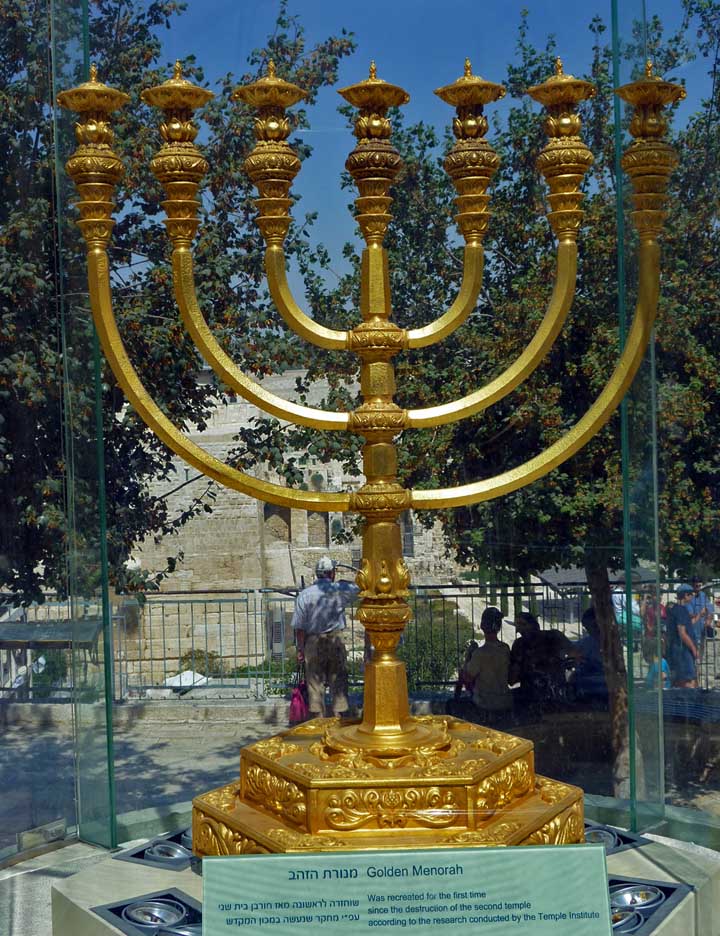
As I prepare for the Hanukah celebration this year, the word that resonates with me is “enough.” I will light candles for eight nights, recalling that in the beginning, there was not enough oil to rededicate the temple after the victory of the Maccabees over the Syrian Greeks, but then there was enough.

How much is enough? The dictionary tells us that enough means having as much or as many of something as required.

During the government shutdown when SNAP was at risk, we learned that one in eight Americans qualify for the program, revealing how many people are food-insecure in our country. The one in eight includes the working poor, disabled, and children. Their issue is quantitative: the amount of food they can afford does not provide adequate nourishment. On the spectrum of enough, they are on the shortage end. Just as the temple needed more oil to be rededicated, they need more food to sustain themselves. 

Continue reading “Hanukah and Enough Already by Winifred Nathan”

From the Archives: Earth-Spirituality in the Qur’an and Green Muslims by Elisabeth S.

This was originally posted on March 14, 2017

There is some very helpful guidance in the Qur’an for how we should and should not treat the earth. In my exploration of Qur’anic verses on the environment, I have found a great deal of Earth-love that I want to share.

The first idea is that the earth is not ours to trash and misuse recklessly or indulgently. Sura 2:284 says, “Whatever is in the heavens and in the earth belongs to God.” This sentiment is found throughout the scriptures. Individual wealth and the practice of financial profit and salary as reward has given us the illusion that, if we’ve earned the cash, we can do with it whatever we like. We can buy anything we want, show it off, hoard it, and then trash it. How often do we quell our suffering or attachments through consumerism as if there were no consequences? But we need to begin to shift to the perspective of honoring the earth as not something we are entitled to or even deserve. If we are supposed to be stewards of the earth, then fine. But it seems that selfishness and personal gain have distracted us, making us neglect our duty. The idea that the earth is a bestowed gift is embedded into the Qur’anic “golden rule”: “You who believe, give charitably from the good things you have acquired and that We have produced for you from the earth. Do not seek to give bad things that you yourself would only accept with your eyes closed” (2:267). Yes, we work the land to produce food, but not everything is within our jurisdiction.

Continue reading “From the Archives: Earth-Spirituality in the Qur’an and Green Muslims by Elisabeth S.”

A Case for Context by Sara Frykenberg


I have a close family member who is staunchly Republican and frequently posts videos from the conservative platform PragerU or “Prager University.” Video topics include: why the Democratic Party is the “real” racist party (as though either party is innocent of racism), the “war on boys” and masculinity, and how feminists don’t care about Muslim women (as though some Muslim women aren’t also feminists), among other issues. You get the picture. It is a propaganda media source founded by radio talk show hosts which creates short videos on every topic there is, presenting the conservative viewpoint as the simple “God’s honest truth” about the issue.

I’ve seen some of these videos. They are as offensive as they are misleading. But one element that is particularly egregious to me is their complete disregard for larger context. Continue reading “A Case for Context by Sara Frykenberg”

“Don’t Let the Store Shop You” by Natalie Weaver

My mother, in the great tradition of all mothers, says things sometimes that:  1) crack me up; 2) speak some depth of human truth; and 3) plainly and pithily state facts that could never be otherwise articulated, even if the task were undertaken by the whole complement of talents of Shakespeare, Goethe, Dostoevsky, and J.K. Rowling combined.  I occasionally feel that I have failed as a mother myself because I do not have a mom-ist voice. If I have one, it surely isn’t pithy. I often find myself spending four hours in a graduate seminar, lecturing on some aspect of Christology and ministry or the like, only to summarize the whole thing with a “momism” that better said what I was getting at all along.

Today, in conversation, I came back around to one of my mom’s oldest and best bespeakings of truth-to-power. Some years back, we were talking about a sale at Macy’s, observing that the base prices on things seemed to go up and down in relationship to sale percentages, such that one always pays about the same, whether the item is “on sale” or just “for sale.”  Even the language of “on sale” seemed ridiculous, we mused, since everything in the store was being sold.  If the sale is “on,” I guessed that means it is “on,” like a string of pulsing Christmas lights or a kettle of boiling water or a revving engine, as opposed to a static, dusty package of picture hangers forgotten in the bottom rack of a narrow row in the bowels of a hardware store (unless, of course, the picture hangers were, well, on sale).  Continue reading ““Don’t Let the Store Shop You” by Natalie Weaver”

Hooray! The Holiday Season Is At Hand! by Barbara Ardinger

December seems to have more holidays than the rest of the year put together. Days to honor Ix Chel, the Virgin of Guadalupe, St. Lucy (aka Santa Lucia), the Declaration of Human Rights, and the publication of the Rider-Waite Tarot. Saturnalia. Hanukkah. Christmas. Kwanza. Yule. Innumerable reasons to go shopping for gifts and banquets. Here, to help you survive the holiday season, are two Found Goddesses.

Who, you may ask, is a Found Goddess? The term comes from Found Goddesses, published in 1988 by Morgan Grey and Julia Penelope. Found Goddesses are modern ones that we invent to deal with modern issues that the classical pantheons can probably not cope with. Like going to the mall and cleaning our houses before our guests arrive. (Note that I’ve rewritten these pieces a bit to bring them more or less up to date.)

Continue reading “Hooray! The Holiday Season Is At Hand! by Barbara Ardinger”

Small Business Saturday: Feminist Gift Guide for the Holidays by Angela Yarber

Wondering what to give the revolutionaries in your life for the holidays? Want to support feminist small businesses as you shop? Need some creative ideas with powerful feminist history and theory embedded in each purchase? Would it help if the gifts fused together feminism and religion? The Holy Women Icons ProjectLagusta Luscious,  and Bloodroot Feminist Vegetarian Restaurant has plenty of ways for you to celebrate the holidays with empowering gifts to please feminist in your life.

The feminist non-profit Holy Women Icons Project seeks to empower marginalized women by telling the stories of revolutionary holy women through art, writing, and special events. For over five years, a different holy woman has been featured each month on Feminism and Religion; we became an official non-profit earlier this year; and we have some beautiful, creative, and empowering offerings suitable for the holidays.

Continue reading “Small Business Saturday: Feminist Gift Guide for the Holidays by Angela Yarber”

Empowering Toys and the Problem of Class Divisions by Katie M. Deaver

I recently noticed that I’ve been spending a lot of time thinking about financial security, the way class systems work in the United States context, and how these types of realities inform my feminism.  Part of this is no doubt due to the fact that for the first time in my life I am not a student with multiple part time jobs, but rather am a “real” adult working full time at a job that offers retirement and medical benefits.

As I’ve written about before, I grew up in a poor family in rural Wisconsin and as a result I am often hyper vigilant about my finances.  While I likely go a bit overboard when organizing my budgeting, balancing, saving, and spending this type of organizing is something I can control.  The simple act of paying a bill, or determining how much I can spend on groceries this week gives me a profound sense of safety because for the first time there really is enough coming in to support my basic needs.

Continue reading “Empowering Toys and the Problem of Class Divisions by Katie M. Deaver”

Bikini Season by Sarah Kiefer

I grew up in a suburban town stuck in the middle of rural Indiana. I drove through corn fields to get to school and on more than one occasion I did have to crawl through my sun roof to get into my car because I was sandwiched between two monster trucks. My grandfather, an avid bird watcher, waged a personal war against the chipmunks and within one summer caught and drowned anywhere between fifteen and twenty of them until my mom pointed out that he was probably attracting them by putting bird seed on the ground.

I was raised in the non-denominational Christian church and part of my weekly activities was attending youth group. For those of you not familiar with youth group, it’s usually held on Wednesday night for the youth in the church. It’s basically church geared towards pre-teens and teenagers. Some of my fondest memories of my teen years are from youth group. You foster deep friendships in a fun environment and have good role models all the while learning about the Bible in a way that is more easily understood by a young person.

When I was about thirteen I went to a conference with the rest of the girls in youth group. It was a “modesty conference” geared at teaching young women the “biblical” truth of their role as a female and how that translates into how one dresses. We were taught that we are responsible for the relationship between our brothers in Christ and Jesus. One of the ways that we can make them fall is wearing too revealing clothes. If we wore something too tight, too low, or too short, the men wouldn’t be able to control themselves and would sin in the eyes of Jesus. We were encouraged to wear loose t-shirts and shorts that went to the knee in order to keep our brothers from sinning.

The last night was the long awaited fashion show of the conference and we had all stayed up the night before eagerly finishing the dresses we would be modeling the next day. At the end of the fashion show the lead pastor’s wife came out wearing a bikini. We were all cheering her on because she looked great. She stood at the end of the runway shaking and grabbed the microphone. As she spoke, the mood of the room dramatically shifted. She said she would never wear a bikini in public because her body is for her husband alone and other men looking at her would cause them to sin. The sadness and guilt her voice conveyed sobered all of us. We all vowed we would never wear a bikini again and from here on out it was modest, one piece bathing suits for us.

Looking back at this experience, I recognize quite a few issues I want to address. First, teaching young Christian girls that we are not only responsible for our own relationship with Christ, but also the relationship of all men feels wrong to my spirit and isn’t even biblical. Second, teaching us to be ashamed of our body’s natural shape and covering it in baggy clothing so men won’t sin when they look at us is detrimental to both men and women. The detriment to a young girl’s self-esteem because she has strict guidelines reinforced with guilt around dressing herself leads her to thinking there is something “wrong” or “bad” about her body. This also perpetuates the lack of accountability for men, as they grow up thinking they can’t control their sexual being so they don’t even try, placing the responsibility on women. Why do you think the question “well what was she wearing?” asked in the case of a woman’s rape comes up so often? (This thinking comes from the common misconception that rape is an act of uncontrollable sexual urges, not a man exercising an intentional act of power.) These innocent teachings have further reaching effects on society than we think.

Lastly, I want to address what the pastor’s wife shared with the group, particularly her comment on her body being her husband’s. True, our bodies are not our own, they are a gift from God. 1 Corinthians 6: 19 says “Do you not know that your bodies are temples of the Holy Spirit, who is in you, whom you have received from God? You are not your own; you were bought at a price. Therefore honor God with your bodies.” All God asks in return is that we treat our body respectfully. I don’t know about you, but I see nothing in that verse about a woman’s body being owned by a man. A woman’s body is not to be owned by a significant other no matter what their marital status is, just like a man’s body is not to be owned by a significant other. Language of possession and ownership in romantic relationships needs to be struck from the dialogue of Christianity and replaced with the language of respect.

Since I’m not the gatekeeper of heaven and hell I can’t say for sure, but I’m relatively certain if you wore a bikini you won’t be sending three men plus yourself into eternal damnation. With bikini season around the corner, take some time to reflect on the way you view your body. Do you treat it with respect? Do you own it? Do you love your body? Or have you given away that privilege to someone else? I say as a Christian woman, we unburden ourselves of the responsibility for our brother’s sin. We have enough to do. Like bikini shopping.


Sarah is graduating with her undergraduate degree as a psychology major with a pre-law concentration and minor in women’s studies in 2017. She has accepted a full ride scholarship to law school and is expecting to pursue prosecutorial work. Outside of the classroom, she serves as a Resident Assistant, plays on the championship lacrosse team, and also serves as president of Women’s Circle—the feminist student group that she helped to establish and for which she continues to lead discussion and events.

Earth-Spirituality in the Qur’an and Green Muslims by Elisabeth Schilling

green pathThere is some very helpful guidance in the Qur’an for how we should and should not treat the earth. In my exploration of Qur’anic verses on the environment, I have found a great deal of Earth-love that I want to share.

The first idea is that the earth is not ours to trash and misuse recklessly or indulgently. Sura 2:284 says, “Whatever is in the heavens and in the earth belongs to God.” This sentiment is found throughout the scriptures. Individual wealth and the practice of financial profit and salary as reward has given us the illusion that, if we’ve earned the cash, we can do with it whatever we like. We can buy anything we want, show it off, hoard it, and then trash it. How often do we quell our suffering or attachments through consumerism as if there were no consequences? But we need to begin to shift to the perspective of honoring the earth as not something we are entitled to or even deserve. If we are supposed to be stewards of the earth, then fine. But it seems that selfishness and personal gain have distracted us, making us neglect our duty. The idea that the earth is a bestowed gift is embedded into the Qur’anic “golden rule”: “You who believe, give charitably from the good things you have acquired and that We have produced for you from the earth. Do not seek to give bad things that you yourself would only accept with your eyes closed” (2:267). Yes, we work the land to produce food, but not everything is within our jurisdiction. Continue reading “Earth-Spirituality in the Qur’an and Green Muslims by Elisabeth Schilling”

On Minimalism by Ivy Helman

untitledOne of the concerns of ecofeminism is the modern materialistic mindset of capitalism. Materialism in capitalism instills not just owning many possessions, but it also inculcates the “need” to own the newest innovation. In addition, materialism advocates a throw-it-away mentality. In other words, it is often cheaper to buy a new shirt or computer than to have them repaired. Similarly, it is not enough to have a cell phone. Rather, one must have the newest and best one! The environment pays the price.

One attempt to deny the hold of materialism is minimalism. The minimalist movement seems to run the spectrum. From the ideals of less is more, there seems to be some competition between mindful consumerism and extreme self-denial. Mindful consumerism suggests that minimalism is a journey of recycling, reusing and repairing combined with well-researched, well-considered, as-ethically-produced-as-possible purchases when necessary. Extreme self-denial advocates owning almost no material possessions. While I strive toward mindful consumerism, I have serious concerns about extreme minimalism. Continue reading “On Minimalism by Ivy Helman”