Summer Lessons, by Molly M. Remer

Let us be gentle with ourselves 
as we cross the threshold 
into summer, 
as we both open our hearts to change 
and open our hands to choice. 
It is now that we both let things go 
and celebrate what is flourishing, 
what is thriving and growing 
and calling us onward. 
Let us be soft and supple, 
luminous and languorous. 
Let us practice the discipline of pleasure 
and the liturgy of delight. 
Let us protect wide margins for magic,
commit to our own life’s unfolding 
and swim freely 
in the current of the sacred 
that is always available 
to receive us 
and welcome us home.

Today, I sit missing the orioles and thinking about cycles of change, how things grow and decline, and how we can choose to be present or not with what we see and feel. I tip my head back in the green filtered light of morning and discover berries beginning on the mulberry trees. The wild raspberries and blackberries too are tipped with small, firm caps of green. I am feeling the sort of overdue clarity that descends when I finally realize I can let something go, that not everything is mine to carry or mine to fix. I know that this clarity too will come and go, but for now, I welcome it, feeling the cool wind stirring my hair and brushing my shoulders as I enjoy the sunshine and the sound of hawks on the wing. There is a powerful hope in these blue sky days and for now, I bask in the sensation of both remembering and reclamation.

This year, as we tip into summer in the Northern hemisphere, the temperatures in my own Midwestern biome have been surprisingly cool, peaceful and rainy. In an era of climate change, this slow entry into the heat of the year has felt welcome and encouraging. Something that continues to inspire and teach me this year has been to start where my feet are, to return again and again to where I am on this earth and in my body. In a culture that encourages fragmentation and distraction, distance, discord, and dis-embodiment, this practice of return is an act of both rebellion and reclamation.

I have been writing for Feminism and Religion for 13 years. This year, sitting down to write and reflecting on the life lesson of starting where my feet are, I decided to go back through my past summer posts here to discover the other lessons I have learned from summers gone by. I chose thirteen lessons to share from past summer posts:

Continue reading “Summer Lessons, by Molly M. Remer”

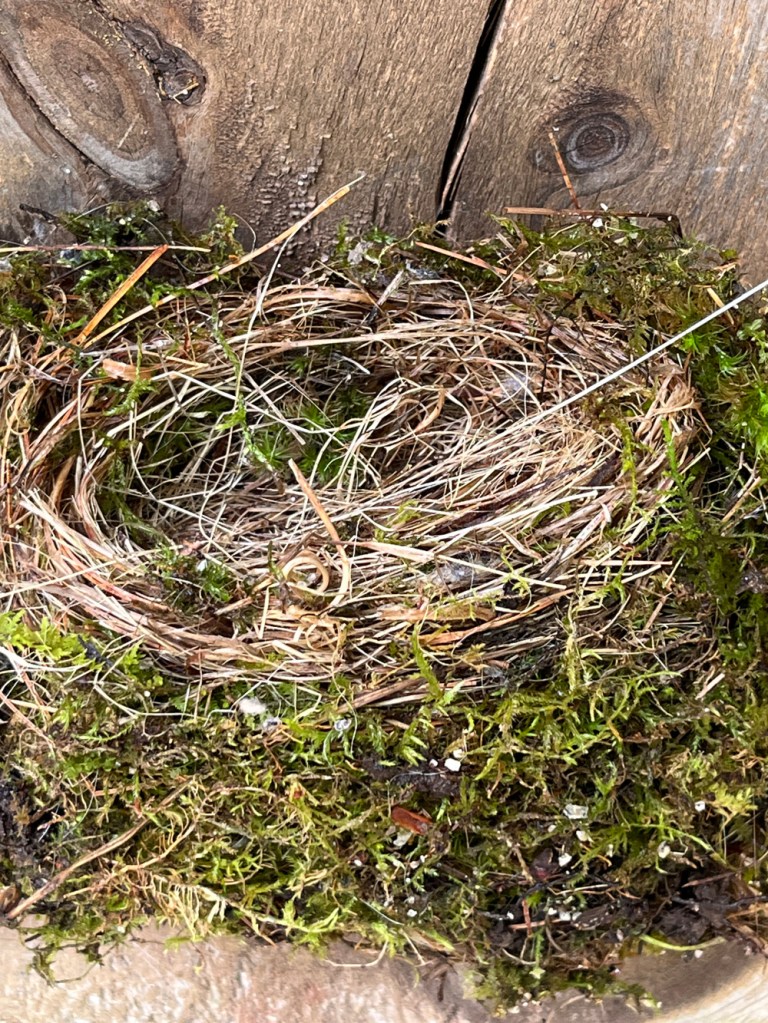
Empty Nest by Sara Wright

 She fluttered
out of a woven
mossy green
basket
above the door
at dawn
the
nest
had fallen
onto granite
stone.
Oh
my drowning senses
couldn’t
contain such grief
every cell
drilled
deeper
I gasped
this
cavernous
hole
had no
bottom
I continued
to fall
Nature had
Spoken
my silent
plea went
unanswered
Ki’s* message
was clear
I replaced
the nest
added a
cedar shingle
enticing
the phoebes
to return
listened
to a vibrating
body
whose mourning
bell
rang clear
Nature
had Spoken
my beloved
birds
and those
I loved
were gone.

Continue reading “Empty Nest by Sara Wright”

Dancing the Stories That Heal

After a near-death experience in 2019, I found myself immersed in myth and movement—sitting with Clarissa Pinkola Estés, dancing archetypes through Movement Medicine, and weaving stories like the Handless Maiden and the Red Shoes into my everyday life. This post shares some of the journey of how myths became embodied allies and an invitation for you too, to remember what lives in your bones.

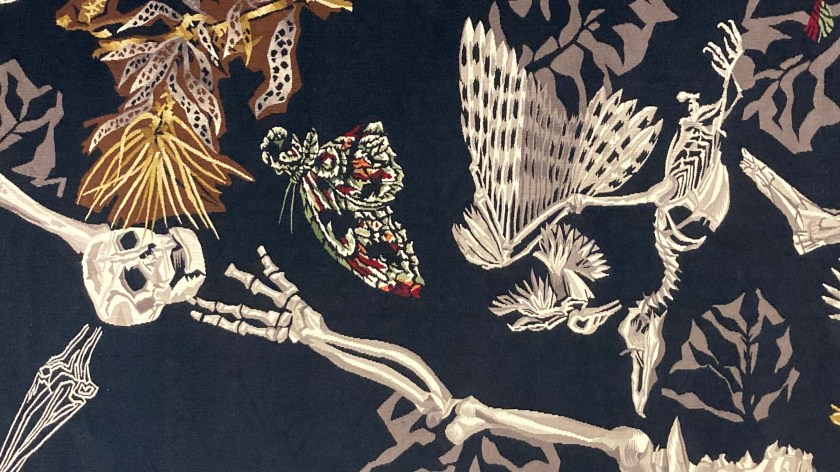
Tapestry: Le Grand Charniers (1959) by Jean Lurçat, Musée Jean-Lurçat, Angers, photographed in 2024. Image © Eline Kieft.
Continue reading “Dancing the Stories That Heal”

Deep Time and Dreaming by Sara Wright

   I am standing on top of a mountain looking over a landscape of unspeakable wild natural beauty that stretches as far as I can see. This is the ‘long view’ the dream -maker tells me. The trees are stretching out their lush green needles to the sky as if in prayer, and they are whole. The forests, clear waters, the animals, birds, insects. All of Nature has been returned to a State of Grace.

An Old red skinned Indian Man appears. He is a Grandfather. He is on the mountain with me but also stands below (both and). He speaks to me.

 “Sit, listen, this is the Song of Life”.

 A finely crafted flowing red clay seat appears below (it flows like a wave) although it is situated a few inches above the earth. Almost hovering. I also see a drum made from deerskin and red clay sitting on the ground. There is a four directional equilateral black cross on the skin of the drum. The cross is thick and around the cross an intricate design is etched/inked into its skin also highlighted in black.

Continue reading “Deep Time and Dreaming by Sara Wright”

Kinship, the Powers of Place, and Leavetaking by Sara Wright

What do I mean by the word kinship? I believe that kinship is the idea, and the belief that all aspects of nature from photons to galaxies are connected to one another. Practically, I think of kinship as my feeling/sense of being intimately linked to place/landscape. In my mind Kinship and Place are not only related, each is shaped by the other.

The powers of place are invisible threads that work by exerting a kind of physical and psychic pressure, pulling me into relationship. Place acts like an attractor site. My body behaves like a lightening rod or perhaps a tuning fork picking up information from the landscape. Once I have heard the “call” the door opens through my relationship with elements, trees, animals, stars or stones to name a few possibilities.

As this presence manifests through its individuals place begins to teach me what I need to know about an area and how I might best live in harmony with a particular landscape, if not its people. This learning occurs in bursts or very slowly just below the threshold of everyday consciousness. Either way, information seeps in through my body as I listen and pay close attention to what my senses are telling me. I allow animals, trees, plants to speak to me in their native language, and I note synchronistic occurrences. Information also comes to me through dreams. Eventually a discernable pattern emerges. My body acts as the bridge between self and the rest of Nature; the vehicle that keeps me connected to the whole.

Continue reading “Kinship, the Powers of Place, and Leavetaking by Sara Wright”

Of Birds and Dogs –Invisible Birds and the Weaver by Sara Wright

Ovenbird nest by Geoff Dennis

I am not feeding my year-round avian friends in the hopes that ‘my’ phoebes can nest in peace above my door and raise their brood without red squirrel interference. Last night I startled a nesting mother by turning on an outdoor light, so egg laying has begun. Every day I apologize to my beloved chickadees who must find food elsewhere (for now).

It’s hard to ignore the truth. So many birds that used to be common around here are gone. Mourning doves and white throated sparrows are two species that I miss too much. Occasionally, I hear a solitary w/t sparrow’s call. In March one mourning dove visited for a day; the flocks are gone

In this space in between bird loss and my choice not to feed those that I recognize by sight and sound, I have gradually learned how to listen to the invisible warblers that have probably been here all along.

Continue reading “Of Birds and Dogs –Invisible Birds and the Weaver by Sara Wright”

Mountain Song on May Day by Sara Wright

I moved to the mountains to move mountains, to find peace in the hidden crevices of an endangered planet.
We pull out her hair, clumps at a time
, self-harming her* in a myriad of new ways.
Wildfires burn up our forests, floods destroy precious lowlands. Loggers strip the possibility of new life from the soil. Our childhood stories become our adult lives: The Giving Tree who gave it all. . . .
The land doesn’t break; just dips and hides in private caves.
I moved to the mountains so that the predators of my past wouldn’t find me.
 Their spirits crawl out from unvisited graves.

[Excerpted from the poem, Mountain Life by Rebecca Rogerson.

They slip past the disappearing forests of canopied evergreens that once shaded and protected Ki’s children. [Ki is short for Kin – more on what this word means in Part 3.]

Continue reading “Mountain Song on May Day by Sara Wright”

Do You Hear Seal-Woman Calling?

It was beautiful to read Carol P. Christ recent ‘from the archives’ post “Mermaid, Goddess Of The Sea,” especially because I’m in the middle of organising my first live Story-Dance workshop since several years, to move through one of my favourite stories of the Selkie-Seal Woman!

Stories of seal-women drift across the sea from the windswept coasts of Scotland to the icy shores of the Arctic. In the Scottish and Irish Highlands, Seal-women are known as selkies—shapeshifters who live as seals in the ocean, and who, when they shed their skins, walk as women on land. These selkie women dance beneath the moonlight, their laughter echoing across the waves as they rejoin their sisters in joyful reunion with the earth.

Continue reading “Do You Hear Seal-Woman Calling?”

Return to Sender by Sara Wright

you whistled
my name
four notes
chilled
prickly skin
needling
truth
we are
forever
bound
you
bird
woman
owl
tree
wounding
wounding
wounding
we weep
grief
grief
grief
too deep
half a
million
dead
gunned down
by Explosive Will
I make
no apology
Return
atrocity
to those
whose
behaviors
will one
day
destroy
them
too.
What we do to nature we do to ourselves.

Context for Poem:

Yesterday I wrote an essay about the barred owl killings beginning with a personal story about my relationship with barred owls. I have known about this Federal Fish and Wildlife Organization’s proposal since 2023.

Continue reading “Return to Sender by Sara Wright”

Hope is the Thing with Feathers by Beth Barlett

Hope is the thing with feathers . . .
Emily Dickinson

Chickadee

I awoke this morning to bird song, and for a moment I was lifted beyond the despair that has caught me in its grip — despair for the country, for the earth, for loved ones whose lives are increasingly tossed into the chaos, for the future  The disappearance of persons into labyrinths of prisons in this country, Guantanamo, and the tortuous CECOT prison complex in El Salvador has broken what was left of my spirit. Then this morning I heard a report that the State Department has changed what it considers to be human rights abuses in order to align with recent Executive Orders, deleting critiques of such practices as retaining political prisoners without due process of law, restrictions on free and fair elections, violence against LGBTQ persons, threats against people with disabilities, restrictions on political participation, coercive medical or psychological practices, and extensive gender-based violence. Ostensibly these changes are to lift restrictions on sanctions toward other countries, but I fear they portend clearing the way for such abuses in the US as well. 

My heart is heavy in ways I have not previously known, so I am grateful for that brief moment of delight in the early morning.  Later in the day, I found myself wondering whether those who suffered and died in concentration camps, whose despair certainly was beyond comparison with my own, found any solace in the sight and sound of birds who flew freely over the walls of the camps in ways they could not. The daughter of survivors of Auschwitz, Toby Saltzman, recalled that her mother, who often suffered bouts of despair over the Holocaust, found her spirits lifted by the songs of birds. When Toby later visited Auschwitz, she was greeted by flocks of birds.  Upon her return, she reflected, “I left Auschwitz feeling a surge of triumph that my parents survived, and gratitude to the birds that gave my mother spiritual sustenance and hope.” We are sorely in need of such sustenance in these times.

Continue reading “Hope is the Thing with Feathers by Beth Barlett”