I read some wonderful posts last spring and summer about the beauties of the outdoors. One that especially inspired me was by Molly Meade. If you missed Molly’s description of how she goes out to the “priestess rocks,” read it now.
But as much as I admire people who like to spend time outdoors in gardens or the wilderness or national parks or anywhere else without kitchens and bathrooms…well, I just don’t like to get the outdoors on me. Most Pagans I know like to camp and hold grand outdoor rituals. Not me. I get lost. I trip over tree roots and get allergic in some large gardens. I don’t like to climb or hike and I stay away from the beach because it’s got all that icky, dirty sand all over it. Although I send money to the Wilderness Society and Friends of the Earth, the wilderness does not need my footprints in it.
So here’s another of my weird little stories. This one’s a fable I wrote several years ago for a friend who was holding regular ceremonies at Joshua Tree National Park in the SoCal desert. (I went to some of those ceremonies. My friends were very proud of me.)
Arduinna, Gaulish Goddess of Forests and Hunting is one of the many Celtic Goddesses who is associated with a particular region or body of water. She was worshipped in the heavily forested regions of the Ardennes, located in what is current day Belgium and Luxembourg with small portions found in France and Germany. She was also associated with the Forest of Arden in England. Her name has its roots in the Gaulish word “arduo” meaning “height”.
I spent 2015 teaching an Intentional Creativity program ‘Wisdom of the Goddess”to an intimate tribe of women creatives from our local community. In December we held an end of Year Art Gala displaying a portion of the work which saw over 100 paintings of Goddesses created over a 10-moon period.
The program was divided into the cycles of Creation, Transformation and Celebration, as inspired by Hallie Inglehard’s book “The Heart of the Goddess”. Each month, through ritual, visioning and painting, we explored a Goddess that represented these cycles; Eve, Anjea, Demeter, Cerridwen, Kali, Persephone, Aphrodite, Ochun and finally, our Inner Goddess.
It took great courage for the artists to display their paintings in public. It is often hard to explain this work because it requires such deep and thoughtful exploration of one’s inner world along with a commitment to a creative practice that favours personal growth and discovery over outcome. It can be difficult finding the language to elucidate on this process that is not just about the act of painting.
It is painting to grow and heal.
It is sacred.
It honours and empowers women.
It inspires authentic creative expression.
It unites one with self.
It connects one back to the earth.
It transforms.
It reveals.
The show was a great success. A gallery full of Goddesses was surely a sight to behold! It was a humbling experience to be out and proud about our creative work in our regional, agricultural, largely conservative community. I feel it is imperative for the restoration of female empowerment to be remembering and re-imagining the Goddess by way of image and it was through Her that these astounding women artists found the courage to put their heart and soul on the wall for all to see.
The influence that image has is far-reaching and cannot be under-estimated. Image is a universal language that evokes emotion and can go as far as mobilising the masses and even change the course of history. The famous photo of ‘Phan Thi Kim Phuc’ running naked down a road after a napalm attack during the Vietnam War is but one outstanding example.
As I reflected on the years work however, I was reminded that while these paintings carry with them incredible insights and powerful messages of change, growth, discovery and transformation, the Goddess is so much more than just an image; and certainly more than just an image to mass-produce and sell. While “the strength and independence of female power can be intuited by contemplating ancient and modern images of the Goddess” (Carol P. Christ in ‘Why Women Need the Goddess’), it cannot be forgotten that She is the sacred made immanent in the natural world, expressed in the diversity of all forms of life and death. We seek Her, sometimes even travelling to the ends of the earth to find Her, forgetting that She is everywhere. She is you and me and Her sacred sites are found in our own backyards.
With this in mind I recently returned to some creative investigations I had begun a few years ago exploring woman in nature and the Goddess as the body of the earth through paint. The earth speaks and I am listening to Her stories and bringing them to the canvas to re-affirm my sense of wonder and respect for nature. My aim is to awaken an ancient memory of the sacred relationship between human and nature, for now, more than ever, it is critical that this relationship be restored. In doing so, the earth may once again be seen and valued as a living, breathing body that sustains and nourishes all life rather than being merely a commodity to be devastated and destroyed in the name of capitalism and greed. Further, these images are reminders of the interconnectedness of all life; we are not separate from the earth, but part of its’ intricate web.
The following image was inspired in part by Terry Tempest Williams ‘When Women Were Birds’ but is also an image born from a revelation I had many, many years ago when I first starting seeing woman in nature, especially in the body of trees.
“We are the birds eggs. Birds eggs, flowers, butterflies, rabbits, cows, sheep; we are caterpillars; we are leaves of ivy and sprigs of wallflower. We are women. We rise from the wave. We are gazelle and doe, elephant and whale, lilies and roses and peach, we are air, we are flame, we are oyster and pearl, we are girls. We are woman and nature. And he says he cannot hear us speak.
Jassy Watson, who lives on the sub-tropical coast of Queensland Australia, is a Mother of four, passionate organic gardener, Intuitive/Visionary Artist, Intentional Creativity Coach and a student of Ancient History and Religion at Macquarie University, Sydney. She is the Creatress of Goddesses Garden Studio & Gallery; a small school for the Sacred Creative Arts. Jassy teaches regular painting workshops in person, nationally, internationally, and online based around themes that explore myth, history, earth connection and the Goddess. Her latest SOULSCAPES (TM) exploring woman in nature will be on show at ‘Dreaming Into Being’, Percolator Gallery, Paddington, Brisbane April 5th-11th. You can see her work at http://www.goddessesgardenandstudio.co
The Year 2015 is coming to a close. It is a time of endings and a time of beginnings. That is the wonderful thing about our cycles. We all have the opportunity to end and begin – over and over. Each day, each month and each year. We all scurry about making resolutions for the new year only to see them fail almost immediately.
This is where a good basic magical practice can lend a hand with our resolutions. In every magical act we must first know what it is we wish to manifest. I am not talking some empty wish here but a real look at what we want – really want – for the new year to bring.
Marie bringing in Elen of the Ways photo by Tony Mierzwicki
One of my colleagues at Feminism and Religion recently wrote of Xmas and Feminine Wisdom.My blog, for Christmas Day continues this exploration.
Elen of the Ways is a figure primarily studied by scholar, Carolyn Wise. She wrote two core articles available on the web hereand here. Wise writes that in order to “track” and find Elen of the Ways she had to peel back the layers:
…to the earliest track ways, the migratory tracks of the Reindeer and Elk. Elen moves across vast tracts of time, and land, cloaked and masked appropriately for each age.
As the Green Lady, she peers out between the trees in forests …As a British Venus… she is guardian of the underground streams that carry the sacred waters. She is the Guardian of the ancient track ways, the Leys, the Kundalini currents in nature. And as the Horned Goddess, she leads us to the first trackways, the migratory tracks of the reindeer and later, to the path of the red deer through the forests. From here she leads us to the lost Shamanism of the isles of Britain and we can follow her across Scandinavia, Russia, Mongolia, Siberia, India and beyond.
…part goddess, part dream, part saint, a green lady and a water nymph, primordial mother and patroness of deer, and guardian of the Old Straight Tracks and solar alignments. …Elen is as real as the roads named after her, as solid as the ancient paths that carry her presence.
What are these tracks? Part of the story can be explained by understanding that there are ley lines, or energy paths throughout the globe. These paths were “tracked” by shamans, pagans, and regular folk and still exert their influence today in very recognizable ways. People celebrated earlier this week on the Solstice (December 21) at Stonehenge. “One of the most important and well-known features of Stonehenge is its alignment on the midwinter sunset-midsummer sunrise solstitial axis,” a spokesperson said. “The midwinter sun sets between the two upright stones of the great trilithon.” The solsitial axis is part of the ley line network that connects sacred sites such as Newgrange in Ireland, a sacred burial mound which lights up only the morning of Solstice.
“The tools are unimportant; we have all we need to make magic: our bodies, our breath, our voices, each other.”
–Starhawk
As November drew to a rainy close, we had a small family full moon ritual on our back deck and incorporated a simple gratitude ritual into it. The sky was overcast so we couldn’t actually see the moon, but my four-year-old daughter wanted to get out glow sticks left over from Halloween. We had so much fun dancing around with them and making patterns together in the dark night. We sang a chant I recently made up:
Hallowed evening
Hallowed night
We dance in the shadows
We offer our light.
We did a simple gratitude practice by placing corn kernels in a jar, one for each thing we are grateful for from the past month. We started out slowly and taking turns and then we sped up and the gratitude offerings came tumbling out, over one another. Even the one-year-old added corn, rapidly yet with great concentration to make it actually go in the jar. We drummed and called out, “We are ALIVE! We are GRATEFUL! We are POWERFUL! We are CREATIVE!” When we finally decided to close our ritual and go back inside, the moon peeked out from behind the clouds to briefly say hello and it felt like a blessing on the magic we’d just created together.
As we went back inside, I felt relaxed, happy, and connected. For being something very simple, not particularly pre-planned, and semi-chaotic, it felt like one of our deepest and most connected personal family rituals. The quote above from Starhawk floated back into my mind and I reflected that when I try “too hard” to get things ready for a perfect ritual, I often end up feeling a disappointed. Sometimes I feel like giving up on holding ceremonies with my children entirely. Last year, as we prepared to walk our Winter Solstice Spiral, the baby had a poopy diaper that extended up his back. I often end up snapping critically at whomever isn’t doing it “right.” My boys make fart jokes. My husband gives long-suffering sighs. Our circle looks more like a lopsided peanut. Our humming together discordant and off-key. As we lie on the ground together on the Spring Equinox to do our “Earth Listening” practice together, the kids wiggle and fight, pushing one another off the blanket and exclaiming in loud voices so no one can hear what we’re listening for. We listen to a shamanic drumming CD, but the only one to reach a trance state is the baby as I pace back and forth with him in a baby carrier. The four year old ends up crying because she doesn’t see anything and she wanted to see something cool. Martyrpriestess emerges to complain that she doesn’t know why she even bothers trying to do nice things for anyone if this is how you’re all going to act.
I recently finished reading Under Her Wings: The Making of a Magdalene, by Nicole Christine. A theme running through the book was the concept of “As Above, So Below and As Within, So Without.” I read this book as part of my research for my dissertation about contemporary priestessing and as I read, I kept thinking, I want to hear from the Mamapriestesses, from the Hearth Priestesses! Where are the other practicing priestesses with children at home? I noticed in Christine’s book that the bulk of her work took place after her children were grown and, to my mind, she also had to distance or separate from her children and her relationships in order to fully embrace her priestess self. I notice in my reading and my research group that many women seem to come to priestess work when the intensive stage of motherhood has passed, or they do not have children. Is there a very good reason why temple priestesses were “virgins” and village wise women were crones? Where does the Mamapriestess fit?
As I read Christine’s book and witnessed her intensive self-exploration, discovery, and personal ceremonies and journeys, I realized that in many ways personal exploration feels like a luxury I don’t have at this point in my parenting life. How do we balance our inner journeys with our outer processes? Christine references having to step aside and be somewhat aloof or unavailable to let inner processes and understandings develop, since our inner journeys may become significantly bogged down in groups by interpersonal relationships, dramas, venting, chatting, and so forth. For me, this distance for inner process exploration isn’t possible in the immersive stage of life as a mother. And, yet, I also know in my bones that I’m not meant to give it up. How does the As Within and the So Without actually work?
I return to our Full Moon gratitude ritual. My oldest son, 12, whose height is rapidly extending into manhood, totes his tiny brother on one hip with practiced ease, offering his own glow stick and helping my little one hold his into the air. He expresses gratitude for the fun he’s been having this month with his new video game and, “I’m grateful for you for doing things like this with us, Mom.”
My second son, 9, my bravest child, crawls willingly into the darkness under the deck to retrieve lost glow sticks, poked purposefully down porch cracks by the one year old. He returns, triumphant, holding the bundle of sticks aloft.
My daughter, nearly five, tips her face back, looking up at me with eyes alight, “I’m glad to be a Goddess Girl!” she calls out…
Molly has been “gathering the women” to circle, sing, celebrate, and share since 2008. She plans and facilitates women’s circles, seasonal retreats and rituals, mother-daughter circles, family ceremonies, and red tent circles in rural Missouri. She is an ordained priestess who holds MSW and M.Div degrees and she is currently writing her dissertation about contemporary priestessing in the U.S. Molly’s roots are in birth work and in domestic violence activism. She has worked with groups of women since 1996 and teaches college courses in group dynamics and human services. Molly is the author of Womanrunes: a guide to their use and interpretation, Earthprayer, Birthprayer, Lifeprayer, Womanprayer, and The Red Tent Resource Kit. She has maintained her Talk Birth blog since 2007 and writes about thealogy, nature, practical priestessing, and the goddess at her Woodspriestess blog. Molly and her husband Mark co-create original birth art jewelry, figurines, and goddess pendants at Brigid’s Grove.
Note: If you have children at home, I’d love to hear from you about the Mamapriestess topic! If you do not have children by choice, how does this play into your spiritual work? If you do not have children and that is not by choice, how does this play into your spiritual work?
When I first moved to Greece I spoke of being attracted to a culture in which people express their emotions easily and do not hold on to anger. In the part of American culture I know, the opposite is often the case: people do not express their emotions easily and hold onto their anger. When I joined a therapy group in Greece, my therapist said that I made the right decision to move to Greece. “You needed to learn to live from here,” she said touching her belly, “and this is where Greeks live.”
During the first years I lived in Greece, I often said that I wanted to become Greek. Like others had done before me, I romanticized Greece and the Greeks. Then one winter I learned that family violence is as prevalent in Greece as it is in every other country. The cultural ability to express emotion does not stop Greek men from beating their wives or Greek women from hitting children. Indeed the more expressive nature of the Greek culture may make it easier for Greeks to resort to physical violence. On the other hand, violence stemming from withheld feelings can be cruel and unpredictable. Continue reading “When I Dance I Am I Greek by Carol P. Christ”
Dahut Ahes, Breton goddess of Love and Sensuality is a Celtic Goddess whose origins are obscured by patriarchal tales which cast Her as wanton and depraved. By weaving together the tales as they are today with an understanding of the life-affirming nature of the old pagan ways Dahut emerges as more than a glittering goddess of beauty; She is revealed as an ancient goddess in a long line of goddesses who holds the rebirth of the old ways in Her loving arms.
It seems like there is a perpetual debate over acquiring land for progress and growth versus the protection of land that has ties to religion, customs, and cultures. The history of America is littered with stories and events that deal with acquisition of land. The sake of growth, expansion, and progress takes precedence in the history of America. Our country’s geography is a road map of acquired land and the pushing aside sacrality.
We had a scrumptious dinner of fresh fish, salad, fried potatoes, local amber-colored wine, and tiny olives. Later the two waiters, Themis and Nikos, bearing another pitcher of wine, sat down at our table.
They told us they were best friends and had just gotten out of the army. When they discovered that we were writers, the two young men were intrigued. “Our village has a very interesting history and many interesting customs,” they told us. “If you would like to come back and write about it, we will introduce you to all of the old people.” This conversation was in Greek, but I translated for Naomi. “This must indeed be a very interesting village,” I said to her, “because when they learn that I am a writer, most Greek men will say ‘write about me, I have a very interesting story.’ These men, in contrast, want us to write about their village.”
When we finished our wine, the young men offered to give us a lift back to our hotel on their motorbikes, suggesting we could have a coffee at the hotel bar. When we got to the hotel, they didn’t stop. “What happened?” I asked. “The bar wasn’t open at the hotel, so we’re looking for another place.” I wondered what Naomi, perched on the back of a motorbike and unable to speak Greek, must be thinking—especially since she was afraid of the unknown. We drove through the town and turned down a dirt road, arriving at the Zaros water factory. “We wanted to show you this,” they said sheepishly. “People drink our water all over Crete.” “O.K., “Naomi said, “but then you must take us back.” There were a few workers on the night shift, and the boys told us they had worked there too, before going into the army.
Leaving the factory, we continued down the dirt road heading away from the town. “Where are we going?” I asked, wondering what we had gotten ourselves into. “Just a minute,” Themis said, as he got off the bike in front of what looked like a small house in the middle of nowhere. “We need to go back,” Naomi said definitively. “Yes, I already said that,” I answered. “Come inside,” Themis beckoned. “We want to show you how they make the raki (the colorless alcoholic drink that had been offered to us in shot glasses us after meals). This is the still,” he continued, as he showed us into a small dark room with a glowing fire. “After the wine is pressed, they put the skins and stems into barrels like those you see in the corner. The mixture takes six weeks to ferment, and then they bring it to a still, where it is heated over a fire. The steam that rises is directed through long curved pipes, and comes out as raki,” he said, pointing to various parts of the mechanism. Continue reading “Dionysian Rites by Carol P. Christ”


 I read some wonderful posts last spring and summer about the beauties of the outdoors. One that especially inspired me was by Molly Meade. If you missed Molly’s description of how she goes out to the “priestess rocks,” read it now.
 Arduinna, Gaulish Goddess of Forests and Hunting is one of the many Celtic Goddesses who is associated with a particular region or body of water. She was worshipped in the heavily forested regions of the Ardennes, located in what is current day Belgium and Luxembourg with small portions found in France and Germany. She was also associated with the Forest of Arden in England. Her name has its roots in the Gaulish word “arduo” meaning “height”.
 I spent 2015 teaching an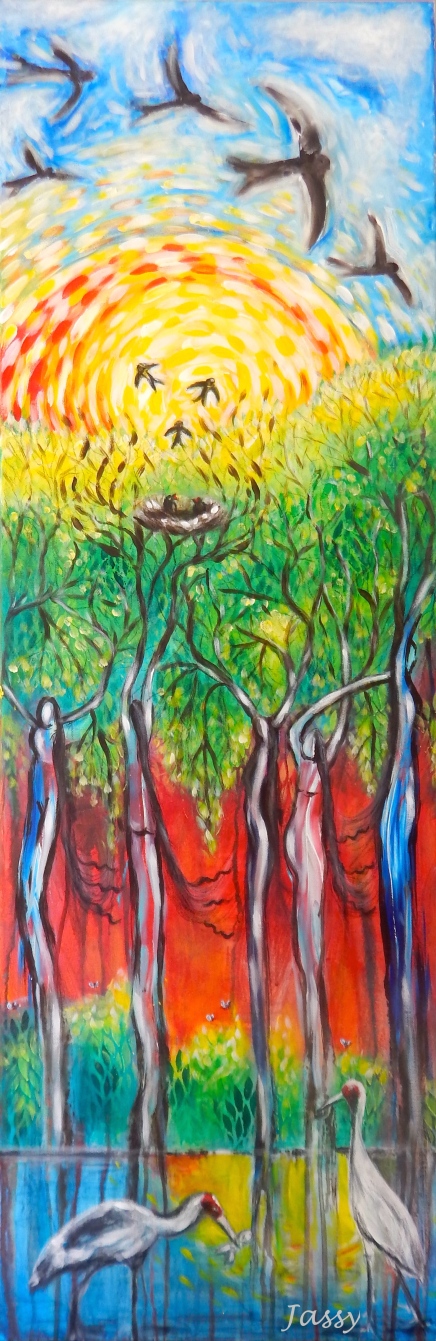
 The Year 2015 is coming to a close. It is a time of endings and a time of beginnings. That is the wonderful thing about our cycles. We all have the opportunity to end and begin – over and over. Each day, each month and each year. We all scurry about making resolutions for the new year only to see them fail almost immediately.
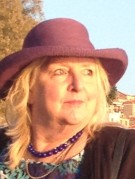 When I first moved to Greece I spoke of being attracted to a culture in which people express their emotions easily and do not hold on to anger. In the part of American culture I know, the opposite is often the case: people do not express their emotions easily and hold onto their anger. When I joined a therapy group in Greece, my therapist said that I made the right decision to move to Greece. “You needed to learn to live from here,” she said touching her belly, “and this is where Greeks live.”
 It seems like there is a perpetual debate over acquiring land for progress and growth versus the protection of land that has ties to religion, customs, and cultures. The history of America is littered with stories and events that deal with acquisition of land. The sake of growth, expansion, and progress takes precedence in the history of America. Our country’s geography is a road map of acquired land and the pushing aside sacrality.

 Feminism and Religion