An Ethics of Anger by Ivy Helman

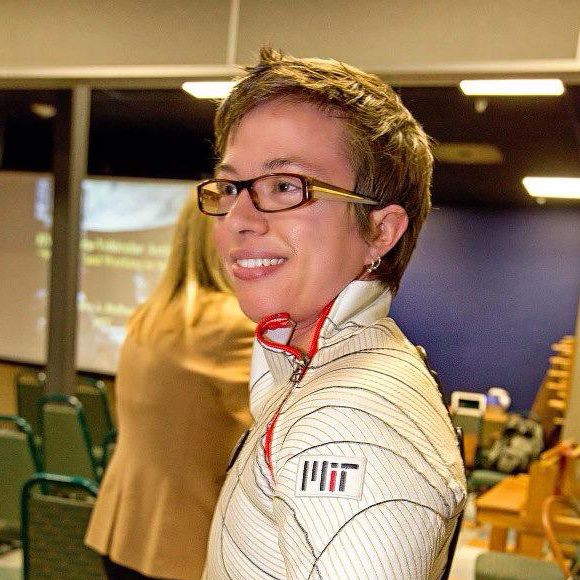
me bio-suitSometimes I feel angry.  I would say that more often I’m upset, disappointed, annoyed or just plain frustrated.  These are easier emotions for me to handle because I tend to shy away from confrontation and conflict.  Of course, when they come up I can deal with them but I’d rather put time and energy into fruitful communication before difficult conflicts erupt.  Nevertheless, this doesn’t always work and other people handle situations and communication differently than I do.  So how does one approach anger?  The anger inside one’s self?  Another’s  anger?  What about when two individuals are angry with each other?  I would like to spend a little bit of time treating each one of these scenarios separately and then conclude with a few general remarks about the importance of empathic feelings of anger over the situations of others.

First of all, everyone handles anger differently.  I’m not sure that there is only one correct way to approach it.  Personally, I use anger as a reflective tool.  Why am I angry?  What happened or didn’t happen to provoke my anger?  Is my anger an appropriate response to the situation in which I find myself?  Are there some concrete actions I can do to right the situation?  These questions allow space for me to not only explore my feelings and ground myself, but more importantly they give me some space between what made me angry and whatever action or inaction I take toward that feeling of anger. Continue reading “An Ethics of Anger by Ivy Helman”

“Stand Up Straight” by Kelly Brown Douglas

When I was little my mother use to always tell me to “stand up straight.” It is probably because of my mother’s plea that one particular bible story became one of my favorites. It is a story that comes from the Gospel of Luke, Chapter 13.  In this story Jesus heals a woman who had been crippled and bent over for 18 years. As he does so he tells her “to stand up straight.” For me, these are some of the most powerful words that Jesus could have spoken to this woman. For not only did they signal that he had freed her from whatever the burden was that kept her hunched over, but they also restored her to a sense of dignity. These are simple, yet powerful words, for the many women in our midst who have for so long have not been able to stand up straight.

I think of the Sarah Baartmans of our world, like a Rachel Jeantel, who are made into a circus act because of their appearance. What happened to Sarah Baartman in 1810 as she was paraded across Europe so that people could examine her buttocks and genitalia—deeming her exotic and erotic, happened to Rachel in 2013 as she gave testimony in an American courtroom while people decried her appearance and mocked her speech—deeming her ignorant and illiterate. Continue reading ““Stand Up Straight” by Kelly Brown Douglas”

An Interview with Lyz Liddell from the Secular Student Alliance by Kile Jones

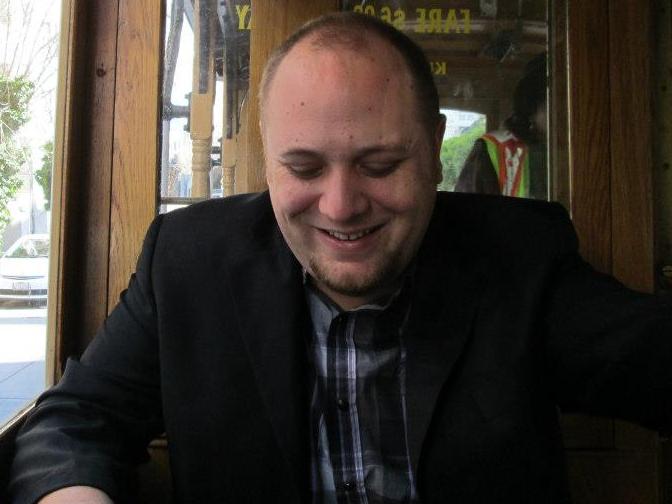
KileIn this post I interview Lyz Liddell, Director of Campus Organizing at the Secular Student Alliance.  I first got in contact with Lyz about the idea of building a Humanist Center at my school, Claremont Lincoln University.  She was very helpful and inspiring.  I then had the pleasure of meeting her face-to-face when I gave a presentation on “Atheism and Interfaith” at the Secular Student Alliance’s Annual Conference in Las Vegas.  So once again, I give you an interview with a strong female non-believer:

Lyz Liddell of the SSA

Can you give us a little background to how you became interested in secular activism and how you became the Director of Campus Organizing for the Secular Student Alliance?

I first became interested in secular activism via our Executive Director August Brunsman, close to ten years ago.  The editor of our newsletter had recently acquired some fame (that was Hemant Mehta, with the fame from his experience of selling his soul on eBay) and was no longer able to commit to the regular editorial schedule; I was asked to step up, and since I had some editing experience, I took it on.  Up until that point, I had been a “layman,” if you will – secular for sure, but not really an activist.  Through several years of editing that newsletter, I learned what secular student groups were doing, and what was happening in the secular movement at large.  The more I encountered, the more enthusiastic about it I was.  I started going to conferences to get more information and news for the newsletter, and got more involved with the organization’s staff and volunteers and affiliates.  When the campus organizer position opened up in late 2008, I stepped up into that position, and we’ve grown it from there (2 full time staff and some volunteers, a board of mostly college students) to the professional organization we are today (9 full time staff, 4 part-timers, a professionalized board and dozens of dedicated volunteers; we’ve grown from ~100 affiliates in 2008 to over 400 today).

No More Of This in Academe! by Grace Yia-Hei Kao

Last week, social media was ablaze over a September 18 Pittsburg Post-Gazette column entitled “Death of An Adjunct” by Daniel Kovalik that had the following teaser: “Margaret Mary Vojtko, an adjunct professor of French for 25 years, died underpaid and underappreciated at age 83.”  Inside Higher Ed reports that the column went viral as “adjuncts across the country reported seeing something tragically familiar in her story.”  The Chronicle of Higher Education likewise covered the story with this tagline: “An Adjunct’s Death Becomes a Rallying Cry for Many In Academe.”

This tragedy involves all sorts of issues with which readers of this blog are concerned: power, structural injustice, job insecurity, underemployment, unions, healthcare, and Catholic values (the last of these since Margaret worked at a Catholic institution), to name a few.

Continue reading “No More Of This in Academe! by Grace Yia-Hei Kao”

The Purity Complex: Are Men Really Less Affected Than Women? by Andreea Nica

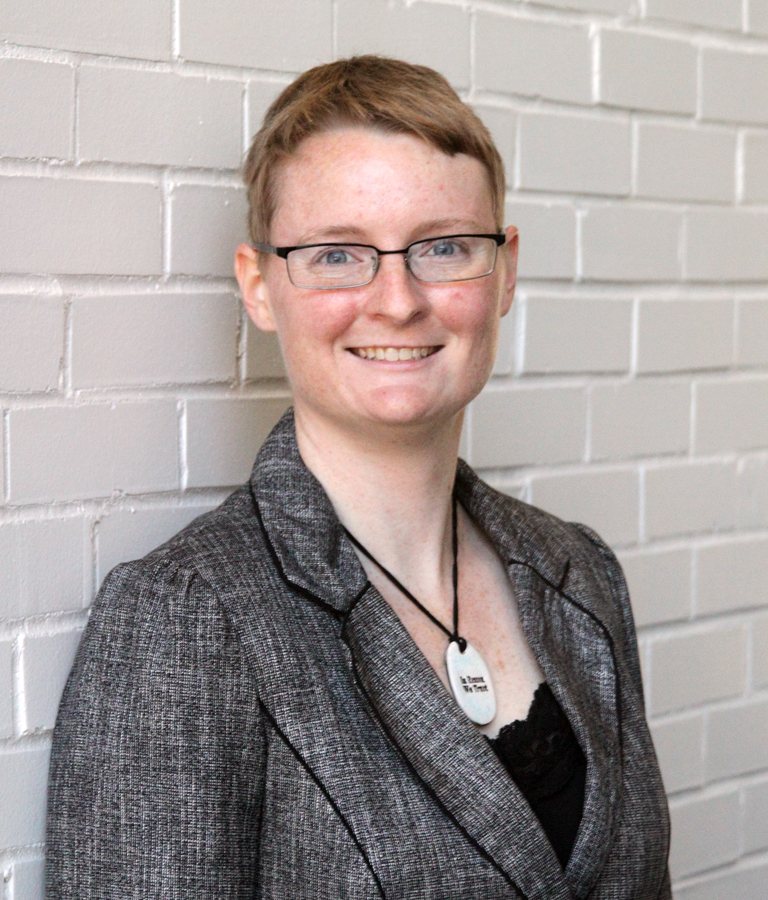
Andreea Nica, pentecostalismWomen’s bodies continue to receive an inexhaustible amount of attention. As a society, we have glorified, scrutinized, degraded, hypersexualized, underrepresented, and misunderstood the female body. Purity culture has orchestrated a movement around the management, perception, and regulation of women’s bodies. As a former Pentecostalist, I grew up knowing there was more focus on my body versus those of my  brothers in Christ. There was a bodily divergence between men and women that I did not fully comprehend but felt obligated to adhere to; the ideological basis of this difference was filled with much ambiguity.

Each time the church organized a sexual purity event and/or discussion, boys and girls were unfailingly segregated. I was always so curious about what was discussed in the boy’s group so I would ask my brother, Christian boyfriend, and male friends at the church to fill me in on the gossip. In my teens, I didn’t know how to perceive the information relayed to me. Looking back now, I am surprised at the discourse around purity culture and masculinity in the church. During my earlier years at college, I convened with the male pastoral leadership, and they confirmed the following main themes taught to men during sexual purity discussions. Continue reading “The Purity Complex: Are Men Really Less Affected Than Women? by Andreea Nica”

Unjust Wars and ‘Innocent’ Bodies by Kelly Brown Douglas

According to a recent online CNN report (15 September 2013) an 8 year old girl in Yemani died from internal injuries after her wedding night. Apparently this was not the first time a young Yemeni girl died under these circumstances.  Despite the fact that there have been various attempts to outlaw child marriage in Yemani, it remains legal.  For some families steeped in poverty, the “innocent” bodies of  young girls becomes a way to make money as these girls are sold for marriage to older men. One Yemeni woman lamented, “this is what poverty can do to people” (CNN online 15 September).

All around the world there are stories of young girls and women whose bodies are being “legitimately” violated.  Even in those places where the violence against women’s bodies is considered a crime, the redress for these crimes fall short of justice.  The story of the Yemeni girls and others like it have raised many theological questions in my mind concerning  notions of innocence,  the meaning of violence, and the implications of just war.  In this blog, I will share my rather fragmented thoughts on these issues as an invitation to conversation. Continue reading “Unjust Wars and ‘Innocent’ Bodies by Kelly Brown Douglas”

The Difference a Feminist Makes by Elise M. Edwards

Elise EdwardsOf the many reasons I am grateful for feminismandreligion.com, I have to say that I am most grateful for the time it requires of me to reflect about feminism’s impact in my life, faith, and work.  I decided it was time to reflect on this question: What difference does feminism make for the way I structure and approach my classes?

I recently started a new position as a full-time lecturer in the Department of Religion at Baylor University.  Earlier this week, I attended a gathering for the department, where I was introduced, along with a few others, as new faculty.  At the end of the evening, the wife of a retired male professor introduced herself to me and remarked about how happy she was to see more women in the department. (Four full-time faculty members were hired this year, and three of us are women.)  She had been looking forward to this kind of change for quite a while.  I was appreciative of her remarks, just as I have been generally pleased with the warm reception I have received around the University.

Her excitement about the increase in the number of women faculty provoked me to reflect on what I add to my department, particularly for my undergraduate students.  I have thought before about how, from a purely representative standpoint, I bring something different to the faculty.  I have thought about how my students may not have previously had a professor–especially a religion professor–who looks like me.  Even if they had, I’ve had different life experiences than many of my colleagues, and that this bears on my approach to theology and ethics.  Therefore, the research I do and share is distinctive in its approach.  Yet, I am slightly embarrassed to admit that I have not given much thought about how my being a black feminist woman might impact my students.  I am tempted to blame it on the fact that I have just been trying to keep my head above water in a new position.  Of the many reasons I am grateful for feminismandreligion.com, I have to say that I am most grateful for the time it requires of me to reflect about feminism’s impact in my life, faith, and work.  So I decided to reflect on this question: What difference does feminism make for the way I structure and approach my classes? Continue reading “The Difference a Feminist Makes by Elise M. Edwards”

Interview an Atheist at Church Day by Kile Jones

Kile Jones, atheistAs some of you may know, I run a project called “Interview an Atheist at Church Day.”  This project aims at bettering understanding and furthering dialogue between atheists and Church-going religious persons.  So far we have had over a dozen interviews take place, and we have more in the making.  If you are a pastor interested in interviewing an atheist during service, or an atheist willing to be interviewed, please contact us here.

Our most popular interview so far is with Neil Carter (atheist) at a church in Mississippi.  You can read up on it here and watch it below.  At Feminism and Religion, I have made it my task to highlight some strong atheist women, and discuss some of the ways in which they can work together with religious women (sometimes this can cause a little friction).  Gretta Vosper, a pastor in Canada, is just such a woman.  She was interviewed as an atheist IN HER OWN CHURCH!  If you are not familiar with her work, I highly recommend it.  Another strong atheist woman who has participated in this project is Sarah Kaiser.  She works with the Center for Inquiry promoting LGBTQ rights. Continue reading “Interview an Atheist at Church Day by Kile Jones”

The Hot Seat by John Erickson

Being a man in feminism isn’t easy and that’s how it is supposed to be.

men_feminist_mainI’ve been thinking a lot about what it means to be a male feminist lately.  As the only man to be a permanent blogger on this very site until my colleague and friend Kile Jones came on board, I took my role, as a man in a traditional feminist (online) space very seriously.  Although the ongoing struggle to be a male feminist is one continually wrought with dialogues about power and positionality (amongst a host of many other topics), I am often conflicted when I see male feminists take advantage and destroy the hard work that many, specifically on this site and beyond, worked hard to build and defend.

Not wanting to reopen old wounds or start new online battles, men have been involved in feminism for quite some time.  From James Mott chairing the first women’s rights convention, to radical feminist Andrea Dworkin’s life partner John Stoltenberg, to Michael Kimmel and Michael Kaufman’s life long work to legitimize not only men in feminism but also what it means to be a man who works for gender equality, being a man in feminism isn’t easy and that’s how it is supposed to be. Continue reading “The Hot Seat by John Erickson”

5 Interesting Facts about Women and Religion by Kile Jones

Kile Jones, atheistPart of my research is focused on how the social sciences relate to “religion” and religious studies.  More specifically, I spend time examining the sociology of religion.  I look at stats, demographics, and polls.  I look at rates of attendance, frequency of prayer, levels of “religiosity,” apostates (or the less religiously-loaded term “exiters”), and political outlooks.  I also look at how bias this area of study is in favor of religion.  One facet of this work that has always interested me, is the differences in “gender” and “sex” as they relate to religious beliefs and observances.  Accepting the fact that there are spectrums of sex, gender, and identity, and the presence of difficult philosophical questions surrounding self-identification and the limits of labels, some really interesting facts and statistics crop up time and time again.  In what follows I will lay out a couple of these interesting facts, along with some thoughts on them: Continue reading “5 Interesting Facts about Women and Religion by Kile Jones”