Fuerzas Para La Lucha: Sources of Strength for the Struggle

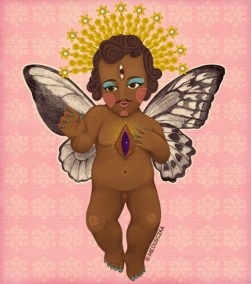
Art work designed by Jaysen Waller - http://www.jaysenwaller.com/
Art work designed by Jaysen Waller – http://www.jaysenwaller.com/

When Ada María Isasi-Díaz lived in Chile, she had a neighbor who lived in extreme poverty who she remembered as someone “who never lost her sense of dignity and purpose of life,” even while she struggled day after day for her survival. She explained,  “I remember the steadiness of her struggle: day after day she dealt with the reality of the present and survived that day in order to be able to face the next.”

From that experience Ada María Isasi-Díaz began to develop la lucha as a category of social analysis and as a theo-ethical category. La Lucha is a way of recognizing the reality of the grand injustices very much in place impacting people in their every day lives and how embedded these are into our intersecting systems and structures. The need for fuerzas para la lucha (strength for the struggle) is therefore great. Continue reading “Fuerzas Para La Lucha: Sources of Strength for the Struggle”

Updates on Listening by Xochitl Alvizo

X.Alvizo CSUN Profile 2-editedThe pieces of my dissertation are beginning to float to the surface, piece by piece, released into the world as smaller parts of the whole. At some point this all may become a book, but for now, I have enjoyed the opportunity to share some of the learning from my dissertation research in book chapters, articles, and blog posts, which I’d like to share with you all so that you can see some of what I’ve been up to these days.

The most recent piece that has come to be is an article on The Listening Guidethe particular method of narrative analysis I used to analyze the transcriptions of the interviews I conducted with participants of Emerging Church congregations. I’m particularly excited about this piece because I think it could be a useful tool to many of us in our respective fields of study and work. And although my particular context is theological and, even more specifically, Christian, as a tool and method, The Listening Guide can be used for reflection and be of great value in a variety of contexts.  Continue reading “Updates on Listening by Xochitl Alvizo”

To Work and to Pray in Remembrance by Elise M. Edwards

Elise EdwardsOne hundred years ago, Jesse Washington was lynched downtown in Waco, Texas. Next week, on March 20th, some of my colleagues and I are organizing a memorial service to remember this horrific event and pray for a better future for our city.

We invited submissions of original prayers, poems, spoken-word pieces, music, drama, and other pieces of liturgy for this ecumenical memorial event.  We received a number of thoughtful, heartfelt submissions, but we also a question:

“Why in the world do we need a memorial for one person who was lynched?!?! In the reality of things, Jesse Washington was one of thousands of Blacks that were lynched in America during the time period.”

I thought the answer was so obvious that I initially brushed off the question. But as our group proceeded with the plans, I thought about the question and wondered whether our university community would understand why we are doing this. And honestly, in moments of exhaustion when I put off responding to emails, I wondered, too. Why am I doing this?

To remember. We memorialize one person who was lynched to remind us that every single one of the thousands who were lynched was a human being who was killed unjustly.

In the speech “Lynch Law in America,” from 1900, Ida B. Wells-Barnett describes the injustice: “Our country’s national crime is lynching. It is not the creature of an hour, the sudden outburst of uncontrolled fury, or the unspeakable brutality of an insane mob. It represents the cool, calculating deliberation of intelligent people who openly avow that there is an “unwritten law” that justifies them in putting human beings to death without complaint under oath, without trial by jury, without opportunity to make defense, and without right of appeal.”

Wells-Barnett was an African-American journalist and activist for civil rights and women’s suffrage. Her writings and activism advanced anti-lynching campaigns adopted by Black women’s clubs and the NAACP. Unsurprisingly, her work was controversial, even among women’s groups. Wells-Barnett argued that lynching began after the emancipation of slaves to repress “race riots.” When a constitutional amendment permitted black men to vote, lynching was used to violently prevent their participation in state and national elections. When fraud, intimidation, and local policy succeeded in suppressing the black vote, the brutality continued in the name of avenging or preventing rape and assault of white women.[1] For this argument, lawmakers, ministers, and women’s groups accused Wells-Barnett of defending rapists and subverting “justice” for their alleged victims.

She did not defend rapists. (Neither do I.) She condemned a system that used allegations of rape of white women to legitimate hanging, burning alive, shooting, drowning, dismembering, dragging, and displaying black men’s bodies. Some allegations may have been true. Many were false. Despite the veracity of the allegations, the vigilantes tortured and killed men, women, and children in brutal, public ways, and we must not mistake that for any form of justice. Lynching apologists explicitly valued white lives over others. Lynching was, and remains a crime against humanity.

In our own age of campaigns against the impartiality of law and law enforcement, we should remember the lynching victims and the tensions within earlier waves of feminism and the temperance movement over anti-lynching campaigns. We do not have to condone criminal behavior to call for humane law enforcement or prison reform. We can affirm the humanity of accused and convicted criminals in the pursuit of justice. So we remember Jesse Washington and the other lynching victims to engage more consciously in the activism of our time. We remember so that we don’t lose sight of the complexities of our work. We work in remembrance of the many victims of injustice.

We also gather to pray. For some people, prayer is about making requests to the divine. But in a more expansive sense, prayer is communication with the divine. In prayer, we set time aside to connect to something greater than ourselves. It’s our hope that gathering as a community to pray for the future of our city prompts us to see beyond individual concerns. In a liberation ethics framework, as explained by Miguel De La Torre[2], prayer is not limited to individual, private conversations with God in hopes of gaining wisdom and guidance. De La Torre presents prayer as a communal activity that brings together different members of the spiritual body. It involves the critical application of the biblical text to the situation at hand. This involves critical analysis of the social context that gave rise to the text or its common interpretation. So we pray to give us time to come together, to read scripture, to seek God and hear God through other members of our community.

So why are we gathering? Why do we memorialize one person when there are so many others who have been harmed, not just in my local community but all of our communities?

To remember past wrongs.

To commemorate.

To honor.

To inspire.

To call attention to persisting injustices.

To make us mindful in our work.

To provoke us to pray.

[1] This argument about the reasons for lynching is found in several of Wells-Barnett’s essays, but is quite developed in The Red Record: Tabulated Statistics and Alleged Causes of Lynching in the United States (1895).

[2] See Miguel A. De La Torre’s Doing Christian Ethics from the Margins (2nd Edition, 2014).

Elise M. Edwards, PhD is a Lecturer in Christian Ethics at Baylor University and a graduate of Claremont Graduate University. She is also a registered architect in the State of Florida. Her interdisciplinary work examines issues of civic engagement and how beliefs and commitments are expressed publicly. As a black feminist, she primarily focuses on cultural expressions by, for, and about women and marginalized communities. Follow her on twitter, google+ or academia.edu.

Fair and (Therefore) Lovely by Vibha Shetiya

VibahAccording to the Great Indian Cultural Lexicon, being light-skinned or “fair” translates to being “lovely.” A look at commercials that promise a make-over, courtesy of Fair and Lovely skin lightening cream will attest to this. [1] The definition, of course, applies to women, for that is where a woman’s identity begins and ends – within the realm of physical appearances. When the product first came out some three decades or so ago, it was mostly about being able to draw the attention of a (very often ordinary-looking) guy; the fairness/ beauty rule does not apply to men.[2] These days, things have “progressed”; the attention has shifted from the need to getting hitched to finding success in the workplace, as these messages scream out:

https://www.youtube.com/watch?v=kNU7QJXG2Tc

https://www.youtube.com/watch?v=L0_h31E9t30

https://www.youtube.com/watch?v=dGepwMtV7R8

The last one is especially cringe-worthy. The lengthy commercial, meant to be a public service message of sorts, targets women in villages and smaller towns, and goes into great detail about issues of women’s empowerment, about how they ought to think of a career now that they are done with college rather than go the usual marriage route. One of the young ladies, Manju, aspires to be a Collector, a high-ranking government official, a post usually limited to males. She works hard, and she also gets Fair and Lovely to work hard, as she happily lets us know. She eventually achieves her dream, all thanks to Fair and Lovely, of course. You decide what the audience is to get from this. Continue reading “Fair and (Therefore) Lovely by Vibha Shetiya”

“Seeking Harbor in Our Histories” – ASWM 2016 Conference

aswmThe Association for the Study of Women & Mythology (ASWM) will be hosting this year’s Conference, “Seeking Harbor in Our Histories: Lights in the Darkness” at the Boston Marriot Burlington Hotel on 1-2 April 2016.

ASWM conferences strive to support the scholarship, artistry, & practice of those who explore and engage the sacred feminine through study and creativity. Offering keynote presentations at this year’s conference are Dr. Elinor Gadon, Dr. Margaret Bruchac, and Dr. Lucia Ciavola Birnbaum.

On Friday night, there will be a plenary session and book-signing moderated by Miriam Robbins Dexter and Vicki Noble and featuring Max Dashu, Starr Goode, Mama Donna Henes, Donna Read, Genevieve Vaughan, Cristina Biaggi, Lydia Ruyle, Miranda Shaw, Elinor Gadon, and Susun Weed. They will be sharing stories from the anthology, Foremothers of the Women’s Spirituality Movement: Elders and Visionaries. FAR contributor Carol P. Christ has a chapter in the book.

FAR is excited to share that three of our contributors are on this year’s conference schedule!

Nancy Vedder-Shults will be joining the “Artists, Activists, & Scientists and the Lineage of the Goddess” panel with her presentation, Science and Divination: The Blurring Lines between the Secular and the Sacred. 

Jill Hammer will present The King and the Priestess: Mythic Motifs and Motives in the Tale of Judah and Tamar as part of the “Male-Female Relationships in the Hebrew Texts: Three Feminist Analyses” panel.

Kate Brunner will be participating in the “Women’s Spirituality, Transformative Scholarship and Personal Quest” panel with Rhiannon, Great Queen of the Mabinogi: Ancient Mythology in Modern Context. She will also be offering her meditative writing workshop, Becoming Branwen the Peaceweaver. 

In addition to the main conference, there will be a Matriarchal Studies Day seminar and celebration, in the same location the day before (31 Mar). Hosted by Vicki Noble and Lydia Ruyle, the program looks to be a great addition to the weekend. Dr. Heide Goettner-Abendroth, founder of Modern Matriarchal Studies will present via Skype. Other presenters will include Max Dashu, Polly Wood, Beverly Little Thunder, and Genevieve Vaughan, exploring woman-centered arts, themes of motherhood, and the gift economy. There will be a keynote presentation by Lucia Chiavola Birnbaum, and evening entertainment by folksinger, Julie Felix.

For registration information & more conference details, see the ASWM 2016 Conference blog.

Feminism & Religion Project contributors past, present, & future interested in connecting with FAR at the conference, are encouraged to get in touch with Kate Brunner at feminismandreligionblog@gmail.com. If there is enough interest, we may be able to organize meeting up for a meal together some time during the weekend.

Fear, Guilt, Duplicity, and Cover-up in the Roman Catholic Church by Carol P. Christ

Carol Molivos by Andrea Sarris 2Last week I watched Spotlight, the film about the Boston Globe‘s exposure of priests’ sexual abuse of children, and then I watched it again. There are many reasons for my fascination with this film. I almost always root for the underdog, and in this story the underdog wins. Moreover as a former Catholic (for a period of time) and as part-Irish, I relish an inside glimpse of the machinations of the all-male Church hierarchy and the all-male Irish power structure that supported it in Boston.

Having dealt with child sexual abuse on an almost daily basis while I was teaching women’s studies, I also have a very personal and emotionally-charged relationship to the subject. I was pleased that victims of child sexual abuse were able—after great struggle—to get a hearing. But this I already knew. Continue reading “Fear, Guilt, Duplicity, and Cover-up in the Roman Catholic Church by Carol P. Christ”

Mazel Tov Tzidkaniyot of the Wall by Ivy Helman

20151004_161012I have never understood the logic behind sexism. Why is half (or so) of the human race better than the other half? Of course, patriarchy and patriarchal religious traditions offer various seemingly logical reasons, sometimes even divine explanations for the inequality between the sexes. Still, the –isms of patriarchy, whatever their “reasons” or perhaps better excuses, puzzle me.

Even more puzzling are the steps patriarchy-orientated men and women take to preserve these distorted systems. Violence usually goes hand-in-hand attempting to control others in order to preserve the status quo. Obviously if you need to resort to violence to keep people in their place, there is something horribly wrong with society. That being said – one could say that almost no society, nation or culture in our modern times doesn’t have some form of patriarchal violence within it. One would be correct to attribute some measure of the increase of violence to globalization, capitalism, fear, past colonialism and/or neocolonialism. Nonetheless one is hard pressed to find a culture without sexism, without patriarchy and without the need to keep the system in place through violence. Continue reading “Mazel Tov Tzidkaniyot of the Wall by Ivy Helman”

Seasons in Church and Life in the Company of Women by Elise M. Edwards

TElise Edwardshis week, the Christian season of Lent began. Ugh. Lent can be so somber and serious and gloomy. Last year, I didn’t want to place myself in that frame of mind. I was experiencing grief and self-doubt and loneliness, and felt that an extended period of reflection about self-denial, Christ’s suffering, and the sinful condition of humanity might pull me into an unhealthy depression. Also, I questioned why I should seek silence and solitude when I was already experiencing too much of it. I felt isolated.

This year is different for me. Once again, I’m entering the season with a grieving heart. I’m mourning the death of my cousin. But I do not feel isolated. I am not self-doubting. This January, I spent four continuous days with mentors and peers in academia who poured love and wisdom and inspiration into me. The women in our group sought each other out and had honest and authentic conversations about the successes and struggles in our lives. We affirmed self-care. We affirmed milestone birthdays. We affirmed our bodies, despite the physical limitations we sometimes feel. We affirmed the tough decisions some had made, the transformations some were pursuing, and the exciting opportunities that had developed for others since we last met over the summer.

It was a powerful experience, but there was pain, too. We confronted fear, rejection, anxiety, exhaustion, and frustration. I felt blessed—divinely gifted—to have an opportunity to speak honestly with my sisters in the spirit about the people and issues on our hearts: challenges with students, systemic racism and sexism, menopause, children, research questions, financial decisions, romance, and health.

I was on an emotional high from the power that comes from being truly known and loved and I was reveling in the power of that love. Continue reading “Seasons in Church and Life in the Company of Women by Elise M. Edwards”

“Light and Darkness” of the Goddess by Carol P. Christ

Carol Molivos by Andrea Sarris 2“Light and Darkness” is a song written and arranged to one of the oldest known European melodies by Ariadne Institute founding Co-Director Jana Ruble, following her first Goddess Pilgrimage to Crete. Every year since then, we have sung it in the caves of Crete during our rituals. A pilgrim told us that she learned it at the (Christian) Re-Imagining Conference. Last spring another pilgrim said that she knew it because her choral group sings it. You can listen to “Light and Darkness” and see pictures of an altar in a cave on a new video created by Goddess pilgrim PJ Livingstone after the 2015 spring tour.

In our culture we have been taught to fear the dark. We have been told that monsters come out in the dark, and that they will eat us. Such fears have not always been part of cultural memory. Continue reading ““Light and Darkness” of the Goddess by Carol P. Christ”

“God is Not a Man, God Is Not a White Man” by Carol P. Christ

“The pictures that line the halls speak volumes about the history of racism and sexism and they shape the future in powerful ways.”–Simon Timm

The author of these words recently posted a short video on Youtube entitled “Mirror Mirror on the Wall: The Legacies of Sexism and White Supremacy at Yale Divinity School.”* The video begins with a catchy little ditty with the words, “God is not a man, God is not a white man.” It tracks paintings and photographs of professors and other luminaries in the field of theology on the walls of the Yale Divinity School. By Timm’s count: 99 white males, 6 women, and 3 blacks. The single black woman is counted in both categories.

Continue reading ““God is Not a Man, God Is Not a White Man” by Carol P. Christ”