

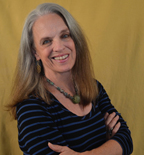
My life’s work with traditional women’s circle dances of Eastern Europe and the Near East has been a natural interweaving of feminism, activism and Goddess spirituality. I would like to share how I came to discover these dances and their potential as tools for healing and transformation.
Circles of women dancing with joined hands appear in rock art, pottery shards, vases and frescoes going back thousands of years1, showing that ritual dance was a primary means of women’s worship. I believe that existing women’s circle dance traditions of the Balkans are direct descendants of these rituals. In their expression of values of partnership, sustainability, and peace, they are living links to the matrifocal Goddess culture of Old Europe as articulated by Marija Gimbutas.2
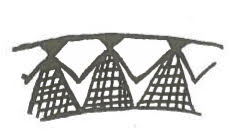
Incorporating symbols of the Goddess in her many guises, these women’s ritual dances are deeply spiritual. They are feminist in the way they provide women with a place of power, not ‘power-over’ but ‘power-from-within.’3 They are an activist practice because the qualities they embody – connection, inclusiveness, balance, empathy, and mutuality – are the principles of a Partnership society, as proposed by Riane Eisler;4 or in Carol Lee Flinders’ term, a society of Belonging.5 Each dance circle is an opportunity to practice being in community in a respectful and cooperative way, which can offer a profound source of healing.6
How did I come to these women’s dances? As a child I was convinced of certain truths: that nature is holy, that God is also female, and that instead of hurting one another, people should celebrate together with music and dance. These longings led me to the rich folk dance traditions of the American melting pot, women’s Middle Eastern Dance circles, and the women’s spirituality network. Around the same time, in the early 1980s, I encountered the meditative communal dance practice known as Sacred Dance. Together with my university training in Intercultural Studies and Dance Movement Therapy, these different streams helped shape the path of my life. Continue reading “Women’s Ritual Dances: Secret Language of the Goddess by Laura Shannon”
 History offers few instances of women helping create scripture. Hinduism’s sacred Rigveda may have been partly composed by women, and scholars believe the biblical Book of Ruth was possibly written by a woman, but the evidence for each is wanting. And while Muhammad’s widow was entrusted with the manuscript that would become the Quran, its scribe was a man named Zayd ibn Thabit. The only clear exception to this is the Book of Mormon, which Joseph Smith partially dictated to his wife Emma. The central role of Mormon women in the church was therefore fixed from the start.
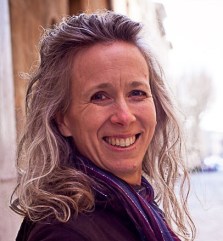 Working alongside my dad on the family farm, I grew up learning how to operate and maintain machinery: tractors, balers, and a double-shift 10-wheeler. We worked outdoors in weather with temperatures ranging from minus 10 to plus 110 degrees Fahrenheit. You could say, I developed a thick skin. Snide comments about me being a girl, doing a man’s job, rolled off.
 Boann, Celtic Goddess of Poetry, Fertility, Inspiration, Knowledge and Creativity was one of the Tuatha De Danann (People of Danu). She was associated with the 70 mile long river Boyne in Northeast Ireland and its source, the Well of Segais. Some bards say that long, long ago when the world was young and wild places were everywhere, Boann initiated that spring by walking counter-clockwise around stones found there, causing the water from under the earth to spring forth with great strength and rush down to the sea. The pool formed by the spring was encircled by nine sacred hazelnut trees, whose nuts could impart knowledge when eaten. The salmon of wisdom swam in the waters of this hidden pool from which the river Boyne flows.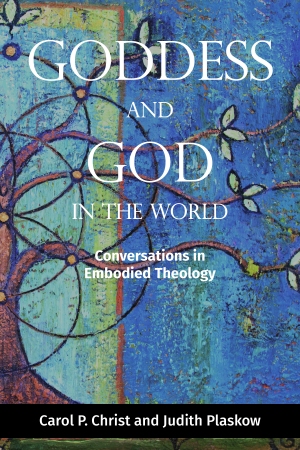
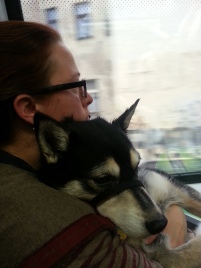 When I was in high school, I once gave a speech summarizing what I had learned about G-d through my dog. I still chuckle at the idea. I cringe sometimes and wonder what others thought of the piece. Oh, the seeming immaturity of such an idea and perhaps naiveté. I’m still embarrassed by my high school self.
 One of my goals for the summer is to paint more. I find I can often say or think by a picture something that I am trying to work through in a formal, discursive way. Art functions as a methodological tool for my theology insofar as it helps me to articulate in one language something that I am trying to say in another. As my teaching career has lengthened, I’ve become more confident using images I have created to communicate my ideas. This no doubt has something to do with the liberty one gains in teaching as a performance exercise, combined with avoidance of repetition, and the desire to engage as well as to be entertained in one’s own right. Even more than just working out an idea, sometimes I also find making images to be a therapeutic tool. I can laugh, mourn, gripe, or celebrate through an image, and sometimes, I can even protest by one.
