Anger is Not a Panacea: The “Next Stage” after Rage by Carol P. Christ

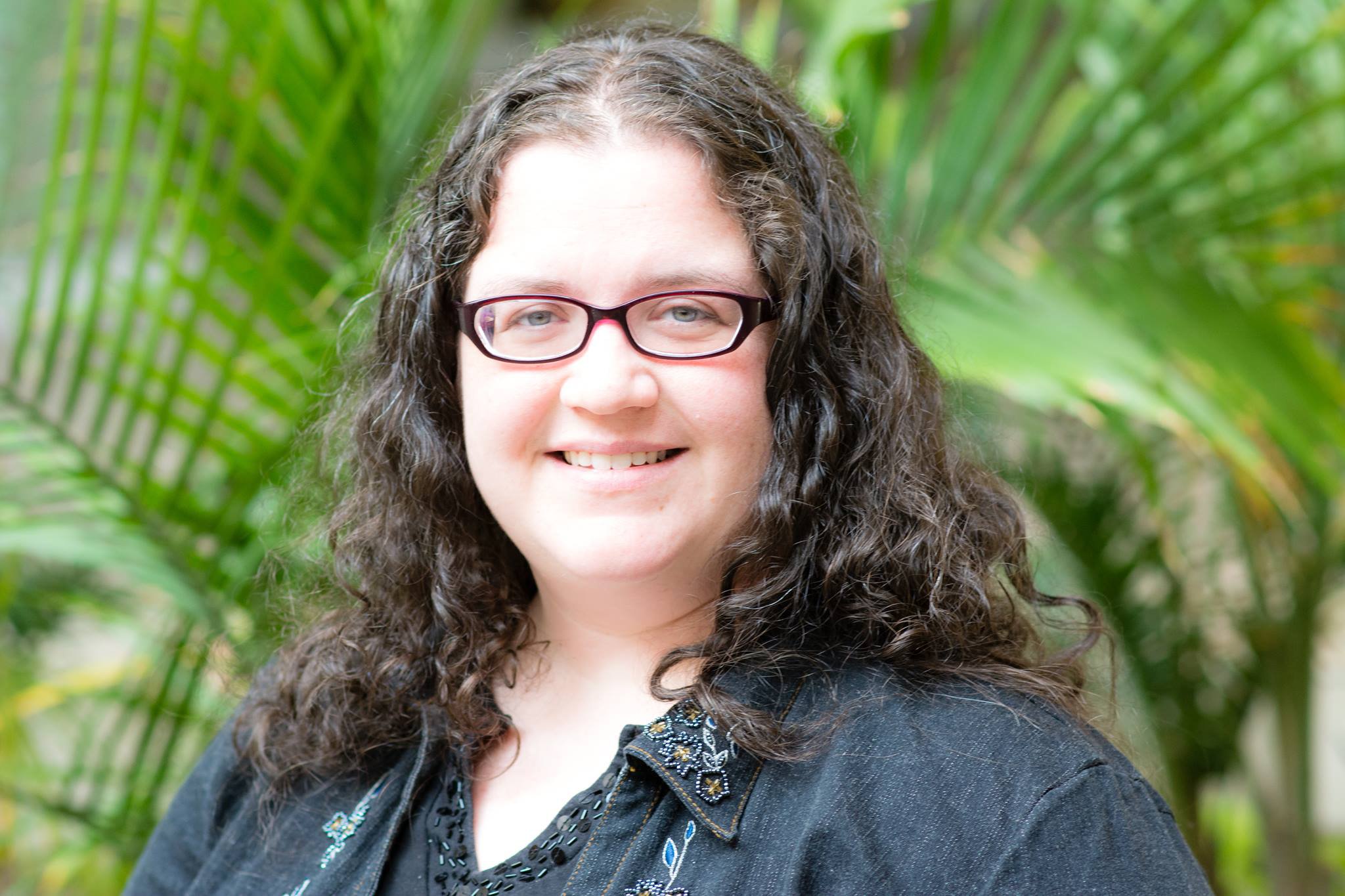
carol mitzi sarahIn a recent post Xochitl Alvizo cited Beverly Harrison’s much-loved essay “Anger as a Work of Love.” Harrison captured feelings that were in the air at the time of its writing several decades ago. Women were laying claim to the right to be angry at the silencing of our voices, the double standard, the media portrayal of women, income inequality, lack of access to good jobs, failure to prosecute rape and domestic violence, and a host of other injustices.

Most of all we were protesting the cultural stereotype that the “good woman” (understood to be white, Christian, and married or hoping to be) would not protest loudly or at all, would turn the other cheek, and would think about others rather than herself. (Jewish women and black women had to strive doubly hard to “live up” to this standard, as it was assumed that Jewish women were “overly assertive” and that black women were “too strong” and often “angry.”)

In this context Harrison’s essay and Mary Daly’s epithet “rage is not a stage” gave women—especially white women–permission to get in touch with our feelings of anger and to express them. We understood that “good women” had been hiding and repressing their feelings for centuries if not millennia with the result that the structures of injustice remained intact. Continue reading “Anger is Not a Panacea: The “Next Stage” after Rage by Carol P. Christ”

A Radical Conclusion: We Are Our Own Authorities by Carol P. Christ

Carol Christ in LesbosElisabeth Schussler Fiorenza articulated a widely held tenet of feminist theology when she stated that feminism places a question mark over all inherited texts and traditions. This means that feminists cannot and must not accept any teaching or traditional way of performing religious acts simply because “the Bible [or the Koran or the minister or the priest or the rabbi or the imam or the guru] tells me so.”

Instead, feminists must question every text and tradition and the words of every religious leader to see whether or not they promote the full humanity of women. The implication of this is that we must acknowledge and take responsibility for becoming our own authorities—as individuals and in communities.

A tongue –in-cheek letter that began circulating on the internet in 2000 under the title “Why Can’t I Own a Canadian?” makes the point that even those who claim to be adhering to every “jot and tittle” of the Holy Book are in fact choosing to accept some aspects of tradition while rejecting others. Continue reading “A Radical Conclusion: We Are Our Own Authorities by Carol P. Christ”

Choosing Well by Ivy Helman

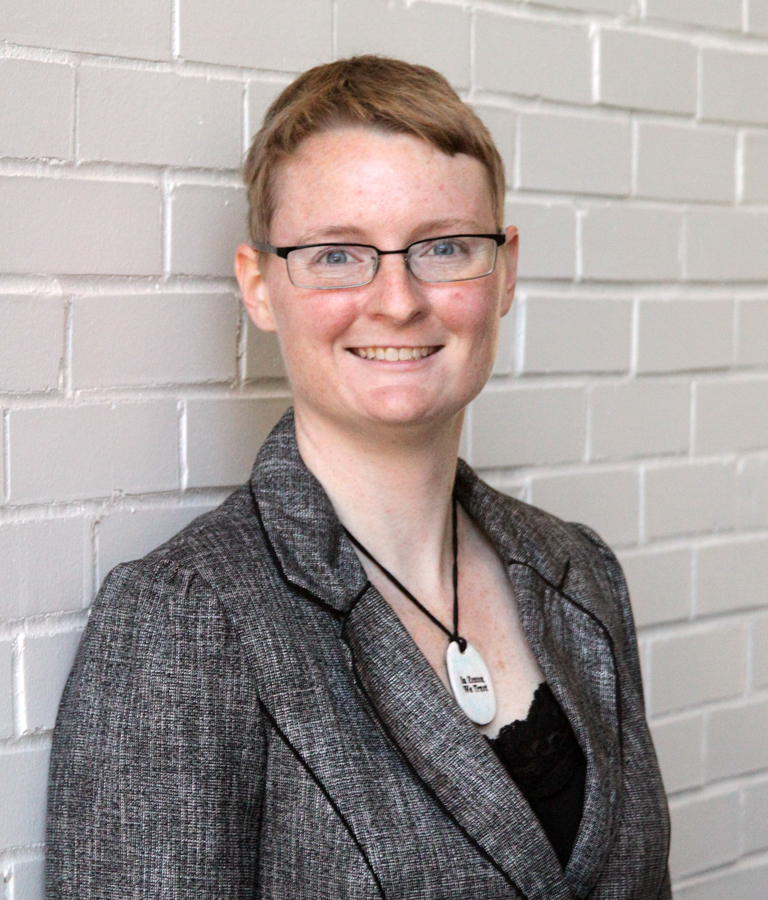
pei headshotI’m moving to Prague in the Czech Republic at the end of August.  (In case anyone is concerned, I will still be a regular contributor to this blog.)  In part, moving to Europe feels like diving headfirst into the unknown.  At the same time, it also feels right.

A full-time teaching job still did not materialize again this year despite my best efforts.  I’m beginning to see the blessing in that since a full-time job would have made the decision to go that much harder.  Yet, the decision to move wasn’t easy either.

My plan in Prague is to teach English to local business people as well as feminism and ecology at Charles University.  Neither of these plans is solid.  I don’t have any job offers yet.  I could go there and everything could fall through or I could go there and decide to do something totally different.   In many ways, it’s up to me.  I’m not sure if I have ever placed myself into a situation in which I have so much freedom.  At the same time, I’m also quite nervous about the entire situation.  At least I’m not moving to Prague alone. Continue reading “Choosing Well by Ivy Helman”

Uppity Women Unite by Barbara Ardinger

Barbara ArdingerI have a poster on my wall: UPPITY WOMEN UNITE. In big, red, capital letters. I don’t remember where I got this poster, but I know I’ve had it since the late 70s or early 80s. I’m sure it comes from the raggedy late 60s, when second-wave feminism got up a head of steam and uppity women began getting our attention. That’s when Betty Friedan said being a proper 50s housewife was like having a mental illness. It’s when Gloria Steinem founded Ms. Magazine, which (oh, horrors!) did not give us recipes or home-making tips and did not tell us how to dress to lure our men into bed. It’s when Mary Daly started giving us a whole new, original take on the English language. Ahhh, yes, those were the good ol’ days. And the bad ol’ days, too, when the Equal Rights Amendment was not ratified.

“Uppity” can be a troublesome word. In the olden days, if someone called you uppity, it means you were inferior to them and weren’t staying in what they thought was your proper place. If you were a black person, for example, and if you didn’t step off the sidewalk when white men were coming, you were uppity. If you were a woman who wanted equal pay for doing the same work a man did, you were uppity. Those women in the 1980 movie, 9 to 5, were majorly uppity. And they won the battle.

Uppity women didn’t stay in the kitchen or the bedroom. They used—oh, horrors—the Pill. They marched to Take Back the Night. They got up on stage and played their own drums and guitars and didn’t sing like proper ladies should. They shouted. And they got into politics. Bella Abzug said that a woman’s place is in the House. Shirley Chisolm became the first black female member of congress in 1968 and in 1972 ran for president. (And I voted for her.)

B292_UppityWomenUnite_0

The English teacher in me wants to get in a word or two here. Look at the phrase “uppity women unite.” It might be a front page headline that says strong women who won’t stay on the bottom are getting together. Or maybe it’s a simple declarative sentence. But add punctuation and we get more punch. “Uppity women, unite.” Now the verb is imperative. We must unite. Let’s make it stronger: “Uppity women—unite!” Now it’s a command.

So, uppity sisters, and uppity brothers, too, you know how to multitask. Push the on button in your corpus callosum and let your imagination run while you read this. Let’s consider what the planet might look like if we had equal rights (and rites) in all things. Please understand that I’m not saying women should be the ones on top. I’m not talking about “power over,” but about what Starhawk calls “power with.” That’s shared power, which leads to shared magic.

Points of lightImagine yourself as one of a huge crowd of flying people joined as points of light above the earth. Float peacefully up there for a few minutes. Think about the power of people joined together, the energy of people working together. Now let’s get down to earth. Floaty energy is fun, but it doesn’t get much done. Imagine yourself as a member of a group with a goal. Touch down. Stand on the earth and consider the fact that everything on the planet is alive—not just people and animals and plants, but rocks, too. Even things we constructed have some life force. Embrace panentheism for a little while. Now here’s something to do: Find a church that doesn’t accept uppity women or uppity brothers. You’re united. As united, uppity people, go to that church and stand in a circle around it. Send friendly but firm energy into that church so that, even if a whole denomination or religion won’t change right now, that individual church might change. The next time you go to that church, radiate the same energy when you go inside.

You can also find a church that appreciates uppity folks. Send grateful energy to the church and all the people in it.

UPPITY WOMEN UNITE. If enough of us uppity women and our uppity brothers get together, we will eventually build up to a critical mass. A critical mass can lead to an explosion. I’d prefer to see a spiritual, peaceful explosion. What do you want to see?


Barbara Ardinger, Ph.D. (www.barbaraardinger.com), is a published author and freelance editor. Her newest book is Secret Lives, a novel about grandmothers who do magic.  Her earlier nonfiction books include the daybook Pagan Every Day, Finding New Goddesses (a pun-filled parody of goddess encyclopedias), and Goddess Meditations.  When she can get away from the computer, she goes to the theater as often as possible—she loves musical theater and movies in which people sing and dance. She is also an active CERT (Community Emergency Rescue Team) volunteer and a member (and occasional secretary pro-tem) of a neighborhood organization that focuses on code enforcement and safety for citizens. She has been an AIDS emotional support volunteer and a literacy volunteer. She is an active member of the neopagan community and is well known for the rituals she creates and leads.

Using the Listening Guide to Leave Oneself Open to Discovery by Xochitl Alvizo

I am deep in the throes of writing my dissertation. Writing started in earnest, in its most recent stretch, in mid-July when I came out to write in isolation in my home city of Los Angeles.* If all goes as scheduled (so far, so good), I will be submitting the first chapter to my editor today, the same date of publication as this blog post. Of course, after my editor’s suggestions, the chapter then goes to my advisor and will inevitably have a life of its own after that. For now, I am enjoying the moment of being on the cusp of completing my very first chapter. I’m a big believer in celebrating every moment of success!

Last month I was in the throes of data analysis. My dissertation involves qualitative research with twelve Emerging Church congregations across the United States. From that research I ended up with 40 audio -hours of transcriptions from the interviews I conducted. I spent the whole month of June – again, in isolation –in San Diego at Point Loma Nazarene University* focusing on the task at hand. Analyzing data is a completely different challenge than writing, and finding the best method of analysis based on one’s own commitments particularly so. Luckily, I found a method of analysis that allowed me to ‘listen deeply’ to my data and leave myself open to discovery.

I have written before about Nelle Morton’s feminist principle of ‘hearing each other to speech’, its importance in my own life, and how valuable I think it could be for those of us in academentia and for the way we do our work. There is a logic that sometimes dominates in the academy of finding the fault in the argument of the other and building one’s own argument in opposition to it. That is not, however, the manner in which I want to do my own work. Nelle Morton proposes a model of engaging one another in which we commit to ‘hearing all the way’, to “depth hearing.” The practice is of a kind of hearing that engages the whole self to the point that you might find yourself holding your breath in order to allow the coherence of someone else’s story to form and come together. Her claim is that this kind of hearing evokes “a new speech – a new creation” because it enables the speaker to be heard to their own story, thereby creating the possibility for new imagining, an imagining that contributes to the mutual empowerment and transformation of both hearer and speaker. Continue reading “Using the Listening Guide to Leave Oneself Open to Discovery by Xochitl Alvizo”

Feminist Questions by Marcia W. Mount Shoop

Marcia headshot“Do sports depend on gender stereotypes that prop up particular expressions of masculinity?”

This question is just one of the defining quandaries of my new book, Touchdowns for Jesus and Other Signs of Apocalypse: Lifting the Veil on Big-Time Sports, just released from Cascade Books (an imprint of Wipf & Stock) a few days ago. The quote above comes from my chapter on gender entitled “Man Up.”

My proximity to the world of football as the wife of a coach, who has coached for well over twenty years in both the National Football League (NFL) and Division I College, has long been a curiosity, and sometimes a demerit against me, among my feminist friends and colleagues. In fact, as I share in the introduction of the book, one of my professors in Divinity school (a prominent feminist theologian who shall remain nameless) expressed her disappointment in no uncertain terms when I shared the news that John and I were engaged while I was one of her students. She said, to my great consternation, that she was “very disappointed.” Her next sentence was something to the effect of what a waste this was—she had thought I was headed toward great things, and now, instead, my life was going to be consumed by football. Continue reading “Feminist Questions by Marcia W. Mount Shoop”

Feminism: My New Religion by Michele Buscher

Michele BuscherMy journey to becoming a religious feminist has been long.  The two most significant experiences have been my time as a Religious Studies graduate student and the uniquely female health struggles I have experienced in the past four years.  The issues I have encountered over the past four years have occurred simultaneously, encouraging me to declare Feminism as my new Religion.

I really hadn’t been exposed to Feminism as an academic discipline until my time at the Union Theological Seminary.  Studying alongside feminist foresisters like Chung Hyun Kyung and Joan Chittister, and researching feminist liberation theology and other “radical” liberation theologies, fueled my passion.  For my master’s thesis I examined how Catholicism and martyrdom should be perceived in modern times.  I relied on the examples of two men: Dietrich Bonhoeffer and Pope John Paul II.  Not a bad topic, not bad case studies, but interesting when I reflect on the choice to focus solely on men and martyrdom when really the face of modern martyrdom should be represented by women and the enormous sacrifices women make every day for the betterment of their Church or their families or their bodily health and integrity.  In other words, I didn’t quite get it yet!

Nonetheless, my doctoral studies continued a focus on feminism and working along side Rosemary Radford Ruether guided me to my new feminist religious identity.  At that time I did not realize how much I would come to rely on her support and encouragement, along with the support and encouragement of many other female faculty members.
Continue reading “Feminism: My New Religion by Michele Buscher”

Women are like countries: both need to fight hard for independence by Oxana Poberejnaia

oxanaRita M. Gross in her book Buddhism After Patriarchy presents portraits of prominent women from Buddhist history. Some stories are extraordinary for the brutal details they contain. For example, Yeshe Tsogyel was raped, kidnapped and beaten by her suitors to the point that her back was a bloody pulp. She subsequently escaped to meditate in a cave.

In a patriarchal society, religious fervour is not recommended for women. Submission and obedience – yes. The life of an ascetic, a wanderer or a hermit – no. A son is relatively free to pursue religious activities (especially if he is one of the younger children and the issue of inheritance is sorted out). However, all daughters are better off tucked into a marriage. Supporting your husband and sons on their spiritual path – yes. Independent striving away from family life – no. Continue reading “Women are like countries: both need to fight hard for independence by Oxana Poberejnaia”

Sleeping: Thinking about Bodily Practices, Pt. 2 by Elise M. Edwards

Elise EdwardsAs I mentioned in my previous post, I’ve been reflecting on bodily practices–especially those that are not typically associated with feminism and religion. Our lives as embodied persons are so multi-dimensional! There is so much we perceive and experience through our senses, through our movements, and through the places we locate ourselves. So I have decided to use this blog to think through some ideas and learn from you in this community of readers, contributors, and commenters. Over the next few months, I will continue to discuss the ways I am becoming more intentional about connecting habits surrounding the body to feminist and religious concerns. Once again, I’ve glossed on only a few of the many connections we could make about women, religion, and bodily practices. Today I write about sleep. I would love to hear your thoughts in the comments below.

Do feminism and religion have anything to do with sleep?

Sleeping is as vital to human survival as food and water. But lamentably, getting the proper amounts of sleep is not one of those healthy goals that is fiercely defended. It is much more common to hear someone brag about how productive she can be on a few hours of sleep than to boast about her productivity after a full night’s rest. I have to admit, I am always a little suspicious of those people who proudly proclaim they only need 4 or 5 hours of sleep, and I’m a little antagonistic to those who want to recruit the rest of us into their sleepless world: “There is so much else you could be doing with your time than sleeping!” They say, “I’ll sleep when I’m dead!” I have even heard “Sleep kills dreams!” Um, actually, dreams come when you sleep. Sleep breeds dreams, you could say. More on that below.

As you might be able to tell, I am the type of woman who loves sleep. I love climbing into my bed at night. I enjoy the feeling of waking up with a rested body and a renewed spirit and a groggy-but-fresh mind. I especially love naps for that reason. The most enjoyable and perhaps “productive” seasons of my life have been those when I could take a nap after class, after work, or after the gym.

Sleep is vital because it allows the body to rest. In the Christian tradition, we claim that rest is part of the creation of the world. That God marveled at the wonderful world God created, and when the work was done, God rested. This rest inspires the Sabbath. Sabbath is a day set aside for rest, worship, and contemplation of the holy. It is regrettably observed less and less in contemporary American Christianity. Since we have let go of the need for the Sabbath, it certainly no surprise we have also lost sight of the importance of daily rest, too.

Although my thoughts are little uncharitable towards those who preach the gospel of little sleep, I am very sympathetic to those who feel they do not have enough time to sleep. To those who feel like sleep is a luxury they cannot afford. Certainly many women tasked with numerous responsibilities often feel this frustration. They make do with less sleep because they have to complete more tasks in their waking hours. Yet it has been my experience that even those who are overworked and overscheduled appreciate the uncommon times when they can sleep a little longer than usual.

For me, times of sleep are very much connected to gratitude. In the past year or so, I have retrieved the practice of nightly prayer, which sadly got left behind in my childhood years. In all honesty, it was not a renewal of spiritual piety that led me to resume these bedtime prayers. It was insomnia. As much as I love sleep, I am often kept from it by anxieties and thoughts of the coming day. I started using bedtime prayers as a way of turning my cares over to God. These silent prayers become conversations about what is important to me and what concerns me. I talk to God about what I am grateful for. I talk to God about my family and my friends, about their lives and concerns that weigh on me. And then I let it go–at least for the night–and trust my soul to the divine power who cares for me while I sleep.

These nightly prayers have not only promoted peaceful sleep (for most nights, at least) but also the experience of vivid dreams. Dreams, like other visions, are honored in many religions as a place where the divine communicates with humanity. But this too, seems absent from contemporary American Christianity. Perhaps it is because dreams are associated with the intuitive senses, and therefore the feminine, that they are overlooked. Dreams are less clear and presumably more open to speculative interpretations than the texts we read during the day. I cannot say whether I meet God or whether I meet my deeper self in dreams, but I do know I am connected to powerful ways of being in my sleep, and that this is important for my spiritual life.

My final reflection about sleep is an acknowledgment that we often do not sleep alone. While sleep itself takes us to a solitary place, we often share our beds with lovers, children, and other family members and friends. Like those bedtime prayers, the words we speak under the covers in those moments before sleep connect us to our bed-mates. Whether they are ghost stories or secrets or incoherent ramblings about the day to come, these nighttime words prepare our minds for the sleep that will soon overtake us. Unless, of course, we are next to someone who snores or kicks.

Elise M. Edwards, PhD is a Lecturer in Christian Ethics at Baylor University and a graduate of Claremont Graduate University. She is also a registered architect in the State of Florida. Her interdisciplinary work examines issues of civic engagement and how beliefs and commitments are expressed publicly. As a black feminist, she primarily focuses on cultural expressions by, for, and about women and marginalized communities. Follow her on twitter, google+ or academia.edu.

Women at the Secular Student Alliance Conference by Kile Jones

KileA few days ago I had the pleasure of giving a talk at the Secular Student Alliance Conference on how non-believing persons can work with Churches.  Amidst the chaos of conferences–managing your time, deciding which talks to attend, and making sure you have enough water (it was a Burning Ring of Fire outside in Tempe, AZ)–I got to meet some pretty incredible secular women.

One of them was Heina Dadabhoy.

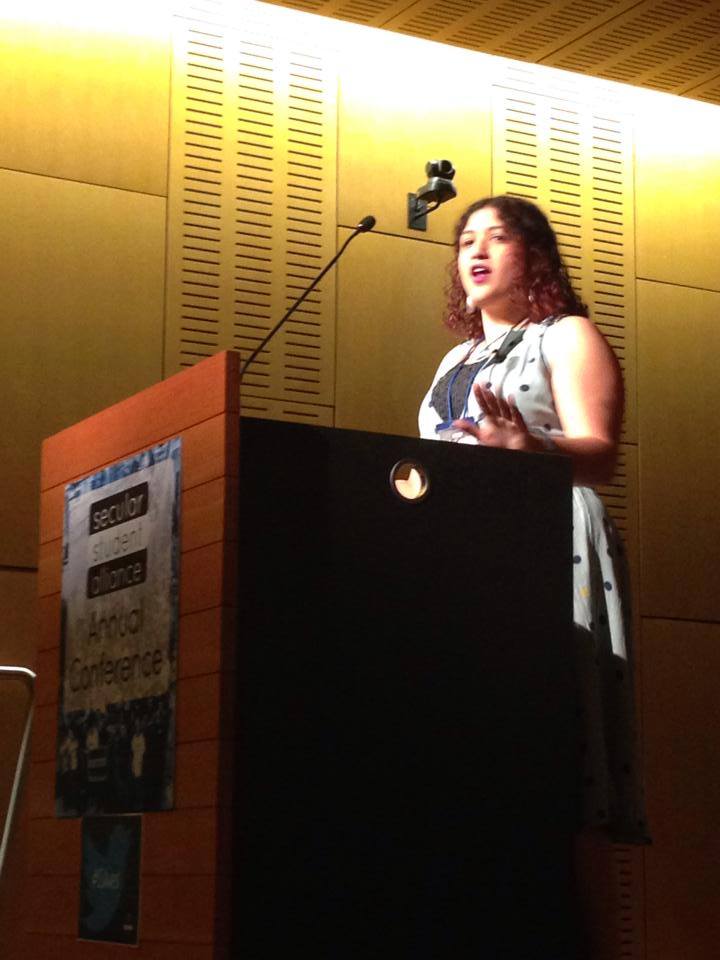
Heina speaking at SSA
Heina speaking at SSA.

Former Muslim, blogger at Freethought Blogs, and overall bad-ass, Heina spoke about ways in which secular groups can create a more welcoming environment for ex-Muslims and Muslims beginning to doubt.  Her talk, “Of Murtids and Muslims,” (a “murtid” is a public apostate) was not only about her experiences coming out as a secular humanist, but considered some of the absurd questions people ask her (and other ex-Muslims) about leaving Islam.  “So did your parents try to honor kill you?”  “Have you gone through FGM?”  It was disturbingly humorous.

What I considered to be Heina’s main point, was that we should respect each others’ individual differences and not generalize and caricature all Muslims with the depictions of some.  “Just because you read Ayaan Hirsi Ali’s book,” Heina notes, “does not make you an expert on Islam.”  Heina made sure to emphasize the radical diversity that exists in Islam.  She also spoke of the some of the issues that people go through when they leave Islam: How do I create a new identity when my old one was intricately tied up in my Muslim community, family, and culture?  How do I navigate popular culture when I have missed a bunch of it?  How do I find myself in this new secular world?  Heina’s answers were refreshingly honest and insightful.

P.S. Aisha (one of Muhammed’s wives) should not simply be reduced to the young person Muhammed married; she was also a war leader, influential Muslim thinker, and someone who contributed greatly to early Islam.  This is, of course, Heina’s insight.

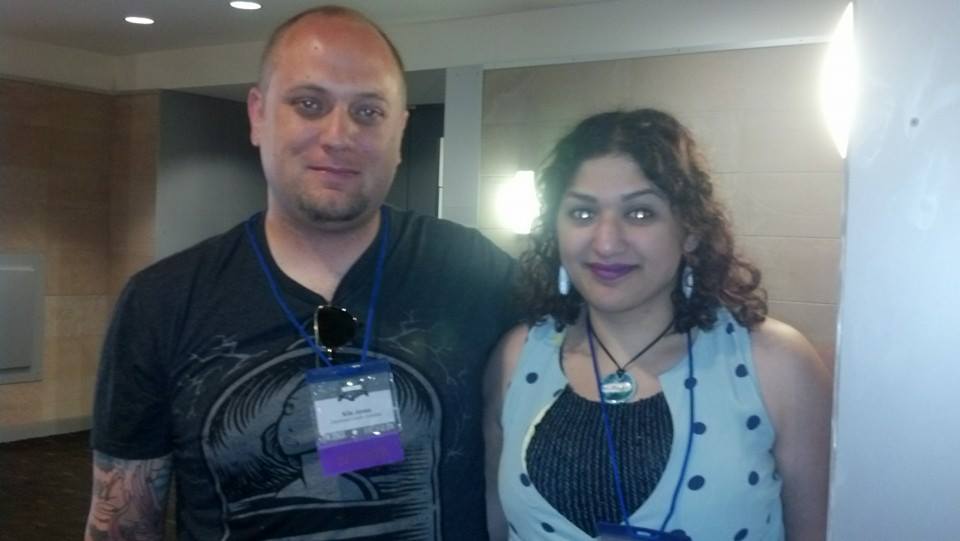
Me and Heina at SSA
Me and Heina at SSA

Another awesome secular woman I met, was Sarah Morehead.

Sarah. Photo from Apostacon.

Sarah is a former evangelical Southern Baptist, Executive Director of the “Recovering From Religion” project, and another overall bad-ass.  She spoke on how to start up a Recovering From Religion group on your campus.  Here is a blurb about Recovering From Religion,

“If you are one of the many people who have determined that religion no longer has a place in their life, but are still dealing with the after-effects in some way or another, Recovering From Religion (RR) may be just the right spot for you. Many people come to a point that they no longer accept the supernatural explanations for the world around them, or they realize just how much conflict religious belief creates. It can be difficult to leave religion because family and culture put so much pressure on us to stay and pretend to believe the unbelievable. If this is you, we want to help you find your way out. Don’t let people convince you that you just didn’t have ‘enough’ faith, or that you just haven’t found the “right” religion.”

Sarah and I chatted (and often laughed) about our old experiences as conservative Christians.  We discussed some of the funny language (Christian-eze) we used to use, the various levels of guilt and shame that were cast upon us, and how science helps explain some of the interesting displays of piety often seen at Pentecostal services.  Sarah’s jovial and welcoming demeanor was calming, and as an Executive Director for a project aimed at helping people “recover” from religion, I cannot think of a better person for the job.

Lyz.  Photo by SSA.
Lyz. Photo by SSA.

The last woman I have in mind is Lyz Liddell.

Lyz is the Director of Campus Organizing for the Secular Student Alliance.  I have an interview I did with her a while back, on this very blog!  Besides running around with her headset on, standing on chairs for announcements, and generally keeping the world of SSA from not crumbling into oblivion, Lyz is a great motivation and example.  If you are ever interested in starting a SSA group on your campus, talk to her.

To all those who attended this years SSA West, or who are involved with helping secular students: Unite!

Kile Jones holds a Bachelors of Theology (B.Th.) from Faith Seminary, a Masters of Theological Studies (M.T.S.) and a Masters of Sacred Theology (S.T.M.) from Boston University, and is a current Ph.D. in Religion student at Claremont Lincoln University.  He also holds a Certificate in Science and Religion from the Boston Theological Institute.  Mr. Jones has been published in Zygon: Journal of Religion and Science, Philosophy Now, Free Inquiry, World Futures, Human Affairs, and the Secular Web.  He is the Founder/Editor-in-Chief of Claremont Journal of Religion (www.claremontjournal.com), and is the Founder/Director of Interview an Atheist at Church Day (interviewatheists.wordpress.com).