The Man with the Hat by Sara Wright

I met a man on a rumbling train who had hooks in his hat.

A fisherman, I thought with the usual dismay – brutal images of dying fish gasping for air exploded in thin air. Memories of my grandmother who took her eight year old granddaughter fly fishing also flooded my mind (my grandmother was a professional fly fisherwoman). I caught my first fish in the brook – a six inch trout. After landing the desperate creature my grandmother said, “ now we must kill it so the fish does not suffer.” And she looked for a stone.

“Hit it over the head” she instructed handing me a rock she picked up nearby, and I did.  Tears welled up. It broke my child’s heart to murder such a shimmering rainbowed creature.

When we got home that day, my grandmother praised me lavishly for my catch, promptly gutted the fish and fried it in a pan for me to eat. I forgot the anguish I had experienced, basking in my grandmother’s approval. The fish tasted delicious, and to this day I eat fish and other seafood.

As a lobsterman’s wife I learned quickly how to cook crustaceans by sticking their heads in boiling water so they would die almost instantly.

Continue reading “The Man with the Hat by Sara Wright”

Why Can’t a Man Be More Like a Woman? by Carol P. Christ (and Hannah Gadsby)

Women are loving, caring, and clever. Why do men say: “I will not be like that, never?”

In a recent article in Gentlemen’s Quarterly, my favorite comedian, Hannah Gadsby, said:

Hello, the men. My advice on modern masculinity would be to look at all those traits you believe are feminine and interrogate why you are so obsessed with being the opposite. Because this idea that to be a man you have to be the furthest away from being a woman that you possibly can is really weird.

A butch lesbian, Gadsby is not advocating traditional sex role stereotypes. She is questioning them. She continues:

Women are always being encouraged to stir masculine traits into their feminine recipe. We are told to “be bolder!” “Speak up in meetings.” “Exaggerate your skills.” All that Lean In sort of crap. So perhaps it’s time for you, the men, to be more ladylike.

Even as she recognizes that it is becoming OK for women to express so-called “masculine traits,” she understands that so-called masculinity is often based on a lie. It may be fine to “be bolder” (but not when you have nothing to say at the moment) and to “speak up” (but not to the exclusion of others), yet it should not be necessary to “exaggerate your skills” to make yourself look better than other people—and better than you are! No one should not have to be “the best” in order to be accepted or acceptable.

Gadsby feels for the men who are trying to live up to masculine stereotypes:

I can see how it is a tough spot. It is not your fault. You didn’t build this mess. You were born into it, like the rest of us. What I am saying is, I have empathy for you.

And then the comedian’s zinger:

And empathy, by the way, is one of the traits that women are most famous for. You might know it by its other name: “weakness.” But don’t be fooled—empathy is a superpower, and it’s the only one that any human has to offer.

*

Empathy is a superpower, and it’s the only one that any human has to offer.

*

All joking aside, this is a profound statement. Many feminists have been saying for a long time that qualities defined as “female” or “feminine” are in fact human qualities that should be embodied and emulated by all.

*

Gadsby takes this a step further. When she says that empathy is a super power and the only super power available to humans, she is saying that a quality often identified as “female” or “feminine” is in fact the highest value and the most important one for everyone, whether they identify as male, female, or something else, to express. This is a truly radical point of view and perhaps the only one that can save our species and our planet from destruction. Without empathy we and many other forms of life are doomed. And as long as empathy continues to be defined as the opposite of masculine strength, the men who rule the world will continue to turn against the only superpower that can save us.

*

In recent years I have been inspired by egalitarian matriarchal societies. What is most amazing to me about these cultures is not that women have power (though this is amazing) nor even that there is no rape (this too is amazing). What is most amazing to me is that these societies place values they associate with mothers and mothering at the center.

For the Minangkabau of Sumatra, nurturing the weak and the vulnerable is the highest value. Nurturing the weak and the vulnerable is what (good) mothers do. In Minankabau culture, not only women and girls, but also men and boys, are expected to nurture the weak and the vulnerable above all else. For men and boys, there is no shame in this. They are not considered weak or effeminate (a word that could not exist in their culture) for doing so. Rather they take pride in being able to express and embody the values that ensure the continuation of life.

In The Kingdom of Women, Choo WaiHong writes about an appointment she made to speak with an elder man about the egalitarian matriarchal Mosuo culture. She arrived on time, but before he could speak with her, he fed, bathed, and put a set of small twins to bed. For him, nurturing the weak and vulnerable came first. Speaking about his culture could wait, and so could his guest. In fact, he could not have chosen a better way to explain Mosuo values to the Han Chinese woman who waited while he, a respected elder man, cared for two little babies. In his culture, caring for the weak and the vulnerable is important. It is what people do. And it comes first!

*

When will we ever learn? Oh when will we ever learn?

*

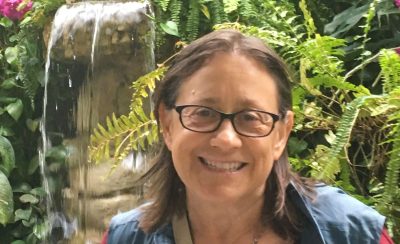
Carol P. Christ is an internationally known feminist and ecofeminist writer, activist, and educator who will soon be moving permanently to Heraklion, Crete. Carol’s recent book written with Judith Plaskow, Goddess and God in the World: Conversations in Embodied Theology, is on Amazon. A Serpentine Path: Mysteries of the Goddess is on sale for $9.99 on Amazon. Carol has been leading Goddess Pilgrimage to Crete for over twenty years: join her in Crete. Carol’s photo by Michael Honneger.

Listen to Carol’s a-mazing interview with Mary Hynes on CBC’s Tapestry recorded in conjunction with her keynote address to the Parliament of World’s Religions.

Ant Hill by Sara Wright

Yesterday I gave a poetry reading at a local library beginning and ending with thoughts about how Climate Change is affecting all living things. I am a naturalist who holds the radical belief that all living things are sentient. I also argue that we must not equate animal intelligence with that of humans.

Almost every poem I read was about my intimate relationship with some aspect of the natural world, for example, the changing seasons, my friendship with sagebrush lizards, steadfast trees, Sandhill cranes, beloved Black bears. Intimacy and inter –relationship are part of every experience I have with nature and by sharing these poems I hoped might draw others in to new ways of perceiving the earth and her creatures.

The whole point of my focusing on non – human species was to raise awareness that these animals and plants desperately need our help. Perhaps I wasn’t clear enough about how critical it is to bring animals, plants, trees, mushrooms into the picture in this age of the Anthropocene, that is, the period in which we live where a few men with power rule. Today, it is not an exaggeration to say that humans control every aspect of our fragile planet.

I repeat: Perhaps I wasn’t clear enough or perhaps almost no one was capable of listening? Maybe both. As soon as I concluded my reading one woman did actually bring up an incident involving a very difficult child who became attached to a lizard, so she at least, was on the track I hoped I had laid….

Continue reading “Ant Hill by Sara Wright”

Joan of Arc from The Goddess Project: Made in Her Image by Colette Numajiri

“I’m not afraid. I was born to do this.” -Joan of Arc

Women are inherently valiant. In extreme situations we armor up and lead others through whatever we are battling at the time.

Joan of Arc was a human woman with otherworldly faith who, as a young teenager, listened to Divine voices and lead an army that eventually ended the 100 Years War.  “The real Joan of Arc is an uncomfortable fit as an icon of female solidarity or democratic rights. She achieved what should have been impossible for someone of her gender and class in 15th-century France.” wrote Helen Castor in her book Joan of Arc: A History. She was so respected and revered that 20 years AFTER Her death, 115 people testified on behalf of Joan of Arc (Jeanne d’Arc) and overturned the ruling.

Enbodying the Divine Feminine on Earth, women look to Joan as an inspiring example of a brave and active woman.  Joan inspired the Suffragettes, they held her banner and wore white (as Joan chose to wear white for purity when She was taken to the stake to be burned for the crime of cross-dressing) as they marched for women’s right to vote. Just as, a few months ago our newly elected Congresswomen all wore white in solidarity.

Continue reading “Joan of Arc from The Goddess Project: Made in Her Image by Colette Numajiri”

Adoring God in Labor by K Kriesel

The day before the 2019 Nevertheless She Preached conference at First Baptist Church of Austin, TX my own Catholic church’s young adult ministry hosted Eucharistic Adoration. Although I’ve enjoyed Adoration dozens of times, several factors made this evening different. I was preparing for cervical surgery for one. My Hebrew Bible class at Austin Presbyterian Theological Seminary was grappling with Rebekah, Rachel, Leah, and the voiceless Dinah. The call to write the history of 20th century Catholic women theologians had been at my ear all day. The catalyst was when two men at the Adoration began leading a song about God the Father.

Maybe it was just the incense but I swear I saw something. An image of the baby crowning from the womb, God gasping in labor, as the Eucharist wore the gold of the monstrance as a crown before the tabernacle. God was pushing the Body of Christ into creation while I prayed for my own sick body. God was crying out with the voices of these thousands of unheard women. We were all there. I snuck out my phone and took a picture, determined to put the scene to paper.

Continue reading “Adoring God in Labor by K Kriesel”

Let Us Now Practice Her Presence by Barbara Ardinger

I’m giving you a twofer this month: a poem and a ritual. I’m writing this a few days after the latest mass shooting in Texas by a crazy white man and a few days before the next debate by Democratic candidates. But you know what? I’m getting real tired of politics and…well, what’s going on around us. Tweets. Bullets. Fires. I’m a liberal, but I’m deciding that there must be a better definition of “conservative,” one that has nothing to do with politics. The OED defines “conservation” as “the action of conserving; preservation from destructive influences, decay, or waste.” Further down: “conservative: a preserving agent or principle.”

Back in the late 80s and into the 90s, I taught a class I called Practicing the Presence of the Goddess, which evolved into a ritual circle. As far as I know, most of the women in the class are still spiritual feminists (though the term hadn’t been invented then), a couple have died (cancer is an awful thing), and one is fading into dementia (but she still remembers our class). Among other assignments, I asked them to read Carol Christ’s splendid book Laughter of Aphrodite (1987), and once we went as a group to hear Marija Gimbutas speak on her newest book The Civilization of the Goddess (1991).

Continue reading “Let Us Now Practice Her Presence by Barbara Ardinger”

A Place Below the Cattails by Sara Wright

As a woman with Passamaquoddy roots when I first came to Abiquiu I was invited to participate in the six pueblo celebrations along the Rio Grande which made me feel blessed, grateful, included, and at “home.”

My own people’s lives and traditions were  destroyed by colonial peoples centuries ago.

Yesterday I was invited to attend a river blessing on what I call Red Willow River a tributary of the Rio Grande by folks of Spanish and Indigenous descent who live here in Abiquiu on the mesa. These people, although local, are of mixed descent and do not follow the seasons and cycles of the year as the surrounding pueblos do. There is a heavy overlay of Spanish colonialism along with a restrictive (to me) Catholicism that sets this village apart from the pueblos.

Still, I was looking forward to this celebration

That was supposed to be led by Tewa Women United from the neighboring pueblos. It was a beautiful day, and of course we were all on “Indian Time” which means practically that ceremonies start when the time was right.

However, this blessing of the river didn’t come together at all. People milled around aimlessly. Some left. The children some of whom were dressed in regalia played for a while and eventually got hungry. Some complained they had to get back to school for a game.

Continue reading “A Place Below the Cattails by Sara Wright”

Call Out Culture vs. Mentor Culture: Which one will save us from the apocalypse? by Trelawney Grenfell-Muir

Have you felt the satisfaction of putting someone in their place? Have you ever felt the rush of power that comes with delivering a cutting set-down? Have you ever felt a glow of pride after making fun of a horrible person or group, and having the people around you laugh appreciatively?

I sure have. In high school, the bully-types in my classes learned not to pick on me to my face, and not to pick on my sister when I was in the room. I got damned good at snide, witty comebacks, and so people stopped messing with me. That kind of success was incredibly rewarding. It was a useful skill I honed over the years, so I could trot it out whenever needed. Rare these days, but my sister still occasionally says, “I’m just glad Trelawney’s in my corner.”

Oh, it feels good to WIN, to experience verbal conquest, and to know I’m justified in using my tongue as a sword, because that person SO deserved it! Ah, the adrenaline, the afterglow, the notch in my belt!

Continue reading “Call Out Culture vs. Mentor Culture: Which one will save us from the apocalypse? by Trelawney Grenfell-Muir”

The Dying Time by Esther Nelson

At the end of Anita Diamant’s novel, THE RED TENT, Dinah—the same young woman who is only briefly mentioned in the biblical account (Genesis 34)—dies after a long and full life.  The biblical text tells us that Dinah “went out to visit the women of the region” and that “Schechem son of Hamor the Hivite, prince of the region, saw her…seized her and lay with her by force” (vss. 1-2).  The passage is often titled “The Rape of Dinah.”

In Diamant’s version of the story, Dinah and King Hamor’s son engage in consensual sex.  In keeping with the biblical account, the king then attempts to negotiate a bride price with Jacob (Dinah’s father), but Jacob and his sons are reluctant to agree to the marriage.  They demand soon thereafter that all the men in Hamor’s kingdom undergo circumcision as a bride price.  On the third day after surgery, the sons steal into the city and kill the men.

After just a mere mention of Dinah’s “rape” in Genesis 34, she disappears from the story.  In THE RED TENT, Diamant not only gives Dinah a powerful voice, she also weaves a wonderful tale of mothers, daughters, heartache, betrayal, loss, love, and joy.  Dinah gives birth to her lover’s son in Egypt, develops a strong bond and working relationship with the midwife, Meryt, and eventually falls in love with Benia, a master carpenter.

Continue reading “The Dying Time by Esther Nelson”

In Dreams by Natalie Weaver

I am grateful for dreams.  I don’t know what they are, of course, in any absolute sort of way.  Defining dreaming is as elusive as dreams themselves.  Moreover, I find that understanding dreaming is complicated by the vastly variegated quality one finds in hearing people speak of their experiences of dreaming.  Some say things such as “I can never remember a dream,” while others say they only remember bad dreams.  Some place no stock in dreams at all, while for others they are the numinous truth realms beneath all waking phenomena.  I have spoken with hard-science minded colleagues as well as artists about dreams, who regardless of professional vocation can be utterly untouched by their nighttime journeying.  On just a few occasions have I ever heard people speak of their dreams as definitively shaping their lives in the way that my dreams, or more precisely, in the way that the faculty of dreaming, has impacted my life.

Continue reading “In Dreams by Natalie Weaver”