Settling into God during the Demise of Gender Neutral Language by Dirk von der Horst

DirkAs my life ambles along, some things change, some things are surprisingly persistent.  As a young person, the last thing I would have predicted about my future would have been developing even a mild interest in sports, but now I have a mild interest in sports.  Mild, but there.  So, that’s a surprise element in my life story.  But while developments arise, I’ve found that in the growth of my faith, the word “God” has settled into all the movements of my being, taken root in my bones, provides many well-worn neural pathways that make the day go on.  It sometimes seems like it would be easier to let the word go for the sake of communicating with a culture that turns more and more to science for cultural coherence, but the word “God” is as there in my psyche the laptop is there beneath my fingers.


While the word God has settled and made itself at home, I’m less and less sure – and it becomes less and less important – what the word means.  I look across history and the word becomes muddled.  Is what the author of Judges meant by “God” what Aquinas meant by “God?”  I’m hard-pressed to find a common referent behind the word when I encounter it in those very different perspectives.  I’ve come on a minimal definition – “the appropriate object of worship” – that lets the theological critique of idolatry work its relativizing acid on various God images and God concepts. Continue reading “Settling into God during the Demise of Gender Neutral Language by Dirk von der Horst”

Philogyny: Women Supporting Women by Ellen Boneparth

ellen boneparthWhen I set out two years ago to create a nonprofit, based on a small, unexpected inheritance, I thought a lot about the role of giving — both to grantees and to myself as a prime donor. My overall goal was to empower women and girls in the developing world through new projects dealing with their health and education.

I was uncomfortable with the word “philanthropy.” I knew from speaking Modern Greek that “anthropos” means “person” or “man” but what I wanted to do was completely woman-centered. So, I created the word “philogyny” or “loving and caring for women” as a way to draw attention to the impact that support for women can have.

Why women, especially women in developing countries? First, we know from years of research that women are the main caretakers and caregivers in their families and communities. When a woman in a developing country has income, she is likely to spend 95 percent on her own family while a man will typically spend a third to a half of his income on family, the rest, on himself. Secondly, contributions to women’s and girls’ education and health have a significant impact on a community resulting in higher employment, lower fertility rates, and healthier populations.

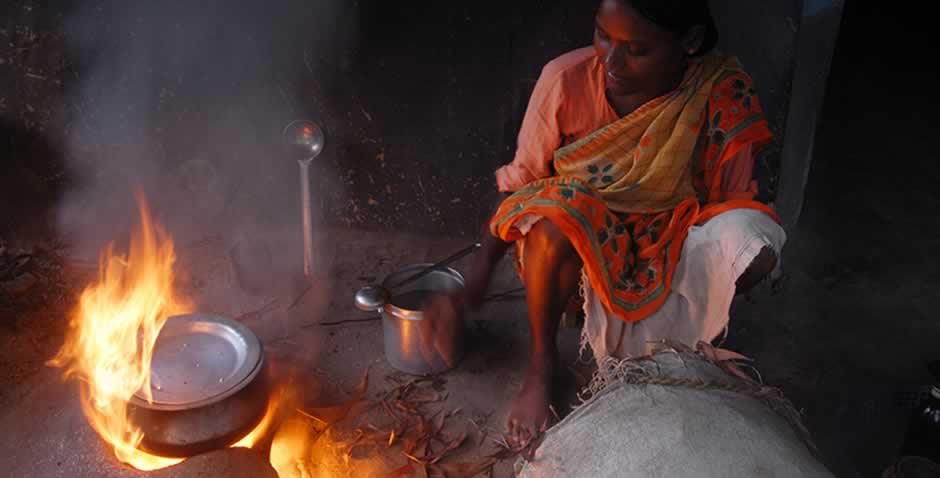
LightMyFireHPAs a new philogynist, I also needed a name for my nonprofit. I wanted to avoid the words most often used in such endeavors — gender, sex, development, empowerment, etc. — and to come up with something memorable that captured the lives of women in the developing world. Thus, LIGHT MY FIRE was born, an image that captures the lives of the two billion women globally who light a fire every day or evening to cook for their families.

What has Light My Fire accomplished in two years? We have given small grants, usually around $5000, to women’s and community organizations in Africa, Asia, Central and South America, and the Middle East. We believe a small grant goes a long way in a resource-poor country. Our total over two years is about $100,000 to 28 programs with some grants made to the same program in both years.

Rather than list all our projects, let me provide an idea of the range of our activities. We have supported programs dealing with: sexual abuse of children in Bolivia; production by women of soya oil in Malawi; girls’ education in Nepal, India and Kenya; health training of Bedouin and Palestinian women and Guatemalan girls; agricultural training of Kenyan women; financial literacy of Ugandan women; employment training for Haitian single mothers. And there is a lot more.

Clearly, Light My Fire seeks practical outcomes. At the same time, however, philogyny has a strongly spiritual element. Giving to women all over the world offers a sense of connection to our planet. We don’t just talk about global sisterhood, we do it. Philogyny also connects the donor to live-giving and life-saving efforts. It is a practice that touches the soul more deeply than the checkbook. To put it simply, giving to women has made me feel good, in fact, better than in any other life work I have done. The gift of philogyny is giving to women and also giving oneself a spiritual boost.

Anyone interested in joining our community of philogynists is welcome to join us: making a donation will make you feel good! Even the smallest amounts can make a big difference in the developing world– our global sisters and our circle at Light My Fire will be deeply grateful.


Ellen Boneparth has enjoyed a range of careers from academia to diplomacy to work in nonprofits dealings with women’s issues. Currently, she is the Director of Light My Fire, a nonprofit promoting women’s and girls’ health and education in developing countries. Her passion for writing has generated 7 novels and 2 memoirs. Her most recent novels, available on Amazon or at Author House, include DO NOT HURRY THE JOURNEY, a love story revolving around Alzheimer’s, and POSITIVE WOMEN, a tale about HIV-positive women in Africa and the obstacles raised by Pharma.

“We Knocked” :: A Review of Mormon Feminism by Caryn D. Riswold

caryn2Mormon feminists experience what most feminists of faith have heard at some point. Utter dismissal of the possibility of their existence.

We know several variations:

You can’t be Christian and feminist.

There’s no such thing as a Catholic feminist.

You can’t seriously be Jewish and feminist.

You can’t possibly be Muslim and feminist.

To be Mormon and feminist? Preposterous.

In response, scholars, activists, and writers within each tradition have had to document their history, make their theological case, and engage their scriptures as robustly as any conservative traditionalist would. In order to achieve meaningful institutional change, unimpeachable work and confident testimony is required. Continue reading ““We Knocked” :: A Review of Mormon Feminism by Caryn D. Riswold”

Feminist Interpretations by Elise Edwards

Elise EdwardsI’ve written a few posts recently referencing biblical themes or stories. I’m not a biblical studies scholar; I’m an ethicist and theologian. So I know that ways I use the texts disturb some people who study them from a historical or biblical studies perspective. To say I don’t use the Bible as those scholars do, though, doesn’t mean I don’t have a disciplined approach. I aim to apply a consistent approach to scripture and to encourage my students to do the same.

I get really annoyed when someone proclaims a variation of “The Bible says it; I believe it; that settles it!” in moral debates. Obviously, people within a religious tradition are going to believe there is truth in the scriptures of their tradition. That’s simply how scripture functions. So I’m okay with “I believe it.” I have a problem with the two other parts of the statement – the Bible says it, and that settles it. The assertion that “the Bible says it” masks the task of interpretation that anyone encountering a text takes on. The statement “that settles it,” when adopted in moral debate, rejects the accountability and humility in sharing our interpretations with others. Continue reading “Feminist Interpretations by Elise Edwards”

The Politics of Being a Woman in a “Christian Nation” by Gina Messina-Dysert, Jennifer Zobair and Amy Levin

FF Editors.001

The far right is pitting God against women. Mike Huckabee’s support for the decision to deny a 10-year-old rape victim an abortion is just another example in a long history that continues this election season.

At Fox News’ Republican Presidential debate in Cleveland, Jeb Bush boasted that, informed by his faith, he “defunded planned parenthood and created a culture of life in my state.” When Megyn Kelly asked Scott Walker if he would “really let a mother die rather than have an abortion,” he refused to temper his position that there should be no exceptions to his “pro-life” position.

Ted Cruz professed “God speaks to me every day through the scriptures and this informs my position on religious liberty, life, and marriage.” And Marco Rubio argued that even in the case of rape, women should not have the ability to make choices about their pregnancies. Sadly, such proclamations ignore individual rights, freedom of religion, and the fact that faith as a guiding principle can be dangerous when the foundational teachings of social justice are ignored. Continue reading “The Politics of Being a Woman in a “Christian Nation” by Gina Messina-Dysert, Jennifer Zobair and Amy Levin”

Broken Mirrors, Broken Bodies, and Sophia Wisdom by Angela Yarber

angelaFreshly cleansed, I stood naked in front of a foggy full-length mirror. I had just taken my first hot, indoor shower in nearly two months. I’ve been volunteering in a National Forest all summer with my wife and toddler; it is stunningly beautiful. While there is a lake for bathing, we have no access to running water and there are certainly no mirrors hanging from the birch trees. Sure, I can catch a glimpse of myself in the rearview mirror of my car, but this was the first time I saw all of me—sun-kissed and mosquito-bitten—in a while. This may not seem like a big deal, and I didn’t think it would be, but the absence of mirrors has had a profoundly holy impact on me this summer.

As the dirt of two months swirled down the drain and I savored every drop of warm water pouring endlessly over my aching body, I thought about the mirror that awaited me. I thought about how it has been almost 15 years since I’ve intentionally starved myself or shoved my finger down my throat to induce calorie-purging vomiting. I thought about how I weigh thirty pounds more than I did during the nadir of my eating disorder. I thought about how much grace I’ve offered my body over these years. The grace to grow. The grace to age. The grace to gain. The grace to work hard. The grace to accept.

I thought about the tremendous privilege my body carries: the privilege of my whiteness, the privilege of being temporarily able-bodied, thin privilege. I thought about how my white body has never feared for her life when pulled over for a traffic violation. I thought about how my body has access to do whatever she wants—climb stairs into inaccessible buildings, or mountains to stunning vistas. I thought about how I can find clothing in my size in virtually any store, how no one offers me health advice when ordering at a restaurant, or diminishes my concerns at the doctor’s office based on my size. I thought about racism, ableism, and fatphobia. I thought about what it means to be a queer femme body. Continue reading “Broken Mirrors, Broken Bodies, and Sophia Wisdom by Angela Yarber”

Two Wrongs Don’t Make a Right by John Erickson

Kim Davis does need a lot of things but saying of suggesting that she needs a haircut, a makeover, or even to lose weight, makes you and those that continue to repeat it no better than she is; to state such statements doesn’t purport the ideal that #LoveWins, which took over social media just mere months ago, but changes the whole narrative to symbolize that sexism and hate are more important than love and equality.

John Erickson, sports, coming out.Kim Davis, the defiant county clerk, is currently sitting in isolation in a jail cell after refusing to issue marriage licenses to same-sex couples in Rowan County, Kentucky, even after she was ordered by a judge to comply with the Supreme Court’s ruling on same-sex marriage or be held in contempt of court.

Everywhere I turn on both social media or in person people are talking about Ms. Davis, her actions, personal history and for some weird reason her hair and looks.   I’m all for individuals taking a virulent stand against an individual who chooses to not uphold the law of the land as well as continually acting in an unjust discriminatory way but bringing her looks or anything else about her physical appearance into the narrative is not only just plain wrong it is sexism in its worst form. Continue reading “Two Wrongs Don’t Make a Right by John Erickson”

Argument from “Absence” and Absence of Dialogue by Carol P. Christ

Carol in Crete turquoiseRecently in a conversation with a noted archaeologist and his male graduate student assistant, I proposed that the absence of war and the trappings of war, including images of larger than life-size warrior kings, suggested to me that we should not understand the social structure of ancient Crete on the model of patriarchal kingship. “Kings are always warriors,” I said, “yet there is no clear and convincing evidence of organized warfare in ancient Crete. And,” I continued, “because warrior kingship is not a ‘natural state,’ but one achieved through warfare and domination, kings must legitimate and celebrate their power through larger than life-size images of themselves. Such images were common in ancient Sumer and in ancient Egypt, but are not found in ancient Crete.”

The response I received was unexpected: both archaeologists seemed dumbfounded. “Is kingship always associated with war?” they asked. “Yes,” I responded, “this is a conclusion I reached many years ago while studying the cultures of ancient Greece and ancient Israel, and I have recently elaborated this theory in a series of essays on the blog Feminism and Religion ( See “Patriarchy as a System of Male Dominance Created at the Intersection of the the Control of Women, Private Property, and War”).” Continue reading “Argument from “Absence” and Absence of Dialogue by Carol P. Christ”

The Francis Blindspot by Gina Messina-Dysert

Gina Messina-Dysert profileThe day Pope Francis was elected is a memorable one for many Catholics, myself included.  Watching our new pope walk out on to the balcony of the Vatican and bow to the crowd left me in tears.  It seemed in Pope Francis we would have a leader who recognized the full humanity of every person in the community; and in asking the people for their blessing, he acknowledged the role we all play in the ministry of Jesus.

Named Time Magazine’s Person of the Year, boasting an astronomical approval rating of 90% among American Catholics, and more than 12 million Twitter followers, Francis has taken the papacy to a new level. People around the world continue to be mesmerized by his acts of kindness and mercy.  His commitment to social justice for the poor, simplistic living, welcoming message to persons of all faiths, and proclamation “Who am I to judge?” is refreshing to say the least.  Nonetheless, this does not mean Pope Francis does not have blind spots, nor that we do not have a responsibility to remind him of them. Continue reading “The Francis Blindspot by Gina Messina-Dysert”

My Problem with the “Proverbs 31 Woman” by Elise M. Edwards

elise-edwardsIn my home, in my journals and notebooks, and in my office, I display proverbs and quotes of all kinds around me to inspire me to live meaningfully. Proverbs and fables from around the world are stacked on my bookshelves and bedside tables. I love reading what is called “wisdom literature” in the Christian Scriptures. But when I get to those final lines of the Book of Proverbs in the Bible, Proverbs 31 sets me on edge.

Proverbs 31 is a poem that begins with sayings of King Lemuel described as “an inspired utterance his mother taught him.” Lemuel’s mother instructs him to not spend his strength on women, to refrain from drinking and to defend the rights of the poor and needy. Verses 10-31, the ones I’ve heard most often read in church settings, follow that advice. They are an acrostic poem of verses that begin with the successive letters of the Hebrew alphabet to describe a noble wife. Instead of reciting the entire A-Z list (A is for adoring, B is for busy, C is for caring, D is for dutiful…), Christians will frequently read aloud only the verses selected below.

Epilogue: The Wife of Noble Character

10 A wife of noble character who can find?
She is worth far more than rubies.
11 Her husband has full confidence in her
and lacks nothing of value.
12 She brings him good, not harm,
all the days of her life.

25 She is clothed with strength and dignity;
she can laugh at the days to come.
26 She speaks with wisdom,
and faithful instruction is on her tongue.
27 She watches over the affairs of her household
and does not eat the bread of idleness.
28 Her children arise and call her blessed;
her husband also, and he praises her:
29 “Many women do noble things,
but you surpass them all.”
30 Charm is deceptive, and beauty is fleeting;
but a woman who fears the Lord is to be praised.
31 Honor her for all that her hands have done,
and let her works bring her praise at the city gate.

I’ll admit it–the woman described here does sound honorable and praiseworthy.   My problem with this poem has more to do with the way I’ve heard it used than its content. In all but one setting, I’ve heard these verses proclaimed as a model for the ideal woman or as a guide to virtuous living for young women.

My first concern about that is a common feminist criticism: Not all women aspire to be wives and mothers. Some of the poem’s statements could apply to all women, like verse 21: “She opens her arms to the poor and extends her hands to the needy.” But others are specific to marital domestic life, like verse 28 (above) and verse 15: “She gets up while it is still night; she provides food for her family.” Women without husbands and children cannot meet all Proverbs 31’s standards. And while family is of primary importance to many women, it is not the only area of a woman’s life that can provide her value and meaning.

I am also concerned that defining Proverbs 31 as a standard of womanhood communicates the idea that it is about women only. While there are references to tasks that have been traditionally gendered (women cook and sew, men take leadership roles outside the home), many of the qualities extolled here are commendable for adults of all genders. Strength, dignity, wisdom, and care are not gender-specific virtues. So why haven’t I heard this proverb set as an example for men, too?

My third concern about making this a guide to womanhood is that it seems to reinforce a standard of perfection. The Proverbs 31 woman is certainly industrious—no one can call her idle! But she also sounds exhausted. By my count, this woman does 23 things surpassingly, including buying fields, planting vineyards, making clothes and selling them. I’m concerned that when emphasizing the Proverbs 31 woman tells Christian women that they are not good, are not lovable, or are not enough until they meet this standard. For me, the message of the Christian gospel is about God’s radical, all-encompassing love for humanity in the face of our imperfection. While I do know some women with a healthy self-image, many are painfully aware that they do not meet some standard set for them. They could stand to be told more often that they are loved simply because they exist, not for what they do.

When I heard Proverbs 31 read at my Aunt Ruby’s funeral , I began to see something more meaningful in these words than an impossible standard for women to attain. The preacher quoted “She is worth far more than rubies” noting my beloved aunt’s name and her character. However, the message he preached that day wasn’t to set a standard of a good wife. It was to honor a woman who had lived a noble life. She was strong, dignified and wise. Her family knew she was blessed and that they were blessed by having her in their lives. She worshiped God and communicated her love of the Lord to successive generations.

When I heard Proverbs 31 spoken about my aunt, I began to find resolution to my concerns. In that setting, the poem was an affirmation of a life lived well, not an exhortation to perfection. Honoring someone is primarily about demonstrating love or respect to that person, not a list of qualities or accomplishments. Certainly, the person we admire may have qualities we seek to adopt to our own lives, but following their model involves more creativity and agency than reducing a poem like Proverbs 31 into a list of standards allows. Integrating those qualities into our own lives requires adapting their traits to our own circumstances and even rejecting some of our model’s qualities that don’t fit the unique vision of our lives that we (or God) have. While I admire the Proverbs 31 woman’s work ethic, I strive for a life with regular periods of rest and renewal.

Elise M. Edwards, PhD is a Lecturer in Christian Ethics at Baylor University and a graduate of Claremont Graduate University. She is also a registered architect in the State of Florida. Her interdisciplinary work examines issues of civic engagement and how beliefs and commitments are expressed publicly. As a black feminist, she primarily focuses on cultural expressions by, for, and about women and marginalized communities. Follow her on twitter, google+ or academia.edu.