The Reaper by Natalie Weaver

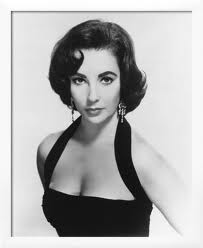
elizabeth-taylorI have begun to call my mother the “Reaper,” which I understand could be to some mums sort of insulting. Images of the Reaper are typically not terribly flattering, you know, with all that sunken skin and stringy black cloth flying around. My mom looks nothing like that, by the way. In fact, she has at all stages of her life borne a striking resemblance to Elizabeth Taylor, causing many a stranger to run up to her over the years, exclaiming, “Oh my goodness, do you know who you look like?” And, let me add, often much to the consternation of those in Mom’s company, such as, well– me, for example– when I was trying to deliver my first baby and the attending nurse ignored me in order to chat with my mom about her resemblances. But, I digress here.
Mom is the Reaper because she is at that point in her life when she rather unabashedly tells it like it is, “reaps truth” as I have come to think of it. Though she may look all violet eyes and white diamonds, she is beyond mincing words.

Is this a feature of aging? I once read that the decreased estrogen and increased testosterone levels in post-menopausal women may contribute to a personality shift where women are more inclined to report on what they are thinking. This may be a factor, but I would find it likelier that many women, menopausal or not, simply get to a point when they have seen/heard/experienced/endured enough that they find little merit in putting up fronts, regardless of hormonal predisposition.

Plus, I am wildly unimpressed by some of the material out there on menopause. It seems like a lot of conflated nonsense that correlates every aspect of female sexual maturation with hormonal imbalance and impending doom. I recently read a book by an “expert” named Dr. Miriam Stoppard – great last name for a menopause specialist, right? – that actually gave medical advice alongside hints about make-up tricks, relationship management tools for your depressed mid-life spouse, and what girdles to wear to help hold up your sagging flesh.

It is interesting that “women who speak their minds” are even an object of contemporary cultural commentary at all. I mean, would there be any talk at all about males who speak their minds? Young girls who speak their minds are cast as feminists, strong-willed, scary to boys, unfeminine, and so on. Of course, the embedded androcentric assumption is that they are doing something contrary to normative female behavior. Older women who “speak their minds” are cast as rude hags and crones, spreading around their venom and disappointment, especially if they swear. This blog on post-divorce dating, kind of says it all:

Continue reading “The Reaper by Natalie Weaver”

From Her Lips by Barbara Ardinger

Barbara Ardinger

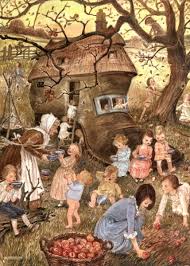
There was an old woman who lived in a shoe,
She had so many children she didn’t know what to do.
She gave them some broth without any bread;
She whipped them all soundly and put them to bed.

Look! Here she comes. Like most old women, she has a lot to say. Let’s listen in:

“Well, that’s what an old nursery rhyme says. But I’m that old woman, and I can tell you for sure that the only thing ‘true’ about that rhyme is that I’m old. I’m older than anyone I know. Oh, I see you there, eavesdropping. That’s okay. You’re welcome here.

Old woman...shoeYou know what? I’ve been called many names by the (mostly) men who make up those rhymes and stories. I’ve been the old witch in the candy house who serves pie to children and then serves the children in the pie. (But did that German guy who wrote that opera about me ever say who eats those pies?) I’ve been the thirteenth old woman at the christening who wasn’t invited and brings a curse that’s as big as the blessings from the first twelve. I’ve been the evil, wicked, mean stepmother.

Continue reading “From Her Lips by Barbara Ardinger”

Re-creating a Gynocentric Cosmology: Situating Myself by Glenys Livingstone

Glenys

I am an inventor, a mythmaker, who has received/taken remnants of her indigenous religious heritage, and newly available parts, and spun and woven new threads, fabrics and stories.[i]

 My method of approach has been informed by my deep personal involvement … my need to “place” myself here – as feminist philosopher Luce Irigaray suggests that woman needs to do.[ii]

 Irigaray said that woman is not situated, “does not situate herself in her place,” that she serves as a thing and is thus nude.[iii] I have intuitively felt the need to “clothe” myself, to find the Place within me, to move from object to sentient subject.[iv]

The way the Cosmos was for a white girl child of Western European descent growing up in country Australia, with Protestant religious teachings, was a place surveyed scrupulously by a vengeful Father God, who was at the same time spoken of as the epitome of Love. What did that do to one’s understanding of Love? How does a woman – or any person – become functional within such a cosmology? Continue reading “Re-creating a Gynocentric Cosmology: Situating Myself by Glenys Livingstone”

Settling into God during the Demise of Gender Neutral Language by Dirk von der Horst

DirkAs my life ambles along, some things change, some things are surprisingly persistent.  As a young person, the last thing I would have predicted about my future would have been developing even a mild interest in sports, but now I have a mild interest in sports.  Mild, but there.  So, that’s a surprise element in my life story.  But while developments arise, I’ve found that in the growth of my faith, the word “God” has settled into all the movements of my being, taken root in my bones, provides many well-worn neural pathways that make the day go on.  It sometimes seems like it would be easier to let the word go for the sake of communicating with a culture that turns more and more to science for cultural coherence, but the word “God” is as there in my psyche the laptop is there beneath my fingers.

While the word God has settled and made itself at home, I’m less and less sure – and it becomes less and less important – what the word means.  I look across history and the word becomes muddled.  Is what the author of Judges meant by “God” what Aquinas meant by “God?”  I’m hard-pressed to find a common referent behind the word when I encounter it in those very different perspectives.  I’ve come on a minimal definition – “the appropriate object of worship” – that lets the theological critique of idolatry work its relativizing acid on various God images and God concepts. Continue reading “Settling into God during the Demise of Gender Neutral Language by Dirk von der Horst”

Philogyny: Women Supporting Women by Ellen Boneparth

ellen boneparthWhen I set out two years ago to create a nonprofit, based on a small, unexpected inheritance, I thought a lot about the role of giving — both to grantees and to myself as a prime donor. My overall goal was to empower women and girls in the developing world through new projects dealing with their health and education.

I was uncomfortable with the word “philanthropy.” I knew from speaking Modern Greek that “anthropos” means “person” or “man” but what I wanted to do was completely woman-centered. So, I created the word “philogyny” or “loving and caring for women” as a way to draw attention to the impact that support for women can have.

Why women, especially women in developing countries? First, we know from years of research that women are the main caretakers and caregivers in their families and communities. When a woman in a developing country has income, she is likely to spend 95 percent on her own family while a man will typically spend a third to a half of his income on family, the rest, on himself. Secondly, contributions to women’s and girls’ education and health have a significant impact on a community resulting in higher employment, lower fertility rates, and healthier populations.

LightMyFireHPAs a new philogynist, I also needed a name for my nonprofit. I wanted to avoid the words most often used in such endeavors — gender, sex, development, empowerment, etc. — and to come up with something memorable that captured the lives of women in the developing world. Thus, LIGHT MY FIRE was born, an image that captures the lives of the two billion women globally who light a fire every day or evening to cook for their families.

What has Light My Fire accomplished in two years? We have given small grants, usually around $5000, to women’s and community organizations in Africa, Asia, Central and South America, and the Middle East. We believe a small grant goes a long way in a resource-poor country. Our total over two years is about $100,000 to 28 programs with some grants made to the same program in both years.

Rather than list all our projects, let me provide an idea of the range of our activities. We have supported programs dealing with: sexual abuse of children in Bolivia; production by women of soya oil in Malawi; girls’ education in Nepal, India and Kenya; health training of Bedouin and Palestinian women and Guatemalan girls; agricultural training of Kenyan women; financial literacy of Ugandan women; employment training for Haitian single mothers. And there is a lot more.

Clearly, Light My Fire seeks practical outcomes. At the same time, however, philogyny has a strongly spiritual element. Giving to women all over the world offers a sense of connection to our planet. We don’t just talk about global sisterhood, we do it. Philogyny also connects the donor to live-giving and life-saving efforts. It is a practice that touches the soul more deeply than the checkbook. To put it simply, giving to women has made me feel good, in fact, better than in any other life work I have done. The gift of philogyny is giving to women and also giving oneself a spiritual boost.

Anyone interested in joining our community of philogynists is welcome to join us: making a donation will make you feel good! Even the smallest amounts can make a big difference in the developing world– our global sisters and our circle at Light My Fire will be deeply grateful.


Ellen Boneparth has enjoyed a range of careers from academia to diplomacy to work in nonprofits dealings with women’s issues. Currently, she is the Director of Light My Fire, a nonprofit promoting women’s and girls’ health and education in developing countries. Her passion for writing has generated 7 novels and 2 memoirs. Her most recent novels, available on Amazon or at Author House, include DO NOT HURRY THE JOURNEY, a love story revolving around Alzheimer’s, and POSITIVE WOMEN, a tale about HIV-positive women in Africa and the obstacles raised by Pharma.

“We Knocked” :: A Review of Mormon Feminism by Caryn D. Riswold

caryn2Mormon feminists experience what most feminists of faith have heard at some point. Utter dismissal of the possibility of their existence.

We know several variations:

You can’t be Christian and feminist.

There’s no such thing as a Catholic feminist.

You can’t seriously be Jewish and feminist.

You can’t possibly be Muslim and feminist.

To be Mormon and feminist? Preposterous.

In response, scholars, activists, and writers within each tradition have had to document their history, make their theological case, and engage their scriptures as robustly as any conservative traditionalist would. In order to achieve meaningful institutional change, unimpeachable work and confident testimony is required. Continue reading ““We Knocked” :: A Review of Mormon Feminism by Caryn D. Riswold”

Feminist Interpretations by Elise Edwards

Elise EdwardsI’ve written a few posts recently referencing biblical themes or stories. I’m not a biblical studies scholar; I’m an ethicist and theologian. So I know that ways I use the texts disturb some people who study them from a historical or biblical studies perspective. To say I don’t use the Bible as those scholars do, though, doesn’t mean I don’t have a disciplined approach. I aim to apply a consistent approach to scripture and to encourage my students to do the same.

I get really annoyed when someone proclaims a variation of “The Bible says it; I believe it; that settles it!” in moral debates. Obviously, people within a religious tradition are going to believe there is truth in the scriptures of their tradition. That’s simply how scripture functions. So I’m okay with “I believe it.” I have a problem with the two other parts of the statement – the Bible says it, and that settles it. The assertion that “the Bible says it” masks the task of interpretation that anyone encountering a text takes on. The statement “that settles it,” when adopted in moral debate, rejects the accountability and humility in sharing our interpretations with others. Continue reading “Feminist Interpretations by Elise Edwards”

The Politics of Being a Woman in a “Christian Nation” by Gina Messina-Dysert, Jennifer Zobair and Amy Levin

FF Editors.001

The far right is pitting God against women. Mike Huckabee’s support for the decision to deny a 10-year-old rape victim an abortion is just another example in a long history that continues this election season.

At Fox News’ Republican Presidential debate in Cleveland, Jeb Bush boasted that, informed by his faith, he “defunded planned parenthood and created a culture of life in my state.” When Megyn Kelly asked Scott Walker if he would “really let a mother die rather than have an abortion,” he refused to temper his position that there should be no exceptions to his “pro-life” position.

Ted Cruz professed “God speaks to me every day through the scriptures and this informs my position on religious liberty, life, and marriage.” And Marco Rubio argued that even in the case of rape, women should not have the ability to make choices about their pregnancies. Sadly, such proclamations ignore individual rights, freedom of religion, and the fact that faith as a guiding principle can be dangerous when the foundational teachings of social justice are ignored. Continue reading “The Politics of Being a Woman in a “Christian Nation” by Gina Messina-Dysert, Jennifer Zobair and Amy Levin”

Broken Mirrors, Broken Bodies, and Sophia Wisdom by Angela Yarber

angelaFreshly cleansed, I stood naked in front of a foggy full-length mirror. I had just taken my first hot, indoor shower in nearly two months. I’ve been volunteering in a National Forest all summer with my wife and toddler; it is stunningly beautiful. While there is a lake for bathing, we have no access to running water and there are certainly no mirrors hanging from the birch trees. Sure, I can catch a glimpse of myself in the rearview mirror of my car, but this was the first time I saw all of me—sun-kissed and mosquito-bitten—in a while. This may not seem like a big deal, and I didn’t think it would be, but the absence of mirrors has had a profoundly holy impact on me this summer.

As the dirt of two months swirled down the drain and I savored every drop of warm water pouring endlessly over my aching body, I thought about the mirror that awaited me. I thought about how it has been almost 15 years since I’ve intentionally starved myself or shoved my finger down my throat to induce calorie-purging vomiting. I thought about how I weigh thirty pounds more than I did during the nadir of my eating disorder. I thought about how much grace I’ve offered my body over these years. The grace to grow. The grace to age. The grace to gain. The grace to work hard. The grace to accept.

I thought about the tremendous privilege my body carries: the privilege of my whiteness, the privilege of being temporarily able-bodied, thin privilege. I thought about how my white body has never feared for her life when pulled over for a traffic violation. I thought about how my body has access to do whatever she wants—climb stairs into inaccessible buildings, or mountains to stunning vistas. I thought about how I can find clothing in my size in virtually any store, how no one offers me health advice when ordering at a restaurant, or diminishes my concerns at the doctor’s office based on my size. I thought about racism, ableism, and fatphobia. I thought about what it means to be a queer femme body. Continue reading “Broken Mirrors, Broken Bodies, and Sophia Wisdom by Angela Yarber”

Two Wrongs Don’t Make a Right by John Erickson

Kim Davis does need a lot of things but saying of suggesting that she needs a haircut, a makeover, or even to lose weight, makes you and those that continue to repeat it no better than she is; to state such statements doesn’t purport the ideal that #LoveWins, which took over social media just mere months ago, but changes the whole narrative to symbolize that sexism and hate are more important than love and equality.

John Erickson, sports, coming out.Kim Davis, the defiant county clerk, is currently sitting in isolation in a jail cell after refusing to issue marriage licenses to same-sex couples in Rowan County, Kentucky, even after she was ordered by a judge to comply with the Supreme Court’s ruling on same-sex marriage or be held in contempt of court.

Everywhere I turn on both social media or in person people are talking about Ms. Davis, her actions, personal history and for some weird reason her hair and looks.   I’m all for individuals taking a virulent stand against an individual who chooses to not uphold the law of the land as well as continually acting in an unjust discriminatory way but bringing her looks or anything else about her physical appearance into the narrative is not only just plain wrong it is sexism in its worst form. Continue reading “Two Wrongs Don’t Make a Right by John Erickson”