Reflections on Death, Evil, and Divinity by Carol P. Christ

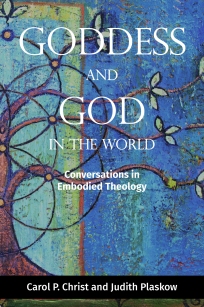
carol-p-christ-photo-michael-bakasIn our book Goddess and God in the World, Judith Plaskow and I discuss and debate our contrasting and conflicting views of the nature of divinity and the cause of evil. In the passage that follows, I respond to Judith’s questions.

This brings us to the major philosophical issue that divides us: the nature of divine power and the relation of divine power to the world. It is fair to say that our major difference in this regard is whether the divine power is personal, conscious, intelligent, loving, and good. You ask, “If all we know of that exists is a mixture of the good and the bad . . . , if our creativity and the creative power that births and sustains the world brings forth both good and evil, then how can the Goddess be less than ambiguous? How can the Goddess be ‘the ground of all being’ if she does not ‘form light and create darkness, make weal and create woe’ (Isa. 45:7)? This question lies at the heart of our differences.

. . .

You ask whether “evil finally has less metaphysical warrant or reality than good” in my worldview. Continue reading “Reflections on Death, Evil, and Divinity by Carol P. Christ”

Meeting Phrike: Feminist Theology and the Experience of Horror by Jill Hammer

Myself, I saw the numb pools amidst the shadows; myself, the wan gods and night in very truth.  My frozen blood stood still and clogged my veins.  Forth leaped a savage cohort… Then grim Erinys (Vengeance) shrieked, and blind Furor (Fury), and Horror (Phrike), and all the forms which spawn and lurk amidst the eternal shades.

Seneca, Oedipus (trans. Frank Justus Miller)

Horror is not a cognitive but a physiological or affective extra-discursive state of being. Not unlike the state of, say, feeling nausea, horror is a state of being, whose manifestation, based on the etymologies of the Greek φρiκη [phrike] and the Latin horror, may be described, as Adriana Cavarero writes, as “a state of paralysis, reinforced by the feeling of growing stiff on the part of someone who is freezing,” and further, through her mythological reference to the prototypical figure of horror, Medusa, as a state of “petrification” …

205. Kiarina Kordela, “Monsters of Biopower: Terror(ism) and Horror in the Era of Affect”, Philosophy Today 60(1), 2016, p. 193-205.

Surging anti-Semitism in the United States, as witnessed by many news reports and also anecdotes related by friends and acquaintances, holds a particular horror for Jews of my generation.  Some of us thought that we were relatively safe from that age-old bigotry.  It’s disorienting to be reminded that we are not.  My wife, whose father (alone of all his relatives) survived Auschwitz, has the skin-crawling sense as she reads the news that somehow we have gone back to that time.  Twenty-eight Jewish community centers have been evacuated in the last two weeks because of bomb threats, and a rabbi in the Midwest has received death threats for protesting neo-Nazi activities. A midwife/rabbi friend in Toronto had her house vandalized with swastikas.  A judge of my acquaintance in the New York area saw a statue of Martin Luther King vandalized with Nazi symbols.  Walking down the street in New York City, I myself heard someone exclaim gleefully: “Trump is going to get rid of the Jews!”  

While I hope that is not anywhere near true, the horror evoked by hearing such words is a real entity: a physiological state of being.  The Greeks personified the feeling of horror as a daimona (spirit) or goddess called Phrike.  The word phrike implies shivers, goosebumps: a physicalized emotion. The Romans called her Horror.  There are no stories about her, but the ancient Greeks used the word phrike when speaking about theater, believing that the pity and terror evoked by a play effected a catharsis for the viewers.  Via their beliefs about theater, the Greeks gifted Phrike to the world.  Lately I feel that Phrike is living in my house.   Continue reading “Meeting Phrike: Feminist Theology and the Experience of Horror by Jill Hammer”

A Time of Reckoning: The SCE and John Howard Yoder By Grace Yia-Hei Kao

How does a professional society—a Christian one, no less—come to terms with the sexual abuse perpetrated over decades by one of its most vaunted members?

At the recently concluded annual meeting of the Society of Christian Ethics, this question was at the forefront of many conference participants’ minds.

Continue reading “A Time of Reckoning: The SCE and John Howard Yoder By Grace Yia-Hei Kao”

Women, Theology and Identity as Believer by Vanessa Rivera de la Fuente

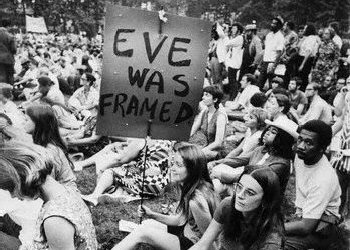
eve

Like all my reflections, this is not intended to be conclusive, but rather, to share some impressions about theology and the way in which women are created or given an identity as believers.

In the androcentric and misogynist narratives of religious traditions lies the root of much violence against women. This is not new, since the same diagnosis has already been raised by the theologian José Luis Tamayo when he says that although women are the majority presence of religious communities and those most involved in the transmission and practice of traditions “they are the biggest losers” for all the exclusion and violence exercised against them in the name of religion.

The influence of religion on the lives of women goes beyond the realm of religion itself. From theology comes the gender discourses that impact our lives as political subjects. In all the most obvious (sociological, historical, economics) causes of the weak status of women, we can find theological roots or argument religion-based. These  roots are discursive. What is said about women from religions, as well as from the social and exact sciences, institutions and the media, are stories, narratives that are the product of the interaction of mechanisms of power, enunciation authority and historical accumulation of performative actions. Continue reading “Women, Theology and Identity as Believer by Vanessa Rivera de la Fuente”

The Tremble of Love: A Novel of the Baal Shem Tov by Ani Tuzman – Reviewed by Joyce Zonana

jz-headshotNever has it been more difficult for me to affirm that “love trumps hate” as during this unprecedented United States election season.  After watching the Republican Convention last July in mute horror, I took to bed for several days, overwhelmed by the presentiment that everyone–blacks, women, Jews, Latinos, Muslims, queers– other than a certain breed of white American males was doomed to shameless malignment and persecution.  The palpable hatred in Donald Trump’s acceptance speech seared me, arousing my ancestral memory of various persecutions of Jews, Muslims, and others–not something I usually think about or choose to foreground.  For several months now, I have been haunted (and almost paralyzed) by fear.

tremble-of-love-cover-3d-for-webHence Ani Tuzman’s The Tremble of Love: A Novel of the Baal Shem Tov has come as an especially welcome, healing antidote, affirming as it does the power of “unshakeable faith even in the presence of inhumanity” (473).  I cannot say that I fully have such faith, but this novel, if anything can, leads me towards it. Page after page is filled with compelling examples of love’s power to disarm hatred and assuage pain.

Early on, a tale is told of a young man fearlessly facing three would-be highwaymen who have stopped the wagon in which he is riding with a rabbi’s wife and her three children, one of whom is disabled:

Continue reading “The Tremble of Love: A Novel of the Baal Shem Tov by Ani Tuzman – Reviewed by Joyce Zonana”

Religion, Dissent and Decolonial Approach in Latin America by Vanessa Rivera de la Fuente and Juan F. Caraballo Resto

womanwithquran

Talking of decoloniality in religion and theology is today a fashionable stance that has been adopted even by the academic and political mainstream. As Latin Americans, decolonial perspectives affect us firsthandedly. For the last 500 years, our continent has nurtured resistance struggles against the racial, sexual, economic, ethnic and religious violences that emerge from the numerous process of colonization we have endured. With this in mind, in this article we contribute to the debate on decolonization of our religious phenomena.

Decolonizing is to Assume that all Religion can Operate as a Colonizing Agent

The expansion of European colonialism in Latin America transpired through all aspects of social existence and gave rise to new social and geocultural identifications (e.g. “European”, “American”, “Indian”, “African”, etc). The consequences of this domination reverberate to this day.

In this regard, we should not loose track of the fact that all abrahamic religions had their genesis within Latin America in the form of colonial presence. In other words, most of our religious expressions are the product of colonial forms of governance, which benefited from an exclusionary instrumentalization of the religious narratives as a tool to ‘dignify’ and ‘enhance’ the population as ‘colonial subjects’.

This was the case of Christianity. The mission carried out by the first European conquistadores in the Americas was characterized by the drawing of exclusionary theological lines that legitimized some, questioned others, and condemned many. Colonization thus manifested itself in part through spiritual violence on native populations. Evangelization, in this regard, was biopolitical in nature; it entailed the pushing of non-European bodies (and souls) into ‘Otherness’.

This illuminates unto why, for example, nowadays interfaith relations have become a problem, rather than a resource for many Latin American Christian congregations. It is often assumed that to establish lasting links of solidarity with religious ‘Others’ puts at risk the core elements which have been taught to enhance our population by the different metropoles that have governed and preached in our midst.

It is well established that for too long the bases of Christianity in the Americas were built upon imposed and/or conditioned conversions which constantly demanded and reminded people that in order to have ‘goodness’ reside in them, they had to be someone essentially different to who they were; they had to be Christian (Rivera Pagán 2013, 2014; Silva Gotay 1998, 2005). In this regard, long established religions such as Judaism, Islam, Spiritism, and Afro-Atlantic religions such as Santería or Palo have been relegated to inferior statuses in some still colonial contexts, such as Puerto Rico (Caraballo-Resto 2016; Román 2007).

A similar case, can be found within Islam. As mentioned in a previous article, many Muslim congregations in the Americas have done well in mirroring the colonial practices of Christianity. Despite common assumptions, some contemporary Muslim groups have come to our lands with the clear aim of Arabization and, again, through spiritual violence they categorize locals as “others” and, thus “subordinate” them as perpetual ‘underage believers’, who seem to need the Arab tutorial aid relentlessly. At times, their theologies are reminiscent of those expressed by Catholicism 500 years ago: A call to abandon local trajectories and spiritualities, in favor of adopting Middle Eastern names, language, arts and aesthetics, social manners, political causes and even diet. Only then, are us Latin American to be considered by some of these communities as “Noble Savages”.

Although some scholars linked to decolonial studies within Islam have difficulty accepting this, Islam has historically been instrumentalized as a colonizing agent in the Middle East, West Africa, Asia and the Indian Subcontinent.

If we talk about Islam and decoloniality in the same sentence, there should be honesty on these facts.

Colonization occurs not only through the sword and war, also through trade, culture and social discourses that become hegemonic and religion. In this regard, the ‘jihad of the soul’ is seldom devoid of politics. The absence of blood is not tantamount to a lessening of colonial violence. There are many and different ways to curtail, cancel and oppress a people without resorting to their physical extermination.

Religion and the Heterosexual Regime

Colonial religions in Latin America have been characterized by an hegemonic discourse based on heterosexuality as a compulsory scheme, androcentrism, ableism and speciesism. Historically, this has entailed the exercise of a new religious taxonomy (eg. ‘Moro’, ‘Marranos’, ‘noble souls’, etc.). Yet, this also corresponded to an encompassing system of power that intersected all control of collective authority, labor, racial relations, the production of knowledge, as well as sexual access and meaning.

It is well known that many indigenous peoples of the Americas were matriarchal, recognized more than two genders, recognized homosexuality and “third” gendering positively and understood gender in much more problematized terms rather than in the binary terms of subordination monotheistic system imposed.

Such dichotomy not only found its way in Latin America. It also transpired in parts of Africa, which were later linked to our Latin-American contexts by way of slavery. This has been dealt at lengths by Nigerian feminist scholar Oyéronké Oyewùmí, in her work The Invention of Women (1997). In it she states that gender was not an organizing principle in Yoruba society prior to European colonization (idem: 31). Instead, she argues that gender has “become important in Yoruba studies not as an artifact of Yoruba life but because Yoruba life, past and present, has been translated into English to fit the Western pattern of body-reasoning” (idem: 30).

So, it becomes all the more important to consider the changes that religious colonizers have brought, as well as the lip service we’ve paid to it, in order to understand the scope of our Latin American organizations of sex and gender under colonialism.

Theology of Dissent in Response to Religious Heteropatriarchy

A decolonial theology must be one of dissidence if it is to have any liberating character. ‘Dissidence’, here, is not used as a mere label of disagreement, but rather as a situational stance from which the very bases of our legitimization as colonial subjects are constantly contested. And just as the expansion of religious colonialism in Latin America transpired through all aspects of social existence and gave rise to new social and geocultural identifications, a decolonial theology of dissidence must do the same—starting from our own gendered bodies.

In sexual terms, Latin American women and non-heterosexual people have been historically defined in relation to heterosexual men as the norm. In other words, women are those who do not have a penis, and non-heterosexual men are those who do not use their penis according to the norm (Lugones 2003). From a decolonial theology of dissidence this must be contested—placed in a situation of uncomfortable political transactions perennially.

From this point of view, a decolonial theology of dissent is much more than a body of intellectual writings. It is a daily practice—a quotidian mode of resistance—that involves people at the grassroots where the challenges of exclusion are negotiated. Yet, something is to be said for the epistemological zones of privilege where colonialism is also instantiated. There is no decoloniality without resistance, and there can be no resistance against the traditional hegemonic enclaves where colonialism is legitimized, as long as the centers where knowledge is produced conceive people in resistance as “objects of study”, rather than “fellows in knowledge-building”.

Up to this day, ‘Otherness’ is one of the most deeply rooted archaeological legacies left by our colonial religiosities. Upon its finding, some people of faith in Latin America are now left to determine how best to deal with religion(s) in an inclusive, liberating and welcoming way, so that our social contexts become ones where religious, gendered, ethnic, linguistic, racial, and able diversities are not thought of as problems, but a resources to strengthen ties. Only then can we help truly shift this time of instability for our region.

Decolonizing religion in Latin America entails understanding that the religious question is always political, and as such must be contested. If there is any liberating potential in the religious phenomena, this is due to a lucid dissidence that eludes colonial privilege and embraces an ethical compromise beyond religious labels.


Vanessa Rivera de la Fuente is a social communicator, writer, mentor in digital activism and community educator in gender and capacity development. She has led initiatives for grass roots female leaders’s empowerment in Latin America and Africa. She is an intersectional latin muslim feminist in the crossroads between Religion, Power and Sexuality. Her academic work addresses Feminist Hermeneutics in Islam, Muslim Women Representations, Queer Identities and Movement Building. Vanessa is the founder of Mezquita de Mujeres (A Mosque for Women), a social media and educational project based in ICT that aims to explore the links between feminism, knowledge and activism and highlights the voices and perspectives of women from the global south as change makers in their communities.

Juan F. Caraballo Resto is professor of Sociology and Anthropology of University of Puerto Rico Reinto Cayey. PhD in Social Anthropology from University of Aberdeen, Scotland.

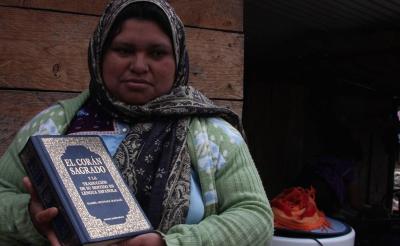
Featured Image: Indigenous woman in Chiapas, Mexico, part of the Islamic mission of Dawa in the area, wearing a hiyab and showing a Qur’an in Spanish,

Can Good Theology Change the World? Part 3: Embodied Theology by Carol P. Christ

carol p. christ photo michael bakasIn an earlier blog I asserted that one of the hallmarks of good theology is understanding that the only valid source of authority is to be found in individuals and communities that continually interpret and reinterpret texts and traditions in new situations.

For most of its two thousand year history, Christian theology was understood to involve rational reflection on revealed truths. It was assumed that revealed truths found in the Bible, the decisions of church councils, and church traditions are a fixed set of facts (such as the death and resurrection of Jesus Christ) and doctrines (such as the Trinity) that are eternally true. It was further thought that the theologian is able to rise above his body and history in order to contemplate these eternal truths. Thus, it was said, theology considers eternal truths from an objective and essentially unchanging vantage point.

For the past several hundred years, theologians have begun to realize that both of these traditional assertions are false. There is increasing recognition that the Bible can no longer be understood as having been dictated by God. Instead, revelation (if it exists at) comes through the minds and bodies and experiences and histories of those who write the sacred texts and doctrinal statements. Revelation can only be expressed in the language or languages known to the individual or group who receive it, and experiences and ideas will inevitably be conveyed using symbols and metaphors taken from a wider cultures.

As “the process of interpretation” is acknowledged, it is also understood that theologians can never reflect on eternal truths in any simple way. They must consider the circumstances in which facts and doctrines are received and written down. Some seek to remove the wheat from the chaff, hoping to discover a kernel of eternal truth encased in language and symbols that are relative. Thus, for example, it has become commonplace for liberal theologians to say that the kernel of truth in Genesis 1 is that God created the world, while the story that He created it in 6 days is not literally true.

While non-fundamentalist theologians generally understand that the process of interpretation of revealed truths is complex, they have been less eager to turn a critical eye on the standpoints from which they carry out the process of interpretation themselves. Many theologians recognize the relativity of all standpoints in principle, yet do not hesitate to assert that they have found “the true” meaning of a particular text or tradition. Rosemary Radford Ruether believes that her reading of the Bible from a liberation perspective is more true to the original meaning of the texts than alternative readings. Elizabeth Schussler Fiorenza, in contrast, always qualifies her readings, stating that what she asserts about the early Jesus tradition is true from the perspective of “wo/men seeking liberation.”

Schussler Fiorenza’s position is rooted in “standpoint theory,” which argues that every interpretation of a text or tradition is influenced by the standpoint of the interpreter. Taking standpoint theory seriously means that we cannot make statements like “the message of Jesus was concern for the poor” without adding that this interpretation is made “from a liberation perspective.” This qualification makes a lot of people—and not only fundamentalists—uncomfortable, because it means that all so-called “truths” are in fact relative to those who assert them.

It is not surprising that those whose voices are relatively new to the theological conversation are more likely to acknowledge their standpoints than those writing from traditional white male European perspectives. Many white male theologians continue to believe that they are writing “theology,” while theologians of color and female theologians of all colors are writing from particular perspectives. When theologies are acknowledged to be perspectival, more often than not, the perspective is a general one, such as “black,” “Asian,” “African,” “feminist,”  “womanist,” or “queer.” But even standpoint thinking can fail to be inclusive. A ground-breaking book on black women’s studies pointed out that All of the Women Are White, All of the Blacks Are Men, But Some of Us Are Brave. By the same token, some have wondered why all of the feminist theologians (who are invited to contribute to books and conferences) are Christian. And so on.

In our new book Goddess and God in the World, Judith Plaskow and I reconsider the question of standpoint in theology. We have been engaged in a theological argument about the nature of divinity that we could not resolve through rational argument for a number of years. We have discussed the general differences in our standpoints as reasons for our differences. Both of our theologies are “feminist” and both of us are “white.” As white and feminist, our theologies have certain commonalities, yet they also diverge.

My view that divinity is a loving and personal but not omnipotent is based in Goddess Spirituality, yet it is virtually identical with the views of Christian process theologians such as John Cobb and Monica Coleman and Jewish process theologians like Bradley Shavit Artson. Judith’s view that divinity is an impersonal creative power that is the ground of both good and evil is as likely to be shared with Neo-Pagans as with other Jews. Thus, we found that it would not do simply to further locate Judith’s position as “Jewish feminist” and mine as “Goddess feminist.”

We discovered that the ways in which our theological viewpoints are rooted in our experiences cannot be explained through a simple application of standpoint theory. Thus, we took the radical step of combining autobiography and theology in our new book, Goddess and God in the Worldexemplifying a new method we call “embodied theology.” Embodied theology is rooted in personal experiences in our individual bodies. At the same time, we all live in a relational world, shaped by social and historical events and forces that are shared. The relationship between theologies and experiences is embedded in complex webs, with the precise factors that lead to the differences in view being impossible to untangle from the whole.

Still, we found that theological views can be judged by criteria that are in the broadest sense rational and moral: do they make sense of the world we share; and do they promote the flourishing of the world? Though different experiences may lead to different views of divinity, we can enter into conversation with each other about them, based on criteria that are shared. In the process of debating our views, Judith and I concluded that both of our views make sense of the world we share (though we each remain committed to our own view) and that both promote the flourishing of the world. At the same time we agree that other views such as the notion that divinity is exclusively male, or omnipotent and totally transcendent of the world, not only make less sense of our shared experience, but also hinder and obstruct the flourishing of the world.

At the end of our book, we invite others to join with us in a fully embodied theological dialogue that heretofore has been unimaginable, unthinkable, unspeakable. In an embodied theological discussion, we will be able to identify relatively more and less adequate theologies, but we will not be able to prove the truth of particular views.

Also see: Part 1 and Part 2.

This is discussed further in the newly published Goddess and God in the World: Conversations in Embodied Theology by Carol P. Christ and Judith Plaskow–order now. Ask for a review copy (for blog or print) or exam or desk copy. Please post a review on Amazon.  Share with your friends on social media using the links below.

Listen to Judith and Carol’s first interview on the book on Northern Spirit Radio.

Carol P. Christ leads the Goddess Pilgrimage to Crete. Space is available on the fall tour October 1-15. Join now and save $150. With Judith Plaskow, she is co-editor of Womanspirit Rising and Weaving the Visions. Carol wrote the first Goddess feminist theology, Rebirth of the Goddess and the process feminist theology, She Who Changes.


Can Good Theology Change the World? Part 2 by Carol P. Christ

Carol P. Christ by Michael Bakas high resoultionIn the first blog in this series, I argued that one of the hallmarks of a good theology is recognizing that the source of authority must be located in individuals and communities who interpret texts and traditions as they encounter divinity anew in the present. In our new book Goddess and God World, Judith Plaskow and I suggest that a second hallmark of good theology is the “turn to the world.” What we mean by this is not only that divinity is immanent in the world, but also that the purpose of human life is to be found in this world—not the next.

The God of traditional theologies is pictured as an old man with a long white beard who rules the world from heaven. It is commonly assumed by those familiar with this picture that the purpose and meaning of human life is not to be found in this world—but rather in heaven. This assumption is increasingly being challenged. Many people no longer believe in life after death. The purpose of morality is increasingly being understood as improving the conditions for the flourishing of human and other forms of life—not on gaining the approval of a God who has the power to assign individuals to heaven or hell in the next world. Continue reading “Can Good Theology Change the World? Part 2 by Carol P. Christ”

Can Good Theology Change the World? Part 1 by Carol P. Christ

Carol P. Christ by Michael Bakas high resoultionTheology is often viewed as abstract and removed from the problems of the real world. Yet many of the problems of the real world are caused by bad theologies. If bad theologies shape the world, might the same not be true of good theologies?

Opposition to a woman’s right to choose birth control and abortion is fueled by appeals to the command of God to protect life. Opposition to lgbtqi rights is couched in divine authorization of normative heterosexuality. Opposition to efforts to counter climate change are challenged by those who claim to believe in the Bible, not science.

All of these claims are rooted in a prior claim that God is and must be the only source of authority for human beliefs and moral decision-making. This view can and often does lead its adherents to distrust scientific and other humanly created forms of knowledge. In America, supporters of Donald Trump routinely dismiss not only the claims of modern science, but also every attempt to disprove the assertions of their candidate by citing facts. Continue reading “Can Good Theology Change the World? Part 1 by Carol P. Christ”

Thinking about Goddess and God by Judith Plaskow and Carol P. Christ

Goddess and God in the World final cover design

Talking about our deepest beliefs and feelings can be surprisingly intimate. In our new book Goddess and God in the World, we discuss our different theologies and challenge each other’s views. In the conclusion, we consider whether there is any way to judge between our positions. While we believe that theologies are rooted in experience, we also insist that they must make sense of the world we share and provide the orientation we need as we face the social, political, and environmental crises of our time.

Theologically, we disagree on two fundamental issues: whether divinity is personal or impersonal; and whether divinity is good or inclusive of good and evil. Does one of our views meet our criteria for adequacy more fully than other?

Does the notion of a personal or impersonal deity make more sense of our experience of the world? Carol argues that if consciousness and intelligence is a fundamental aspect of human existence and is found in varying degrees throughout the web of life, then it makes sense to think of divinity as also having consciousness and intelligence. Judith responds that the notion of a personal deity seems to her a holdover from the biblical picture of God and that she can find no evidence in her experience or reflection that a divine individual who is conscious and intelligent exists. We seem to be at a standoff here. There is some consolation in recognizing that this is a fundamental divide in the history of religions, but this insight does not resolve our disagreement.

Does one or the other of our views offer better guidance in making moral decisions? Judith argues that her view places moral responsibility firmly in human hands, which is where it belongs. Carol agrees with Judith that humans and other individuals are the ones whose decisions will determine the fate of the world, and she finds recognition of the interdependence in the web of life sufficient grounds for moral decision-making. But she would add that the love and understanding of a divine individual inspires her to love and understand the world and to promote its flourishing. Judith believes that the idea of one divine presence that enlivens and unites the universe is a sufficient basis for ethical action.

Our other major theological difference concerns whether divinity is good or inclusive of good and evil. Judith argues that if divinity is inclusive of the world, it must be inclusive of both good and evil. Carol counters that if divinity is reflective of what is best in ourselves and in other individuals in the world, then divinity must be good, not evil.

Does one of our views provide better moral guidance? Carol argues that a divinity who is good inspires us to try to make the world better. Judith replies that the notion that divinity is good leads us to idealize ourselves and to forget or deny our capacity to do evil. Carol feels that a clear focus on the world is sufficient to remind us of our capacity for evil.

Does one of our views offer a more adequate account of the existence of evil in the world? Judith asserts that the idea that divinity is the ground of both good and evil provides a better answer to the problem of evil: the potential for both good and evil are inherent in the creative process that is the foundation of life. Carol believes that the world is created by a multiplicity of individuals, including the divinity. The capacity for good and evil is inherent in the creative process that structures the world. The divinity is good but not omnipotent. What we call evil is created by individuals other than the divinity. Judith replies that this view does not adequately account for the origin of evil.

Is there any way to choose between our different positions? Each of us is firmly convinced that her view is clear, consistent, coherent, and comprehensive, that it takes full account of the complexity of human experience, and that it provides the moral orientation we seek….Each of us has tried without success to win the other over to her perspective. In the process, we have gained a deeper appreciation of each other’s views and clarified our own. This is as far as we have been able to go. We acknowledge that, in the end, we cannot know which, if either, of our theologies expresses the nature of ultimate reality or provides the crucial ethical guidance we need. Our views have been shaped by our standpoints, including personal, communal, cultural, and historical factors, and this means that they are relative and partial. Because we cannot see into the future, we cannot know the long-term effects of either of our theological worldviews.

At the same time, we are unwilling to throw up our hands and declare that all theological perspectives are of equal value. We firmly reject the fundamentalist insistence that particular texts, traditions, or truths are universally and eternally valid. This position denies that people create and interpret traditions, and it has repeatedly led to intolerance and violence. We continue to insist that the views of divinity we have articulated make more sense of the world as we know it and provide better orientation as we face the problems of our time than the traditional views we have criticized. On the one hand, all theologies—and all worldviews—are relative to experience and limited by human finitude. On the other hand, they can be examined, evaluated, and debated in relation to their understanding of the world and the kind of life they make possible for both the self and others.

Excerpted from Goddess and God in the World: Conversations in Embodied Theology–order now. Ask for a review copy (for blog or print) or exam or desk copy. Post a review on Amazon.  Share with your friends on social media using the links below.

carol p. christ photo michael bakas

Carol P. Christ and Judith Plaskow are co-authors of Goddess and God in the World and co-editors of Womanspirit Rising and Weaving the Visions. Judith wrote the first Jewish feminist theology, Standing Again at Sinai, while Carol wrote the first Goddess feminist theology, Rebirth of the Goddess. Judith is co-founder of the Journal of Feminist Studies in Religion. Carol leads the Goddess Pilgrimage to Crete. Space available on the fall tour!