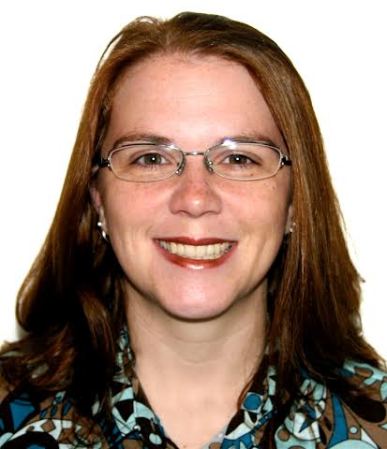
Ashes, Sacrifice, and Abundance by Melissa Browning

Melissa BrowningLast year I got my ashes at the airport. As I sat in that airport chapel, I halfheartedly listened to a (mostly terrible) litany that was proclaimed in between announcements for gate changes. I was leaving for another campus interview after having been home for only 24 hours since the previous one. The Christian season of Lent came during a time of stress and chaos in my life. That year, when I contemplated what I might give up for Lent, I could think of nothing. So much had been taken away that I had nothing left to give.
The season of Lent is often linked with the idea of sacrifice. Some people fast, others give up a favorite vice or a favorite food. As a feminist theologian, I spend a great deal of time thinking about the idea of sacrifice. I wonder how women who consider themselves part of Christian churches can be asked to sacrifice when we have already given away too much. Too often, our labor is welcomed but our voices are silenced. As a Baptist theologian and ordained minister who has sojourned in Catholic universities, I’ve felt this in my own tradition and in traditions that are not my own. Continue reading “Ashes, Sacrifice, and Abundance by Melissa Browning”

The Case of Mary’s Decency by Xochitl Alvizo

Incarnation, Goddess spirituality, Xochitl Alvizo, god became flesh

This post builds on yesterday’s post on Marcella Althaus-Reid’s indecent theology.

In her book, From Feminist Theology to Indecent Theology, Marcella Althaus-Reid states that liberation theology has two dominant characteristics: the familiar ‘preferential option for the poor,’ with its suspicion of class structures and the influence these have on faith and church teachings to perpetuate and preserve its unjust systems of oppression and domination; and  for its praxis of transformation of said unjust systems (FFTIT, 11). Marcella Althaus-Reid credits liberation theology for “systematically and structurally using the concept of ideological formation in order to unveil class economic interests embedded in theology” (FFTIT, 11).

To build on this, Althaus-Reid uses the concepts of ‘decency’ and ‘indecency’ to challenge theology’s obsession to regulate and control “sexual performances, roles and behavioral patterns of people…through a sexually based patriarchal hierarchy based in a particular androcentric understanding of life according to predetermined identities” – in other words, heterosexism. Indecent theology, then, aims to strip away theology’s false claim to sexual neutrality and its obsession to control, and instead aims to develop a theology free from the heterosexism that confines it (FFTIT, 83). One key place in theology she seeks to indecent (she used the word as a verb) is the “legend of Mary” (IT, 40).

Continue reading “The Case of Mary’s Decency by Xochitl Alvizo”

A Little Indecency with Marcella Althaus-Reid by Xochitl Alvizo

Incarnation, Goddess spirituality, Xochitl Alvizo, god became fleshInspired by the conversation following Vanessa Rivera de la Fuente’s post yesterday, I offer here a little synopsis of Marcella Althaus-Reid’s work in Indecent Theology: Theological Perversion in Sex, Gender, and Politics.
Marcella Althaus-Reid opens her book by recalling a question she received from one of her colleagues: “What has sexuality to do with a Feminist Liberation Theology?” To answer she reflected on early liberation theology when it was still in formation and later liberation theology as it gained its place in the academy and the church:

[T]imes change and subversive theology becomes incorporated: church leaders claim that they themselves have always been liberation theologians. They guarantee to the state that there is no danger here…It is acceptable in the academy, entertaining to the wider public and a valuable commodity to publishers. Having reached calm waters, why would I as a feminist liberation theologian risk rocking the boat by introducing such a scandalous theme as sexuality, especially when it is not the theology of sanctified sexuality? (Indecent Theology, 2)

Continue reading “A Little Indecency with Marcella Althaus-Reid by Xochitl Alvizo”

Queer in Islam and a Theology of Dissent by Vanessa Rivera de la Fuente

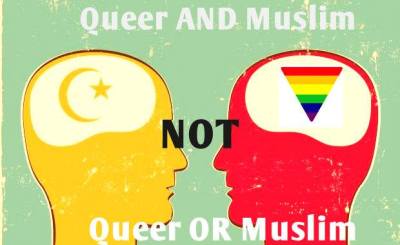
Vanessa Rivera de la Fuente. Queer and IslamMost of the time, when we talk about being “Queer in Islam,” we identify the term with a hermeneutics developed by or on behalf of LGTBQI Muslims in order to allow their inclusion in religious spaces and recognize their agency in matters of faith.

Is not my intention to appropriate the voice of LGTBQI Muslims in this issue, just to share my reflections about a topic that deserves a larger and deeper treatment. Continue reading “Queer in Islam and a Theology of Dissent by Vanessa Rivera de la Fuente”

What If There Are Sex Differences But Biology Is Not Destiny? by Carol P. Christ

carol p. christ photo michael bakasTheories about sex differences have been used to keep women in the home and to justify male domination. Because of this, many feminists run as fast as they can from any discussion of them. Last week while thinking again about this question, I realized that the debate about essentialism often turns a flawed syllogism that goes like this:

• If there are sex differences,

• then, biology is destiny.

In fact the conclusion does not follow from the premise. The syllogism assumes that there if there are sex differences they must inevitably determine behavior.

What if there are sex differences, but we have a choice as individuals and societies as to how to negotiate them? This suggests another possible syllogism:

• If there are sex differences,

• we can choose how to respond to them as individuals and societies,

• because biology is not destiny. Continue reading “What If There Are Sex Differences But Biology Is Not Destiny? by Carol P. Christ”

Faith Doesn’t Need Walls: A Conversation with Kate Kelly by Kate Stoltzfus

Kate.Stoltzfus-1When Kate Kelly faced excommunication from the Church of Jesus Christ of Latter-Day Saints in June 2014, much of the world took notice. The D.C.-based human rights lawyer garnered wide-spread attention for founding Ordain Women, a movement to push for advocacy of female ordination in her Mormon faith. A ripple of press from The New York Times to The Huffington Post chronicled Kelly’s waves of activism and its subsequent consequences: excommunication in absentia on June 23 by her former church leaders in Virginia.
While the press has since died down, the momentum remains. Church leaders denied Kelly’s first appeal against the charge in October 2014, but Kelly remained hopeful of her plan to appeal a second time to the church’s First Presidency when she spoke to WATER (Women’s Alliance for Theology, Ethics, and Ritual) a month later. Continue reading “Faith Doesn’t Need Walls: A Conversation with Kate Kelly by Kate Stoltzfus”

Be Wild this Holiday and Find the Face of God(dess) by Marie Cartier

MarieCartierforKCETa-thumb-300x448-72405I know that you all will be reading this the day after Christmas…so this is my Christmas and/or winter holiday gift to you. I so love the Feminism and Religion (FAR) community—its discourse, intelligence, and its community of like minds. And I appreciate that so many of us offer lessons to each other on how to live—wild. For in some ways the very juxtaposition of the words “feminism” and “religion” posits an out of bounds existence. What does it mean?

I was recently asked how I would teach a class on “women and religion.” Among my first responses was that I would, among other texts, use the book The Feminine Face of God: the Unfolding of the Sacred in Women by Sherry Ruth Anderson and Patricia Hopkins (1992). Although this book was published over two decades ago it still holds, perhaps unfortunately, as true today as then. The text is based on interviews with women regarding the “unfolding of the sacred” in their lives. This book was required as part of my graduate program in the first class I took at Claremont Graduate University (CGU) “Women’s Studies in Religion.” CGU was the first program in the country where you could get your Ph.D. in Religion, with an emphasis in Women’s Studies in Religion, and I believe it is still the only program where you can do so.

My professor for that class, Dr. Karen Torjesen, challenged us to write, if we could, the “theology” in the book—was there one? She challenged us to see if there was a “theo” “logo” word of God in this idea of the “unfolding of the sacred” in women. I took up her challenge—and so one of my first big graduate papers was to unpack this book of interviews and see if I could find a theology in these lives/stories. This is what I found—what is sacred to women—right now (in 1992 and still today)—is the chance to find the sacred. Continue reading “Be Wild this Holiday and Find the Face of God(dess) by Marie Cartier”

A Women’s Mosque: An Interfaith Space for Feminist Spirituality by Vanessa Rivera de la Fuente

Vanessa Rivera de la Fuente. A Women MosqueIf you thought that all I could do in regards to feminism and religion is challenge Patriarchy and tease around ladies and gentlemen of good temper and better reputation with my corrosive comments, this post may change your mind.

As I said in a previous article, this year I started, with a small group of people, a social project called Imaan, whose goal is centered on inter-faith dialogue and better visibility of the actions and contributions of women in Islam (and religion in general,) plus critical thinking on religion from a feminist and progressive perspective.

As part of the activities of Imaan, we are developing “A Women’s Mosque” project; an initiative that aims to create a meeting place for women and our spirituality. The idea came after a reunion to talk on Islam and inter-faith dialogue with women from different denominations. At one point in the discussion, they asked me about sex segregation in mosques, which led us to a broader reflection on the position of women in the religious space, both material and symbolic, and how uncomfortable we were with that.

We realized that, in a variety of ways, places of worship displace women. Whether they relegate us to separate rooms, or refuse to allow us to speak, limiting our participation to “strictly female” issues such as maternity, caregiving, the role of wife and – of course- clothing, these prohibitions are always from a patriarchal “canonical” perspective.

So we decided to join together to create our own space. Continue reading “A Women’s Mosque: An Interfaith Space for Feminist Spirituality by Vanessa Rivera de la Fuente”

Is it a Feminist Act to Stay in a Patriarchal Tradition? by Gina Messina-Dysert

Should women (or men) maintain a religious identity within a patriarchal tradition?  Is it a feminist act to stay? Or is it only a feminist act to leave?  These are questions that regularly surface in conversations related to religion and are often the center of dialogue here on Feminism and Religion.

I have often thought that change can only take place from within.  Certainly we can see the progress made by foresisters who have struggled within their traditions for change; Rosemary Radford Ruether, Mary Hunt, Amina Wadud, Judith Plaskow, and the list goes on.  These women have greatly impacted our understanding of misogynistic practices within their respective traditions and have educated us on how religions need to live out their teachings. Continue reading “Is it a Feminist Act to Stay in a Patriarchal Tradition? by Gina Messina-Dysert”

The Ancestors Live in Us by Carol P. Christ

Carol Christ in LesbosOn the recent Goddess Pilgrimage to Crete women had the option of riding up a winding road on a mountainside in the back of a farm truck singing “She’ll Be Comin’ ‘Round the Mountain” or could choose to go with the guard in his closed automobile.

That evening one of the older women who had chosen to ride in the car said, “I saw how much fun you were all having, but I have done that before. This time I was happy to let the rest of you do it.”

“That’s exactly how I feel about death,” I responded. “Some people want to live on after death, but I don’t. I am happy to let others do it. The only thing that would upset me would be if life did not go on after me.” Continue reading “The Ancestors Live in Us by Carol P. Christ”