Feminism and Faith by Judith Plaskow, Rosemary Radford Ruether, and amina wadud

Foreword Image.001 (1)“Feminism saved my faith” is the concluding phrase of one of the writers in Faithfully Feminist, and though not everyone would say it that way, most of these women have found feminism and faith vibrantly interrelated. The contributors to this anthology articulate a range of reasons that feminists might choose to remain within a patriarchal religious tradition. They also remind us that women reconcile their faith and feminist identities in diverse ways. This volume testifies to the dynamism within the religious communities of Judaism, Christianity, and Islam in the United States, and to their internal diversity. This diversity allows for the contributors to engage in a process of their own development as feminists of faith that interacts with similar processes of development going on in their religious communities.

The overriding common bond for these women of faith is the shared conviction that the conflict between religion and feminism is real— even when it is generated by other people’s expectations that those two identities are separate and irreconcilable. Once each woman arrived at a place where she no longer felt an imperative to abide by an either/or dichotomy, she was able to define the terms of her religion and feminism for herself and to own both identities as significant.

Multiply the individual accounts in this volume by tens of thousands, and the effect of these women’s decisions and the concerted actions for change that have flowed from them has been enormous. For example, feminism has profoundly altered American Judaism in the last forty-plus years. Women are ordained in all branches of liberal Judaism and, in all but name, in modern Orthodoxy. New denominational prayer books written in English use inclusive language and incorporate writings by women. Feminists have written Torah commentaries, designed rituals for important turning points in women’s lives, and created new scholarship on women that contributes to a fuller history of the Jewish people.

Likewise, Christianity has been significantly impacted by the work of feminist theology. While some branches continue to refuse leadership roles to women, many others have acknowledged that every person embodies the spirit of Christ and have embraced the ordination of women. In 2006 the Episcopalian Church ordained its first woman bishop, the highest office in the church. Inclusive language has found its way into the prayers and rituals of many churches and feminist commentaries have shifted thinking on scriptural interpretations. Dialogue within and across branches of Christianity are expanding borders, and movements like Woman Church and online feminist spaces have created opportunities for women to claim agency and participate in roles that have been traditionally withheld.

In the long road to Islamic feminism, women have sometimes lacked agency to define either Islam or feminism. Traditional definitions of these words which operate as a constraint on work within Islam towards justice, equality and dignity; feminism was connected to Western imperialism and invasion into Muslim-majority nation states, and centuries of patriarchal control and interpretation stifled women’s efforts to claim Islam for themselves. This is changing, aided by campaigns such as the 2009 launching of the Musawah movement for equality and justice in Muslim family law. A new freedom is emerging that allows Muslim women the dignity and honor of defining Islam and feminism for themselves—no matter how little they might know of global discourses and historical traditions. All that was necessary was to, identify as a believer and expect a life of justice within that belief. Islam has also witnessed women-led prayers and a move toward inclusive prayer spaces.

The profound changes feminists have inspired and worked for do not mean that all problems have been solved and that women’s subordination is a thing of the past; there is plenty of work for a new generation. The difficulties with overcoming the glass ceiling and balancing work and life that women within the larger society face also bedevil women in all three religious communities. Panels, boards, and publications often exclude women’s voices completely or have only token female participation. Ordained women in Judaism are paid less than their male counterparts and rarely become senior rabbis in large or prestigious congregations. If women “choose” to serve smaller synagogues —the explanation often tendered to explain these gaps—that is partly because the expectations surrounding the rabbinate have not kept pace with its changing demographic, and women who want to combine rabbinic work with raising a family face considerable obstacles. Christian ordained women face similar obstacles within the priesthood and continue to be denied leadership roles in some branches, including Catholicism and Mormonism. Similarly, Muslim women are often excluded from panels at religious conferences and are underrepresented on the boards of religious institutions. The idea of women leading Muslim prayers remains controversial. And too often, discussions about women’s role in Islam still revolve around the issue of hijab, or covering.

The challenge for feminists today is passing on feminist insights and gains to the next generation. Is women’s history being incorporated into elementary and high school texts, or are students being taught the same parade of male names and faces? More particularly for Jews, Christians, and Muslims, when a girl or woman wants to mark some nontraditional ritual occasion, is it clear where to turn for resources? Do most Jews, Christians, and Muslims even know that it is possible to create new rituals that feel deeply meaningful and religiously authentic?

Finally, when teachers—and parents—talk about God, how is God imagined? Are children still growing up thinking about God as a distant male figure, or are they offered a range of images, and emboldened to create their own? Are children being encouraged to talk about and challenge passages in and interpretations of the Torah, Bible, and Qur’an that are misogynist or otherwise unethical? Are they developing critical tools that will allow them to engage with and transform difficult parts of tradition?

The next generation of feminists should consider a move beyond rhetoric and terminology towards substance and personal affirmation. Identifying as feminists of faith helps forge global alliances towards meaningful dialogue across difference—even the differences within. It is only when these deeper levels of change are addressed that the question, “Why stay?” will cease to be relevant.

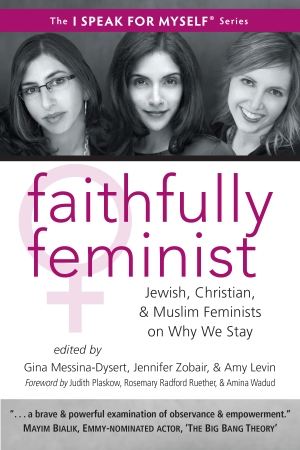
FF_front-cover_FINALThis essay is the Foreword for Faithfully Feminist: Jewish, Christian, and Muslim Feminists on Why We Stay edited by Gina Messina-Dysert, Jennifer Zobair, and Amy Levin.  

For more on Faithfully Feministclick here.

Join the conversation on Twitter using the hashtags #FaithfullyFeminist and #WhyIStay.

Related Articles:

9 Badass Feminists of Faith You Should Know

Mayim Bialik Endorses Faithfully Feminist

Why We Stay

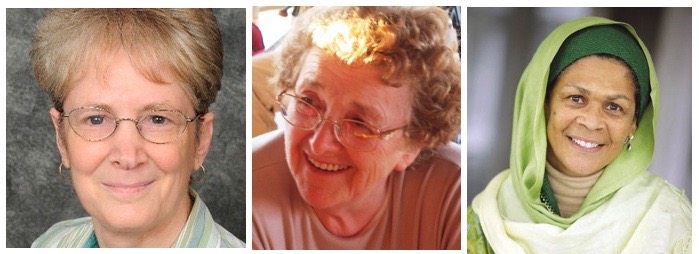
Judith Plaskow is Professor Emerita of Religious Studies at Manhattan College and a Jewish feminist theologian. Co-founder and co-editor of the Journal of Feminist Studies in Religionshe is co-editor of Womanspirit Rising and Weaving the Visions and author of Standing Again at Sinai: Judaism from a Feminist Perspective and The Coming of Lilith: Essays on Feminism, Judaism, and Sexual Ethics 1972-2003.

Rosemary Radford Ruether, Ph.D. is Professor of Feminist Theology at Claremont Graduate University and Claremont School of Theology.  She is also the Carpenter Emerita Professor of Feminist Theology at Pacific School of Religion and the GTU, as well as the Georgia Harkness Emerita Professor of Applied Theology at Garrett Evangelical Theological Seminary. Rosemary has enjoyed a long and distinguished career as a scholar, teacher, and activist in the Roman Catholic Church, and is well known as a groundbreaking figure in Christian feminist theology.  Ruether is the author of multiple articles and books including Sexism and God-TalkGaia and GodWomen Healing Earth and The Wrath of Jonah: The Crisis of Religious Nationalism in the Israeli-Palestinian Conflict. Her most recent books include Catholic Does Not Equal the Vatican: A Vision for Progressive Catholicism(2008), Many Forms of Madness: A Family’s Struggle with Mental Illness(2010), and Women and Redemption: A Theological History, 2nd ed.(2011).

amina wadud is Professor Emerita of Islamic Studies, now traveling the world over seeking answers to the questions that move many of us through our lives.  Author of Qur’an and Woman: Rereading the Sacred Text from a Woman’s Perspective and Inside the Gender Jihad, she will blog on her life journey and anything that moves her about Islam, gender, and justice, especially as these intersect with the rest of the universe.

Faithfully Feminist by Gina Messina-Dysert

Gina Messina-Dysert profile“Why do you stay?”  It is a question I am often asked when I reveal my Catholic feminist identity.  It is not lost on me that such a question is one that is often posed to women in abusive relationships.  First, let me say, I don’t ever think it is appropriate to pose such a question to women experiencing domestic violence.  This said, I also want to be clear that I in no way view my relationship with my faith as abusive.

Yes, the Vatican is patriarchal and it is true that women are relegated to the underside of dualism in the Church. There are so many ways that women are oppressed in Christianity and there are many issues that need to be reexamined – and from a non-male perspective. Nonetheless, I believe that the foundation of my faith offers a very different message; one that is liberating and honors my gifts as a person and as a woman.

Working on my latest project, the anthology Faithfully Feminist: Jewish, Christian, and Muslim Feminists on Why We Stay, has been an incredibly rewarding experience.  First, co-editing alongside Jennifer Zobair and Amy Levin has been truly a gift.  And then, to have the opportunity to engage the stories of so many amazing women has been powerful, heartbreaking, uplifting, and so much more.  It is in one another’s experiences that we see ourselves and find that we are not alone and that has certainly been my experience with this project.

https://www.youtube.com/watch?v=VMb1UkkZsR8 Continue reading “Faithfully Feminist by Gina Messina-Dysert”

Katharine Bushnell—The Most Important Christian Feminist You’ve (Probably) Never Heard Of by Kristin Kobes Du Mez

037 DuMez 2015 photo shootKatharine (Kate) Bushnell (1855-1946) was by any measure a remarkable figure in the history of Christian feminism. A global anti-trafficking activist and author of God’s Word to Women, a fascinating feminist theology that recasts the entire biblical narrative as a story of liberation for women, Bushnell was once widely known throughout the late-nineteenth-century Protestant world.

A Midwestern Methodist, Bushnell came of age in Evanston, IL. After a brief stint as a medical missionary to China, she helped launch the American “social purity” movement by leading a dramatic exposé of the trafficking of women in Wisconsin lumber camps. Drawing attention to the injustices women faced under the Victorian sexual double standard, Bushnell helped break the “conspiracy of silence” that inhibited discussion of sexuality among “respectable” women and men. She then took her activism overseas, where she exposed the abusive practices of the British army in colonial India, particularly when it came to the confinement and abuse of local women in military brothels. Continue reading “Katharine Bushnell—The Most Important Christian Feminist You’ve (Probably) Never Heard Of by Kristin Kobes Du Mez”

What’s Wrong with this Picture? by Elise M. Edwards

Elise EdwardsOn Monday, the picture was on my Facebook feed again: The picture of a girl lying face down in the grass under a police officer pressing his knee in her back. It was from the video of an African-American teenager being pinned to the ground by Eric Casebolt, the police officer in McKinney, Texas who was responding to calls about a pool party. When I saw the picture this time, it was in a screenshot with these words below it:

“Funny how a 14 year old bikini-clad black girl being publicly assaulted by an adult male does not accrue mainstream feminist outrage.” – Yohanna

The screenshot was taken of a post to Yohanna’s Twitter account (@maarnayeri). I don’t know her, but she troubled me.

If you haven’t seen the images we’re talking about, you can view the video here with a description of what is concurring or below from YouTube. I was reluctant to watch the video. It seems voyeuristic to view this young woman’s suffering and screaming. And, if I am honest with myself, it also seems useless. Viewing this from my computer screen, I’m in no position to help her. I hear her cries and it make me cry too. But I can’t push him off of her. When other teens tried to come to her defense, Casebolt pulled a gun on them and chased them. I don’t even have the power to get him fired from his position of authority immediately. No, we must have the investigations and inquiries and due process that seems so indiscriminately afforded to the privileged. Casebolt was put on administrative leave on Friday, and on Tuesday June 9, he resigned.

So how should I respond?

I had a conversation with one of my closest friends a couple days ago that provoked me to reflect on what to do when I’m conflicted about how to respond. Her background is in acting and theatre, and now she is a pastor and artistic director of a Christian church and arts initiative who believes in supporting arts, imagination and creativity. In our conversation about discerning the next steps in our lives, she was reminded of a book by Samuel Wells that proposes “theatrical improvisation as a model for Christian ethics.” That reminded me of books I’ve read that talk about musical improvisation or call-and-response as model for living, and some pieces I’ve written about that. Inspired by ethicists and theologians including Emilie M. Townes and H. Richard Niebuhr, I believe that to answer the question of how I should respond, I must first answer ‘What’s going on?” An improvised response or a fitting response is the response to what is already occurring. We must look at the situation critically to respond appropriately.

What’s going on in this video and the controversy surrounding it? I am certainly not an impartial or all-knowing observer, but here’s what I see:

  • A white man forcibly throws an unarmed, African-American teenager to the ground yelling “On your face!” We can see that she is unarmed because she is wearing a bikini.
  • The man is a police officer. He is upset that his authority is being challenged. Other officers are present and seem to be asking questions, but the violent one seems out of control and frantic, running around and yelling. He escalates the situation when he throws the girl to the sidewalk, which causes an outcry in the crowd.
  • As the video went viral, there were many protests and online statements against this violent event, but also statements of support for the officer. And sadly, I agree with Yohanna’s assessment. I may have missed it (and I hope I did), but I didn’t see a broad, mainstream feminist response against this violence.

I’m a feminist. I’m a black feminist. I’m a Christian feminist. I may not be a mainstream feminist (depending on your definition), but I’ll express my outrage anyway. It is sickening to watch his treatment of this teenage girl. This man’s mistreatment of a young black girl’s body is chilling. It is wrong and he should be held accountable for it.

I don’t think outrage is enough. But outrage does express that our moral sensibilities have been awakened and that we recognize that something profoundly wrong has occurred. In the face of comments that say she deserved this treatment, we as feminists must insist on the officer’s wrongdoing. “She had it coming.” “She incited him.” As feminists, we know that these kinds of statements are used in cases of rape and intimate partner violence to explain away violent actions and to shift the guilt from perpetrator to victim. The backlash against feminists and others who oppose these explanations argues that we ignore the victim’s responsibility or agency.

Bloggers and social media users know all too well the horrific statements that often appear in the comments section of online posts, videos, and articles. One comment I saw about the McKinney video says that the girl was “sassing back” at the police and that “if she wants to talk like adult then she’s going to be treated like an adult.” This kind of justification makes my blood boil! Sassing back is speaking up and saying something to an authority figure when you are expected to be silent.  While the term sassing back doesn’t exclusively apply to women and girls, it is nonetheless a phrase with gendered connotations. How many boys are called “sassy”? Is it that no one had the right to say anything to this officer running around yelling at black teen boys to sit on the ground, or is it that this black female should have kept quiet? Regardless, throwing an unarmed person to the sidewalk for supposedly saying something disrespectful is not justifiable behavior to adults or children.

I wish I knew more about what’s going on and how to respond to the violence I see in the world. I know these perennial questions subvert easy answers. I only have a partial response. I am responding with outrage and questioning and take this to my feminist community and into my spiritual practice. “What’s going on?” and “How should I respond?” are questions I ask God. I pray for justice. I pray for God’s presence in the outrage and in the investigations, and in the lives of those children who were violated.

Elise M. Edwards, PhD is a Lecturer in Christian Ethics at Baylor University and a graduate of Claremont Graduate University. She is also a registered architect in the State of Florida. Her interdisciplinary work examines issues of civic engagement and how beliefs and commitments are expressed publicly. As a black feminist, she primarily focuses on cultural expressions by, for, and about women and marginalized communities. Follow her on twitter, google+ or academia.edu.

Does God have Cleavage? The Avengers and Why the Sheroe We Need is Goddess by Trista Hendren

trista_bkgr_greenMost days I am not certain that anyone really cares about what happens to girls. As a mother of a soon-9-year-old daughter, this burns me.

Because I also have a 12-year-old son, I often end up watching movies I wouldn’t chose on my own. Last Friday, we went to see The Avengers sequel, and I left feeling angry. There were two sheroes shadowed by testosterone; both were highly sexualized. After all the hype over Joss Whedon and his “strong female characters” I began to wonder if the Sheroe we really need is Goddess.

Saturday night we had a lively discussion after dinner with my son’s best friend. I shared my observations on the movie and asked for feedback. They told me the only girl heroes they could think of had “huge boobs.” I asked them why they thought there was not equal amounts of sheroes in movies like this and whether they could think of any movies that were comparable in budget to the Superman, Batman, and Spiderman movies that continue to come out year after year. Continue reading “Does God have Cleavage? The Avengers and Why the Sheroe We Need is Goddess by Trista Hendren”

Ireland’s Same-Sex Referendum & The Necessity for Reconstructing Sexual Ethics in the Catholic Church by Cynthia Garrity-Bond

IMG_5296 - catAt this writing, Ireland successfully passed the same-sex marriage referendum which reads, “Marriage may be contracted in accordance with law by two persons without distinction as to their sex.”  It has been 22 years since homosexual acts were decriminalized in Ireland.  Even more astounding is the rapid two-year process from inception to constitutional law for same-sex marriage in Ireland.  This coming from a country where 84% identify as Roman Catholic but less than one-third attend weekly Mass.

While the US Catholic Bishops are vocal about their opposition to same-sex marriage, the Irish magisterium’s strategy, in this case, was less pronounced.  Which is not to say there was no movement by the Irish hierarchy to oppose same-sex marriage. In a pastoral letter to be read at Sunday Mass, Bishop Denis Brennan urged a no-vote on the same-sex referendum saying it would forever change how the institution of marriage is understood.  A number of those in attendance walked out during the reading in protest of the official church teaching.   Archbishop Diarmuid Martin took a more pragmatic stance on the outcome. With the success of the referendum, Martin stated the church is in need of a “reality check” in response to what he identifies as a “social revolution” at least in Catholic Ireland.  Argues Martin: Continue reading “Ireland’s Same-Sex Referendum & The Necessity for Reconstructing Sexual Ethics in the Catholic Church by Cynthia Garrity-Bond”

The Reason to Hope by Carol P. Christ

Carol in Crete croppedRecently, Valentina Khan touched many of us when she wrote a blog entitled The Powers of Evil are Well at Work and I’ve Lost My Spirit. Valentina spoke of the weariness and despair many of us feel when we think about the problems the world is facing today. She said that “right now it just seems like my voice of peace is lost to the voice of fanatics who get more media attention than I ever will.”

Last week I met a young man who has recently begun to try to save a large wetland pool on the island of Lesbos. He told me he feels frustrated that “no one else” is doing anything to save the important and fragile ecosystem of our island. I explained to him that there are many of us who have been working to save the wetlands of Lesbos for fifteen years, but with few or no results.

Refugees awaiting transport
Refugees awaiting transport in Molivos, Lesbos

In the past month—since the weather turned to spring—thousands of refugees have arrived on the shores of Lesbos. Most of them are fleeing war Continue reading “The Reason to Hope by Carol P. Christ”

What if Divine Feminine and Divine Masculine Are Not Oppositional Categories? by Carol P. Christ

Carol in Crete croppedA friend who is a spiritual teacher speaks often “bringing back the values associated with the Divine Feminine.” For her this has to do with helping women to understand the beauty of our bodies and the importance of ways of being such as giving and caring for others that have been associated with the undervalued so-called “feminine” side of the masculine-feminine polarity. Though she also speaks about the Goddess, I think she prefers the term “the Divine Feminine” because of the implication that men too have their “Divine Masculine.”

This friend has a wonderful husband who is a teacher in his own right and who often ends up spending a lot of his time among powerful women who enjoy talking about the Goddess. In these conversations he sometimes speaks of the need for men to “recover the Divine Masculine” if they are to become whole.

I was reminded of these conversations when a two other friends, in different contexts, recently voiced their concern that Goddess imagery is problematic if it repeats sex role stereotypes. My response to them was that in the West, the feminist association of femaleness with power and value in Goddess symbolism automatically shatters the most important sex role stereotype: the notion that women are less powerful and less valuable than men. But, I said, after that, problems may arise.

I added that (for me) the categories of Divine Feminine and Divine Masculine are problematic because (it seems to me) that at their core these concepts are rooted in the notion that males and females are fundamentally different, and that the so-called “feminine” is relational, loving, giving, while the so-called “masculine” is independent, rational, aggressive, and sometimes violent and warlike. Those who speak of the Divine Feminine and Divine Masculine as oppositional categories usually try to avoid categorizing men and women by stating that “we all have our masculine and feminine sides.” Still it is hard to avoid the implication that men are more masculine and women are more feminine.

Though I agree that men need new images of what it means to be men as much as women need new images of what it means to be women, I hesitate to speak of these as new images of the Divine Feminine and Divine Masculine for two reasons. Although I recognize that others are inspired by images of the Sacred Marriage, for me it has been more important–and more possible–to find power within myself and in a wide variety of relationships, than to find it in a male-female heterosexual couple relationship in which the opposites are “joined.”

More importantly, I find that images of Divine Feminine and Divine Masculine often do justify patriarchal sex-role stereotypes. An internet search for “Divine Masculine” validated this fear. The first (and therefore most popular) website defined the Divine Masculine through six archetypes: God, King, Priest, Warrior, Lover, Sage.

The site’s author seems to want to help men learn new ways to interact with powerful women—as neither dominant over them nor submissive to them. The author writes: “The Divine Masculine represents an archetypal ideal, the best and most inspiring, elevating, and restorative aspects of masculine expression and manifestation in the universe. For those seeking an expanded understanding of the Self, the Divine Masculine is not a distant, detached, jealous and vengeful male deity. The Divine Masculine (along with the Divine Feminine) acts as a shining mirror of the Self, revealing aspects that need compassionate attention and support to become one’s highest potential.”

Following this insight, he redefines the God archetype as “unconditionally loving, inclusive, open, welcoming, heart-centered, spiritually focused, supportive and inspirational.” For him, the King archetype is “benevolent, evenhanded, calm, caring and thoughtfully present.” And the Warrior “finds his place in collaborative projects, being fulfilled and contented with the collaboration and not by ambition or competition.”

While I appreciate the ways in which this man redefines masculinity and male strength in terms that in the past have been associated with “the feminine,” I am concerned that he continues to view the six “archetypes” that include the King and Warrior as universal. He does not explicitly name patriarchy as a system of male dominance enforced through violence as the reason for redefining the meaning of the “archetypes.” I also worry that a good king is still a king, and that a warrior who fights for the good of others is still a warrior. From a feminist perspective, these archetypes are not universal, but rather are the product of patriarchy. Perhaps instead of redefining them, we should discard them.

peak shrine figurines 3
Male and female figures from ancient Crete are not strongly differentiated.

New research suggests that in matriarchies, there is no divine masculine per se, because though men have their own important roles, both males and females are encouraged to embody the values associated with mothers and mothering—in other words to be loving, giving, caring, and generous. In this context there is no opposition or sharp contrast between the divine masculine, the divine feminine, and any other divine gender or transgender.

I believe that that we need a multiplicity of images for divine power that express the diversity and differences of our bodies and all bodies in the web of life. We also need new images of how to be strong and powerful, yet loving and caring above all, in male, female, and other bodies.

However, if the “highest” values are the same for both—and all–genders, then perhaps it is time to retire the oppositional binary of Divine Feminine and Divine Masculine and to speak instead of images of divinity in male, female, and other bodies.

Carol leads the life-transforming Goddess Pilgrimage to Crete (facebook and twitter).  Carol’s books include She Who Changes and and Rebirth of the Goddess; with Judith Plaskow, the widely-used anthologies Womanspirit Rising and Weaving the Visions and forthcoming next year, Goddess and God in the World: Conversations in Embodied Theology. Explore Carol’s writing. Photo of Carol by Maureen Murdock.

Guanyin Revisited: Queer, Pacifist, Vegan Icon by Angela Yarber

Each month, I delight in writing about a revolutionary woman. Whether she is from history or mythology, sharing the stories of my Holy Women Icons with a folk feminist twist is one of my favorite things to do as a feminist, artist, scholar, and clergywoman. Yet, no matter how much research I’ve done, or how many times I’ve taught about an icon, new discoveries are made, revelations within my own heart and mind cracked open, so that there is sometimes the need to revisit a particular holy woman afresh. Such is the case this month with Guanyin. Though I wrote about her nearly two years ago, published a book including her story, and have taught a course with one session focused on her compassion and mercy, I realized that much about her has gone unsaid. Namely, she is an icon for queers, pacifists, and vegans. Before explaining why, let’s have a quick review…

Guanyin is the Buddhist Goddess of Mercy and Compassion. In the Lotus Sutras, she originates from a bodhisattva named Avalokitesyara. Avalokitesyara is identified as male in the Lotus Sutras. Overtime, however, Avalokitesyara transitions from being identified as a male to becoming Guanyin, most often portrayed in feminine terms and referred to as “she.” Many scholars assert that Guanyin is androgynous and can take on the form of any sentient being. And this is how I’ve always written about Guanyin, as the divinely androgynous one who is most often portrayed in feminine form. Continue reading “Guanyin Revisited: Queer, Pacifist, Vegan Icon by Angela Yarber”

What “I Believe” and Found Worth Sharing by Xochitl Alvizo

Incarnation, Goddess spirituality, Xochitl Alvizo, god became fleshThe end of my Ph.D. program is in sight. Originally, in 2004, I came to Boston University School of Theology (BU STH) from Los Angeles for a two-year masters program. Along the way I switched to a three-year masters program, after which I ended up staying for the Ph.D. Now, eleven years later, the end is actually in sight.

Last week I successfully defended my dissertation, “A Feminist Analysis of the Emerging Church: Toward Radical Participation in the Organic, Relational, and Inclusive Body of Christ.” Two days ago I had the last class section that I will ever teach as TA (teaching assistant) – next time I teach I will be doing so as a professor of religious studies at Cal State Northridge.  Finally, because I am one of the students who will be graduating this year, I was invited to participate in the last chapel service of the year and be a speaker for the “This I Believe” service – themed after the NPR series by the same name. Yesterday, I was one of six students who were given three minutes each to share what we believe – which, let me tell you, is not a small task!  Continue reading “What “I Believe” and Found Worth Sharing by Xochitl Alvizo”