Painting Lilith, Leaving Church by Angela Yarber

 Lilith has been a misunderstood, appropriated, and redeemed woman throughout the ages.  Many feminists claim her as an empowering figure in Jewish mythology, her story reclaimed by contemporary artists such as Sarah McLachlan, who created the all-women music tour, “Lilith Fair.”  Others have claimed that Lilith was a demon who seduced men and strangled children in the night.

Based almost entirely on Judith Plaskow’s beautiful Midrash, “The Coming of Lilith,” this new Holy Woman Icon with a folk feminist twist has empowered me to reject the sexism and heterosexism that was rendering me broken.  So, she joins Virginia Woolf , the Shulamite, Mary Daly, Baby Suggs, Pachamama and Gaia, Frida Kahlo, Salome, Guadalupe and Mary, Fatima, Sojourner Truth, Saraswati, Jarena Lee, Isadora Duncan, and Miriam as powerful women who have done holy and remarkable things.  First, her story.  Then—if I may—my own.

Continue reading “Painting Lilith, Leaving Church by Angela Yarber”

Ancient Spirit Wisdom by Jassy Watson

For the Love of Gaia Jassy WatsonOn a recent journey within, guided by drumming and visualisation I encountered my Muse. Her Native American Indian appearance surprised, even bewildered me, as I know so little about North America’s indigenous cultures.

As I painted her into being I listened closely to what she told me, stating clearly “I am Ancient Spirit Wisdom,” the wisdom of our ancestors passed on through story, image, sculpture, word, song, dance, ritual, prayer and ceremony. The closer I listened, the more my Mysterious Muse reminded me that I had a story within, one of my very own, yet one shared by women everywhere. I too am a container of Ancient Spirit Wisdom, more precisely, Ancient Women’s Wisdom.

Ancient Women’s Wisdom, Jassy Watson,  ‘Ancient Spirit Wisdom’
Closeup, ‘Ancient Spirit Wisdom’ Jassy Watson 2013

Continue reading “Ancient Spirit Wisdom by Jassy Watson”

Painting Miriam by Angela Yarber

 We are your subtlest instruments:
no music branches to your breast
that does not sound in us,
no music dies away from you,
that in us lives not,
and even in your absence
your cadence journeys…

Allen Mandelbaum, Chelmaxioms

The path to freedom is often muddy.  Water sloshes through your sandals and the soles of your shoes stick, clinging to the past, weighing down the future.  No one said dancing in wet sand was easy.  But it is very holy.  Just ask the brave prophetess who celebrated liberation by dancing on the shores of a reedy sea.

Often relegated to the submissive role of sister, the character of Miriam is typically overshadowed by the triumphs of her younger brother. Like many of her canonical contemporaries, Miriam receives little attention in scripture. Her name is only mentioned twice and the story of her song is left unsung by the writers of Exodus.  Yet she is there, her song hidden in the crevices of the canon, her dance demanding that we notice the ritual event of liberation, her courageous voice prophesying, leaving a legacy for all the dancing women who will follow in her intrepid food steps. Continue reading “Painting Miriam by Angela Yarber”

It Was a Rainbow Graduation by Grace Yia-Hei Kao

Distributing rainbow tasselsI have the privilege of serving as Co-director of the Center for Sexuality, Gender, and Religion at Claremont School of Theology. I am ecstatic that we just hosted our version of a “rainbow graduation” at this year’s Commencement.

Continue reading “It Was a Rainbow Graduation by Grace Yia-Hei Kao”

Painting Isadora Duncan By Angela Yarber

A dancing woman stands center stage, her arms outstretched in natural, free, and unbound movement, as her heart cries out to us…

In May of 1877 a dancing, feminist, revolutionary was born.  She was not constrained by the corsets, morals, or traditions of her time.  Barefoot, clad in flowing garments, with a diaphanous scarf in hand, she stepped onto the stage and rocked the world: the world of dance, the world of women, and the world of religion.

Born in San Francisco as Dora Angela Duncan and known to us as Isadora Duncan, or Holy Isadora.  This wild woman rejected the rigidity of ballet, conventional roles for women, and traditional religion.  After feeling constrained by the pointe shoes, corsets, and unyielding technique of American ballet, Duncan left for Europe, intent on revolutionizing the world through dance.  She claimed, “I have come to bring about a great renaissance of religion through the dance, to bring the knowledge of the beauty and holiness of the human body … (Duncan quoted by Terry Walter in Isadora Duncan).” Continue reading “Painting Isadora Duncan By Angela Yarber”

Painting Jarena Lee By Angela Yarber

When we gender the pulpit in the direction of justice, we ordain her spirit with gratitude for the many miles she walked and the countless sermons she preached.

This month I celebrate the release of my second book, The Gendered Pulpit: Sex, Body, and Desire in Preaching and Worship.  As I celebrate the privilege I have as queer feminist to stand behind the pulpit each Sunday—to gender the space in the direction of justice—I must also recall the myriad holy women who have gone before me.  I think of many of my Holy Women Icons with a folk feminist twist: Virginia Woolf , the Shulamite, Mary Daly, Baby Suggs, Pachamama and Gaia, Frida Kahlo, Salome, Guadalupe and Mary, Fatima, Sojourner Truth, Saraswati, and so many others.  And this month I think specifically of my sister preachers, those who raised their voices in bold proclamations when the road was long and unimaginably difficult.  I think of preachers like Jarena Lee.

Jarena leeLee spent thirty years as an itinerant preacher and was the first black woman to be licensed to preach through the African Methodist Episcopal (AME) church.  Despite the fact that the AME issued a definitive ruling that women were not permitted to preach in 1852, Lee spent the bulk of her adult life preaching.  Jarena Lee’s struggle to preach is a familiar story in nineteenth-century American Protestantism, even though the Second Awakening ushered in a period of intense religious revival; with camp meetings around every corner, there was an unprecedented opportunity for women to preach.  Like Jarena Lee, though, they weren’t paid, ordained, or protected. Continue reading “Painting Jarena Lee By Angela Yarber”

Painting Saraswati By Angela Yarber

Saraswati reminds me that the divisions between fields are our construction; that academics can be creative, art can be holy, and preaching can engage the mind. 

I was precariously perched atop a file cabinet tacking a giant cloth to the wall when another staff member entered my office.  “What’s that?” she asked, puzzled, and pointing to the massive cloth now covering my wall.  “Saraswati,” I responded, hopping off the file cabinet, “the Hindu goddess of arts, creativity, and learning.”  She raised her eyebrows.  “Our previous Baptist preacher didn’t have any Hindu goddesses hanging on the wall,” she said with a wry smile.  “I guess I’m not your average Baptist preacher,” I chuckled.

For years I have been searching for Saraswati, claiming her as my patron saint, the one who guides my path as I navigate three seemingly disparate callings: artist, scholar, and preacher.  In Saraswati, these three callings merge.  Naturally, I hang a giant image of her on my office wall and wear a pendant bearing her likeness around my neck.  She reminds me that the divisions between fields are our construction; that academics can be creative, art can be holy, and preaching can engage the mind.  These three seemingly disparate callings do not have to be mutually exclusive.  Saraswati certainly wouldn’t see them this way. Continue reading “Painting Saraswati By Angela Yarber”

Painting Sojourner Truth By Angela Yarber

This month, I am reminded of the importance of Jacquelyn Grant’s work on womanist Christology.  In White Women’s Christ and Black Women’s Jesus, Grant reviews the white feminist discussion of the so-called problem of Jesus’ maleness, while beginning to construct a womanist response to this incarnational conundrum.  She states, “It is my claim that there is a direct relationship between our perception of Jesus and our perception of ourselves.”[1]

Beginning with Mary Daly, feminists have responded to Jesus’ maleness in a variety of ways.  Daly argues that because the person of Jesus is male, the male is recognized and celebrated as the superior being.  Because of this, the male Jesus is to be rejected or exorcised because Jesus’ gender identity contributes to patriarchy and does not hold salvific power for women.  Rather than rejecting Jesus altogether, Rosemary Radford Ruether asks the seminal question, “Can a male Jesus save woman?” Continue reading “Painting Sojourner Truth By Angela Yarber”

The Joy of Honoring Rosemary Radford Ruether by Dirk von der Horst

DirkA cutting-edge voice in many theological conversations, Rosemary Radford Ruether has been an inspiration to many of us over the last few decades.  The tremendous joy of my last couple of years was co-editing a volume of essays in her honor.  Even discovering just how dreary indexing is was a labor of love for a true pioneer in feminist theology.  The result: Voices of Feminist Liberation: Writings in Celebration of Rosemary Radford Ruether, a collection of fourteen essays by Ruether’s doctoral students, put together by Emily Leah Silverman and Whitney Bauman, along with myself.

Voices of Feminist Liberation documents the current state of her impact and legacy.  The richness of her thought is manifest here in the variety of directions her students have taken her insights.  While most of the essays are scholarly works that engage her ideas above all else, some essays have more personal recollections.  Rosemary’s preface recounts her personal experiences of and with us, with descriptions of incidents from her relationships ranging from hearing a live-in student coming down the hall to slip a paper under the door, to seeing a student’s dissertation prospectus enrage a committee member, to switching from same-sex hand-holding in Palestine to male-female hand-holding in Israel as a small gesture of recognizing cultural difference. Continue reading “The Joy of Honoring Rosemary Radford Ruether by Dirk von der Horst”

Monthly Highlight: Emilie M. Townes


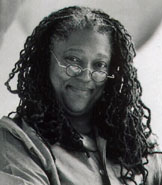
Emilie M. Townes

“In my teaching I want to get students excited about that notion of, you know, you’re not just here to get a Yale degree and have it on your diploma and be able to hang it on your wall…You should be here thinking about what kind of contributions can I make to society….What are you doing that helps enhance the lives of all of us, as opposed to (our) own little idiosyncratic research interests.”  – – Emilie M. Townes

Emilie Townes is a pivotal person in the field of Womanist and Christian ethics as well as a foremother and pioneer in Womanist theology. Cornel West of Princeton University said:

“Emilie Townes is the towering womanist ethicist of our time….In this ice age of indifference and evasion, her powerful voice and viewpoint summon us. And we thank her for her vision and courage.”

At an opening address at the Convocation in 2005, Townes stated that there is a need to live in a “deep walking hope” that shapes lives “in ways that are not always predictable, not always safe, rarely conventional” and protests “with prophetic fury the sins of a world, and sometimes theological world views, that encourage us to separate our bodies from our spirits, our minds from our hearts, our beliefs from our actions.” Continue reading “Monthly Highlight: Emilie M. Townes”