Gender Identity, Religious Identity and Performance.

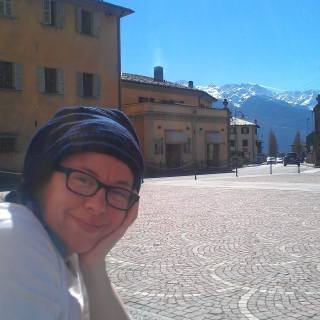
10953174_10152933322533089_8073456879508513260_oWhen I cover my head in respect for the Holy One, it feels right. This act touches on a religious truth of who I am. To me, it not only matches who I am, it also expresses something about who I strive to be and the relationship I want to have with G-d.

Seeing Caitlyn Jenner on the cover of Vanity Fair, I think she’d say something similar about herself. Her outward appearance touches to the very core of who she is and who she has had the strength and courage to become.   Not only that, it feels right.

Sure, there is a wide gulf between the public nature of Jenner’s cover photo and my public head covering, yet, in these two examples, I see a number of connections. First, there is the real possibility of harm and danger. Second, there is a link between outside actions that express something true about the person on the inside. Third, value is placed on the agency and autonomy of the individual carrying out those actions. Finally, there is a performativity connection between religiosity and gender. It is the last point that I find particularly compelling.

I don’t cover my head anymore on a daily basis although I used to before I moved to Europe. Even though it doesn’t feel right, with the rise of anti-Semitism, it seems like the safe and unfortunately prudent thing to do. I also don’t wear any signifying my religion except for a small star of David earring. In 2014, by the Jewish community’s own account, anti-Semitism grew 200% in the Czech Republic alone.  Statistics seems to support my actions.

Jenner too, like so many members of the trans community, now has the real threat of violence against her person. While her public persona may make her somewhat safer, too many trans men and women have been harmed and even murdered just for being themselves. In fact, many trans people live closeted lives because of this danger and the fear of rejection from family, friends and the larger society.

While not minimizing the fear and danger, I want to return to the more theoretical link between gender expression, gender identity and religious identity. In 1990, Judith Butler wrote Gender Trouble: Feminism and the Subversion of Identity. For Butler, what we think of sex and its connections to gender as masculinity and femininity often come down to a person performing gender in a way that is socially recognizable. People wear clothing, do actions, speak words and use body language that marks them as woman or man and therefore individual agents adhere to societal constructions of gender at the same time they reinforce societal expectations for men and women. Butler’s suggestion is that gender performances, that subvert “normal” discourses on gender expression, show the ways in which gender is culturally constructed. They also disrupt what has been seen as somehow inherently natural. In other words, biologically-sexed females acting, dressing, speaking and behaving in ways typically associated with masculinity disrupts what it means to be both a woman and to be masculine. This would be impossible if things were as natural as society thinks they are.

One of Butler’s goal, in my opinion, is not only to expose the culturally constructed nature of sex/gender, but also to open up individual agency to perform gender in ways that would disrupt the power these “natural notions” have over peoples’ lives. Subversive gender performances, for Butler, creates more freedom in society and would hopefully undermine blanket misogyny and disrupt patriarchal power.

Yes, Butler has often been criticized in many ways, including the attempt to erase any notion of substance behind personhood and its gendered expression especially as it relates to transgendered individuals. Butler has spoken to this specific criticism saying on transadvocate.com that, “…others have a strong sense of self bound up with their genders, so to get rid of gender would be to shatter their self-hood. I think we have to accept a wide variety of positions on gender. Some want to be gender-free, but others want to be free really to be a gender that is crucial to who they are.”20150128_132833

In the end, what is essential for Butler is individual autonomy and freedom to be. Performing sex/gender is one possible way to get there. Let me suggest another that builds off Butler’s ideas of performativity. Religiosity is a type of culturally-laden performance. After all, what are kippot, hijabi, nuns’ habits, ministers’ robes, etc.? They are religious markers tied up in gender identity.

Just as masculine women subvert and disrupt social constructions, couldn’t a Jewish lesbian perform gender in a way that she passes for an orthodox man (or woman)? Doesn’t this disrupt what it means to be both lesbian and orthodox? I think so. This passing person also destabilizes the power of orthodox men to define womanhood and women’s sexuality. She defines for herself who she is. She may very well consider herself to be orthodox and masculine, just as masculine women consider their masculinity as part of who they are.  She may connect deeply with Jewish orthodox feminine styles of dress.  Nonetheless, her outward performance expresses something about her commitment to G-d and who she is as a Jew at the same time it subverts received religious notions of gender and sexuality.  Another example is a woman minister who wears priestly attire including the black shirt and white collar.   She too disrupts power relations, gender assumptions and, for some people, the very notion of women and ordination.  Religious performance is powerful stuff.

To go back to the point I made at the beginning. I think expressions of religiosity are similar to expressions of gender. In addition, claiming for one’s self a religious identity subverts patriarchal notions of gender. Yet, most importantly, performing a religious identity often expresses an inner truth. In both of these ways, religious identity performances could create freedom, disrupt power-over and destabilize patriarchy just as Butler hopes gender performativity does.  I would modify Butler’s approach somewhat to say, “I think we have to accept a wide variety of positions on gender [and/or religious identity]. Some want to be gender-free [and/or religion-free], but others want to be free really to be a gender [and/or religious indentity] that is crucial to who they are.”

Holy Women Icons on Tour: A Motley Crew of Unlikely Saints Hits the Road by Angela Yarber

angelaSeveral months ago I introduced one of my newest Holy Women Icons with a folk feminist twist, the intrepid traveler and passionate nomad, Freya Stark. In writing about her fearless journeys to far-flung places women only dreamed of visiting in the early 1900s, I also shared that my wife, toddler, and I have decided to follow her fierce lead into the seemingly unknown. In less than one month, our journey will begin as we spend an entire year volunteer traveling throughout the United States. We have sold our home. We finish teaching summer courses at the end of the month. And in Freya’s courageous words, we have decided that “it is the beckoning that counts, not the clicking latch behind you.” The beckoning is calling us to live more gently with the earth, do more justice, and to create a more peace-filled world. And we have the privilege of radically altering our lives to follow this beckoning.

This time next month, we’ll be settled into our little pop-up camper in the Green Mountain National Forest of Vermont where we’re volunteering for three months. In the fall, we’ll do the same in the southernmost part of the Shenandoah Valley. December will find our trusty camper—aptly named “Freya Stark”—chugging east to west across the southern parts of the United States, parking in the San Francisco Bay Area so that we can fly to Hawaii to volunteer on an organic farm and lead yoga retreats for the first three months of 2016. Continue reading “Holy Women Icons on Tour: A Motley Crew of Unlikely Saints Hits the Road by Angela Yarber”

What’s Wrong with this Picture? by Elise M. Edwards

Elise EdwardsOn Monday, the picture was on my Facebook feed again: The picture of a girl lying face down in the grass under a police officer pressing his knee in her back. It was from the video of an African-American teenager being pinned to the ground by Eric Casebolt, the police officer in McKinney, Texas who was responding to calls about a pool party. When I saw the picture this time, it was in a screenshot with these words below it:

“Funny how a 14 year old bikini-clad black girl being publicly assaulted by an adult male does not accrue mainstream feminist outrage.” – Yohanna

The screenshot was taken of a post to Yohanna’s Twitter account (@maarnayeri). I don’t know her, but she troubled me.

If you haven’t seen the images we’re talking about, you can view the video here with a description of what is concurring or below from YouTube. I was reluctant to watch the video. It seems voyeuristic to view this young woman’s suffering and screaming. And, if I am honest with myself, it also seems useless. Viewing this from my computer screen, I’m in no position to help her. I hear her cries and it make me cry too. But I can’t push him off of her. When other teens tried to come to her defense, Casebolt pulled a gun on them and chased them. I don’t even have the power to get him fired from his position of authority immediately. No, we must have the investigations and inquiries and due process that seems so indiscriminately afforded to the privileged. Casebolt was put on administrative leave on Friday, and on Tuesday June 9, he resigned.

So how should I respond?

I had a conversation with one of my closest friends a couple days ago that provoked me to reflect on what to do when I’m conflicted about how to respond. Her background is in acting and theatre, and now she is a pastor and artistic director of a Christian church and arts initiative who believes in supporting arts, imagination and creativity. In our conversation about discerning the next steps in our lives, she was reminded of a book by Samuel Wells that proposes “theatrical improvisation as a model for Christian ethics.” That reminded me of books I’ve read that talk about musical improvisation or call-and-response as model for living, and some pieces I’ve written about that. Inspired by ethicists and theologians including Emilie M. Townes and H. Richard Niebuhr, I believe that to answer the question of how I should respond, I must first answer ‘What’s going on?” An improvised response or a fitting response is the response to what is already occurring. We must look at the situation critically to respond appropriately.

What’s going on in this video and the controversy surrounding it? I am certainly not an impartial or all-knowing observer, but here’s what I see:

  • A white man forcibly throws an unarmed, African-American teenager to the ground yelling “On your face!” We can see that she is unarmed because she is wearing a bikini.
  • The man is a police officer. He is upset that his authority is being challenged. Other officers are present and seem to be asking questions, but the violent one seems out of control and frantic, running around and yelling. He escalates the situation when he throws the girl to the sidewalk, which causes an outcry in the crowd.
  • As the video went viral, there were many protests and online statements against this violent event, but also statements of support for the officer. And sadly, I agree with Yohanna’s assessment. I may have missed it (and I hope I did), but I didn’t see a broad, mainstream feminist response against this violence.

I’m a feminist. I’m a black feminist. I’m a Christian feminist. I may not be a mainstream feminist (depending on your definition), but I’ll express my outrage anyway. It is sickening to watch his treatment of this teenage girl. This man’s mistreatment of a young black girl’s body is chilling. It is wrong and he should be held accountable for it.

I don’t think outrage is enough. But outrage does express that our moral sensibilities have been awakened and that we recognize that something profoundly wrong has occurred. In the face of comments that say she deserved this treatment, we as feminists must insist on the officer’s wrongdoing. “She had it coming.” “She incited him.” As feminists, we know that these kinds of statements are used in cases of rape and intimate partner violence to explain away violent actions and to shift the guilt from perpetrator to victim. The backlash against feminists and others who oppose these explanations argues that we ignore the victim’s responsibility or agency.

Bloggers and social media users know all too well the horrific statements that often appear in the comments section of online posts, videos, and articles. One comment I saw about the McKinney video says that the girl was “sassing back” at the police and that “if she wants to talk like adult then she’s going to be treated like an adult.” This kind of justification makes my blood boil! Sassing back is speaking up and saying something to an authority figure when you are expected to be silent.  While the term sassing back doesn’t exclusively apply to women and girls, it is nonetheless a phrase with gendered connotations. How many boys are called “sassy”? Is it that no one had the right to say anything to this officer running around yelling at black teen boys to sit on the ground, or is it that this black female should have kept quiet? Regardless, throwing an unarmed person to the sidewalk for supposedly saying something disrespectful is not justifiable behavior to adults or children.

I wish I knew more about what’s going on and how to respond to the violence I see in the world. I know these perennial questions subvert easy answers. I only have a partial response. I am responding with outrage and questioning and take this to my feminist community and into my spiritual practice. “What’s going on?” and “How should I respond?” are questions I ask God. I pray for justice. I pray for God’s presence in the outrage and in the investigations, and in the lives of those children who were violated.

Elise M. Edwards, PhD is a Lecturer in Christian Ethics at Baylor University and a graduate of Claremont Graduate University. She is also a registered architect in the State of Florida. Her interdisciplinary work examines issues of civic engagement and how beliefs and commitments are expressed publicly. As a black feminist, she primarily focuses on cultural expressions by, for, and about women and marginalized communities. Follow her on twitter, google+ or academia.edu.

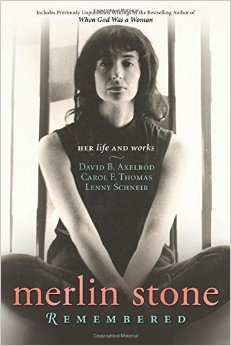
Book review: Merlin Stone Remembered: Her Life and Works by Barbara Ardinger

Barbara ArdingerWhen Merlin Stone’s book, When God Was a Woman, was published in 1976, it was a lightning bolt of feminist scholarship that told the world that before there was a Judeo-Christian god there were goddesses, and before there were goddesses, there was the Goddess. If you’re reading this review and you have not read When God Was a Woman, buy the book. Right now. As you sink into Stone’s book, try to imagine what it was like before we knew about Isis or Inanna or Astarte, before we knew that the tree in the Garden of Eden was probably a sacred fig and that the serpent was a symbol or aspect of the Goddess and that people (mostly women) who ate figs or worked with serpents were honored priestesses and prophets. Just imagine! The work of the second wave feminists added to the work of scholars like Merlin Stone and Marija Gimbutas, but it didn’t begin until the second half of the 20th century. Before that? All there was, was God the Father, maker of heaven and earth. Yes, Merlin Stone hurled lightning bolts into our hearts and minds and bookshelves.

Merline StoneMerlin Stone Remembered is a new book edited by Dr. Carol F. Thomas, Dr. David B. Axelrod, and Stone’s life partner Leonard Schneir, with an introduction by Gloria Orenstein, professor emerita, USC. Orenstein opens the book by putting Stone’s work in context. Before the 60s and 70s, she writes, no one was ever taught anything about the matristic cultures. Yes, a few books had been written. She cites G. Rachel Levy’s The Gate of Horn (published in England in 1948, republished in the U.S. in 1963), Helen Diner’s Mothers and Amazons (1973), and Elizabeth Gould Davis’ The First Sex (1971). These books gave us some of our foundational myths, but, Orenstein writes, “we can see that although there was some writing that had already attempted to reconstruct a history of women …, much more expertise and authority were needed” (p. 8). “Once Merlin Stone provided us with her careful scholarship and a truly feminist (not biased, patriarchal) accounting of ancient Goddess cultures, I and all who found Merlin’s work were finally able to understand our herstory…” (p. 9).

Continue reading “Book review: Merlin Stone Remembered: Her Life and Works by Barbara Ardinger”

Daphne’s Salvation? by Natalie Weaver

Natalie Weaver edited

The Cleveland Symphony Orchestra last week put on a two-night production of Richard Strauss’s Daphne: A Bucolic Tragedy in One Act.  It was an outstanding collaboration between conductor, singers, instruments, and the stage and costume production and design team.  Included in the show was a lone Dancer who represented the emotional content of the music (as opposed to representing a single voice or persona in opera).  She nimbly wove about the stage painting a sort of visual poem of tones and feelings rather than articulated concepts.

I went to the show, expecting something really beautiful as I always find Strauss somehow soft on the ears.  And, it was a masterpiece to be sure.  Franz Wesler-Most, the symphony’s Music Director and the opera’s conductor, commented on the production in the program notes, observing that this opera is rarely performed because it is so difficult to sing, especially the role of Apollo.  This team made it look effortless, and it was as a result a tremendously satisfying, rich, and edifying night out. Continue reading “Daphne’s Salvation? by Natalie Weaver”

The Religiosity of Silence by John Erickson

In a repetitive culture of abuse and silence, is it really shocking to find out that an individual who preached such hate and discontent for others actually perpetuated other forms of heinous abuse against others?

John Erickson, sports, coming out.In 2013, I wrote an article about the then latest reality TV scandal featuring A&E’s Duck Dynasty’s Phil Robertson and his rampant foot-in-mouth disease that caused him to express, in the pages of GQ, his true distaste for the LGBT community and specifically for the sexual proclivities of gay men.

Now, two years later in another reality TV show, TLC’s ’19 Kids and Counting’, it isn’t star Josh Duggar’s anti-LGBT statements getting him into trouble but rather his sexual assault and molestation of 5 girls, including two of his sisters. However, while the Internet explodes with attacks against Josh Duggar and his Quiverfull background, it is vital to remember that the silence that he and his family inflicted upon his victims since 2006 has not only been ongoing since then but is also being reemphasized today with each keystroke focusing on the assailant rather than the victims. Continue reading “The Religiosity of Silence by John Erickson”

Does God have Cleavage? The Avengers and Why the Sheroe We Need is Goddess by Trista Hendren

trista_bkgr_greenMost days I am not certain that anyone really cares about what happens to girls. As a mother of a soon-9-year-old daughter, this burns me.

Because I also have a 12-year-old son, I often end up watching movies I wouldn’t chose on my own. Last Friday, we went to see The Avengers sequel, and I left feeling angry. There were two sheroes shadowed by testosterone; both were highly sexualized. After all the hype over Joss Whedon and his “strong female characters” I began to wonder if the Sheroe we really need is Goddess.

Saturday night we had a lively discussion after dinner with my son’s best friend. I shared my observations on the movie and asked for feedback. They told me the only girl heroes they could think of had “huge boobs.” I asked them why they thought there was not equal amounts of sheroes in movies like this and whether they could think of any movies that were comparable in budget to the Superman, Batman, and Spiderman movies that continue to come out year after year. Continue reading “Does God have Cleavage? The Avengers and Why the Sheroe We Need is Goddess by Trista Hendren”

Reconstructions of the Past 3: Hafsa bint Sirin (“Hafsa’s Hadith”) by Laury Silvers

silvers-bio-pic-frblog - Version 2If you’ve read Part 2, then you know we’ve been talking about how the literature demonstrates that there were attempts in the early period to bar women from mosque attendance and even attendance at the prayers for the two `eids. Our hero, Hafsa bint Sirin, seems to have been part of winning women the right in Basra to attend the `eid prayers. She does so by making a legal argument through the transmission of a hadith.

Hadith are typically transmitted with a narrative frame that describes the circumstances that prompted Muhammad’s reported words or actions; sometimes that narrative frame also includes the circumstances for the transmission of the report itself.  Hafsa’s hadith is the second kind. Since Hafsa’s hadith can be reliably traced back to her place and time, and since we can triangulate its circumstances with other evidence, I am going to accept that her narrative frame is a reasonable account of her telling of it.

I am going to unpack the frame to give some sense of how she argued for women’s right to attend the `eid prayers. And here is where my imagination comes most into play and I will begin to significantly part ways with careful historical writing. To be sure, my imagination is historically grounded. But I’m going just going to tell it like I think it was. And in later blogs, in the reconstruction of her life story, I’m going to tell it as I would have it be.

I will quote the hadith in full at the beginning, then unpack it in parts showing how the narrative frame tells us something about 1. how these reports were used in legal conversations, 2. Hafsa’s role as a discussant in this particular legal question, and 3. the intellectual and ritual lives of women at the time. 

Hafsa said: We used to prohibit our girls from going out [for the `Eid prayer]. But then, I went to visit a woman who had come to stay at the palace of the Bani Khalaf [the governor’s palace]. The woman was telling people about how her brother-in-law fought alongside the Prophet and that her sister [Umm `Atiyya] had nursed the wounded. She reported that her brother-in-law fought alongside the Prophet in twelve battles, and that her sister had been there for six of them. Her sister said, “We used to care for the sick and treat the wounded.”

Once [the sister] asked him directly, “Oh Messenger of God, is there any harm in a woman not going out [to the `Eid prayer] if she has no outer wrap (jilbab)?”

“He replied, ‘Her neighbor should loan her one of her own wraps to wear, so that she may also be present to take part in the good works and the gatherings of the believers.'”

Hafsa added: So when Umm `Atiyya [herself] came, I asked her about what I had heard.

Umm `Atiyya replied, “On my father’s life may he be sacrificed for the Prophet’s sake, peace upon him, yes.” [Hafsa added:] She never mentioned the Prophet without saying, ‘On my father’s life may he sacrificed for the Prophet’s sake, peace upon him’.”

‘The Prophet said, ‘Adolescent girls who are only seen by related men and servantscurtained off [from non-mahram men]–or adolescent girls and those who are curtained off [from non-mahram men], Ayub [the transmitter of Hafsa’s report] was not certain–and menstruating women should go out on the ʿeid. The menstruating women should keep away from the prayer area. But all of them should be present to take part in the good works and the gatherings of the believers.'”

Hafsa said: So I said to Umm `Atiyya, Even those who are menstruating?

Umm `Atiyya replied, “Yes. Are they not also present at `Arafat [during the pilgrimage], and for this [ritual] and for that?'”

Hafsa visited well-known female and male scholars and was a well-respected scholar of hadith and Qur’an who taught male and female students out of her home. Perhaps while sitting in one of these scholarly circles, a discussion arguing for excluding women from attending the mosque was raised and an argument was made for it. Hafsa disagrees. She has heard a Hadith that can be used to argue for the exact opposite. In fact, this report demonstrates that women not only attended the mosque for `eid prayers during the Prophet’s day, but that Muhammad insisted that women attend even if they are menstruating or sexually vulnerable. But Hafsa does not just relay the hadith to her companions and hope for the best, rather using the hadith as a proof-text, she argued brilliantly for women’s right to attend the prayer.

She starts out by rhetorically taking the side of those arguing against women attending ʿEid prayers. It is a disarming ploy. She begins by saying, “We used to prohibit our girls from going out [for the `eid prayer].”  “But then!” she adds. The “but then” indicating that something changed her mind. It is as if she is saying, “Really, fellows, I’m on your side!” It is a rhetorical claim that sets the whole story up as her objective discovery of the facts of the matter.

After that move, she establishes her own authority and that of the secondary transmitter of the hadith by pointing out (1) their connections to political elites. (2) Then she points out the unassailable moral authority of the primary transmitter as a woman who went into battle with the Prophet, (3) which also demonstrates the transmitter had the opportunity to hear these words directly from the Prophet thus guaranteeing the accuracy of the tradition itself. In other words, these are women whose opinion should be taken seriously.

Hafsa said: We used to prohibit our girls from going out [for the `Eid prayer]. But then, (1) I went to visit a woman who had come to stay at the palace of the Bani Khalaf [the governor’s palace]. (2) The woman was telling people about how her brother-in-law fought alongside the Prophet and that her sister [Umm `Atiyya] had nursed the wounded. She reported that her brother-in-law fought alongside the Prophet in twelve battles, and that her sister had been there for six of them. Her sister said, “We used to care for the sick and treat the wounded.”

(3) Once [the sister] asked him directly, “Oh Messenger of God, is there any harm in a woman not going out [to the `Eid prayer] if she has no outer wrap (jilbab)?”

Here is where she begins laying out her argument. The Prophet’s response to Umm `Atiyya’s question establishes three points: (1) Umm `Atiyya’s question and Muhammad’s answer begin with the assumption that women had already been attending the ʿeid prayer. After all, the question would make no sense if women were not already attending. So it sets a precedent. (2) Attending `eid benefits women’s moral character. And (3) While acknowledging the need for modesty, it asserts that women are not simply permitted to attend, but Muhammad urged them to attend.

Once she asked him directly, “Oh God’s Messenger, is there any harm in a woman not going out [to the `eid prayer] if she has no outer wrap (jilbab)?”

“He replied, ‘Her neighbor should loan her one of her own wraps to wear, so that she may also be present to take part in the good works and the gatherings of the believers.'”

Now, while any reliable hadith narrator would seek out confirmation of the report, the rhetorical tenor of the opening to her argument–taking the side of the opposing opinion–suggests that she continued to use this device. In this next part, she sounds like she nevertheless remained wary about this permission. She is letting her listeners know that she cannot be swayed from prohibiting women’s mosque attendance so easily!

Hafsa added: So when Umm `Atiyya [herself] came, I asked her about what I had heard.

When she asks Umm ʿAtiyya, Umm `Atiyya confirms the report, swearing on her father’s life, and relays what she heard directly from the Prophet to Hafsa. This direct report from Umm `Atiyya shortens and strengthens the line of transmission making the report even more reliable. The version of the report she hears directly from Umm `Atiyya builds on the argument that the Prophet insisted all women go to the mosque as he insists that even sexually vulnerable women and women who are menstruating should go.

Umm `Atiyya replied, “On my father’s life may he be sacrificed for the Prophet’s sake, peace upon him, yes.” [Hafsa added:] She never mentioned the Prophet without saying, ‘On my father’s life may he sacrificed for the Prophet’s sake, peace upon him’.”

‘The Prophet said, ‘Adolescent girls who are only seen by related men and servantscurtained off [from non-mahram men]–or adolescent girls and those who are curtained off [from non-mahram men], Ayub [the transmitter of Hafsa’s report] was not certain–and menstruating women should go out on the ʿeid. The menstruating women should keep away from the prayer area. But all of them should be present to take part in the good works and the gatherings of the believers.'”

But Hafsa continues to play the part of the skeptic in her transmission!

Hafsa said: So I said to Umm `Atiyya, “Even those who are menstruating?”

In other words, how can it be that menstruating women who cannot even perform the prayer itself should go?!

In the closing words of her case, Hafsa shares Umm ʿAtiyya’s answer to this question sealing her argument with a legal analogy. Umm `Atiyya states with clarity that the attendance of menstruating women is certainly permissible because it is legally analogous to their attendance at other rituals.

Umm `Atiyya replied, “Yes. Are they not also present at `Arafat [during the pilgrimage], and for this [ritual] and for that?'”

The narrative frame of Hafsa’s hadith gives us some insight into scholarly women’s experience in legal discussions of the day. Asma Sayeed writes in some detail about a number of female hadith transmitters whose transmissions demonstrate their active engagement in legal discussions. All evidence points to Hafsa’s close involvement in the scholarly circles in Basra and that her opinion was taken seriously. I believe that Hafsa helped women retain the right to attend the `eid prayers in Basra at least. But the report also indicates the kinds of struggles women were facing in their public ritual lives, and so it gives a sense of the gravity of the efforts to disenfranchise women from the public ritual life of the community at that time.

(To be continued…)

 Laury Silvers is a North American Muslim novelist, retired academic and activist. She is a visiting research fellow at the University of Toronto for the Department for the Study of Religion. Her historical mystery, The Lover: A Sufi Mystery, is available on Amazon (and Ingram for bookstores). Her non-fiction work centres on Sufism in Early Islam, as well as women’s religious authority and theological concerns in North American Islam. See her website for more on her fiction and non-fiction work. 

Reconstructions of the Past 2: Hafsa bint Sirin (“Women’s Mosque Attendance”) by Laury Silvers

silvers-bio-pic-frblog - Version 2There is significant historical scholarship demonstrating that women’s public lives were coming under increasing restriction during the first few hundred years of Islam. Despite the differing modes of analyses and conclusions of such scholarship, there seems to be agreement that the Qur’an, Hadith, legal, and biographical literature advocate for increasingly restricted public social and religious engagement for women.

While piety and Sufi literature may have called for and depicted women in seclusion, in practical terms, the available historical sources suggest that women’s “secular” public activities–such as manual labor, buying and selling, teaching, and socializing–could not be controlled. Likewise unofficial religious activity such as pious and Sufi men and women visiting each other, attending mixed-gender gatherings, and, in some extreme cases, women setting up camp at the Kaaba or even preaching in the streets was not uncommon. Continue reading “Reconstructions of the Past 2: Hafsa bint Sirin (“Women’s Mosque Attendance”) by Laury Silvers”