Linden – Taste the Sweetness of Summer by Deanne Quarrie

Deanne QuarrieWe are in the season of the summer and have just celebrated the Solstice.  I work with Ogham in my spiritual practice because it brings nature into my life so effectively.  It helps me listen to the many messages available to me from my kindred in nature.  In Celtic tradition, the tree for the Summer Solstice is Heather, something we can all associate with Scotland and Ireland, but the alternate tree for this season is the Linden, actually much more prevalent all over Europe.

Let’s take a look at the linden tree, its botanical profile as well as the messages it shares with us.

lindenCalled lime trees in the British Isles, (not closely related to the lime fruit) and linden, lime, or basswood in North America.  Lindens are hermaphroditic and have perfect flowers with both male and female parts.

The wood of linden trees is soft and easily worked. Throughout history it has been used for sculpture, model building, shields, altar pieces, marionettes and puppets. Having a fine light grain and being comparatively light in weight it has been used for carving, even though more modern alternatives are available.

Both the European and American Lindens flower in early summer, and the flowers have a wonderful heady sweet scent. Continue reading “Linden – Taste the Sweetness of Summer by Deanne Quarrie”

The Fault is in Our Stars: Feminism, Sisterhood, and the Fight for Awesome by Marie Cartier

If you haven’t yet read the book The Fault is in Our Stars (or seen the movie) I guess I should begin by saying this blog will contain spoilers.

This story is about having cancer as a teen and dying from it. It’s also about a young woman, Hazel Grace, having cancer, a sense of humor, belief in her ability to have her life on her own terms, fall in love and claim her independence. It’s about a young man, Augustus Waters, falling in love, being insecure as a young man, yet secure enough to cry, and his belief  in making life better for those around him for as long as he can—even after death.

It’s quite remarkable and…its aftermath is also remarkable.  This book and its film and following have created some remarkable trends.

The author, John Green has coined a few phrases that deserve coinage in my every day usage. Among them, Green has proposed we use the phrase: “nerd fighter.” Nerd fighters fight to “increase awesome and decrease suck.”

We fight against suck….we fight for awesome. We fight using our brains, our hearts, our calculators and our trombones.

Continue reading “The Fault is in Our Stars: Feminism, Sisterhood, and the Fight for Awesome by Marie Cartier”

Wrestling with Jewish Learning By Casey Tova Markenson

TOVA_01You will be handed a sheet of paper. The paper will have a quote from the Torah or the Gemara or Abraham Joshua Heschel. The ‘what’ and ‘who’ and ‘why’ behind those sources will not be explained. You will read the passage and reflect on it with a partner. In ten minutes, you will share a piece of your conversation with the rest of the group. Then, the Jewish part of the Jewish social justice program you’re about to experience will be complete.

I have read and reflected on countless texts as part of that ritual. I don’t remember any of them. I do remember being embarrassed that I didn’t know who Rebbe Nachman was. I remember sensing that my training in literary criticism didn’t “count” as Jewish knowledge. I do remember every time I revealed that I misunderstood a detail or a Hebrew word, and all of the times that a (usually male identified) peer excessively explained it.  I remember feeling left out of an exclusive club, one that I was embarrassed to want to join to begin with. Continue reading “Wrestling with Jewish Learning By Casey Tova Markenson”

Anne Hutchinson, Sor Juana, and Kate Kelly: Reflections on Equality and Excommunication by Erin Seaward-Hiatt

Erin-Close-Up-BW On June 11, 2014 the New York Times made waves in the world of Mormondom with their breaking news that two members of the Church of Jesus Christ of Latter-day Saints (LDS) are facing excommunication on the grounds of apostasy. Active Church members Kate Kelly and John P. Dehlin both received letters from their local church officials in early June summoning them to participate in scheduled Church hearings to discuss their so-called heretical public activism. By many accounts, this appears to be Dehlin’s first notice of formal disciplinary action for his faith-mending work with Mormon Stories, but Kelly has been under official fire from the LDS Church since late May for her efforts in founding and operating Ordain Women (OW)—a pro-women’s ordination group of active believers—more than a year prior. The excommunication threats came on the heels of a church-wide trend that preaches acceptance and diversity among members and beyond, but sends a mixed message to those who, like Kate Kelly, find themselves asking sincere questions only to be either silenced or rejected by their Church and cut off from communal worship of their God.

Ever since the New York Times story broke, the web has seen a swarm of responses in the form of news, interviews, blog posts, and social media discussion; watching everything unfold has been a fascinating study in feminist thought. Kelly herself responded publicly to her disciplinary letter here, saying that she had been transparent about Ordain Women with her bishop from the group’s inception and that not once had she been called in to discuss her work. The formal letter came only after Kelly had moved across the country, and the disciplinary hearing is scheduled to occur with or without her on June 22, 2014. On June 23, Kelly received the word that the trial had resulted in her excommunication.

As I’ve read through the slew of ideas and arguments surrounding what amounts to Kate Kelly’s spiritual fate, I can’t help but notice a strong underlying theme of patriarchy at work in squelching what Kelly believes are sincere questions about the lives of Mormon women. Commentators have tried hard—in classic anti-feminist fashion—to discredit Kelly’s work with Ordain Women, making certain that readers see her as a disingenuous religious deviant worthy of silencing. Throughout the spill of voices about Kelly’s Church standing the underlying point seems to be that as a Latter-day Saint she has no right to contest her Church’s doctrine or its patriarchy, that she is imagining inequality into the Church, that the Church’s discipline will be for her own spiritual good, and even that her group, Ordain Women, is lying in its claims about inequality. Continue reading “Anne Hutchinson, Sor Juana, and Kate Kelly: Reflections on Equality and Excommunication by Erin Seaward-Hiatt”

#YesAllWomen, the Darwin Debate, and the God Complex by John Erickson

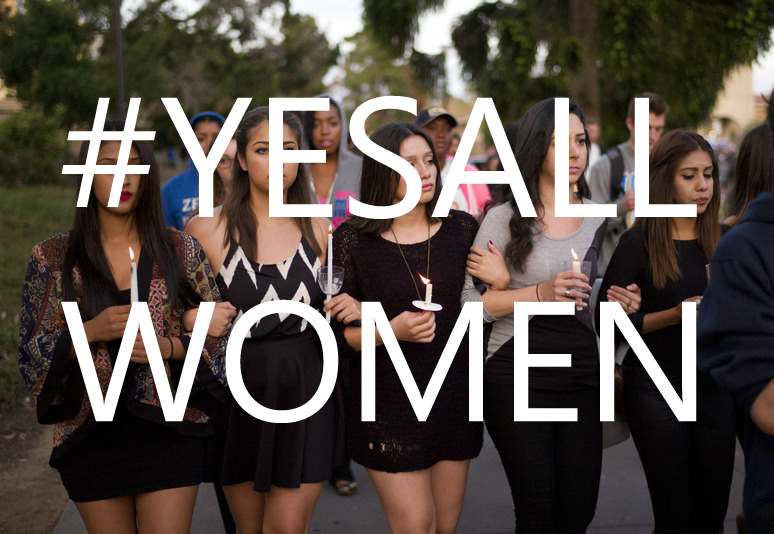
#YesAllWomen proved that although not all men commit horrible crimes against women, the men that often get the headlines and create the most controversy are the ones that need to be watched out for.

John EricksonThe one thing I typically will choose to do on the rare occasion that I’m able to sit down and relax is to watch a documentary.  While some people may go to the gym, read a book, or hang with friends, I typically choose to stay in, nestle up on my couch, and learn.  While on my last bout of relaxation, I chose to watch the HBO documentary Questioning Darwin. Although it offers very little new insight into the evolution vs. creationism debate, it does offer an interesting new way to look at the recent social media hashtag war feminists, allies, and supporters found themselves in over the #YesAllWomen movement that took the world by storm.

yesallwomen

Now, before I discuss #YesAllWomen, I have to admit that I did not enter into the safe space women created for themselves to tell tales of the horrible things they have and have had to face on a daily basis.  I firmly believe that men should not have entered into the digital space Continue reading “#YesAllWomen, the Darwin Debate, and the God Complex by John Erickson”

Before Misogyny Contaminated Theology by Stuart Dean

Stuart WordPress photo

Compared to many issues related to ancient history, it is relatively easy to identify not just where and when misogyny began to contaminate theology, but  the person primarily responsible for it: Plato, who lived in Athens in the late fifth and early fourth centuries BCE. Although today Plato is not thought of as a theologian, in antiquity theology was not just one discipline among many, but rather was synonymous with philosophy as an overarching system of thought to which all else was subordinated. Conceived of in this way theology was comprised of a variety of interrelated theories that today ostensibly appear to be discrete disciplines, including biology and psychology.

There is thus little question but that the exclusion of women not just from theology but from literate culture generally up until the 20th century can to a great degree be attributed to Plato. In one dialogue he categorizes women as a subaltern species of humanity that has yet to evolve to the level of being attained by men. Consistent, in an odious way, with that biological theory, is Plato’s view of female psychology as being such that it should be against the law for women to establish private religious shrines and related rituals since they derive the inspiration for doing so from dreams, apparently incapable of the ‘serious thought’ he deemed necessary for such matters. Given that context it is hardly surprising that in all his ‘dialogues’ there is not one female participant.

Continue reading “Before Misogyny Contaminated Theology by Stuart Dean”

My Brother’s Keeper by amina wadud

amina 2014 - cropped

When my son was a teenager, living with his father in another state, he came to visit me in the suburbs of Virginia.  He is nearly 6 feet tall, chestnut brown skinned.  Like many suburbs there is no concept of the corner store.  But about a half mile from our house was a gas station, with the usual quick shop that was pretty much the same thing as the corner store in residential urban centers.  To get to this gas station by car was a short run.  There was a shortcut through the woods behind my house, so that anyone trying to reach the store by foot could cut off some of the distance required in a car. I suggested this out of the way path to him.  He told me in no short order.  “Mom, I’m a Black male.  I can’t be sneaking out of the woods at almost dark in this part of the world.”

I was embarrassed to think I had not considered how potentially perilous this might be, but starkly reminded what it is like to survive as a young Black male in the US, still today.

I remember reading an article that stated unequivocally that the income of the average college graduate Black male was about equal to the income of the average white high school graduate.  I made the point with both my sons: college education was not an option.  It was mandatory, to even begin to compete.  I guess they got the message because both went straight through college directly after high school (and one of them even returned later for a law degree).  My three daughters, on the other hand took a more circular path meanwhile. All of them went to college, but none of them either went directly from high school or route maintained a direct course through to the first degree.  Continue reading “My Brother’s Keeper by amina wadud”

Confession by Darlena Cunha

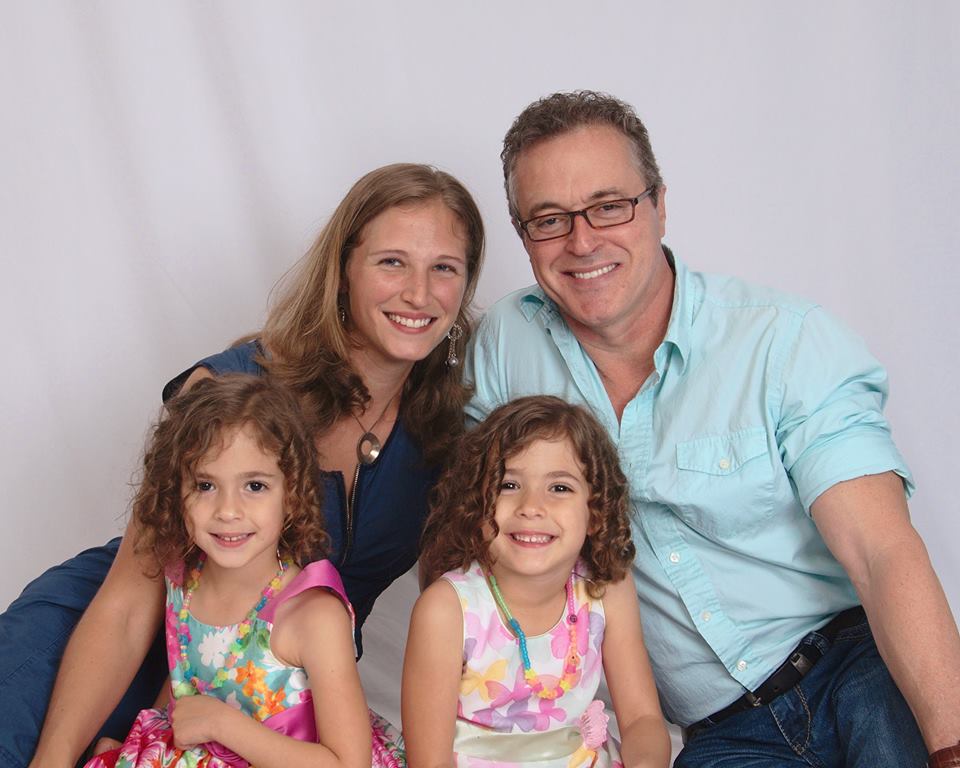
Darlena family portraitGood afternoon, Fr. John. I’m here for confession. No, I’d like the curtain back, please. I want you to see my face. I really need to talk to you, get my bearings. But this confession will not be solely about my sins, for, unfortunately, I am not sure I will ever change my ways.

Does that exclude me? Is Catholicism a club? Should my twin daughters, five years old, be subjected to scorn and pity that their mother is a sinner? That they were born in sin? They don’t look like sin, to me. They are light, and love, and happiness. They have shaped me, taught me, brought me into the woman I was meant to be. Is it wrong of me to want to do the same for them? Is it better to turn me out and lose two potentially pure beings who will make their own choices in their religion and could be devout Catholics, or put up with me in the hopes that my children will be more worthy?

I’m here because I like you, you know. I like Catholicism. It’s in my blood, my heritage, my family. And where I’m from, everyone belongs.

I was baptized, received communion, was confirmed, attended youth group. I went to an all-girls Catholic college my freshman year. Full-ride because I’m fairly smart, and I work hard. That’s where I lost Him, you see. I don’t know how, or why, but one early fall day when the leaves were crisp and bright but not yet falling, I looked up at the chapel on campus, and He was gone. Or He seemed gone. Continue reading “Confession by Darlena Cunha”

The Girl Who Lived: Reflections on Malala, the Middle East, and Feminism by Erin Seaward-Hiatt

Erin-Close-Up-BWAs I return home from a busy day signing off on proofs and churning out cutesy paper patterns, I find my husband, Neil, at the kitchen table. He wears a complicated frown as he pores over a score of tiled browser windows telling various iterations of a singular story. “Come here,” he says, flipping to a second tab, “you’ve got to see this.” It’s The Daily Show, and as I poise for Tea Party zingers and Obamacare barbs, I see instead a girl in hijab, a brilliant smile, and a whole new hope for world politics.

The story was all about a girl. Malala Yousafzai achieved international fame one day when she took a Taliban bullet to the head. Her vocal support for girls’ education had earned her a spot on the Taliban’s hit list. It’s a group with an all-too-familiar radical bent that thrives, among other things, on the cultural ideal of women’s inferiority and silence. One moment Malala was boarding a bus and the next, she faced a hopeful assassin, eager to erase her words and her work from the world. Continue reading “The Girl Who Lived: Reflections on Malala, the Middle East, and Feminism by Erin Seaward-Hiatt”

Eating: Thinking about Bodily Practices, Pt. 1 by Elise M. Edwards

Elise EdwardsI am currently preparing to teach a course on bioethics in the fall. I plan on combining some common, secular materials on biomedical ethics with some theological material and some feminist readings. After all, in a course that centers around practices related to the body, birth, and death, there seems ample opportunity to introduce feminist themes. Some feminist perspective, of course, is typical, like when we will discuss abortion and contraception. (Or at least it is common in my courses where try to present multiple sides of an issue.) Anything related to conception, pregnancy, and birth is easily understood as a “women’s issue” and therefore something that feminists address. I’ve discussed abortion and contraception in previous posts on this forum.

However, I realized in going through readings for this course that I have not focused much on other practices related to the body in my scholarship or personal reflection. Specifically, I have not connected them to theological principles or feminist convictions. Perhaps not everything concerning the body is directly relevant to feminism. But I am sure if I thought about it, I would be able to make the connections. We are physical creatures and the feminist movement generally affirms recognizing our embodiment.

Continue reading “Eating: Thinking about Bodily Practices, Pt. 1 by Elise M. Edwards”