Embracing the Dark Goddess – Empowering Paradigm Shifts, Part 2 by Judith Shaw

 The Dark Goddesses, with qualities that are mysterious, magical, chaotic, destructive, violent and transformational bring a wholistic understanding of ourselves and of nature. They are wild and untamed.  Today I finish up my initial dive into the Dark Goddesses which began yesterday with the publication of Part 1. Look for a more detailed look at these goddesses and more in the coming months.
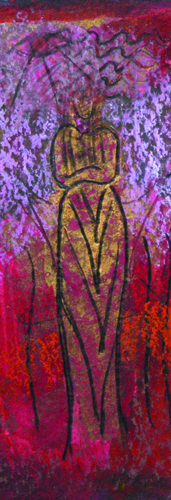
Erishkigal, Underworld Goddess

Dark goddesses are wild, free, and sexual – Lilith, Erishkigal and Medb

Lilith and Erishkigal
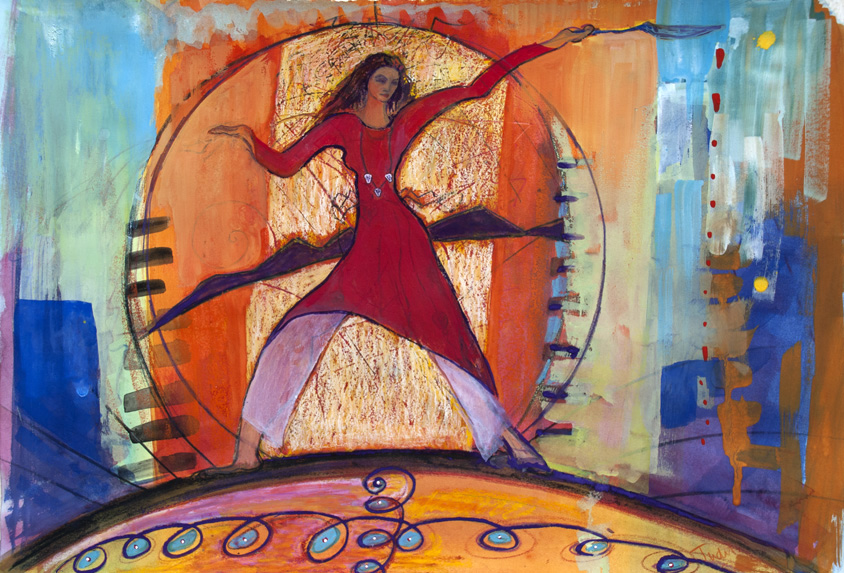
Long before the rise of civilization, people lived together in very different ways and Goddess was understood as the force that encompasses all life – the light and the dark. It’s very interesting that two of the world’s oldest dark goddesses – Lilith and Erishkigal –  are found in the creation story of Sumer, considered as the world’s first civilization.
Continue reading “Embracing the Dark Goddess – Empowering Paradigm Shifts, Part 2 by Judith Shaw”

Embracing the Dark Goddess – Empowering Paradigm Shifts, Part 1 by Judith Shaw

I always approach the Dark Goddesses with trepidation, preferring to focus on the bright, life affirming aspects of the Goddess. Yet now I find that the difficult break-downs and violent conditions of these days are calling me to explore the terrifying aspects of the ones called “Dark Goddesses.” 

But who are the Dark Goddesses and why are they called dark? That question is one of controversy within the Goddess community. Carol Christ has written that the Dark Goddess only exists as a projection of patriarchal values onto the Goddess, turning the Goddess into a force of war and terror, in particular the War Goddesses found in various cultures. Christ views war as an abnormal desire for the Goddess. Whereas others view the Dark Goddess as a part of the one Great Goddess, who encompasses all. 

A painting I did in 2013 inspired by Kali and in response to the destruction caused by oil drilling. “Gaia Wields Her Sword of Justice”
Continue reading “Embracing the Dark Goddess – Empowering Paradigm Shifts, Part 1 by Judith Shaw”

Floods and Flexibility: Another Rainy Day Reflection by Sara Wright

As soon as I awakened, I set off for my predawn walk in light rain, a habit that I am re -forming after having lived in NM that one summer when the days were too hot, too windy, the air too polluted for me to stand being outdoors except in the predawn hours. It was even too damn hot to sleep at night…even my beloved wild lizards hid out during the fierce heat of the day.

 I am adjusting to living in the tropics by becoming more and more flexible. I make no plans. I stay home when I need to, allowing the day to guide me. I will not walk in polluted air even at 4:30 AM. Fortunately, I love my simple cabin that is mercifully empty of ‘stuff’. I have evolved into a minimalist. Except for plants, dogs, and Lily b my bird, my closest friends and relatives not much has change here since I built this house except that I have less!

Continue reading “Floods and Flexibility: Another Rainy Day Reflection by Sara Wright”

Legacy of Carol P. Christ: TWO TORTOISES IN THE WEB OF LIFE

This was originally posted on March 14, 2014

The Gods made only one creature like them—man.  Greek TV documentary

The sight of a reptile or an amphibian usually provokes, at the very least, a feeling of repulsion in most people. Natural History of Lesbos

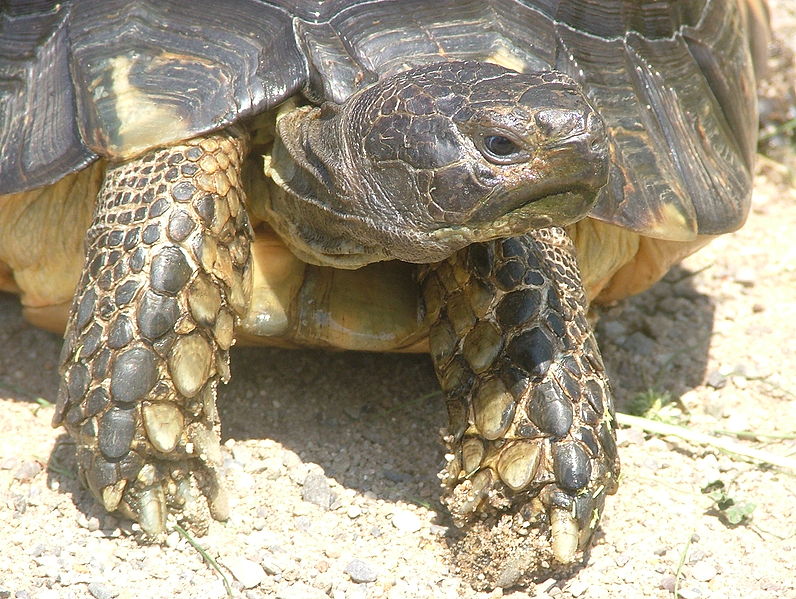
testudo marginata face

In the past days and weeks thetwo tortoises with whom I share my garden have woken up from a long winter’s sleep.  Henry, testudo marginata, has been up for a while now.  More than a month ago when I was cutting back and weeding in the area of the garden where he had been sleeping, Henry roused himself to sit in the sun near me for a few hours each day before creeping back under a shrub.  At first I thought I had disturbed him, but when he came back out day after day while I worked, I began to wonder if he was coming out to say hello.

Continue reading “Legacy of Carol P. Christ: TWO TORTOISES IN THE WEB OF LIFE”

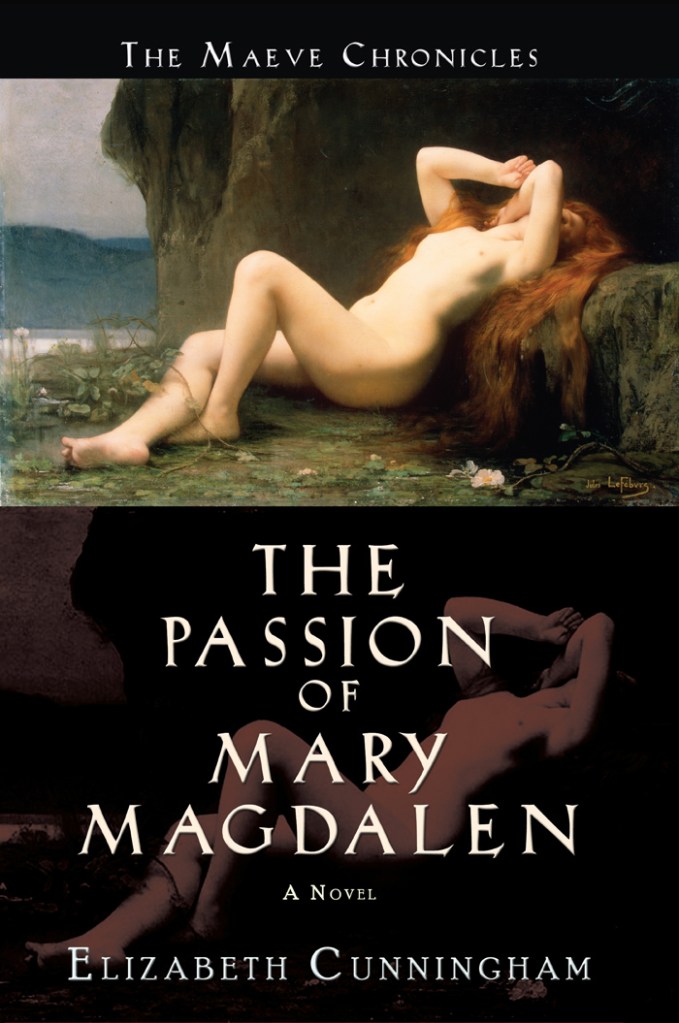
How Mary Magdalen Came into My Life: an excerpt, edited for brevity, from My Life as a Prayer: A Multifaith Memoir by Elizabeth Cunningham

(Author’s note: Mary Magdalen, or Magdalene, comes to people in many ways. To me, she came as an unconventional, fictional character. I worked hard to get the first century setting of her story as accurate as possible. Otherwise, I make no claim to historicity. I respect all the ways in which others know her.)

When I finished writing my novel Return of the Goddess in 1990, I thought I had nothing more to say. Yet, I sensed there was something—someone—missing.

An artist friend suggested I take up drawing or painting for a time—visual art being a form in which I had no experience, skill, and best of all, no ambition. I dabbled in paint and charcoal but soon reverted to magic markers, my childhood medium. 

One day a line drawing in brown marker took shape. An ample woman sat naked at a kitchen table having a cup of coffee. The round clock on the wall read a little after three in the afternoon. (The same time of day I was born.) She told me her name was Madge.

Continue reading “How Mary Magdalen Came into My Life: an excerpt, edited for brevity, from My Life as a Prayer: A Multifaith Memoir by Elizabeth Cunningham”

The Cuyamungue Institute, part 2 by Janet Maika’i Rudolph

This is part 2 of a blogpost based on an interview I did with Laura Lee at the Cuyamungue Institute. Yesterday’s post concluded with the concept of natural body positions and how these inspired the founder, Dr. Felicitas Goodman. She was also inspired by yoga postures. Laura describes Dr. Goodman’s thinking.

With yoga postures, even sitting in them for five minutes, we can note some interesting physiological reactions. Non-invasive tests were done such as galvanic skin response, breath rate, motility of the intestines, with just sitting in a yoga posture. Interestingly, many of our postures that we see from around the world look like yoga postures. These can be sitting cross legged or kneeling with your hands and arms in a specific configuration in your lap. Goodman had the idea, ‘I should add that to my ritual.’ She started to experiment with postures. And indeed, that pushed it from, let’s have a trip with some drumming, to, oh my gosh — now here we’re touching the hem of something larger than ourselves.

Continue reading “The Cuyamungue Institute, part 2 by Janet Maika’i Rudolph”

The Cuyamungue Institute, part 1 by Janet Maika’i Rudolph

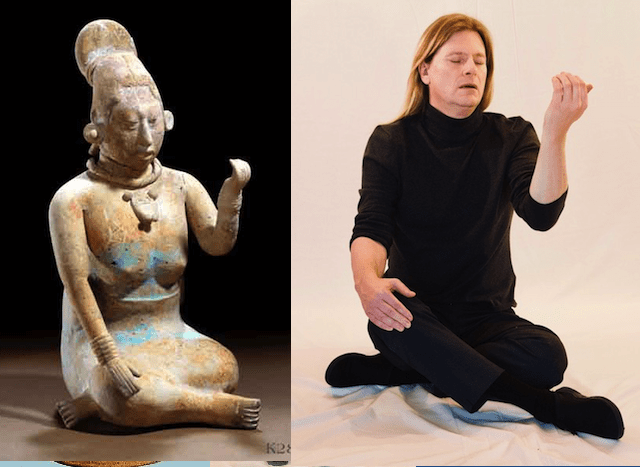
Director Paul Robear in a pose based on this artifact from Chichen Itza

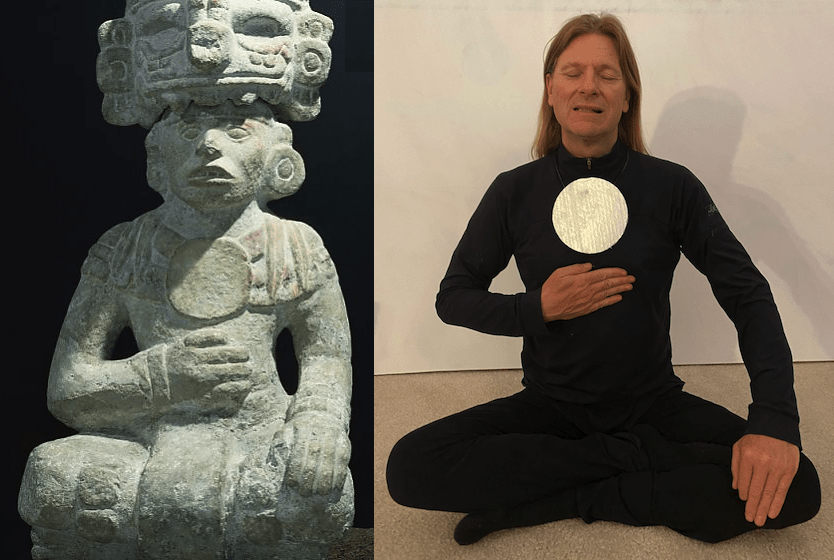
The Cuyamungue Institute was founded in 1978, in Santa Fe New Mexico by Dr. Felicitas Goodman. It is based on work that Dr. Goodman was doing with ritual trance poses as a means to encourage ecstatic states, gain knowledge, and have otherworldly communications and experiences.  The poses Dr. Goodman studied are based on early statues and images found in various cultures. She became aware that these poses of ancient sculptures and drawings were often ritual instructions that people could replicate. By holding these positions in a ritualist manner, she found that people had these common or related experiences which she characterized loosely as healing, divination, metamorphosis, and/or spirit journeys.  This 2-part blogpost is about her journey and what she discovered. It is based on an interview I did with Laura Lee, who along with her husband Paul, are directors of the Cuyamungue Institute.

Continue reading “The Cuyamungue Institute, part 1 by Janet Maika’i Rudolph”

Changes, part 2 by Sara Wright

part 1 was posted yesterday

Returning home, I peered around my house; most of my wildflowers are seeding up – only a few columbine, celandine, wild bleeding heart and a riot of Canada anemones are shining their white faces upturned to the sky. What used to be my cultivated garden has gone wild, and I have let my vegetable garden go. As more and more trees shade the house, (A blessing during these hot dry summers) I feel a tremendous sense of contentment. I am doing research on wild plants for some folks, spending time in the woods when I can. Being surrounded by so much diversity offers me hope that even now some wild places will survive – at least for now.

Because one of my beloved dogs is in heart failure, Lucy’s health is my first priority, so we walk as early as possible to avoid Lucy’s coughing and shortness of breath. Later, I walk by myself, grateful that I have this little patch of land to cover a few miles without having to leave the property. It helps that I rise so early. When I can, I head for the forests I love, but the woods and my writing life have had to take a backseat to Lucy’s illness. Since my dogs have helped me survive my life – like nature has, they will always come first.

Continue reading “Changes, part 2 by Sara Wright”

Changes, part 1 by Sara Wright

A Reflection

Two days ago, I climbed a nearby mountain on a quest to check on some wildflowers that have been disappearing. I noted the leaves in the hardwood forest were crackling under my feet and the two small brooks were dry. When I reached my destination, I felt discouraged. Not again. A whole series of trees had been cut to open a view that made no sense. Across the horizon some trees, but no mountains or water ‘views’ although I was standing on a mountain ledge (and just how many mountain views do we need here in the mountains anyway)? After perusing the area with keen attention, I was convinced. The wildflower I was seeking had been burned to a crisp under a solstice sun after the protective trees were cut, and I had to accept that this jewel was gone for good.  Worst of all this travesty occurred in what was supposed to be a protected “recreational community forest.” (translation: human centered – nature is just being used).

Continue reading “Changes, part 1 by Sara Wright”

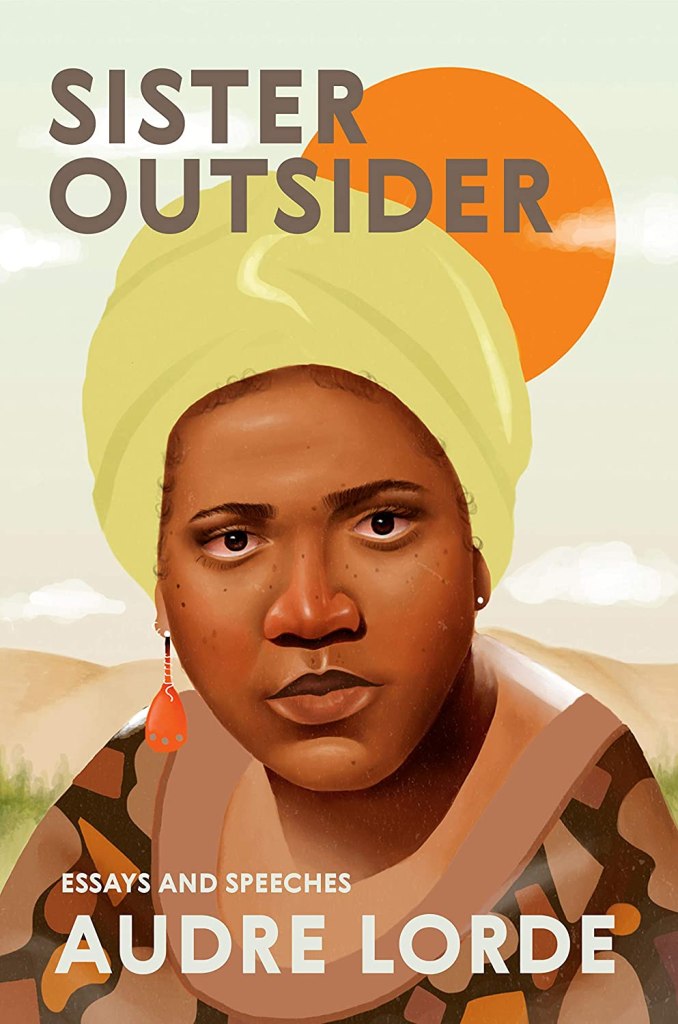
Legacy of Carol P. Christ: Remembering Audre Lorde and “The Uses Of The Erotic”

This was originally posted on March 18, 2013

Moderator’s Note: Carol’s original essay had links to the essay which are no longer active. The essay can be found in Sister Outsider.

I was  given a copy of Audre Lorde’s essay “The Uses of the Erotic” in my first year of teaching at San Jose State by a young white lesbian M.A. student named Terry.  It was 1978.  I was in my early 30s.  This essay came into my life and the lives of my students, friends, and colleagues at “the right time.”  It became a kind of “sacred text” that authorized us to continue to explore the feelings of our bodies and to take them seriously.

The second wave of the women’s movement was about to enter its second decade. We had already been through years of consciousness raising groups.  There we learned to “hear each other to speech” about feelings we had learned to suppress because we had been told they were not acceptable for us as women to have or to express.  Those early days of the women’s movement were one big “coming out” movement.  We were bringing our feelings and ourselves out of the closet.

Continue reading “Legacy of Carol P. Christ: Remembering Audre Lorde and “The Uses Of The Erotic””