Of Resistance and Risk, Community and Kin: A Thanksgiving Reflection by Beth Bartlett

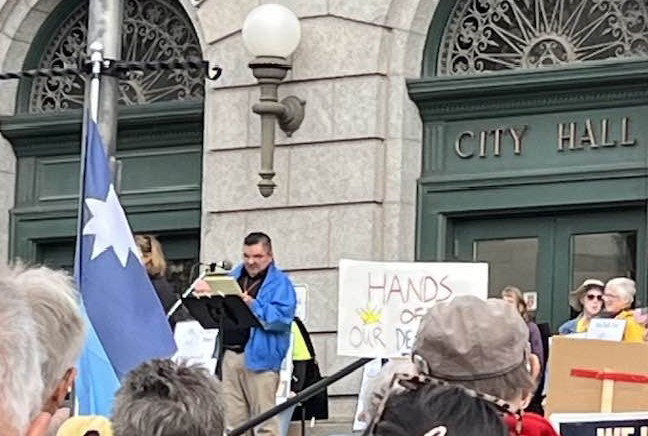
Ricky DeFoe

At the No Kings rally on October 18th, Anishinaabe elder Ricky DeFoe affirmed to the gathered crowd that “the natural response to oppression, ignorance, evil, and mystification is wide-awake resistance.” Such resistance, he claimed, calls for an “ethic of risk.”  I was immediately struck by his use of the term, paralleling feminist theologian Susan Welch’s A Feminist Ethic of Risk.[i]Returning home, I picked up my copy and found many of the same points DeFoe had articulated.[ii] Both asserted that an ethic of risk recognizes that “to stop resisting, even when success is unimaginable, is to die,” and by this they meant not only the threat of physical death, but also “the death of the imagination, the death of the ability to care.”[iii]

Continue reading “Of Resistance and Risk, Community and Kin: A Thanksgiving Reflection by Beth Bartlett”
WHEN I SAY THAT I MISS MY MOTHER (THIRTY YEARS AFTER HER DEATH), WHAT PRECISELY AM I MISSING? by Rebe Huntman

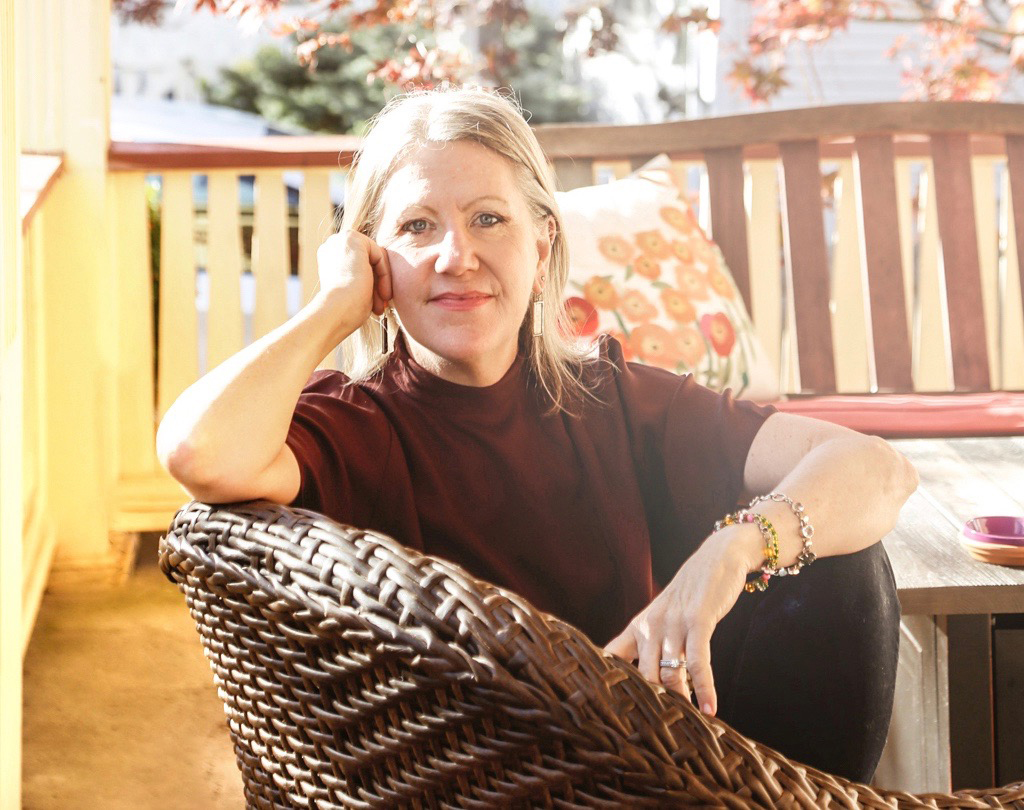
photo credit: Lac Hoang

On the eve of my 50th birthday, I found myself longing for my mother. She’d been dead thirty years—so long that I’d forgotten the sound of her voice or the temperature of her skin. And yet I missed her. Desperately. Shamefully.

The shape of that missing had something to do with the fact that I was nearing the age she’d been when she died. As a child, I’d watched my mother dress for a night of dancing with my father, lining her lips with red and stringing her neck with beads—sure signs she knew the secrets of being a woman: self-possessed; striding through the world with confidence and self-assurance; a real badass!

By now, I’d expected to feel that same sense of largesse. But the truth was that I still felt like the nineteen-year-old version of myself who had lost her mother, a child still waiting for someone to show me the way.

~*~

I wasn’t alone. My whole country seemed to have lost our way. We were surrounded by images of the feminine—pop icons and underwear models, feminists and porn stars, soccer moms and saints—all of them flashing large but pointing in different directions, unglued from whatever architecture might give them a coherent narrative: A blueprint that might hold us through the waters of our deepest anxieties. A guide who might answer our deepest questions: Who am I? Am I part of something larger than my own life? And if so, how do I fit within it?

~*~

Continue reading “WHEN I SAY THAT I MISS MY MOTHER (THIRTY YEARS AFTER HER DEATH), WHAT PRECISELY AM I MISSING? by Rebe Huntman”

From the Archives: I Sing Asherah Exalted! by Janet Maika’i Rudolph

This was originally posted Dec. 16th, 2021

With this season of the festivals of light upon us (Hanukkah, Christmas, Solstice, Kwanzaa), I wanted to focus on the more joyful aspects of our lives. For that, I have been diving into passages about joy and singing in the bible.

Sometimes when I write these posts, they take me in directions I never thought to go. This post is one of them. The surprise direction I found is in the Psalm below:

Sing unto him, sing psalms unto him: talk ye of all his wondrous works.
Glory ye in his holy name: let the heart of them rejoice that seek the LORD.
Psalm 105:2-3 KJV

Continue reading “From the Archives: I Sing Asherah Exalted! by Janet Maika’i Rudolph”

Ramadan Mubarak! (Have a Blessed Ramadan)—After Covid by Jamilah Ali

It is Ramadan again for the Muslim ummah (community). May I refer you to my previous FAR article in 2020,  to reference Ramadan, because this is a bit of a sequel. I am only one example of how the positive and negative pressures of the times are impacting our psyches. I consider, how can I fast voluntarily while Palestinians are literally starving? This is a paradox I’m sure shared by many this year in the world-wide diaspora of Islam. I send prayers in addition to donations for food, of course.

For the faithful, Ramadan is a month-long celebration of the Holy Quran. Our Quran as revealed is from the Creator. We believe in the Bible and Torah as well, but they are much older than the Quran, and we acknowledge are from God but we believe corrupted by people.  This is why we call Christians and Jews “the People of the Book”. For us, the Quran is a special divine universal message which beckons every Muslims heart when recited. Instead of Christ for Christians, the Quran is our manifestation of Divinity. Muhammad and Jesus born 600 years apart, are both Messengers of Allah, but not divine.

Continue reading “Ramadan Mubarak! (Have a Blessed Ramadan)—After Covid by Jamilah Ali”

Miriam Speaks by Janet Maika’i Rudolph

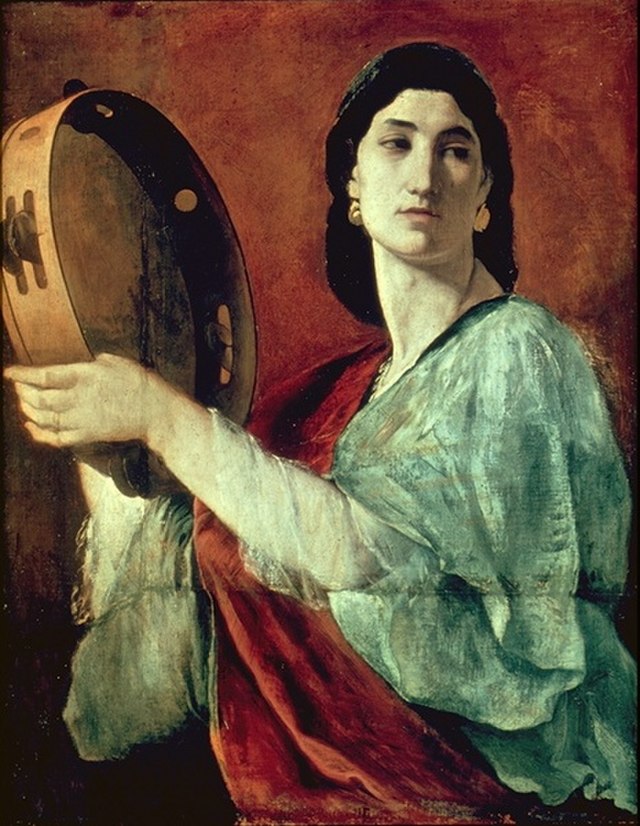
Wikimedia Commons: Anselm Feuerbach

Intro:  I have been working on a project inspired by Charlene Spretnak and her book Lost Goddesses of Early Greece. I am writing biblical stories through the eyes and words of the women. The scribes who wrote down the tales of the bible, wrote mostly from men’s point of view. And they had their own which was to destroy evidence of the Goddesses. I tell Noah’s story through Naamah, his wife. Abram and Sarai’s journey to Egypt through the eyes of Sarah. Exodus in Miriam’s voice. In my telling, Miriam went to Midian with Moses and, while there, experienced the Burning Bush and worked with Moses’ wife Zipporah to protect knowledge of the Goddesses. Below is an abridged version of this section of Miriam’s tale.  

I look around at your world today. You, yes you, are my descendants. My beloveds. I mourn for what you’ve lost. No, I am angry, how could things have gotten this bad? I dare you, I dare any of you to challenge my work. We did everything we could. It should not have taken this long to find our clues. But then I see the job the scribes did. It was better and more thorough than even we, who saw so much, could have imagined. I look around at this precious earth we bequeathed to you and see how damaged it is.

Continue reading “Miriam Speaks by Janet Maika’i Rudolph”

Praise Arianrhod by Diane Finkle Perazzo

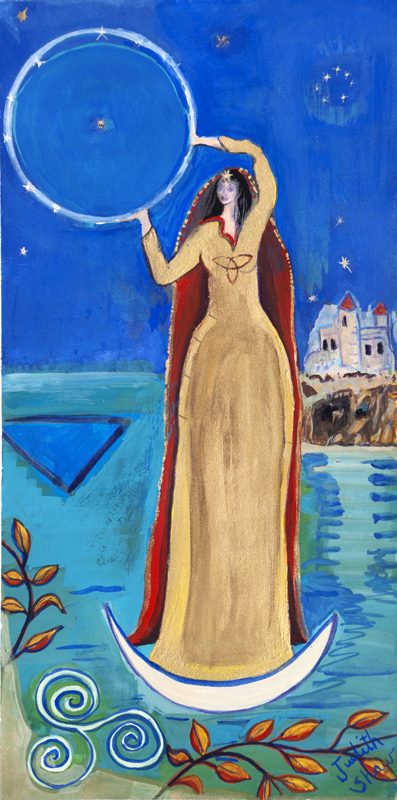
arianrhod-silver-wheel painting by Judith Shaw
Artwork: Judith Shaw from her post on Arianrhod, Feb 23, 2013 which can be read here.

Divine Arianrhod, Beloved Goddess.
Your truth is an inspiration to all living beings.
As you weave the light and the dark so do you scatter.
Joy is in our hearts while you live among the heavens

Celestial Arianrhod, Your crown shines among the stars.
You are the Goddess of the silver wheel upon which all magic is bound together.
Fortunate are we that you are a child of the land and the sky
and mother of the sea and the sun.

Continue reading “Praise Arianrhod by Diane Finkle Perazzo”

Biblical Poetry – Trees by Janet Maika’i Rudolph

Image from an Egyptian tomb ca. 1314-1200 BCE. Isis is giving nourishment in the form of fruit and drink,

In many cultures of the world, including our own, trees are considered the ancestors of humanity – own our ancestors.

Trees are connected with great goddesses throughout antiquity. We see this in the bible where, as I’ve noted before, the Tree of Life is Eve’s tree for the word Eve means life. It is, in essence, the Tree of Eve. Goddesses in trees feeding humans were common themes in ancient Middle Eastern art. The tree was Hers to give freely of as she wished.  

Anthropologist and religious scholar, Mircea Eliade writes extensively about the associations of trees ancestral connection to humans. He calls them both mystical and mythical.[1] His examples include the Miao groups of Southern China and Southeast Asia who “worship the bamboo as their ancestor.” He also notes Australian tribes who view the mimosa as their progenitor. And there is a tribe from Madagascar, called Antaivandrika which means “people of the tree,” who considered themselves descended from the banana tree.

Continue reading “Biblical Poetry – Trees by Janet Maika’i Rudolph”

Asherah, Blessed, Asherah by Janet Maika’i Rudolph

Once upon a time, the Great Goddess was the spiritual focal point of ancient culture. Her worship included honoring women, living in harmony with the earth, and cherishing the processes of the cycles of nature. Asherah was one of those Goddesses. When the Patriarchs moved in and worked to suppress the old goddess religions, Asherah and her fellow Goddesses were diminished, and in a propaganda coup we might recognize today, defined Her as evil. I imagine that some brave people fought to hold onto the Goddess in Her glory but when they saw they were losing the battle, they encoded Her and Her Sister Goddesses into their cultural mythology. Hidden in this manner, She found Her way into the bible. If we can uncover those codes, we can reclaim Her, others and their Earth-based spirituality.

Continue reading “Asherah, Blessed, Asherah by Janet Maika’i Rudolph”