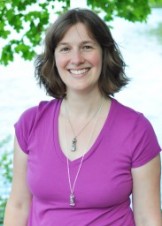
The Sanctuary of One Another by Molly Remer

53850207_2292227257656150_5800641319395131392_o“Please prepare me
to be a sanctuary.
Pure and holy
tried and true.
With thanksgiving
I’ll be a living
sanctuary
for you.”*

Beautiful Chorus (Hymns of Spirit)

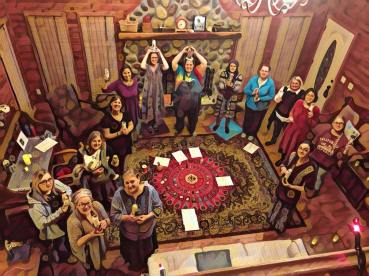
In March, my husband drove our daughter into town to work at her Girl Scout cookie booth and released me to prepare for an all-day Red Tent retreat for my local women’s circle. After I packed my supplies for ritual, I set off on a walk in the deepening, rain-dark twilight. As I walked, I sang a song of sanctuary over and over, until I felt transported into a different type of consciousness, my feet steady on muddy gravel, the leafless branches stark against grey sky, moss and stones gleaming with sharp color against the roadside. A fallen tree absolutely carpeted with enchanting mushrooms caught my eye and invited me off the road and into its arms. As I stood there, feeling as if I had stepped out of ordinary reality and into a “backyard journey,” the spring peepers in the ephemeral pool in our field began their evening chorus. It has been so cold out with below freezing temperatures, snow, and ice for days since first hearing them in early March that I actually wondered if they would survive to continue their song.

Mercifully, though, it is not a silent spring. Continue reading “The Sanctuary of One Another by Molly Remer”

Ritual Theory: Sharing Stories by Molly Remer

“Ritual that is alive encourages each person to touch what is sacred in their own way, in their own time, through their own unique experience. So there evolves a dynamic dance between guiding and shaping the group’s experience and encouraging and supporting the individual’s experience, so there is a smooth and cohesive flow to the ritual.” –Suzanne Reitz and Sandy Hoyt (Celebrating, Honoring, Healing)

As a practicing priestess, one of the dynamic dances that I engage in is with the power of story. I both find that women’s stories are the vital lifeblood of conscious engagement and power-building with one another and that they can be one of the elements that bogs down a ritual and makes it lose power and magic. This is partially because the dominant culture may teach us to bond using stories in a way that actually drain our energy through “venting,” swapping complaints, trading to-do lists, and through describing behavior, motives, and character of other people. In women’s ritual space, I encourage people to dig deep, but also to share a here-and-now connection of shared experience rather than a ­there-and-then­ rendition of past experiences.

Chameli Ardagh in her Create Your Own Women’s Temple manual from Awakening Women explains:

To hold the group and space as sacred is one of the most important guidelines, and the guideline that may bring up the most questions or protests. It goes against our habits as women and against our identification with the small self; we are quite used to creating intimacy through sharing our wounds and problems. The Temple Group is not a place for processing wounds, analyzing ourselves, solving problems, complaining about our lovers, healing our addictions or sharing the stories of the personality. Many women’s circles (and support groups or sharing circles) are focused mostly on the personality. The Temple Group is, in a way, impersonal because it focuses on the larger vast nature of our true self. In the Temple Group we focus not so much on our identity as separate women, but on the whole group as one feminine divine body and expression. The impersonal guideline may sound uncaring at first, but as you explore new ways of being intimate and nourish each other as women, beyond the words, you discover that those are infinitely more fulfilling and caring than the personality talking and processing (p. 61).

I believe that we live in a storied reality and that we are constantly in the process of 22338975_2058326864379525_7570131764764457268_ostorying and re-storying our lives and that seeing our lives, and the lives of others, through a mythopoetic lens, can have a radically transformative impact on our experiences and our relationships. I have written about this for FAR in the past and noted that my personal lived experience is that stories have had more power in my own life as a woman than most other single influences. The sharing of story in an appropriate way is, indeed, intimately intertwined with good listening and warm connection. As the authors of the book Sacred Circles remind us “…in listening you become an opening for that other person…Indeed, nothing comes close to an evening spent spellbound by the stories of women’s inner lives.”
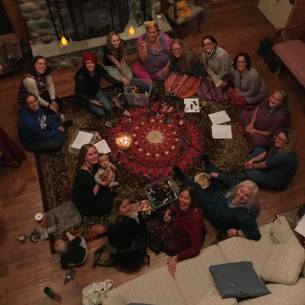
So, what is special about story as a medium and what can it offer to women that traditional forms of education cannot?

Stories are validating. They can communicate that you are not alone, not crazy, and not 23319504_1994649147413964_2818983018590835346_nweird. Stories are instructive without being directive or prescriptive. It is very easy to take what works from stories and leave the rest because stories communicate personal experiences and lessons learned, rather than expert direction, recommendations, or advice. Stories can also provide a point of identification and clarification as a way of sharing information that is open to possibility, rather than advice-giving.
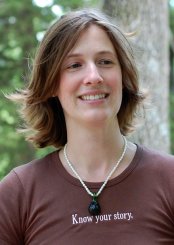
Cautions in sharing stories while also listening to another’s experience include:

  • Are you so busy in your own story that you can’t see the person in front of you?
  • Does the story contain bad, inaccurate, or misleading information?
  • Is the story so long and involved that it is distracting from the other person’s point?
  • Does the story communicate that you are the only right person and that everyone else should do things exactly like you?
  • Is the story really advice or a “to do” disguised as a story?
  • Does the story redirect attention to you and away from the person in need of help/listening?
  • Does the story keep the focus in the past rather than the here and now present moment?
  • Is there a subtext of “you should…”?

Several of these self-awareness questions are much bigger concerns during a person-to-person direct dialogue such as at a women’s retreat rather than in written form such as blog. In reading stories, the reader has the power to engage or disengage with the story, while in person there is a possibility of becoming stuck in an unwelcome story. Some things to keep in mind while sharing stories in person are:

  • Sensitivity to whether your story is welcome, helpful, or contributing to the other person’s process.
  • Being mindful of personal motives—are you telling a story to bolster your own self-image, as a means of pointing out others’ flaws and failings, or to secretly give advice?
  • Asking yourself whether the story is one that will move us forward (returning to the here and now question above).

This work is beautiful. It is complex. It is multilayered. It is simple. It is hard. It is easy. It is rich and rewarding. It is dynamic and evolving and flowing. It is never the same.

May you be blessed with many stories together.

mollyatparkNote: there is a detailed audio exploration of the themes of this post available here.
Molly has been “gathering the women” to circle, sing, celebrate, and share since 2008. She plans and facilitates women’s circles, seasonal retreats and rituals, mother-daughter circles, family ceremonies, and red tent circles in rural Missouri and teaches online courses in Red Tent facilitation and Practical Priestessing. She is a priestess who holds MSW, M.Div, and D.Min degrees and wrote her dissertation about contemporary priestessing in the U.S. Molly and her husband Mark co-create Story Goddesses, original goddess sculptures, ceremony kits, and jewelry at Brigid’s Grove. Molly is the author of WomanrunesEarthprayer, and The Red Tent Resource Kit and she writes about thealogy, nature, practical priestessing, and the goddess at Patreon and at Brigid’s Grove.

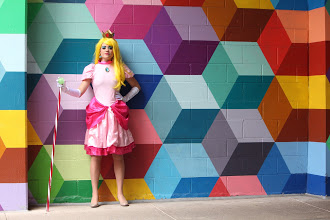
Princess Peach from The Goddess Project: Made in Her Image by Colette Numajiri

Toy stores and department store aisles are decked with pink and purple princess paraphernalia. Disney has provided an array of princesses for little girls to choose their birthday party or bedroom decor from. But as we all know, there’s a deeper secret hidden in the FAIRY TALES that high powered media execs have made their fortunes on: THE GODDESS.

Every hero’s tale, be it in video games or romantic movies sets out to do one thing: SAVE THE PRINCESS.  When I was a child I saved Her myself on my little Nintendo system never knowing why She was in trouble in the first place. And was I the only one who ever wondered why NONE of the PRINCESSES HAD MOTHERS!?

In the early Centuries during the Christianization of Europe, Pagans (which means “people of the land”) hid truths right under the nose of the newly forming Christian Church in their folklore, games and children’s rhymes to avoid being burnt at the stake. These simple people tried to covertly keep the Wisdom of the Sacred Feminine that they’d been honoring since the beginning of time, ALIVE.

Continue reading “Princess Peach from The Goddess Project: Made in Her Image by Colette Numajiri”

Call for Contributions: She Rises Volume 3 Goddess Feminism, Activism, and Spirituality

She Rises Goddess Feminist Activism Collective Writing Project: Call for Contributions

She Rises: What … Goddess Feminism, Activism, and Spirituality? Volume 3 Two books: The main book and a sectional booklet including poetry, prose, art, the like.

Coeditors include Deanne Quarrie, D.Min., Helen Hye-Sook Hwang, Ph.D.

I am the source, I dream the dreams, I am the spark, Creation lives in me. Jana Runnalls, The Source, Speaking in Tongues

Using She Rises Volume 1 and Volume 2 as a springboard, the collective writing project of She Rises Volume 3 aspires to interweave new patterns in the tapestry of Goddess feminist activism. She Rises Volume 3 invites possible contributors by asking the questions: What do you envision for Goddess Feminism, Activism, and Spirituality? What is Goddess Feminism, Activism, and Spirituality for you? What do you seek from Goddess Feminism, Activism, and Spirituality? What are our practices that will bring more Goddess Feminism, Activism, and Spirituality into the world?

You may like to engineer the question on your behalf or answer it for us all. Here are some examples of the question: “What keeps me continuing in Goddess Feminism, Activism, and Spirituality?” or “What does Goddess Feminism, Activism, and Spirituality mean to me?”

The first volume evolved around stating/proclaiming the rational or cause of our Goddessian/Magoist commitment by answering the question, “Why Goddess Feminism, Activism, and Spirituality?” and the second volume took a step further to ask the “How?” question, “How… Goddess Feminism, Activism, and Spirituality?”

It is our hope that the question “What?” potentially produces a record number of ways we engage in Goddess Feminism, Activism and Spirituality. We foresee the possibility that She Rises Volume 3 may become a guidebook of the common cause for Goddess feminists and activists.

She Rises, Volume One, asked WHY? and 93 contributors answered the question with depth, honesty, insight, creativity, imagination, and inspiration. She Rises, Volume Two, asked How? and 96 contributors answered the question with depth, honesty, insight, creativity, imagination, and inspiration.

Now we are asking What?  Your answers will offer:

  • a guidebook for those beginning their journey with Goddess feminism, activism, and spirituality,
  • a confirmation for those already engaged with Goddess feminism, activism, and spirituality,
  • another thread in the tapestry of Goddess feminism, activism, and spirituality that is being woven by women and men all over the World.

Let’s weave a tapestry of answers! Are you interested?

To be part of this weaving, please send your contribution to both emails (please indicate “She Rises Volume 3” in the subject line) See submission form and guidelines below:

Deanne Quarrie – deanne.quarrie@outlook.com

Helen Hwang – magoism@gmail.com

Primary Deadline: January 31, 2018

Submission details: 

Short writing – up to 200 words

Longer essays – up to 4,000 words

Research papers – 4,000-12,000 words,

Poetry – any length (please indicate formatting)

Art, photography, illustrations – any form, which may be accompanied by a descriptive paragraph attached as a separate Word file

Please include a brief bio of no more than 100 words at the end of your Word document.

Text: As attachment of Word files (.doc or.docx)

Font: Garamond or Times New Roman (12 font size, 1 spaced)

Style: Chicago Style, footnotes

Art, photography, and illustrations: As attachment of jpg files (must be 300 dpi)

For sample short writings, see below:
http://magoism.net/…/special-post-1-why-goddess…/

For ongoing submissions, see below:
https://www.facebook.com/groups/magoism/

Multiple proposals are allowed. The submission form is included below.

Submission Form

Please fill out the following form and pasted it in the body of your email submission.

Your name and email address:

“I agree that my proposals may be published in the main book AND the secondary sectional book (poetry, prose, and art).”

Number of proposals and their genres:
List the titles/contents of attachments including your short bio:

Making Our Stand by Molly Remer

“You may not remember, may-2016-103
but let me tell you this,
someone in some future time

will think of us.”

Sappho

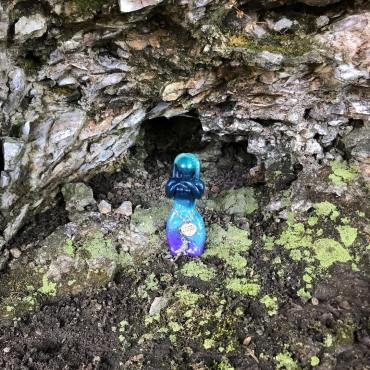
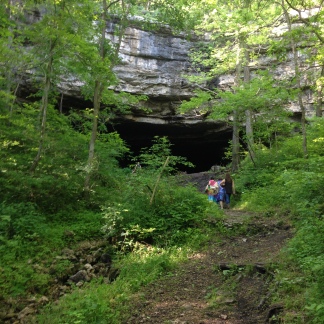
I put on my boots and jeans, grab my priestess robe, pack a basket of ritual supplies, and meet four close friends in a nearby cave. We feel a little nervous about holding ritual on unfamiliar land, but we decide to push our boundaries and do it anyway. The land needs us, says my friend. The other people who come here are meth-heads and vandals.

We take our drums and climb to the top of the cave, singing as we find our way up the steep hillside. On top, looking out across the country, we sing: cauldron of changes, feather on the bone, arc of eternity, ring around the stone. We laugh and practice some more songs, some hearty, some tentative and new. We tie up small bundles of our symbolic burdens with stones and let them down over the edge
may-2016-051using handspun wool yarn until the yarn releases, taking our burdens with them. Suddenly, we hear the sound of tires on the gravel. Slamming doors. The sound of loud men’s voices. The smell of cigarette smoke. A ripple of uncertainty passes through us. We are once again tentative and we feel a current of unease. What should we do? we whisper to one another. The voices draw nearer, there are calls and hoots. My friend looks at me and says: this is where we make our standWe hold hands in a line at the edge of the cave roof, gazing out into the horizon. A hawk wheels overhead. We sing. The approaching voices quiet. We sing louder.
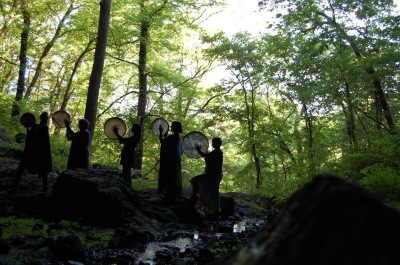
I am a strong woman, I am a story woman, I am a healer, my soul will never die.

We project our voices and yell: we are the witches, back from the dead!

The voices stop. We wait. We hear doors slamming. The sound of tires on gravel. We are alone once more.

We descend into the cave singing a song composed on the spot: Deeper, deeper. We’re going deeper. Deeper, deeper. Deeper still.

We strike a pose based on the carvings described in the classic book, When the Drummers were Women. Archaeologists described may-2016-099carvings of priestesses carrying drums as, “women carrying cakes to their husbands.”
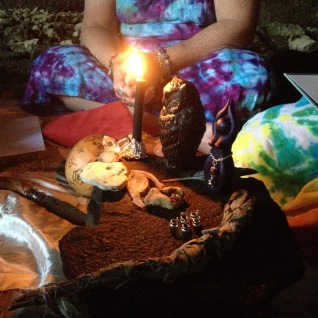
We shout: “we’re not carrying cakes!”

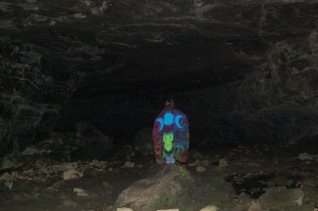
I stand on a rock in the center of the cave and sing: she’s been waiting, waiting, she’s been waiting so long, she’s been waiting for her children to remember to return. My friends join the song and we move deep into the darkness where we face the “birth canal” at the back of the cave, listening to the small stream within trickle, laugh, and bubble as it emerges from the dark spaces deep within the heart of the earth. We begin to sing:

Ancient mother we hear you calling. Ancient mother, we hear your song. Ancient mother, we hear your laughter…

Just as we sing the words, ancient mother, we taste your tears, droplets of cave water fall on our faces, splashing our eyelids.

It might seem simple on the surface, but gathering the women and calling the circle is a radical and subversive act. A revolutionary act. In my work with women’s circles and priestessing, I am repeatedly reminded that gathering with other women in a circle for ritual and ceremony is deeply important even though it might just look like people having fun or even being frivolous, it is actually a microcosm of the macrocosm—a miniature version of the world we’d like to see and that we want to make possible.

In the book, Casting the Circle, Diane Stein observes that women’s rituals, “…create a microcosm, a ‘little universe’ may-2016-062within which women try out what they want the macrocosm, the ‘big universe’ or real world to be. Within the safety and protected space of the cast circle, women create their idea of what the world would be like to live in under matriarchal/Goddess women’s values…The woman who in the safety of the cast circle designs the world as she would like it to be takes that memory of creation and success out into daily life…By empowering women through the microcosm of the ritual’s cast circle, change becomes possible in the macrocosm real world.” (p. 2-3)
It starts with these private ritual and personal connections and then, as Stein explains, “A group of five such like-minded women will then set out to clean up a stream bed or park in their neighborhood; a group of twenty-five will join a protest march for women’s reproductive rights; a group of a hundred will set up a peace encampment. The numbers grow, the women elect officials to government who speak for their values and concerns. Apartheid crumbles and totalitarian regimes in Eastern Europe end, disarmament begins, and laws to control polluters are enforced. Homes, foods, and jobs are opened to the world’s homeless, and often begins in the microcosm of the Women’s Spirituality ritual circle” (p. 3)

“Feminism catches fire when it draws upon its inherent spirituality. When it does not, it is just one more form of politics, and politics never fed our deepest hungers.”

–Carol Lee Flinders (in The Millionth Circle)

january-2017-038Molly has been “gathering the women” to circle, sing, celebrate, and share since 2008. She plans and facilitates
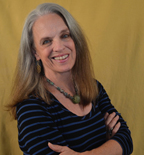
women’s circles, seasonal retreats and rituals, mother-daughter circles, family ceremonies, and red tent circles in rural Missouri and teaches online courses in
Red Tent facilitation and Practical Priestessing. She is a priestess who holds MSW, M.Div, and D.Min degrees and finished her dissertation about contemporary priestessing in the U.S. Molly and her husband Mark co-create Story Goddesses, original goddess sculptures, ceremony kits, and jewelry at Brigid’s Grove. Molly is the author of Womanrunes, Earthprayer, and The Red Tent Resource Kit and she writes about thealogy, nature, practical priestessing, and the goddess at Brigid’s Grove

Boann, Celtic Goddess of Inspiration and Creativity by Judith Shaw

Judith Shaw photoBoann, Celtic Goddess of Poetry, Fertility, Inspiration, Knowledge and Creativity was one of the Tuatha De Danann (People of Danu). She was associated with the 70 mile long river Boyne in Northeast Ireland and its source, the Well of Segais.  Some bards say that long, long ago when the world was young and wild places were everywhere, Boann initiated that spring by walking counter-clockwise around stones found there, causing the water from under the earth to spring forth with great strength and rush down to the sea. The pool formed by the spring was encircled by nine sacred hazelnut trees, whose nuts could impart knowledge when eaten. The salmon of wisdom swam in the waters of this hidden pool from which the river Boyne flows.
Continue reading “Boann, Celtic Goddess of Inspiration and Creativity by Judith Shaw”

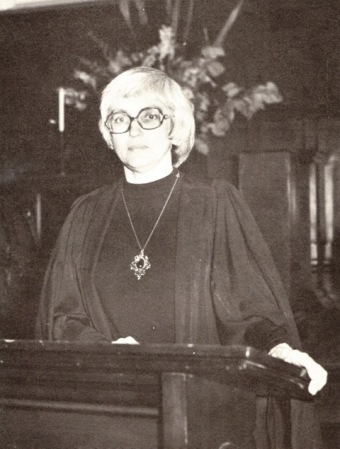
thea Gaia née Dorothy Ivy Wacker: Feminist Foremother and a Great “Ponderer” by Glenys Peacock

Rev. Dorothy Waker (thea Gaia)
Rev. Dorothy Wacker (thea Gaia)

On 15th May, 2016 thea Gaia left this earth which was her home for 85 years. thea was born
Dorothy Ivy Wacker in Gatton, Australia on 9th February, 1931, the eldest of four children.
Her family were descendants of German immigrants who came to Australia in the 1860s.
In primary school, Dorothy was a bright student, winning a bursary enabling her to continue
her studies at high school which she completed in 1947. She then studied primary teaching
at Queensland Teachers’ College and from 1950-52 she worked at School for the Deaf,
Dutton Park, Brisbane.

Dorothy joined South Brisbane Congregational Church and became President of Queensland
Congregational Youth Fellowship. At age 22, she decided to take theological training to
become a Congregational minister. Dorothy studied for Bachelor of Arts and Bachelor of Divinity at the University of Queensland. In 1959, she was awarded a Certificate of Ordination by the Queensland Congregational Union. Dorothy was ordained on 17th April, 1959 at Broadway, Woolloongabba, the first woman ordained as a Minister of Religion in Queensland. Over the next 10 years she was minister for Belmont, Broadway and Chermside Congregational Churches. Continue reading “thea Gaia née Dorothy Ivy Wacker: Feminist Foremother and a Great “Ponderer” by Glenys Peacock”

Epona – Goddess of the Land by Deanne Quarrie

celtic-horseDeanne QuarrieThis week I bought a pendant that caught my attention.  It is Celtic knot work of horses, meant to represent Epona.  This triggered my interest in Epona and off I went to learn more.

Epona is a goddess from Gaul.  Sadly, any information about her from those early days of worship are lost to us. This is the case of the most ancient deities from that region and time in history. It is thought that she was picked up in Gaul by the conscripted soldiers of the Roman Army who saw a depiction of her upon her horse and they adopted her. Since this army rode across the land on horseback, she was the perfect deity to pay homage to and so, she traveled with them. She soon made it to Rome and is one of only a few deities, not originally Roman, to be worshiped in the Roman Empire. Continue reading “Epona – Goddess of the Land by Deanne Quarrie”

Goddess Politics and the Cauldron of Memory by Kavita Maya

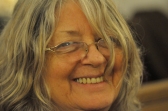
KavitaMaya‘Someone needs to gather the stories, to keep the cauldron,’ said the late Goddess feminist artist Lydia Ruyle during one of the last times we spoke, at the 2014 Glastonbury Goddess Conference. I had hinted at my concerns around conducting doctoral research in the presence of ongoing conflict within the Glastonbury Goddess community (especially when my broadly-stated site of interest is ‘politics’), and in reply she had stressed the need to ‘hold space’ for the different voices and perspectives in the UK Goddess movement, and that conflict would be inevitable. ‘There needs to be a weaver,’ she said.
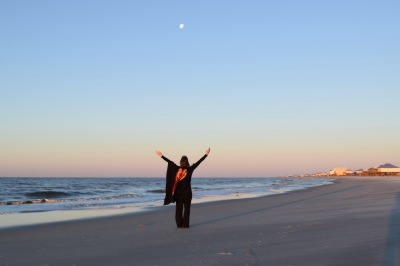
The following day I recorded an interview with Lydia and some of her friends at Café Galatea on the High Street, which she had been keen to ensure since the previous summer—with poignant foresight, given her death in March 2016. I’m not sure if she was expecting that I should fully take on the role of this ‘weaver’—there are more stories than one PhD thesis can claim to encompass—but the theme is present in my writing. Her words lead me to reflect on the weaving together of politics with memory and storytelling, and on the need to honour the plural histories of the British Goddess movement. Continue reading “Goddess Politics and the Cauldron of Memory by Kavita Maya”

Facing the Moon Alone by Molly Remer

February 2016 030

“When all is said and done I think every Witch should, at some time, face the moon alone, feet planted on the ground, with only his or her voice chanting in the starry night.”

–Laurie Cabot, Power of the Witch

I will never forget the first time I heard someone recite the Charge of the Goddess from memory. Bare-breasted, she strode around the fire in sacred circle at a large goddess festival in Kansas, delivering the words with power, grace, and confident resonance. I thought: I will do that someday.

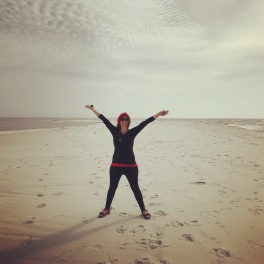
In February of this year, we took a family trip to Dauphin Island. While there, the afternoon of the full moon, I February 2016 148
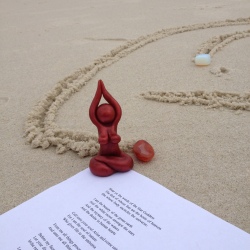
decided that the time had come. I was going to memorize the Charge of the Goddess. First, I thought I would only memorize it a piece at a time. It seemed “too big” to do in a single sitting. I had it printed out on a piece of paper that rapidly became damp with the salty sea air. I drew a labyrinth in the sand with my toes, set one of my goddess sculptures at its entrance, and drew a Womanrunes card.

One stanza at a time, slowly I began to repeat the poem* aloud:

hear ye, the words of the star goddess
the dust of whose feet are the hosts of heaven..
.

Over and over, I said the words, letting them twine around my tongue and in the air, experimenting with cadence and rhythm. After I could reliably repeat one section, I’d move to the next, letting it build in my memory until I could put the two together confidently and then moving to the next.

I am the beauty of the green earth
the white moon amongst the stars..

I stared into the waves, listening to them rise and fall along with my words. My three older children dug in the sand. February 2016 073
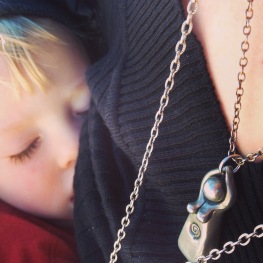
My husband fished. My toddler toddled around and then came to sit on my lap and nursed to sleep for nap time:

before my face
beloved of all…

I whispered into his damp hair. I felt in an altered state of consciousness. The words began to wind their way through me, becoming a part of me, embedded in me. I danced with them as I have never danced with another piece of writing. I felt them merging with me. I sang them aloud. I stated them fast and slow and I built, adding the next line and then the next…

for behold, all acts of love and pleasure
all my rituals.

I turned over hard thealogical questions as the words spun their magic through the air. What does it really mean that “all your learning and seeking shall avail you not, lest your know the mystery.” Do I really feel the goddess within? Do I find her within myself or is she only outside and if she is only outside, does she really exist at all? Tears came to my eyes: do I even like myself?

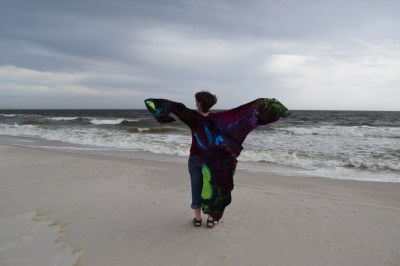
Two hours passed. My baby awoke and returned to digging in the sand. My husband packed up his fishing gear. The sky began to darken and spit rain. I stood and danced the words into the sand with my feet.

let your divine innermost self
be enfolded
in the rapture
of the infinite

I felt rapturous. I felt triumphant. I had done it. Faster and faster my feet stamped the sand as I called the words into the waves. I spun in circles with my toddler chanting and laughing and offering my devotion before the sea, beneath the moon.

the mystery of the waters
the desire in human hearts…

February 2016 179

*I used Shekhinah Mountainwater’s adaptation of the Charge, originally by Doreen Valiente, as included in the book Ariadne’s ThreadMolly 180

Molly has been “gathering the women” to circle, sing, celebrate, and share since 2008. She plans and facilitates women’s circles, seasonal retreats and rituals, mother-daughter circles, family ceremonies, and red tent circles in rural Missouri and teaches online courses in Red Tent facilitation and Practical Priestessing. She is a priestess who holds MSW and M.Div degrees and recently finished her dissertation about contemporary priestessing in the U.S. Molly and her husband Mark co-create original goddess sculptures, ceremony kits, and jewelry at Brigid’s Grove. Molly is the author of Womanrunes, Earthprayer, and The Red Tent Resource Kit. She writes about thealogy, nature, practical priestessing, and the goddess at her Woodspriestess blog.