Where is the humanity? Why are my sisters and brothers continuously subjected to persecution? Who will help and stop this madness?
I am a member of the human race. Collectively I identify with those who need help and are oppressed. I do not identify with the oppressors, for they are like Pharaoh whose heart was hardened. In identifying with this group, I will provide a label of humanity; for the oppressors do not show care or love but evil and sin towards my people – they cannot be part of this group. As my people flee the boarders from the oppressors, the world has opened their gates to let them in. The world has not turned their back on them. However the oppressors continue to mar their homeland, destroy their culture, and attempt to erase their history, their identity, their footprint on this earth. They are not oppressors but are in fact committing cultural genocide. They are committing genocide against humanity, against anyone who does not follow their ideology, their way of life.
Why should we care? Should we care? For this I say yes. My people need protection and help, but like the Israelites in the story of the Exodus, they yearn for their homeland – a place they were forcibly exiled from. They yearn for food and clean water. They yearn for safety and protection. While you may think that my people were not forcibly exiled – they were. They fled for their own lives – for their own people, and the community’s hearts became hardened to their pleas for help.
The Syrian crisis is one that we have allowed to repeat over and over again. According to World Vision, nearly 12 million Syrians have been forced from their homes – half of which are children. At least 7.6 million have been displaced within Syria and more than 4 million have fled the country. Children affected by this crisis are at risk of becoming ill, malnourished, abused, or exploited. Save the Children produced a video that shows what happens to a girl after three years of conflict:
Kim Davis does need a lot of things but saying of suggesting that she needs a haircut, a makeover, or even to lose weight, makes you and those that continue to repeat it no better than she is; to state such statements doesn’t purport the ideal that #LoveWins, which took over social media just mere months ago, but changes the whole narrative to symbolize that sexism and hate are more important than love and equality.
Kim Davis, the defiant county clerk, is currently sitting in isolation in a jail cell after refusing to issue marriage licenses to same-sex couples in Rowan County, Kentucky, even after she was ordered by a judge to comply with the Supreme Court’s ruling on same-sex marriage or be held in contempt of court.
Everywhere I turn on both social media or in person people are talking about Ms. Davis, her actions, personal history and for some weird reason her hair and looks. I’m all for individuals taking a virulent stand against an individual who chooses to not uphold the law of the land as well as continually acting in an unjust discriminatory way but bringing her looks or anything else about her physical appearance into the narrative is not only just plain wrong it is sexism in its worst form. Continue reading “Two Wrongs Don’t Make a Right by John Erickson”
I am mad. So very mad. No, that doesn’t begin to describe it. I am pissed. I am angry. I am irate. I am incensed. I am outraged. I am enraged. I am livid. I am GODDESS DAMN FURIOUS.
“All men are created equal,” states the Declaration of Independence. From the very beginning, women were denied equality in this country. It has taken over two centuries for women to win the right to vote, to have alleged protection under the law, to earn as much as 68 and 77 cents on the dollar (depending on our skin color) that men are paid, and to gain control over our own bodies and destinies.
And now, nearly 250 years later, we are seeing our rights, our freedoms, our health care being stripped away, one by one, by mean spirited, misogynistic, right wing religious uber-conservatives. In 2015 there is still no Equal Rights Amendment. Women are still not equal under the law. Continue reading “I am mad by Mama Donna Henes”
I just can’t. The Planned Parenthood sting operation videos. The GOP debates earlier in the month. I can’t bring myself to watch them. I used to jump without hesitation into the thick of the most vitriolic political exchanges and stand my self-righteous ground with the best of them, but I just can’t anymore.
I can’t. And I won’t. I do recognize that when I choose to tune out the noise of public debate, I am opting out of the conversation, at least in part. I shouldn’t be commenting directly on events of which I am not aware and informed. Nor should anyone else for that matter. I do end up relying on a community of commentators to fill in what I’ve missed by not watching. Continue reading “Why I’m Not Watching by Katey Zeh”
I remember when I heard of the death of Michael Brown who was shot by a Ferguson, Missouri Police Officer exactly one year ago today. His bloody body laid in the middle of the street for four hours before receiving help. I wondered if Michael Brown would still be alive today if he hadn’t been shot and left for dead. I remember looking at my beautiful black sons that night as they slept. I wept until my knees gave way. I do not think I have stopped weeping as I continue to be imbued with reports of black and brown bodies dying at the hands of police officers month after month.
One year later, I am still grieving and praying. I am still tired. I am now joined into a call with my sisters who work alongside me in the anti-violence movement. We held each other as we listened over the phone. Then my friend Corine Reed gets our attention. She says it’s time for peace. That word, peace, was the divine pause I needed. I think it is what the world needs right now – PEACE. Continue reading “A Day of Peace: On the Anniversary of Michael Brown’s Death by Qumyka Rasheeda Howell”
Bas relief of Atropos, shears in hand, cutting the thread of life
In Greek myth, the Fates, the Moirai, are three sisters – Clotho, Lachesis, and Atropos – who spin, measure and cut the thread of life for every person born. Their rule is law; even the gods, so the legend has it, have no power to bargain with the one who cuts the thread and ends the life. Her name, Atropos, means ‘she who cannot be turned’.
In Greece today, others are making the life-or-death decisions. It is not the three sisters of ancient folklore, but a bunch of men in suits now wielding the power to uplift or cast down an entire nation and its millions of citizens. I would like to shine a little light on just two of these groups of (mainly) men who have had the most impact on the recent decisions to bring Greece to the brink of bankruptcy, default and catastrophe. Continue reading “The Unelected and Unaccountable Men Who Decide Our Fate by Laura Shannon”
While black Churches are burning, and black children are being gunned down by police, I felt it important to speak with someone who is involved in raising awareness on the role of racism and cultural imperialism in American society. I am honored to present to you all, Sikivu Hutchinson.
As a woman of color, and an atheist, how do you respond to the invocation of God in the Charleston tragedy?
It frustrates me but the invocation of God in crisis is a significant part of African American cultural and social history. As I wrote recently in an article entitled “Pushing Back on ‘God’ in Charleston”: “Radical black humanists, most notably Frederick Douglass and A. Philip Randolph, have challenged black religiosity under slavery while acknowledging the crucial role activist churches played in black self-determination.
Randolph’s critique of organized religion and the god concept was always coupled with a critique of capital and the imperialist occupation of black bodies and African countries. Churches dominated black communities because of the nexus of racial apartheid and capitalism.”
Organized religion and God belief continue to dominate African American communities because of these legacies. That said, clearly no loving god would allow a twenty six year-old in the prime of his life to be cut down in cold blood, nor abide by a five year-old having to play dead to avoid being murdered. And no moral god would demand forgiveness for a crime for which there has never—since the first African was stolen, chained, exploited and “imported”—been any reparations. Continue reading “Feminism, Race, and Religion: An Interview with Sikivu Hutchinson by Kile Jones”
In a previous article, I have described the devastating consequences of five years of austerity in Greece: soaring poverty, hunger, unemployment, infant mortality, pensioner deaths, malnourishment, sickness, and suicide.
Unemployment has exploded to over 25%, nearly 60% for young people. In contrast to other European nations, Greece provides virtually no unemployment benefits , and national healthcare is only available to those with a job.
The resulting humanitarian catastrophe, ruthlessly and knowingly imposed by Greece’s creditors, the IMF, EU and ECB, is unequaled by anything in European history in peacetime. People have only managed to survive thanks to the intrinsic values of Greek culture and civilisation: generosity, hospitality, connection, positivity, sustainability and mutual support.
These are the values which brought me to live in Greece; they are also the values of the traditional circle dances I have spent my life researching. And they are directly descended from the values of Old European culture as articulated by Marija Gimbutas, Carol P. Christ, and Riane Eisler.
When the economic crisis first struck in 2008, worsening every year since, I saw firsthand how deeply these values are embedded in Greek society.
Here, networks of families, neighbours and friends help one another, even when everyone is desperately struggling; this is how Greeks have managed to survive the terrible effects of the man-made ‘crisis’ until now. As family members have lost jobs, homes, businesses and prospects, often crucial support for the whole family is provided solely by one grandparent’s meager pension.
Laura and Magdalina, in northern Greece. In the course of my research, I have been welcomed in countless homes by Greek rural women. Many families may be materially poor by contemporary standards, but are rich in values of community, hospitality and sustainability. Here Magdalina is showing me samples of her peerless embroidery (featuring ancient Goddess motifs, for those who have eyes to see).
This picture of grandparents helping support their children and grandchildren throughout their lives is quite alien to western and northern Europeans, and yet it is firmly at the heart of Greek society. Elders are almost universally cared for within the family; old-age homes are extremely few. Like the sacred hospitality offered to guests and strangers since ancient times, elder care is considered a sacred responsibility, and elders themselves are universally treated with great respect.
This respect for elders is at the heart of the Greek resistance to further cuts to pensions. For the same reason, Greece does not wish to consider raising VAT (sales tax) on medicines and electricity bills, two further measures on which the lenders continue to insist, which will of course hit these vulnerable elderly the hardest. Continue reading “The Greek Crisis: Grandparents on the Table? by Laura Shannon”
To speak ones truth is oftentimes a difficult and nearly impossible act. However, to live one’s truth, on a day-to-day basis, is an aspect of life that has become so foreign to individuals who have become so comfortable in their own skin that I fear the activist and social justice roots that we all claim to hail from have fallen at the wayside and been replaced by complacency and reductionism.
I’m deeply troubled by some of the anti-trans and anti-queer commentary that has been taking place on some of the comments on this blog in recent months. I’ll never forget when this project first began—talking with the founders about its original purpose: to bring the “F” word back into the mainstream religious discourse and more importantly, to be a place where scholars, young and old, senior or junior, could write, collaborate and eventually converse with across cyberspace.
However, in recent months, I’ve found myself being more of a watchdog rather than a frequent commentator on issues pertaining to feminist religious discourse. I’ve found myself reading comments about issues I may not frankly identify or agree with just to make sure that the cisgendering or anti-trans narratives do not become symbolic of what this blog is now rather than what was supposed to be at the beginning.
When I sat down to write my very first post I was scared. I was terrified that feminists from all communities would see me only as I appeared and not for whom I actually was. I was afraid that all I had worked for throughout my life would be moot with the first bad comment on one of my posts. While all of those fears were real and valid they quickly faded away as I was embraced by this community and many others for my passion rather than my gender; my life’s work rather than my privilege; and more importantly, the personal mission to make the world a safer and better place for women and girls everywhere.
To speak ones truth is oftentimes a difficult and nearly impossible act. However, to live one’s truth, on a day-to-day basis, is an aspect of life that has become so foreign to individuals who have become so comfortable in their own skin that I fear the activist and social justice roots that we all claim to hail from have fallen at the wayside and been replaced by complacency and reductionism.
Caitlyn Jenner’s story is one that many individuals, often not highlighted on this blog, know all too well. Caitlyn Jenner’s story and personal experiences are valid and for members of the feminist community to refer to her as not “feminist” or merely as a man “masquerading” as a woman while still utilizing his privilege from being biologically born as a man is troubling and the root of the problem facing many trans individuals today when they’re negotiating coming out as their true selves.
Trans individuals face a cadre of other horrible social, physical and mental statistics that oftentimes lead them to be more likely to self-harm. However, as feminists, isn’t it our job to make sure that all groups have access to the same freedoms rather than working towards denying it for certain groups while trolling the comments sections of posts?
Shakespeare said: “To thine own self be true” and for those of us who identify with the Golden Rule, if we no longer treat others as we would like to treat ourselves, then we really have failed as feminists; and if the comments on recent blogs are any indication, we still have a long way to go before all voices can feel welcomed not only on FAR but also in the world at-large.
John Erickson is a Ph.D. Candidate in American Religious History at Claremont Graduate University. He holds a MA in Women’s Studies in Religion; an MA in Applied Women’s Studies; and a BA in Women’s Literature and Women’s Studies. He is a Permanent Contributor to the blog Feminism and Religion, a Non-Fiction Reviewer for Lambda Literary, the leader in LGBT reviews, author interviews, opinions and news since 1989 and the Co-Chair of the Queer Studies in Religion section of the American Academy of Religion’s Western Region, the only regional section of the American Academy of Religion that is dedicated to the exploration of queer studies in religion and other relevant fields in the nation and the President of the University of Wisconsin Oshkosh’s LGBTQA+ Alumni Association. When he is not working on his dissertation, he can be found at West Hollywood City Hall where he is the Community Events Technician and works on policies and special events relating to women, gender, sexuality, and human rights issues that are sponsored or co-sponsored by the City of West Hollywood. He is the author of the blog From Wisconsin, with Love and can be followed on Twitter @JErickson85
On Monday, the picture was on my Facebook feed again: The picture of a girl lying face down in the grass under a police officer pressing his knee in her back. It was from the video of an African-American teenager being pinned to the ground by Eric Casebolt, the police officer in McKinney, Texas who was responding to calls about a pool party. When I saw the picture this time, it was in a screenshot with these words below it:
“Funny how a 14 year old bikini-clad black girl being publicly assaulted by an adult male does not accrue mainstream feminist outrage.” – Yohanna
The screenshot was taken of a post to Yohanna’s Twitter account (@maarnayeri). I don’t know her, but she troubled me.
If you haven’t seen the images we’re talking about, you can view the video here with a description of what is concurring or below from YouTube. I was reluctant to watch the video. It seems voyeuristic to view this young woman’s suffering and screaming. And, if I am honest with myself, it also seems useless. Viewing this from my computer screen, I’m in no position to help her. I hear her cries and it make me cry too. But I can’t push him off of her. When other teens tried to come to her defense, Casebolt pulled a gun on them and chased them. I don’t even have the power to get him fired from his position of authority immediately. No, we must have the investigations and inquiries and due process that seems so indiscriminately afforded to the privileged. Casebolt was put on administrative leave on Friday, and on Tuesday June 9, he resigned.
So how should I respond?
I had a conversation with one of my closest friends a couple days ago that provoked me to reflect on what to do when I’m conflicted about how to respond. Her background is in acting and theatre, and now she is a pastor and artistic director of a Christian church and arts initiative who believes in supporting arts, imagination and creativity. In our conversation about discerning the next steps in our lives, she was reminded of a book by Samuel Wells that proposes “theatrical improvisation as a model for Christian ethics.” That reminded me of books I’ve read that talk about musical improvisation or call-and-response as model for living, and some pieces I’ve written about that. Inspired by ethicists and theologians including Emilie M. Townes and H. Richard Niebuhr, I believe that to answer the question of how I should respond, I must first answer ‘What’s going on?” An improvised response or a fitting response is the response to what is already occurring. We must look at the situation critically to respond appropriately.
What’s going on in this video and the controversy surrounding it? I am certainly not an impartial or all-knowing observer, but here’s what I see:
A white man forcibly throws an unarmed, African-American teenager to the ground yelling “On your face!” We can see that she is unarmed because she is wearing a bikini.
The man is a police officer. He is upset that his authority is being challenged. Other officers are present and seem to be asking questions, but the violent one seems out of control and frantic, running around and yelling. He escalates the situation when he throws the girl to the sidewalk, which causes an outcry in the crowd.
As the video went viral, there were many protests and online statements against this violent event, but also statements of support for the officer. And sadly, I agree with Yohanna’s assessment. I may have missed it (and I hope I did), but I didn’t see a broad, mainstream feminist response against this violence.
I’m a feminist. I’m a black feminist. I’m a Christian feminist. I may not be a mainstream feminist (depending on your definition), but I’ll express my outrage anyway. It is sickening to watch his treatment of this teenage girl. This man’s mistreatment of a young black girl’s body is chilling. It is wrong and he should be held accountable for it.
I don’t think outrage is enough. But outrage does express that our moral sensibilities have been awakened and that we recognize that something profoundly wrong has occurred. In the face of comments that say she deserved this treatment, we as feminists must insist on the officer’s wrongdoing. “She had it coming.” “She incited him.” As feminists, we know that these kinds of statements are used in cases of rape and intimate partner violence to explain away violent actions and to shift the guilt from perpetrator to victim. The backlash against feminists and others who oppose these explanations argues that we ignore the victim’s responsibility or agency.
Bloggers and social media users know all too well the horrific statements that often appear in the comments section of online posts, videos, and articles. One comment I saw about the McKinney video says that the girl was “sassing back” at the police and that “if she wants to talk like adult then she’s going to be treated like an adult.” This kind of justification makes my blood boil! Sassing back is speaking up and saying something to an authority figure when you are expected to be silent. While the term sassing back doesn’t exclusively apply to women and girls, it is nonetheless a phrase with gendered connotations. How many boys are called “sassy”? Is it that no one had the right to say anything to this officer running around yelling at black teen boys to sit on the ground, or is it that this black female should have kept quiet? Regardless, throwing an unarmed person to the sidewalk for supposedly saying something disrespectful is not justifiable behavior to adults or children.
I wish I knew more about what’s going on and how to respond to the violence I see in the world. I know these perennial questions subvert easy answers. I only have a partial response. I am responding with outrage and questioning and take this to my feminist community and into my spiritual practice. “What’s going on?” and “How should I respond?” are questions I ask God. I pray for justice. I pray for God’s presence in the outrage and in the investigations, and in the lives of those children who were violated.
Elise M. Edwards, PhD is a Lecturer in Christian Ethics at Baylor University and a graduate of Claremont Graduate University. She is also a registered architect in the State of Florida. Her interdisciplinary work examines issues of civic engagement and how beliefs and commitments are expressed publicly. As a black feminist, she primarily focuses on cultural expressions by, for, and about women and marginalized communities. Follow her on twitter, google+ or academia.edu.


 Let my people go!
 Kim Davis
 I just can’t. The Planned Parenthood sting operation videos. The GOP debates earlier in the month. I can’t bring myself to watch them. I used to jump without hesitation into the thick of the most vitriolic political exchanges and stand my self-righteous ground with the best of them, but I just can’t anymore.


 In
In 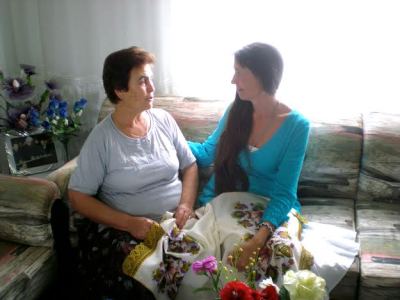


 Feminism and Religion