#YesAllWomen, the Darwin Debate, and the God Complex by John Erickson

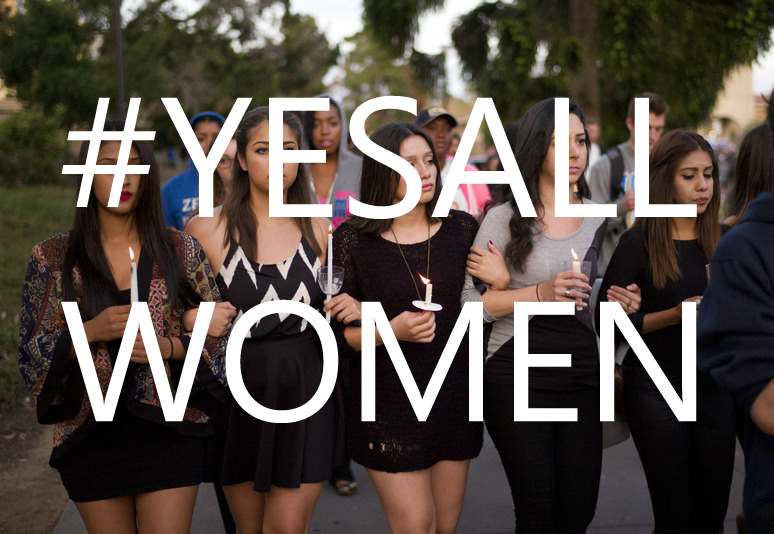
#YesAllWomen proved that although not all men commit horrible crimes against women, the men that often get the headlines and create the most controversy are the ones that need to be watched out for.

John EricksonThe one thing I typically will choose to do on the rare occasion that I’m able to sit down and relax is to watch a documentary.  While some people may go to the gym, read a book, or hang with friends, I typically choose to stay in, nestle up on my couch, and learn.  While on my last bout of relaxation, I chose to watch the HBO documentary Questioning Darwin. Although it offers very little new insight into the evolution vs. creationism debate, it does offer an interesting new way to look at the recent social media hashtag war feminists, allies, and supporters found themselves in over the #YesAllWomen movement that took the world by storm.
yesallwomen

Now, before I discuss #YesAllWomen, I have to admit that I did not enter into the safe space women created for themselves to tell tales of the horrible things they have and have had to face on a daily basis.  I firmly believe that men should not have entered into the digital space Continue reading “#YesAllWomen, the Darwin Debate, and the God Complex by John Erickson”

The Girl Who Lived: Reflections on Malala, the Middle East, and Feminism by Erin Seaward-Hiatt

Erin-Close-Up-BWAs I return home from a busy day signing off on proofs and churning out cutesy paper patterns, I find my husband, Neil, at the kitchen table. He wears a complicated frown as he pores over a score of tiled browser windows telling various iterations of a singular story. “Come here,” he says, flipping to a second tab, “you’ve got to see this.” It’s The Daily Show, and as I poise for Tea Party zingers and Obamacare barbs, I see instead a girl in hijab, a brilliant smile, and a whole new hope for world politics.

The story was all about a girl. Malala Yousafzai achieved international fame one day when she took a Taliban bullet to the head. Her vocal support for girls’ education had earned her a spot on the Taliban’s hit list. It’s a group with an all-too-familiar radical bent that thrives, among other things, on the cultural ideal of women’s inferiority and silence. One moment Malala was boarding a bus and the next, she faced a hopeful assassin, eager to erase her words and her work from the world. Continue reading “The Girl Who Lived: Reflections on Malala, the Middle East, and Feminism by Erin Seaward-Hiatt”

Whose Sharia Is It? by Kecia Ali

dissertation, Advising, feminism and religionIt has been a lousy month for Islamic law.

First, there was the kidnapping and threatened sale of Nigerian girls by Boko Haram, which claimed religious acceptability for their acts. As Muslim theologian Jerusha Lamptey opined, this is not my sharia.

Then, the Sultan of Brunei’s horrific new penal code came into effect. Unlike the Nigerian girls, where a social media campaign garnered White House attention, the Brunei law gained visibility because the Sultan–who is dictating law that his track record suggests he does not observe–indirectly owns the famous Beverly Hills Hotel. Hollywood figures have objected to the rules, due to come into effect next year, which would punish proven male-male anal sex with death. (As far as I know, the code does not prescribe any particular punishment for lesbian acts, though the rhetoric has become that the new law prescribes “stoning gays and lesbians.”)

Claims like that of the Sultan or Boko Haram that “Islam” demands implementation of “sharia” ignore the complex reality in which there is not now nor has there ever been a uniform set of identifiable rules that Muslim scholars have agreed on much less that governments in Muslim majority countries have implemented over the centuries. As I wrote elsewhere, so-called sharia laws on the books in Brunei, Nigeria, Pakistan, Iran, Saudi Arabia, or Morocco are not directly revealed by God. They are human products with human histories negotiated in human contexts. The pretense that these laws are straightforward implementations of God’s will not only serves to justify these otherwise unjustifiable rules but also feeds the demonization and dehumanization of Muslims. Though happening on two continents and perpetrated by two quite distinct sorts of actors – a multibillionaire monarch enmeshed in global capitalism and a militant anti-Western, anti-government insurgency – the Nigerian kidnapping and the Brunei law became exhibits A and B for the vilification of sharia. Continue reading “Whose Sharia Is It? by Kecia Ali”

No Honor for A Career of Hate by amina wadud

amina 2014 - croppedA recent decision by Brandeis University (founded in 1948 as a nonsectarian Jewish community-sponsored, coeducational institution) to take back its offer to give Ayaan Hirsi Ali an honorary doctorate hit the media with the usual storm over such a controversial figure.

Most of the resistance to her, as a public figure, comes because of her own categorical statements against Islam. Not only does she choose to be an atheist, but she lambasts those who do not make her same choice. Her sweeping statements are meant to galvanize support against the Islam she has suffered from both as a child in a conservative family and as colleague of a brutally murdered film maker. She lost her bid for refugee status in Holland for lying about her past and was taken lovingly into the arms of certain institutions (like the conservative think tank, American Enterprise Institute  and tea party politicians, like Pamela Gellar). All manner of official trickery was put in her favor such that she enjoys something millions of her country men and women from Somalia would probably never hope to see: US citizenship and institutional support. Continue reading “No Honor for A Career of Hate by amina wadud”

In Memoriam – God Hates Fags

Phelps didn’t just live a life filled with hate but he also embodied the very reasoning why so many communities cannot cross that proverbial bridge to work together to see past their differences and maybe never will. In the case of Phelps, sticks and stones may break our bones, but words really do hurt.

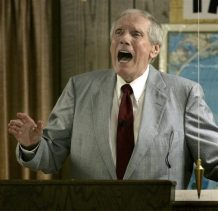
Fred Phelps, an American PasFred Phelpstor who headed the Westboro Baptist Church in Topeka, Kansas died at the age of 84 on March 19, 2014.  While some individuals leave behind legacies of their good deeds and loving memories, the only thing Phelps left behind was a family and church founded on the principle of hate.

A frequent eyesore at various events ranging from military funerals and gay pride gatherings to mainstream events that captured the attention of our pop-culture obsessed society, Fred Phelps and his clan believed it was their sacred duty to warn others of God’s anger over the growing acceptance of not only modernity in general but also issues like gay rights and abortion.  From slogans and signs such as ‘God Hates Fags’ to ‘Thank God for IEDs (Improvised Explosive Devices), Phelps has caused many controversies both during his lifetime and after his death.

Continue reading “In Memoriam – God Hates Fags”

Feminist Professors Are Not Secluded Monks by Kwok Pui-lan

Pui Lan.high resolutionIn his column “Professors, We Need You!” New York Times columnist Nicholas Kristof charges that most university professors “just don’t matter in today’s great debates” and admonishes them not to cloister themselves “like medieval monks.”

Many academics and others took offense at what he has written. A Twitter hashtag #engagedacademics sprung up and many have posted opposing views.

That Kristof imagines the professors who isolate themselves from the real world as “medieval monks” betrays his bias that the professors to whom he is addressing and the public intellectuals he longs to see are male (and possibly white)! Continue reading “Feminist Professors Are Not Secluded Monks by Kwok Pui-lan”

Yes, You’re a Homophobe by John Erickson

Jesus loved sinners and Jesus would rather be dancing with me in West Hollywood on a Friday night than lugging through a swamp luring ducks into a trap with a duck caller made by a clan who think that my sexual actions are similar to that of an individual having sex with an animal.

John Erickson, sports, coming out.

To be able to walk down the street holding the hand of the one you love is a great feeling and an action that some of us aren’t able to perform without fear.

A line has been drawn in the sand between those who support gay rights and those who do not.  While some call it being on the “right side of history,” I simply now refer to it as not sounding and looking like a bigot in the halls of history and in the various books, Facebook posts, and Tweets that our children will one day read. Continue reading “Yes, You’re a Homophobe by John Erickson”

What Would Malala Do? by Gina Messina-Dysert

Gina Messina-Dysert profileOctober 11th was International Day of the Girl – a movement that empowers girls around the world to see themselves as powerful change agents. This year’s theme is “Innovation for girls’ education.”  Certainly, this makes sense given that education is one of our most powerful resources – just ask Malala.  During her recent interview on The Daily Show, Malala reminded the world that it is education that can solve global problems – not war.

The youngest person in history to be nominated for a Nobel Peace Prize, Malala is clear in her message; the only way to make change is through peace, dialogue, and education.  When asked about her reaction to the threat to her life by the Taliban, Malala responded saying that she thought quite a bit about what she would say if she came face to face with a Talib.  “I would tell him how important education is and that I would even want education for your children as well. That’s what I want to tell you, now do what you want.”

Although the Taliban has continued to threatened her life, Malala says striking back is not the right approach.  “If you hit a Talib, then there would be no difference between you and the Talib. You must not treat others with cruelty. … You must fight others through peace and through dialogue and through education.”  Such words of wisdom from a child. Continue reading “What Would Malala Do? by Gina Messina-Dysert”

The Hot Seat by John Erickson

Being a man in feminism isn’t easy and that’s how it is supposed to be.

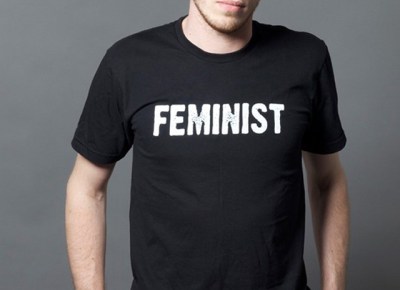
men_feminist_mainI’ve been thinking a lot about what it means to be a male feminist lately.  As the only man to be a permanent blogger on this very site until my colleague and friend Kile Jones came on board, I took my role, as a man in a traditional feminist (online) space very seriously.  Although the ongoing struggle to be a male feminist is one continually wrought with dialogues about power and positionality (amongst a host of many other topics), I am often conflicted when I see male feminists take advantage and destroy the hard work that many, specifically on this site and beyond, worked hard to build and defend.

Not wanting to reopen old wounds or start new online battles, men have been involved in feminism for quite some time.  From James Mott chairing the first women’s rights convention, to radical feminist Andrea Dworkin’s life partner John Stoltenberg, to Michael Kimmel and Michael Kaufman’s life long work to legitimize not only men in feminism but also what it means to be a man who works for gender equality, being a man in feminism isn’t easy and that’s how it is supposed to be. Continue reading “The Hot Seat by John Erickson”

Who is the Church? by Linn Marie Tonstad

Linn Marie TonstadThe headlines blared, “Who am I to judge?” News outlet after news outlet led with the pope’s conciliatory stance toward gays, expressed during an interview aboard the pope-plane as he returned from Brazil. Among the several headers from Fox News (I encourage not clicking!), we find discussions of the pope’s “reaching out” to gays and even one that combines this development with his “urging” of a “greater role” for women. The New York Times story introduced the pope’s comments as follows: “For generations, homosexuality has largely been a taboo topic for the Vatican, ignored altogether or treated as ‘an intrinsic moral evil,’ in the words of the previous pope.” Ignoring the astonishing comment that this has been the case “for generations,” as though homosexuality has historically been the kind of issue for the church it has become in the wake of radical queer movements – see Mark Jordan’s several books on this for the most helpful treatments – the story went on to say that the pope’s comments “resonated throughout the church.” Although the NYT article did a better job than some contextualizing and nuancing the pope’s comments, they were still termed “revolutionary” in an assessment better suited to an opinion page than to a news report. Better-informed commentators, such as James Martin, offered a measured response. Martin said that although the pope’s remarks didn’t really signal a significant change in policy, “in the church, style often proves substantial,” implying that the “pastoral” tone might have effects in the implementation of policy. More significantly, Martin praised the pope’s adherence to Jesus’ injunction not to judge as an instance, first and foremost, of the pope’s commitment to mercy as the hallmark of his pontificate.

My Facebook feed, predictably, lit up with links to and discussions of these comments. While most were thrilled, a few posts noted that, even if Pope Francis is in fact (which is not proven) walking back Benedict XVI’s language of “intrinsically disordered,” the church’s policy has not and will not change in any significant way. What was missing in all but a few instances was attention to the pope’s comments in the same interview on women, and the deep theological problems with the assumptions contained in those comments. And while I, as a queer theologian, would never wish to downplay the struggles of LGBTQI people in the Roman Catholic church, there are rather more women than queers in that church (as elsewhere!). What’s more, it is arguable that it is the sexism and heterosexism of what Marcella Althaus-Reid memorably termed “T-Theology” that underlies condemnation of homosexuality in Roman Catholic theology. Continue reading “Who is the Church? by Linn Marie Tonstad”