Una Hora de Vida, Es Vida! by Xochitl Alvizo

I learned, recently, that this is a common phrase among my family members – “an hour of life, is life.” I remember the first time I heard my mom use the phrase, not more than a few years ago, I latched onto it immediately. Since then, I have realize that many of my relatives use the phrase – it’s kind of a family mantra, which makes sense, then, that when I heard it, it reverberated within me—“Yes! An hour of life is life.”

To me it was a clarion call to not waste a single hour – to never think, “Oh, but I only have an hour…” and instead embrace the hour for all its potentiality—I have an hour, what will I do with it?

Continue reading “Una Hora de Vida, Es Vida! by Xochitl Alvizo”

Re-Anointing the Body by Eline Kieft

How ‘at one’ are you with your body, and what reasons might there be if your body-sense got separate(d) from your soul-sense?

This piece starts with the difference between feminine and masculine spirituality, and introduces a few reasons why living in a physical body isn’t always easy.

It then invites a shift to the beloved body and how we can start to re-instate our body as a sacred place and love it from within.

Continue reading “Re-Anointing the Body by Eline Kieft”

On Eikev: Whose Behavior Should We Emulate? by Ivy Helman

The Torah portion for 20 August is Eikev, or Deuteronomy 7:12-11:25.  Eikev describes the importance of spirituality in one’s life and proscribes the actions of spiritually-attuned people.  The portion returns time and again to whom one should be spiritually connected: the deity, a jealous, angry, and fierce warrior who freed the Israelites from Egyptian slavery.  Yet, if we look closely at the language of Eikev, there is a disconnect between this warrior imagery, other language in Eikev about the divine, and how the spiritually-attuned should behave.  It is as if there are two understandings of divine nature here, and they are at odds with one another. In spite of itself, the language of the parshah decidedly favors a more feminist understanding of the divine.

Let us begin by looking at what Eikev says about spirituality.  Deuteronomy 8:3 asserts that one needs not just bread to live, but connection to the divine as well.  In other words, humans have concrete material needs that are extremely important.  However, there is also more to life than just the material.  

But, to whom is one supposed to spiritually connect?  It cannot be denied that there is a lot of language in Eikev that refers to the deity as a fierce warrior, quick to anger, whose principle act was freeing the Israelites from slavery.  A typical example of this language can be found in verse 7:19.  “The great trials that your eyes saw, the signs, the wonders, the mighty hand, and the outstretched arm with which the L-rd, your G-d, brought you out. So will the L-rd, Your G-d, do to all the peoples you fear.”  The deity showed strength and power when rescuing the Isrealites from slavery and will not hestitate to bring low those who threaten them.  The deity is also often depicted as jealous and vengeful and quick to anger at Israelite misbehavior (9:7-8, 18, and 22).  It is even said in Eikev that the deity gave the Israelites the Land not because of their goodness but because of the wickedness of the Land’s inhabitants (9:4-5).  

Yet, in Eikev, one can read other passages in which that fierceness is overshadowed, where instead the deity displays love, care, and concern, and blesses the Israelites.  This model for the divine is considerably more feminist because, as I have explained in numerous other posts, it is definitively not based on a patriarchal model of anger, jealousy, or power-over others.* The main example of the juxtaposition between the angry, vengeful warrior deity and the loving, kind one is in Deuteronomy 8.  The deity both punishes and provides. But, in the end, divine care and concern outweigh more warrior-like behavior (verses 3-4), because despite the tests and trials, the people had food, water, their health, and clothing.   

There are other examples in Eikev that highlight the divine as care and acts of loving-kindness.  In Deuteronomy 7:13-14, we read about the many blessings the divine will bestow on the Israelites including fertility of the people and of the land.  People will not suffer disease in the land (7:15).  The deity makes sure to bring the Israelites to a good land with water, hills and valleys for mining and fertile fields for raising animals and planting crops and various fruit trees; no one will go hungry (8:7-10).  

Why does the deity do this?  Because of love.  The parshah’s second verse (7:13) says that the Israelites are blessed because of divine love for them.  The deity operates out of love for the stranger as well (10:18).  Love is also part of how the Israelites should behave.  They should love the divine (10:12, 11:1 and 22).  And, because they love the divine and the divine loves the stranger, they too should love the stranger (10:18-19).

This very much reminds me of the sentiments expressed in Leviticus.  We are to be holy like the divine is holy (Lev. 11;44-45 and 19:2).  Just sixteen verses later, we read “…Love your neighbour as yourself,” (19:18). However, in Eikev, there is a more immediate connection between who the divine is and how the Israelites should behave. As I have already mentioned above, one should love because the divine loves, do acts of loving-kindness because the divine does, shelter, clothe, feed, and so on.  Operating out of an understanding of the divine as angry, vengeful, jealous warrior would produce very different behavior, would it not?  

Spiritual connection and action go hand-in-hand.  Be holy for I am holy.  Love because I love.  Be kind because I am.  Take care of others as I have taken care of you.   This is Eikev’s message, one I think we should heed.

Ivy Helman, Ph.D.: A feminist scholar and faculty member at Charles University in Prague, Czech Republic where she teaches a variety of Jewish Studies, Feminist and Ecofeminist courses.  

*A partial list of my past blog posts that critique the patriarchal model of divinity as a jealous, fierce, angry warrior: Balak; Vayikr; Sh’lach; and Ha’azinu.

The Blessing of the Elders by Rachel Thomas

, elders are people who have illuminated my path, inspired me to see my own potential. To open my eyes, all my senses, even those I did not know I had. Elders show bravery and model for us how to be strong.

What is an Elder?

The word elder comes from an Old English word which also meant ancestor or chief. A lot can change in a thousand years and many of us no longer honor older people or seek out them out for advice.

In my experience, elders are people who have illuminated my path, inspired me to see my own potential. To open my eyes, all my senses, even those I did not know I had. Elders show bravery and model for us how to be strong.

My first wise woman teachings came from my family. My mother, and her mother, taught me to be myself, to love being outdoors and the importance of having a garden. Feeling the joy of flowers, cooking with fresh herbs, planting a tree to honor the dead. These are a few ancient traditions of my ancestors that have survived even in a modernized and urban setting.

Continue reading “The Blessing of the Elders by Rachel Thomas”

As I rediscover my connection with the earth, my eco-consciousness inspires me to transform. As I go back to nature, I re-awaken my ancient cellular memories of living in harmony with the earth. I feel called to dance barefoot, play drums, make offerings, bathe in moonlight, harvest with my own hands. As I move forward on a path which is both new and old, it is my beloved elders who have shown me how to find my way.

What is an Elder?

The word elder comes from an Old English word which also meant ancestor or chief. A lot can change in a thousand years and many of us no longer honor older people or seek out them out for advice.

In my experience, elders are people who have illuminated my path, inspired me to see my own potential. To open my eyes, all my senses, even those I did not know I had. Elders show bravery and model for us how to be strong.

My first wise woman teachings came from my family. My mother, and her mother, taught me to be myself, to love being outdoors and the importance of having a garden. Feeling the joy of flowers, cooking with fresh herbs, planting a tree to honor the dead. These are a few ancient traditions of my ancestors that have survived even in a modernized and urban setting.

Continue reading “The Blessing of the Elders by Rachel Thomas”

If You Remove the Yoke: the Hidden Home in Life’s Pilgrimage by Tallessyn Zawn Grenfell-Lee

(Note: This post briefly references genocide and brothels.)

Every year we can, we go visit my amazing Korean parents in law, Halmeoni and Harabeoji (‘Grandmother’ and ‘Grandfather’). Now in their 80s, they consistently embody the kind of radical trust that I’m trying to build. Their lives tell like a movie script, one dramatic, heartbreaking story after another, interwoven with incredible courage, faithfulness, and generosity. Hunger and genocide, robbery and abandonment, occupation and persecution – and, unexpected, powerful sources of support and inspiration.

Against all odds, their journeys brought them together; then across the world to Germany, a haven to raise their children and minister to lonely Korean workers, far from kin and homeland. Then, uprooted again to chilly Alberta, to learn yet another language and culture, ecosystem and way.

Continue reading “If You Remove the Yoke: the Hidden Home in Life’s Pilgrimage by Tallessyn Zawn Grenfell-Lee”

Talking about Death with my Daughter & Remembering Carol Christ

Recently, facing the reality that I do not have definitive or perhaps, static “answers” for my little one when she asks me about death, I find comfort in Carol’s words—in the idea that I don’t have to “answer” my daughter with one, forever “truth.” Because I have to ability to give her “enough,” at least for now.

As I sit down to write, I am reminded of a post I wrote many years ago entitled “Where Do Cat’s Go,” about my mother’s cat, Mimi, who passed away at the age of twenty-four. At that time, I was struggling with what death meant outside of an Evangelical Christian ideology. I had rejected the doctrine of heaven (and hell) itself; but doubt lingered. Fear still held sway over my emotions. I wanted to “believe in,” something else. Whether to regain control or simply for comfort, I hoped for new belief.

Carol Christ, who has touched so many of us, who was my teacher and whom I miss, replied to that post (paraphrasing here), “Why does [Mimi] have to go anywhere? Isn’t it enough that she is a loved and remembered part of life?”

At the time it was not enough. But recently, facing the reality that I do not have definitive or perhaps, static “answers” for my little one when she asks me about death, I find comfort in Carol’s words—in the idea that I don’t have to “answer” my daughter with one, forever “truth.” Because I have to ability to give her “enough,” at least for now.

 As a feminist mom, I frequently think about what will give my daughter strength and a sense of her value outside of hetero-patriarchal standards. I am also an ex-vangelical agnostic married to an atheist. He and I want our daughter to have choice in her spirituality and freedom to explore her own directions. I think this is a good commitment, though it is frequently a little more difficult in practice. My partner wants to protect our daughter from all religion and Christianity in particular. I tend to take an educational approach, answering her questions about spiritual matters with, “well, people believe all sorts of things about that,” then listing several beliefs or mythologies that might give her some information on the matter.

Continue reading “Talking about Death with my Daughter & Remembering Carol Christ”

Vigil by Sara Wright

Preface: I am submitting this story for publication because it occurred during the Christian Holy Week and because it involves me, a woman who follows her dreams… That I did so in this instance was important in ways that I cannot comprehend rationally. But I know that it involved creating space for some kind of passing over from one way of being to another. Every word is true.

Roy comes Home

In the dream I’m creating a ceremony to welcome Roy home – it’s very elaborate – yet fluid – it’s fine when I make mistakes – I am creating the space for his death but also welcoming him home. I am also asking for gifts that are expensive. Someone, I think it’s Roy, says humorously and with kindness, “You don’t want much do you?” I laugh. He is teasing me. I finish the ceremony, and I see Roy in an old dented truck pulling on his ears – he can’t hear me but we have made contact. There is such Joy in his heart that I know All Will Be Well….

Continue reading “Vigil by Sara Wright”

Lily B and Messages From the Beyond by Sara Wright


The night before last I had a dream that has stayed with me. My dreams rise out of my body to teach and to comfort me so I pay close attention. I had recently written tributes for two men, Lynn Rogers, bear biologist, and Rupert Sheldrake, biologist and plant physicist. Both of these men mentored me like a “father” each encouraged me to believe in myself, celebrated my original thinking and told me to trust my intuition. Writing about these mentors reminded me of my own father with whom I had a most difficult relationship…

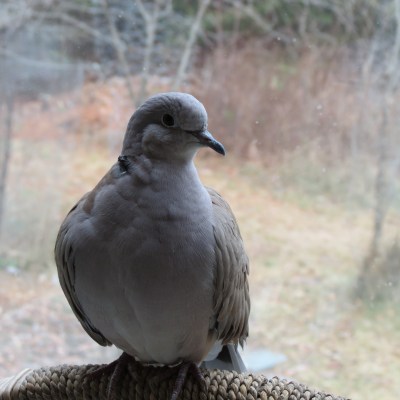
I am talking to my mother (she has been dead for 13 years) about having found someone who could help me with math and stuff I can’t do because of dyslexia. In this conversation my mother is not a personal figure (when she appears as herself it usually means that I am going to face some difficulty – As an impersonal ‘great mother’ figure she is very helpful). She replies that my father wanted to teach me all these things but he just couldn’t. So many problems were in the way. I choke up weeping over this knowing (and my tears carry over into waking) because I know that “my mother” is speaking the truth. I feel such heartbreak for both my dad and for me. Neither of us had a chance… as I awaken from this dream in the middle of the night Lily b., my dove, is bellowing. He is reiterating the truth of the dream.

Continue reading “Lily B and Messages From the Beyond by Sara Wright”

Grown Little Girl, Grow Little Girl by Chasity Jones Selenga


I have newly found myself a wife and in the throes of motherhood. In many feminist circles, I have encountered anti-family and anti-wifehood sentiments. The understanding is that to be a wife, and, to be a wife that chooses to start a family, is an oppressive position to occupy as well as the antithesis of the feminist movement. Though I am not typically a fan of tough physical, emotional, soulful labor, these two positions have been the highlights of my life so far.

My daughter embodies both my husband and me, physically. However, she is and will become her own person-soul. She is so young, but her soul is eternal, and has experienced eternity. I am here to help her navigate remembering who she is. She inhabits the intersection of Blackness, divinity, femininity, and infinity. Motherhood has greatly increased my capacity of appreciation for women and what women are capable of doing. Especially from the intersection of Blackness and woman-ness. From the capacity to create, labor, and deliver life to the task of raising Black children in a country that would have them annihilated, emotionally traumatized, and made to accept they are inferior.

Continue reading “Grown Little Girl, Grow Little Girl by Chasity Jones Selenga”

Will You Be My (Feminist) Valentine? by Tallessyn Zawn Grenfell-Lee


Valentine’s Day was never about romantic love in my family. Mom always gave us Snoopy Valentines. Dad would write hilarious rhymes. My stepmom created gorgeous tea parties with chocolates and flowers, and we even gave red treats to our dogs. It was a chance to tell each other how much we love each other, and it was… well, really fun! So it’s no surprise that we’ve continued these traditions, with our own kids and dogs, and we all look forward to St. Valentine’s Day.

Most people know Valentino was from Italy. That’s another thing I love. I really love being Italian. Whenever I go back to New York, I feel my family’s Italian history and heritage surging through my soul. My olive-skinned mother would get so excited for the Italian street festivals – you know, where the center of the pavement is the red, white, and green of the Italian flag, instead of double yellow? And we had to eat the street food, like sausages with peppers and onions, and pizzelle. We’d wander around listening to folk music, proudly wearing our ‘Kiss Me, I’m Italian’ buttons, and giving each other lots of kisses.

Continue reading “Will You Be My (Feminist) Valentine? by Tallessyn Zawn Grenfell-Lee”