#ShareTheirStories, June 2025 Edition

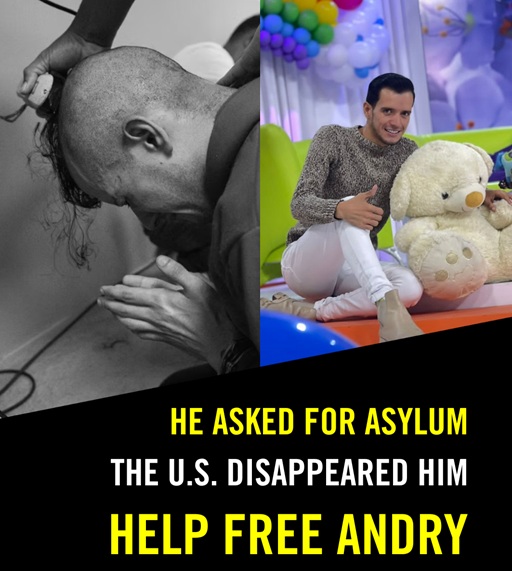
Photo from Amnesty International. For more information and to support his petition click here.

This is a project that FAR has started to share the stories of immigrants who are targeted by the US administration. It is our belief that when people are recognized as human beings, it is harder to dehumanize them and to take away their civil rights. We are facing a devastating situation where in the United States people are being “disappeared” without any recourse to the legal system. The viciousness of what is happening is growing. Some of those arrested have been released but it is a small drop in the bucket of the flood of arrestees, most not even receiving a day in court and some caught in legal mazes that show no sign of ending.  

Take Mahmoud Khalil, whom we have already discussed.  He was arrested in March due to his outspoken Pro-Palestinian views. In May, U.S. District Judge Michael Farbiarz in New Jersey ruled that Secretary of State Marco Rubio likely violated the Constitution when he stripped Mahmoud Khalil of his green card and ordered him deported. Even so the Judge declined to release him because he has not proven “irreparable harm” caused by his detention. I think an elementary school child can even understand the irreparable harm one suffers by being detained, esp. in Trump prisons that are designed for harshness. And to add to it, Khalil is a new father who only got to hold his son while in prison after a flurry of lawsuits.

Continue reading “#ShareTheirStories, June 2025 Edition”

Did We Ask for a King? by Esther Nelson

Northrop Frye (1912-1991), a Canadian literary critic, is probably best known for his book THE GREAT CODE: THE BIBLE AND LITERATURE (1983). In it, he demonstrates how the Bible is foundational for our understanding of Western literature, a body of work replete with Biblical allusions. 

Today, most of us are not familiar enough with the Bible to appreciate where many literary themes take root. We fail to see how its stories—gathered over centuries—relate to us. Not only does Western literature mine from Biblical text, our lives as we experience them mirror much of Biblical story and narrative.   

I was raised on the Protestant Bible. To this day, I experience the world through Biblical story. There is nothing sacrosanct (to me) about the familiar text. The Bible is not unique. 

Continue reading “Did We Ask for a King? by Esther Nelson”

On Terumah: (Eco)Feminist Reflections on the Tent of Meeting.

The Torah portion for March 1, 2025 is Terumah, consisting of Exodus 25:1-27:19. Terumah in Hebrew means contribution, and the parshah begins with the deity requesting donations from the willing hearts of men (yes, only men) of precious metals and stones as well as dyes, linens, wools, and skins.  Terumah then provides the instructions for how to build the Tent of Meeting and all of its components.  In this post, I want to focus on four aspects of the post from the perspective of ecofeminism and feminism: beauty; the misuse of nature, the concept of home, and the indwelling or immanence of the divine.

Continue reading “On Terumah: (Eco)Feminist Reflections on the Tent of Meeting.”

Broken Human Bonds by Janet Maika’i Rudolph

Author’s Note: I originally wrote this in the fall when Andrea Robin Skinner started going public with her own story. It has taken me a while to contemplate posting it. It feels like this is such a common story that it needs to be shared. We all need to know that we are not alone and that each of us is lovable.

Whenever I hit a personal and/or emotionally raw topic, my first instinct is to turn to Tarot cards to see what lessons I need to learn. I use Rachel Pollack’s Shining Tribe deck (more on that later). I have been finding myself in this situation recently with the revelations of Andrea Robin Skinner, daughter of the renowned Nobel Prize winning writer Alice Munro. Andea waited until her mother died before she revealed publicly that her step-father began sexually abusing her when she was nine years old. When she had told her mother about it, Munro blamed Andrea for damaging her marriage. The stepfather at issue publicly called Skinner even though a child at the time, a “homewrecker.” He did this in a letter which included death threats. Abuse, blame, threats tools of patriarchy all. Skinner’s own mother didn’t seek to protect daughter but chose instead to shield the abuser. A betrayal of the most primal sort!

Continue reading “Broken Human Bonds by Janet Maika’i Rudolph”

Re-claiming Friday the 13th and Other Tidbits by Janet Maika’i Rudolph

I am struck by how language affects our thoughts, values and even our actions. One standout for me is Friday the 13th which is a day accused of being cursed and holding bad luck in modern beliefs. There is even a series of horror films created in the date’s honor. But why has this date been declared so negative?  Like so much, the answer is that it is a suppression of women and our strength. Although I have heard different explanations for its meaning, my favorite is this; there are 13 moons in a solar year. That means that a woman will menstruate 13 times in that solar year. Thirteen is a symbol of women’s power. And Friday? Friday is the only day of the week named for a Goddess. In English it is Freya’s day named in honor of the Norse Goddess of love. In Spanish it is viernes, in French vendredi, both named for Freya’s counterpart Venus. I present to you that this makes it an extremely powerful day. Perhaps a horror for misogynists but for we women a day to celebrate.

I have also been thinking about the roots of the word “history” – his story.  Many in feminist communities, including here at FAR, counter it with “herstory” – her story. But truly our past is not broken up into genders for the arc of the past affects us all, perhaps differently but all of us nevertheless. We all breathe the same air, live under a culture’s laws, etc.  … Here are some names I have been playing around with as replacements: Ancestorstory.  Ourstory. Hustory.   

Continue reading “Re-claiming Friday the 13th and Other Tidbits by Janet Maika’i Rudolph”

Resistance Checklist: Do It Loud. Do It Quiet by Karen Tate

Despite what you’re hearing out there, because it’s outdated information just being repeated in the echo chamber, Trump did not win by a landslide.  He has no legitimate mandate.  As of this writing one percentage point of the population separates how many votes each candidate got in this election and counting has not finished.

Many of us might still be recovering from the election disappointment and we’re trying to find our way forward.  Consider this:

“Many of us have been brought up on stories of praying to God the Father to save us, waiting for our prince to come, submitting to the greater wisdom of our husband or priest to guide us. We need to move from this way of being, into our own agency. But we must also recognise that we cannot do it all, nor do it alone, in the martyr mother myth so many of us have learned to embody.
This is not the time for being nice, biting our tongues or not rocking the boat. And yet these are also not times for making enemies or picking fights. Can we find other ways of engaging and challenging, visioning and contributing to transformation? What might these look like?” From Weaving Our Way Beyond Patriarchy – a compendium of over 80 women’s voices, launching today exclusively from Womancraft Publishing. com

Continue reading “Resistance Checklist: Do It Loud. Do It Quiet by Karen Tate”

The Story of Changing Woman, part 2 by Sara Wright

Part 1 was posted December 7th. You can read it here.

Commentary:

I love this story because it demonstrates the evolutionary and eternal nature of Woman; her intimate relationship to Nature, her ability to give birth, to mother, to let go, her ability to endure, her need for animals and plants as companions and her willingness to stand her ground until she is able to get what she needs. Changing Woman matures from a passive figure who is acted upon by the forces of Nature into a self-directed female power who knows what she wants, and one who finds peace in choosing relationships with animals, plants and humans on her own terms.

Initially, Changing Woman is impregnated by the wind – the power of the spirit moving across the land – and not through sexual intercourse. Spirit and the Body of the Earth are the two equally creative aspects involved in her birth. The same holds true for her children, who are male, but conceived and birthed in a similar manner without the need for male insemination (no room for Patriarchy to enter here), suggesting to me that all three are parts of one spiritual/bodily whole that cannot be separated. As creative principles (beyond gender stereotypes) they work together as a triad to rid the world of monsters, to make the Navajo world a safe place, and to secure the matrilineal line. According to Navajo mythology securing the matrilineal line is primarily how Changing Woman saves the world.

Continue reading “The Story of Changing Woman, part 2 by Sara Wright”

Bo: On Passing Over.

On August 12, 2018, I announced that I would begin my feminist reflections on Torah portions. I have seven left, but the timing of them are all in the beginning months of the year. This means, that the following seven posts about the parshot will not be aligned with the actual calendar dates in which they are read, especially since I only post once a month. But, in each post, I will note when they will be read next (in 2025). I hope that is not too much of a bother for the reader as I complete this project.

The parshah for Feburary 1, 2025 is Bo. It covers the final three plagues (locusts, darkness, and death of the firstborn males), the instructions for Pesach (Passover), and the beginning of the flight out of Egypt. The parshah makes two mentions of women. First, Moses includes the daughters of Israel among those who will leave Egypt (10:19). This mention comes in a list of opposites: young and old, sons and daughters, and (what I assume to have been considered opposites at the time) flocks and cattle. To me, this stylistic set-up signals that the entirety of the Israelite community would leave Egypt – a combination of seeming opposites thus represent the whole (that would be an interesting post for another time!). The second mention of women is in verse 11:2; men and women will ‘borrow’ gold and silver items from their (Egyptian) friends. This borrowing allows them to later leave Egypt with the items and thus rob Egypt of its riches (13:35). I do not find this necessarily all that interesting except to note that it helps to tell the story of how an oppressed, enslaved people had enough gold to build a golden calf (Ki Tisa), Exodus 32:2-3. 

Continue reading “Bo: On Passing Over.”

Harris Could Not Outrun 2000 Years of Patriarchy by Janet Maika’i Rudolph

I made this poster 8 years ago and am devastated to have to dust it off again. The safety pins came from a British idea when Brexit was passed. People would wear the safety pins on their clothes to let anyone feeling vulnerable know that they would be “safe” with them.

The political finger pointing for Harris’ loss is beyond noxious. I have heard all manner of scapegoats; Biden, the Obamas, VP candidate Walz, Harris for saying too much of one thing, not enough of another, the progressives, Liz Cheney and even George Clooney. . . .blah blah blah

How can we make sense of a world where women voted for a misogynistic abuser. Black and brown people voted for a white supremist. Latinos voted for a policy of mass deportations targeting their brethren. Youth voted for a climate denier affecting their future. And so on. Think of all the women who voted for a world where they, their daughters and their granddaughters can be denied basic healthcare. It’s a true-to-life Cinderella scenario whose stepmother cut the toes off her own daughters to please a prince. Or Chinese mothers who would bind their own’s daughter’s feet, thereby crippling them in the service of marriage.

Continue reading “Harris Could Not Outrun 2000 Years of Patriarchy by Janet Maika’i Rudolph”

NOT POSITIVE MASCULINITY, BUT FULL HUMANITY by Esther Nelson

The following New York Times article titled “We Can Do Better than ‘Positive Masculinity’” by Ruth Whippman was published on October 9, 2024.  Whippman is also the author of the book, REIMAGINING BOYHOOD IN THE AGE OF IMPOSSIBLE MASCULINITIES. Whippman’s New York Times article grabbed my attention.

Decades ago while taking undergraduate courses in the discipline that was then called Women’s Studies (now known as Gender, Sexuality, and Women’s Studies), most of the authors I remember reading insisted that both masculinity and femininity (human ways of being in the world) were cultural constructs, not something innate in humans we refer to as women and men. Throughout the world, societies have shown a lot of variety in ways that women and men express themselves and are expected to behave.

Continue reading “NOT POSITIVE MASCULINITY, BUT FULL HUMANITY by Esther Nelson”