The Language of Flowers by Barbara Ardinger

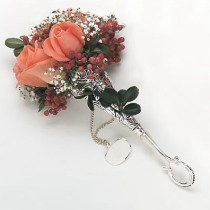
Instead of sending a billet-doux to your honey, present a tussie-mussie, a small bouquet wrapped in a lace doily or a fancier holder. Say you have a friend having a birthday and he already has too many neckties and she already has too many kitchen gadgets. Give them flowers or potted plants. The white camellia signifies “unpretending excellence.” Ivy, “with its clinging habit, is a feminine symbol” (sic., p. 53). The lily means purity. The peony symbolizes abundance. The primrose is a token of affection and respect. Get the idea? Your friends will be delighted by the flowery language.

William Shakespeare, The Winter’s Tale
A fancy tussie-mussie

     Here’s flowers for you:
Hot lavender, mints, savory, marjoram,
The marigold, that goes to bed wi’ the sun,
And with him rises weeping: these are flowers
Of middle summer….
          —William Shakespeare, The Winter’s Tale Continue reading “The Language of Flowers by Barbara Ardinger”

Gendercide: Words and Poem by Bernedette Muthien

engender, Bernedette Muthien, gendercide, poetry, violence against women, patriarchy,

gendercide  

 it took a full week

of straitjacketing generations

of genocidal femicidal trauma

for the clay dam wall to explode

and flood me in torrents

of collective grief

a poet with no words

a lifelong activist struck dumb

i choke on love for the dead

thousands of beautiful women and children a year

i puke for my incested cancerous country

and gag grappling for compassion of

perpetrators and the morally blind

in this breathtaking country

so brutally drenched in the blood

of ordinary women and children

i discover anew

that i fail to

swim

my spiritual cadaver

is dragged under by the concrete limbs

of victims perpetrators witnesses

majority blinkered burdens

too busy scrabbling for survival

to fight for justice

as i contemplate the imminent refreshment

of my childhood starvation

my hunger for food agency adventure

leads me to stare the dragon in its ambered eyes

like a mirror of my ever-present shadows

Demon! Patriarchy…

how can I love you to death…?

— Bernedette Muthien (15 feb 2013)

for the billion women martyrs around the world… Continue reading “Gendercide: Words and Poem by Bernedette Muthien”

Mystery by Janine Canan

Janine Canan

You are the living Goddess
and I bow to You.
All the crickets chant OM
and the moon glows.

Time lies down
in the corpse pose.
And the night births
hundreds of thousands of galaxies. Continue reading “Mystery by Janine Canan”

Imix: Primal Mother and Dawn of a New Age by Michele Stopera Freyhauf

Michele FreyhaufIf you are reading this, then we survived another apocalypse.  People are fixated on end-times; especially predictions, prophecies, etc.  Specials on Nostradamus, the Book of Revelation, TV Evangelists looking for end signs plague television shows, movies, and writings.  Countdown clocks and reminders to repent are all around us.

Original image found at http://www.dwayneedwardrourke.com/Pages/TIMEWAVE0728/page21/page21.html

What is unnerving is how we obsess about the end of the world instead of living in the world we have right now.

I would like to share a Mayan poem that I came across.  It is called “Imix”- a Mayan Oracle Interpretation translated by Ariel Spilsbury and Michael Bruner and I am drawn to it due to the imagery and symbolism:

I Am Imix, Primal Mother.

Still, dark womb of the patterned potential of becoming, sacred, interstellar genesis, I Am.

Nourishing, fertile abyss, I birth you.

Benevolent, my mighty cauldron of primal waters, enveloping the living seed. Eternal is my embrace. Continue reading “Imix: Primal Mother and Dawn of a New Age by Michele Stopera Freyhauf”

Who is She? The Existence of an Ontological Goddess By Molly

I do feel Her presence directly in my life—call it an energy, call it the sacred feminine, call it the divine, call it source, call it soul, call it spirit, call it the great mystery…I perceive a web of relatedness and love within the world and I choose to put a feminine form to that energy—to name it and know it as Goddess.

To me, Goddess is found in the act of specifically naming that ineffable sense of the sacred that we all, universally, experience or perceive at some point during our lives. Whether it be in gazing at the ocean or in climbing a mountain, in the births of our children or the hatching of a baby chick, almost all humans experience transcendent moments of mystery, meaning, wonder, and awe. We can call these experiences by different names and I feel that the Goddess arises when we have the courage and capacity to name Her as such, rather than stay hazy, generic, or afraid.  In my own life, I call these numinous experiences Goddess and through this I know She exists in, of, around, and through the world that I live in. It is in these experiences that I touch Her directly. Continue reading “Who is She? The Existence of an Ontological Goddess By Molly”

Theapoetics by Molly

I think there is a poet in me

she’s been hiding

I didn’t know she was there

I didn’t see her
I didn’t hear her

I didn’t watch for her
wait for her
listen to her
or know her

and yet, when I come to this place in the woods
and I sit down
and I open my mouth

poetry comes out

and I really think
she’s been here all along.

In the woods behind my house rest a collection of nine large flat rocks. Daily, I walk down to these “priestess rocks” for some sacred time alone to pray, meditate, consider, and be. Often, while in this space, I open my mouth and poetry comes out. I’ve come to see this experience as theapoetics—experiencing the Goddess through direct “revelation,” framed in language. As Stanley Hopper originally described in the 1970’s, it is possible to “…replace theology, the rationalistic interpretation of belief, with theopoetics, finding God[dess] through poetry and fiction, which neither wither before modern science nor conflict with the complexity of what we know now to be the self.” Theapoetics might also be described, “as a means of engaging language and perception in such a way that one enters into a radical relation with the divine, the other, and the creation in which all occurs.” Continue reading “Theapoetics by Molly”

Sacred Outcry: A Poetic Trilogy by Mary Saracino

1.  NO COUNTRY FOR OLD WOMEN

Howling from the mountaintops
wailing from the riverbanks
scooping the moon into their waning wombs
the old women know that lies kill,
distortions maim, hope isn’t enough to feed starving
babies, school the ignorant, put an end to war.

Like Furies, the old ones rise,
clench their furious fists against the blazing sun;
like Harpies they roar, casting dire warnings
upon the winds of change; soothsaying Sibyls
decipher omens, portend the future, speak in baffling koans.
With dakini wisdom they cut through
illusion, vote in primaries, attend caucuses,
raise their voices against power, shatter
the corrupted ceilings that chafe the crowns
of their wizened heads.

The wandering Maenads cry: “This is no country
for old women.”

Medea calls down her midnight powers,
prays for revolution, strengthens the tired tongues
of memory. Eloquence isn’t enough to heal
a wounded country; sequined celebrities
can’t mend a nation’s odiferous past. Kali avenges
her sisters, the long-patient Queens & Crones,
Maidens & Mothers. The forgotten ones
wait and watch and warn: “Beware the hubris
of ages. Beware the greedy hand that grabs the golden fleece.” Continue reading “Sacred Outcry: A Poetic Trilogy by Mary Saracino”

Her Name by Janine Canan

She is dancing her Dance
and everything changes.
This is what is meant by Impermanence,
buddhist for God.

She is dancing her Dance
and nothing remains.
This is what is meant by Nothingness,
atheist for God.

She is dancing her Dance
and everything is beautiful.
This is what is meant by Changing Woman,
navajo for God. Continue reading “Her Name by Janine Canan”

Soror Mystica: New Myth for a Changing Earth by Gael Belden

Once, when my life collapsed around me, as life is wont to do at times, I began creating clay images, placing them near the headwaters of watersheds around the United States. I called this project 100 Clay Buddha’s and it seemed at the time an incantation and a prayer for water, for the planet.  Later, I came to understand that I was also re-figuring my life, image by image, waterway by waterway.

I was also working at the time with particular koans, myths, and fairy tales because they speak not only to the personal, but to the collective –to the ways things have been over time. The hero’s journey monomyth, although genderless in its most distilled terms, seemed, though its imagery, to speak mostly to the theme of the outer quest (slaying dragons, returning from battle, and whatnot). I felt as a woman, however, my journey had to do with a descent into the Great Below and with that a dying into something new. Continue reading “Soror Mystica: New Myth for a Changing Earth by Gael Belden”

Process Thought: Feminist Friendly Metaphysics by Xochitl Alvizo

To be is necessarily to be in process and engagement with the lure of creative advance (that is, with God). In this sense, God is the poet of the world continually luring the world toward its full be-coming.

“It all goes back to one’s metaphysics.” That is what my TA said in the first theology class I took during my masters program. We were discussing our theological statements in class – a statement that outlines our individual understanding of God, humanity, sin, etc. – presenting them to one another for feedback and discussion.  As we argued  and discussed (“How can you possibly believe that?”) our TA made the case that our theological statements and the varying differences among them were largely determined by our particular metaphysics – that is, they are determined by whatever we hold to be the nature of existence.  That is to say, if science studies the physical world, metaphysics is the result of asking questions about the underlying reality of that physical world – about the nature of the physical world and by extension all of existence. As one can imagine, not all metaphysics are created equal, but all of them are theories with enormous implications. Continue reading “Process Thought: Feminist Friendly Metaphysics by Xochitl Alvizo”